Features

Giorgia Meloni’s Italian renaissance

Rome Last weekend, Rome hosted nearly a million young pilgrims to celebrate the Papal Jubilee of Youth. Part Woodstock festival, part giant outdoor mass and all-night vigil, crowds of students from all over Italy and beyond gathered to listen to Christian rock music, sing hymns and receive the blessing of the new Pope. Leo XIV, arriving in a white papal helicopter, was feted like a rock star. The event was orderly, joyous and a sign of a society at peace with itself and proud of its heritage. The way Italians carry on, you’d think the country was booming. The Lombardy and Veneto regions are gearing up to host the 2026 Winter Olympics.

Inside the Mohammed Hijab trial

Mohammed Hijab sat at the back of the courtroom and ate doughnuts while his lawyer, Mark Henderson, delivered his closing submission. ‘You will have seen that my client is argumentative, can be provocative,’ said Henderson. ‘Some people might think that he is a bit of a smart alec, a bit too cocky.’ Hijab reclined in his chair and licked the sugar from his fingers. Hijab acted like a schoolboy throughout last month’s four-day trial at the Royal Courts of Justice. He laughed and shouted while giving evidence. ‘It’s an unsalvageable case, Greg! It really is!’ he yelled at The Spectator’s legal counsel Greg Callus at the end of his second day in the stand, leaning over the side. Well, he lost.

Motherland: how Farage is winning over women

On the campaign trail in the Midlands ahead of May’s local elections, a journalist asked Nigel Farage: ‘Do you have a woman problem?’ The twice-married, twice-separated father of four laughed and said: ‘God, yes. I’ve had 40 years of it.’ His response was characteristic of Reform UK’s leader – a determination not to take things too seriously and a tacit acknowledgement that every political cause he has espoused has been more popular with men than women. ‘Around me there’s always been a perception of a laddish culture,’ he says. ‘Ukip was the rugby club on tour.’ In last year’s general election, 58 per cent of Reformvoters were men. Since May, when Reform seized 700 seats and ten councils, that has begun to change.

Dinner party talk won’t help Gaza

I’m one of the Silent People who sit on the sidelines of the great political events and debates of the present. We Silent People don’t sign on-line petitions or go on protests to show solidarity with this group or that one. We don’t tweet our outrage, or blog our bile. We prefer to keep what we think to ourselves. When a verbal punch-up erupts over Gaza or trans rights at a dinner party, I stay silent and wonder what’s for pudding. The thing we Silent People are most silent about is our silence. It’s easy to see why: the silent are suspect The thing we Silent People are most silent about is our silence. It’s easy to see why: these days the silent are suspect.

Why Generation Woke loves romantasy

When the willowy human Feyre meets the faerie Tamlin in A Court of Thorns and Roses (known as ACOTAR by fans), he is a ‘snarling gigantic beast with golden fur’. Drama ensues when Tamlin, with his ‘elf-like horns’ and ‘yellow fangs’, kidnaps Feyre. He keeps her in captivity, then claims her: turning up in her room at night and clamping his teeth down on to her neck against her will. Two hundred pages later, the pair finally have sex and Feyre marvels that while ‘his claws were out’ they are ‘devastatingly gentle on my hips as he slid down between my thighs and feasted on me’. She moans his name and he ‘sheathed himself inside me in a powerful, slow thrust that had me splintering around him’.

Varun Chandra: the most important adviser you’ve never heard of

The porousness of the Establishment, and its reluctance to advertise its activities, are illustrated by the career of Varun Chandra. At the age of 40, he sits as business adviser at the right hand of the Prime Minister, accompanied him to the meeting on Monday with Donald Trump at Turnberry, and is credited with playing an invaluable role in the recent trade talks in Washington. Before the general election, he used his innumerable high-level contacts to persuade business that Labour would be a better bet than the Conservatives. About himself he has preserved an almost immaculate discretion. He has no Wikipedia entry and is not in Who’s Who.

Ctrl U: the Online Safety Act is shutting down the internet

This time last year, the UK was consumed by the worst race riots since 2001. It was precipitated by the spread of online rumours that the perpetrator of the Southport atrocity was a Muslim refugee. This summer, there have been smaller protests following reports of sexually motivated attacks allegedly perpetrated by migrants. But something is different. Legislation which was originally passed in 2023 came into force last Friday and the effects can already be felt. Social media posts showing rioters fighting with police have been suppressed; those referring to sexual attacks have been automatically flagged as pornographic.

The asylum hotel crisis will cost Labour

Yvette Cooper doesn’t do holidays, which is probably just as well since she is the minister who, this summer, holds Labour’s fate in her hands. During the Easter break, the Home Secretary, her husband Ed Balls and their adult children holidayed in Madrid. Cooper went every day to the British embassy to check emails and make secure phone calls to London. Balls tells a story about a camper van trip to New England in 2015, when Cooper was running for the Labour leadership. ‘After a few early mornings spent sailing her into the middle of the lake near their campsite so she had enough signal to call her campaign team in London, he sent her home,’ a family friend recalls.

The Epping protests have become entertainment

Early on Sunday afternoon at the Epping Bean Café, where a cutesy sign hangs from a wall reading ‘Coffee makes everything better’, a man is enjoying a roast dinner as the staff prepare for violence. Chairs and tables are moved inside, and a tall flagpole for advertising the café, which could be a very effective spear, is removed too. ‘Just in case we need to close down,’ says a waitress sweetly to the man. Epping isn’t used to days like this. The protests started on 13 July, after Hadush Kebatu appeared in court for the first time. Kebatu, 38, from Ethiopia, had allegedly tried to kiss a 14-year-old girl and a woman in the town.

Give Eric Ravilious a rest

How do artists sustain a reputation? We’d like to think it’s on the basis of their work. In the case of visual artists, it would be nice to think they make it because their art is beautiful, original or absorbing. It shouldn’t be a matter of what the art is about, or Benjamin West’s epic historical tableaux would be better paintings than Jean Siméon Chardin’s still lives. It shouldn’t be about the artist’s personality or history, or we would rate Benjamin Haydon (tragic suicide) over John Constable (domestically inclined Tory). On the other hand, it doesn’t always work like that.

Trump’s tariffs are taming China

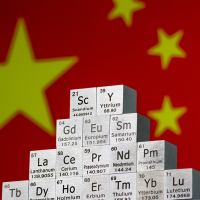
Stockholm This week, the fate of the global economy could have been decided over a Mongolian barbecue in a Stockholm tourist trap. On Tuesday, just 50 yards from Sweden’s seat of government, Rosenbad – where the US Treasury Secretary Scott Bessent and the Chinese Vice Premier He Lifeng had been wrangling over trade negotiations – the Chinese delegation suddenly exited the talks and headed for lunch near the Mongolian buffet place, where they had eaten the day before. Its windows were covered up and a sign announced it would be closed for three days for a ‘private event’. The Americans stayed behind, making do with salad.

Monaco, the people-watching paradise

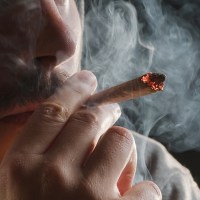
I’m lying on a sun lounger in Monte Carlo and there are so many women with extended blonde hair, hornet-stung lips and bazooka breasts stuffed into tiny monogrammed bikinis that I can’t distinguish between them. They make me feel as though I’m part of a different species. My battered copy of Bret Easton Ellis’s The Rules of Attraction and a sweating glass of champagne complete the scene. Like Bret, I’m drawn to the dark side of glamour, which means Monaco is a people-watching paradise. Along with the bazooka babes, ninety-something men also aren’t in short supply. A leathery, wispy-chested man in that age category is slumped next to the pool, with a bandage on his foot, plasters up his arm and a wheelchair tucked away to the side. He is chain-smoking cigars and chugging beers.

Is this the man who can defeat France’s Islamists?

When France played Algeria in their national stadium, the Stade de France, in 2001, the French player Thierry Henry said afterwards he felt – disturbingly – as if he were playing away. The game had to be abandoned after dozens of Algerian fans, furious at being 4-1 down, invaded the pitch.  Bruno Retailleau, the interior minister of France since September last year and a key figure in the small boats crisis, has been known to cite Henry’s comment. Retailleau is carving out a distinct role for himself in government as the tribune of the growing number of his compatriots who share the same sense that they, too, are ‘playing away’. In other words, the millions who believe that they have become strangers in their own country.

The Donald and the art of golf diplomacy

In 1969, one of the great acts of sportsmanship occurred at Royal Birkdale golf club in Southport, when the Ryder Cup came down to the last green. Britain’s Tony Jacklin had a three-foot putt to halve the final match with Jack Nicklaus and make the score 16-16, but the American picked up Jacklin’s marker and said he was happy to share the spoils. ‘I don’t think you would have missed,’ he said, ‘but I didn’t want to give you the chance.’ The gesture was immortalised in the naming of a Florida golf course, the Concession, which has just been awarded the next three senior PGA Championships, one of the majors. I suspect that Donald Trump, who owns three courses in that state, might regard Nicklaus as a loser.

Base instincts: unease on the garrisons housing Afghan refugees

Helping Afghan refugees escape Taliban retribution has not proved easy; ensuring their integration into their host countries more challenging still. In September 2021, a month after the United States completed its mass evacuation of refugees from Afghanistan, a serving female soldier was reportedly assaulted by a group of Afghan men at Fort Bliss in New Mexico. The incident caused a brief scandal but that was swiftly contained. Within six months, 76,000 Afghan evacuees had been processed and resettled into American communities. The UK has taken a different approach. As part of the Afghan resettlement programme, around 39,000 refugees have been brought here since the fall of Kabul.

Can anything stop Reform?

A close associate of Nigel Farage received phone calls from three civil servants in the past week, asking how they might help Reform UK prepare for government. Officially, mandarins won’t begin talks with the opposition until six months before a general election, which might be nearly four years away. And Reform currently has just four MPs. But behind the scenes, the source reveals: ‘I’m personally getting middle-ranking civil servants in various departments asking if they can help – people who actually understand how to get things done. They don’t want to lose their jobs, but they want to tell us what’s going on.’ MPs may have departed Westminster for recess, but that also marks the firing of a starting gun on a highly consequential political summer.

How private equity ruined Britain

What has happened to Britain’s rivers isn’t a mistake. The fact that serious pollution is up 60 per cent on the year, or that only one in seven rivers can be called ecologically healthy, is the result of corporate tactics. It is effluent from the murky world of private equity. Some 2.5 million people in the UK now work for a business that is ultimately owned by private equity. Since the 2008 financial crisis, Britain has become a prime target for takeovers, driven by low company valuations, favourable exchange rates and a pliable regulatory environment. Everything from Bella Italia to the Blackpool Tower, Travelodge to Legoland, the AA to Zizzi, has been owned by private equity. Today, it claims to make around £7 in every £100 generated for the British economy.