Features

The myth of the outsider

The job of radio critic for the Tablet offers several perquisites. One of them is access to the BBC previews website, and it was by this means, quite some time before its recent broadcast, that I was able to listen to Adrian Chiles’s Radio 4 documentary Finding Elgar. As a veteran of countless BBC radio documentaries and mindful of their sensitivity to the cultural issues of the day, I knew exactly what I would find, and there it was. Elgar, Chiles insisted, was an ‘outsider’ – lower middle class, a Catholic to boot, and marginalised and patronised by ‘the establishment’ until such time as his musical genius began to declare itself.

Fragile China: who’s really in charge?

Xi Jinping effectively vanished in July and the first half of August. Some China watchers speculated that his unexplained absence was a sign that he was losing his grip on power. But he has since reappeared and been very visible again. At the end of last month, he visited Tibet, then indulged in a high-profile, back-slapping meeting with Vladimir Putin and the Indian Prime Minister Narendra Modi in Tianjin. He capped off his busy fortnight with the 3 September military parade in Beijing and a second meeting with his star guest Putin, this time accompanied by Kim Jong-un. So, a great triumph for the neo-Maoist leader and the new Axis of Evil? Not so fast. The lessons to draw from these three events are a sight more nuanced. Here are five take-aways from Xi’s last few weeks. 1.

The comeback of George III

We no longer correct ourselves as we sing the first line of the national anthem. ‘Prince of Wales’ no longer means ‘Charles’. As we mark the third anniversary of his accession this week, it is possible to attempt useful comparisons between the reigns of Charles III and Elizabeth II. Set aside age and medical matters and the principal differences are pace and expectation. It was nearly a year before the UK heard a speech from the new monarch in 1952; in 2022, it took a day. Court mourning went from 16 weeks to one. Three years in, the late Queen was still on her first prime minister. The King is on his third. Family-wise, her main distraction was Princess Margaret’s passing passion for her late father’s equerry.

Winston, Windsor and ‘private time’: inside Trump’s state visit

The first time Donald Trump was on an official visit to the UK, in July 2018, he was deep in conversation with Theresa May during the state banquet at Blenheim Palace when his interview with the Sun dropped, offering a range of unwelcome thoughts about the then prime minister and her handling of Brexit. May’s communications team decided to let her enjoy the meal before dealing with the fallout. When the President lands in Britain next week for another two-day jamboree of pomp and politics, Keir Starmer’s aides know what to expect. ‘The one thing about Trump which is entirely predictable is his unpredictability,’ one ventures. The potential landmines lie in plain sight this time – including a possible interview with GB News’s Beverley Turner.

Mandelson’s Epstein problem is not going away

When King Charles hosts Donald Trump for the state banquet at Windsor Castle next week, the dignitaries should know better than to mention Jeffrey Epstein. Inevitably, however, Epstein’s ghost will hang over proceedings, the paedo-Banquo at the feast. In the coming days, the details of Mandelson’s bond with Epstein may end up overshadowing all talk of the special relationship The royal family will entertain the President, though the Duke of York will (surely?) stay away. He no longer works for the crown and everyone knows why. Trump, meanwhile, will still be batting away suggestions that in 2003 he contributed a puerile drawing to Epstein’s 50th ‘birthday book’ – a strange compilation of messages for the sex criminal, lovingly assembled by Ghislaine Maxwell.

How volunteer groups are taking the place of our absent police

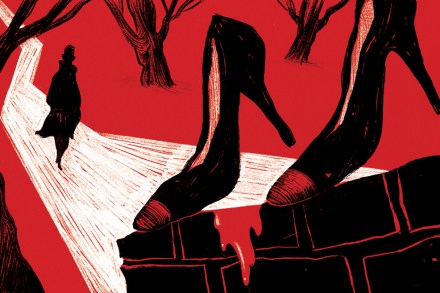
Chris Hargreaves used to be a wellness coach with a promising future in reality television. In 2023, he starred in E4’s Big Celebrity Detox and tried to cleanse Kerry Katona’s soul with piñón blanco seeds. Today, he leads The Shield: a private volunteer police force of hundreds of officers. They plan to begin patrolling Britain’s streets imminently. Hargreaves and his team regard Britain as a place of increasing lawlessness. Many would agree. Shoplifting is at record highs, prosecutions are near record lows and people are asking where the authorities have gone. According to a poll by Merlin Strategy for The Spectator, only around half of British people have spoken to a police officer in the past 12 months.

The lunacy of emotional support animals

Naturally, the start of the new school year is often stressful for pupils. Perhaps those anxious children returning to their classrooms this week could follow the example of Milly, a young Lancashire student. When picking up her GCSE results from her school, Tarleton Academy, near Preston, she brought her ‘best friend’ Kevin – a four-year-old ram. Milly says Kevin is her ‘therapy sheep’. He accompanies her ‘pretty much everywhere’. He was her date to the school prom, wearing a halter to match her dress. Milly seems resilient enough: later this year she is going to compete in the Young Shepherd of the Year competition. Perhaps her unwillingness to be parted from Kevin displays her dedication to her work.

Is the British Council really a ‘nest of espionage’?

I worked for nearly a decade at the British Council in East Asia. Every day, under the guise of teaching English and promoting awareness of British culture abroad, I would compile dossiers on people of interest, take pictures of government buildings and military installations and pass secret documents to couriers to smuggle back to Britain. I would sometimes meet contacts in parks where we would have brief, cryptic conversations beginning with a code line like ‘The geese are flying south early this year’, without ever directly looking at each other. Except of course I did none of these things and neither, I am convinced, did anyone else.

Robert Jenrick: ‘Asylum seekers should be detained in camps’

On a table in Robert Jenrick’s parliamentary office lies the first part of Ronald Hutton’s biography of Oliver Cromwell, a conventional MP who became radicalised by events and usurped a monarch. The shadow justice secretary is very on message when it comes to the prospect of regicide in the Conservative party (‘I’m just doing my job. Kemi is the leader’). But as one who recently travelled to Calais to berate the French authorities for facilitating Channel small boat crossings, Jenrick has found unlikely inspiration in another bloody-minded leader. ‘I’ve been reading biographies of de Gaulle over the summer and he had a line that “Treaties are like roses, they last as long as they last”. I think that’s where we are.

The glorious campness of Reform

It’s a very serious and rancorous time in Britain. Social strife is simmering. The asylum system is at breaking point. The lines on the economics graphs are all going in unsettling directions – the ones you’d prefer to see going down are going up, and vice versa. And inevitably the Overton window is shifting. Though perhaps not in the way any of us expected. Reform is currently odds-on to form the next government. Nigel Farage’s party meets for its conference in Birmingham this week at 35 per cent in the polls. But that’s not because it’s bracingly right-wing. Or not just. It’s because Reform is camp.

The human stories of slavery

With a new history of slavery and the slave trade in the Islamic world just published, I am under strict instructions not to make any fatwa-related jokes. The Holy Trinity, if I can mix my faith metaphors for a moment, of publisher, agent and wife have advised me strongly against it. ‘No jokes about fatwas, please,’ were my wife’s exact words ahead of an appearance at Chalke History Festival. ‘No one finds them funny.’ I disagree. They can be extremely funny. But on balance it may be wisest to err on the side of caution.

There’s nothing ironic about civilisation

A recent photograph on a BBC website startled me. It was of hundreds of books thrown out of a former library in Croydon on to the ground.  It startled me because I had taken an almost identical photograph 34 years before – in Liberia. The books in the University of Liberia had been pulled from their shelves and scattered in similar fashion to those in Croydon. Of course, the books in Liberia were at a higher intellectual level. The capital city of Monrovia was in those days cut off from the rest of the country by the forces of Charles Taylor, and the only way to arrive was by the Steel Trader, a ship owned by a redoubtable old Africa hand, Captain Monty Jones, responsible, at his risk and profit, for revictualling the besieged city.

The painful truth about foster care

The foster care system in this country is collapsing. There are roughly 80,000 children who’ve been removed from violent or neglectful parents and need homes, but there’s a catastrophic lack of people prepared to care for them – a shortfall of around 6,500 foster carers. The rate of decline is terrifying. Every year the small pool of available foster households shrinks and those who do apply to be carers are increasingly elderly. Perhaps you assumed that a generation with ‘Be kind’ tattooed on their wrists would leap to look after the worst off? Not a chance. ‘Be kind’ is an instruction to others, not a memo to self. Neither my generation (X) nor the millennials are interested in stepping up. We rubberneck the tabloid stories of poor abused children online.

Phone-addicted yummy mummies are neglecting their children

As a foster carer and an adopter, I know what neglect looks like. I’ve looked after children who didn’t know what a bed was. Children who arrived at my door with matted hair, rotten teeth and eyes that scanned every room for danger. Neglect smells of mildew and unwashed clothes. It is chaotic, desperate and tragic. But there is also a different, quieter kind of neglect. One that doesn’t look like crisis at all, but it has a profound effect on the children at the receiving end of it. Teachers have been sounding the alarm for years – children starting school unable to speak in full sentences or sit still for even five minutes. Some can’t feed themselves. Some aren’t even toilet trained.

Denmark’s ‘spiritual rearmament’ is a lesson for the West

Something unusual is happening in Denmark – and other countries across Europe, including Britain, ought to pay attention. This spring, Denmark’s Prime Minister, Mette Frederiksen, stood before a group of university students and made a striking statement: ‘We will need a form of rearmament that is just as important [as the military one]. That is the spiritual one.’ Few expected such words from the leader of the Social Democrats, a party which spent much of the 20th century reducing the Church of Denmark’s influence in public life. Yet this was no passing remark. Just days earlier, Frederiksen had announced a major military build-up: increased conscription, a sharp rise in defence spending and intensified strategic readiness.

The coming crash: the markets have had enough

‘The problems of financing our deficits have seriously hampered progress in achieving our goals,’ wrote Labour’s chancellor Denis Healey in 1976 in his letter to the International Monetary Fund (IMF). Half a century on, little has changed. Britain’s numbers still don’t add up. Our demographics are the problem: we’re an ageing population with too few taxpayers. As births struggle to replace deaths, liabilities funded from today’s taxes become harder to sustain. If the picture looks bad now, the next few years will be disastrous. A crash seems almost certain. For years the government has spent more than it raises through taxes. It financed that gap through the kindness of others, or to put it more plainly: debt. Staggering amounts of it.

America’s obsession with British decline

As Sigmund Freud pointed out way back in 1905, everyone feels a bit schizo about Mum. On the one hand, she carried you in the womb, she probably nursed you at the nipple. She made the greatest of sacrifices so that you exist. Heck, maybe you really love her cooking. On the other hand, you have to escape her. The Italians have a brilliantly pejorative word for the man-child who stays in the maternal home far too late in life: mammone. No one wants to be that guy. And to avoid it, sometimes you have to scorn your mother, to break the psychological apron strings. So it is with American attitudes to the Mother Country. The USA had many midwives, but the mother of America was unquestionably Britain/England.

Britain is having its own gilets jaunes moment

‘I heard you want your country back. Ha, shut the fuck up!’ So yelped rap-punk duo Bob Vylan on stage at Glastonbury in June. That televised set became notorious for other reasons – for Vylan’s chant of ‘Death, death to the IDF’, which cost the group their agent, a string of shows and, presumably, another Glasto appearance. But part of me thinks that Britain wouldn’t have faced such a restive summer, rocked by grassroots patriotic protests, were it not for that cretinous tirade against the nation. That and the triumphant return of Oasis, who aren’t afraid of a flag. Everything that has happened since has felt like a defiant middle finger to the Bobs and the anti-pleb sentiment so often pumped out by the arts-schooled elites.