Features

Test match

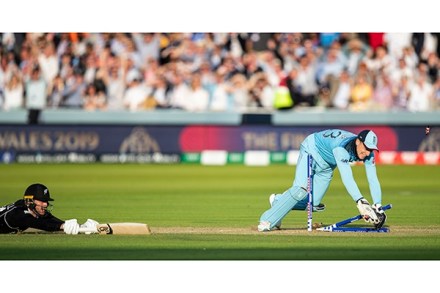
Why do we need tie-breaks and photo finishes? If competitors have been nip-and-tuck all the way, why can’t they just share victory? England supporters who watched the ICC Cricket World Cup final might have been febrile with joy when the extra-time ‘super over’ ended in another tie, giving England the margin on boundaries, but New Zealand’s Black Caps lost by less than a whisker. Why shouldn’t they have halved the triumph? Why shouldn’t Roger Federer, who went toe-to-toe with Novak Djokovic in the longest-ever Wimbledon final, have lifted one side of that famous trophy? The answer is that human beings need resolution. Spectators need to know the thing has been finally settled. Professional sport is a test of nerve; it is not simply a physical contest.
Kent’s new Rose

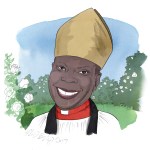
East Kent is bracing itself. Its Church of England clergy are enjoying their last quiet months before Rose Hudson-Wilkin arrives as the new Bishop of Dover in the autumn, replacing Trevor Willmott. History is being made — the C of E is to have its first black woman bishop. But some members are clutching their heads in despair at what they see as Justin Welby’s predictably flashy appointment. Behind the scenes, there’s a lot of sighing going on. Rose Hudson-Wilkin is the Chaplain to the Speaker of the House of Commons. Known for her dangly earrings, she is widely loved in the Palace of Westminster and is in her element as she strolls the corridors in her red clericals, purveying hugs and prayers at moments of political crisis.

Health warning

Everyone agrees something dramatic has to be done to help the NHS. It is crumbling and the canary in the mine is general practice. I work as a psychiatrist but my GP colleagues are almost all frazzled, overworked and frustrated at not being able to give the care they want to their patients. They’re quitting in their droves. So it makes sense that politicians, desperate for a quick and easy answer to an overwhelming and complex problem, have leapt on technology as a solution. And, in particular, on  the idea of an app that offers a GP consultation via your mobile phone. In theory, it sounds great: the patient can dial up, speak to and (via phone camera) see a doctor, who could be anywhere. The poster boy is an app called GP at Hand, run by British start-up Babylon.

Sue the Normans!

Restorative justice for the victims of colonialism is an idea whose time has come. A few years ago, the Indian diplomat Shashi Tharoor suggested Britain pay India compensation to atone for centuries of colonial rule. ‘I’d be quite happy if it was one pound a year for the next two hundred years,’ he said. In April, Cambridge University announced a two-year study into how buildings and wine cellars might have been constructed on the backs of slaves. ‘There is growing public and academic interest in the links between the older British universities and the slave trade, and it is only right that Cambridge should look into its own exposure to the profits of coerced labour during the colonial period,’ said Vice-Chancellor Stephen Toope. Too right.

The ties that bind

It seems a fitting end to an ill-fated premiership. As Theresa May prepares to leave No. 10, a major quarrel erupts between her government and its most powerful ally, the United States of America. Leaked diplomatic cables show Sir Kim Darroch, the British ambassador in Washington, calling President Donald Trump ‘inept’, ‘insecure’ and ‘uniquely dysfunctional’. The funny thing is, the words in his memo are just as applicable to Theresa May’s leadership. Within days, Sir Kim resigns. But every diplomatic crisis is a political opportunity, as President Donald Trump well understands. He even spelled this out in one of his Twitter rants. ‘The good news for the wonderful United Kingdom is that they will soon have a new Prime Minister.

Who’s afraid of no deal?

How bad would a no-deal Brexit really be? This is now perhaps the most important question in politics, and the one provoking greatest disagreement. The answer will help decide whether parliament allows Brexit to happen, and whether Tory MPs bring down their own government. If they think calamity would follow, patriotic rebels might risk a general election to stop the Tories. But what if it would not be so bad? And is there any way of finding out? Almost everyone accepts it will cause problems, but views range from manageable to ‘national suicide’. It is difficult to predict complex events without historic precedent, but there are other reasons for the divergent views. The first is that there is not a single ‘no deal’, but a whole spectrum.

‘Duty howled’

We could all forget about Ann Widdecombe for the past nine years while she was doing Strictly Come Dancing and panto and Celebrity Big Brother and the rest. But now she has risen from the political grave to become a Brexit MEP. Tragically, it has meant cancelling her Christmas panto booking as Chop Suey in Aladdin, which she was hugely looking forward to, but ‘Duty didn’t just call,’ she says, ‘it positively howled.’ So now she is playing Chop Suey to Nigel Farage’s Aladdin. They certainly made an eye-catching entrance to their first plenary session in Strasbourg, turning their backs on parliament while the ‘Ode to Joy’ was played.

Jog on

Forget the cigar, the homburg and the V-for-victory sign. If Winston Churchill were around today, he’d be pounding the streets in T-shirt, shorts and chunky trainers. Jogging is an almost compulsory obsession for any Tory alpha male. Boris Johnson and Jeremy Hunt are forever out running; Michael Gove has lost a drastic amount of weight racing around west London; and Boris has revealed he’s down to 15 and a half stone, from 16 and a half. He’s also declared he’d freeze obesity taxes on fattening food — the answer to losing weight was more exercise, he said — and admitted to failing to keep up a vegan diet (he likes cheese too much). But he is certainly looking slimmer since he started going out with Carrie Symonds, 24 years his junior.

Watch out

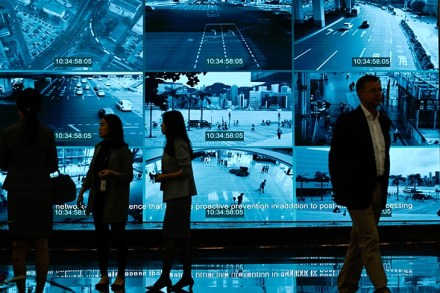
I was recently treated to a small taste of the real China. It was in the incongruous setting of a vast conference centre in east London, directly under the flight path of City airport. On assignment for the BBC, I found myself wandering the stalls of Europe’s largest international security technology exhibition, filming for a new series on criminal justice. As soon as I arrived in the main exhibition hall with the production team, we were greeted by roving cameras, high-definition displays, drones and every variety of audio and video surveillance kit. All bar a handful of stands were manned by Chinese representatives, smiling politely, if somewhat stiffly, as we approached them.

The social politics of Eton

Every prime minister is a sociologist. Theresa May drew a distinction between citizens of somewhere and ‘citizens of nowhere’, a sort of riff on David Goodhart’s distinction between Somewheres (rooted, provincial, less well off) and Anywheres (snooty, international, at home on planes and in the corridors of power). Now Boris Johnson segments the country in a fresh way. He talks about the existence of both rural and ‘oppidan’ Britons feeling ‘under-invested, excluded’ and that ‘their lives and their futures weren’t as important’, and he implicitly opposes them to the elites. Why oppidan? Oppidan is essentially a posh word for ‘townie’ (from the Latin oppidum).

All by myself

As I get older I find the idea of wanting to be in a couple more and more bizarre. I’m not talking about sex — which anyway often becomes less frequent after years of familiarity — or marrying for financial security. No, I’m puzzled about people’s obsession with getting a permanent companion. There are all sorts of websites and advice columns purported to help us reach this goal. I used to receive ‘taster’ emails from Rori Raye, a bubbly American lady with blonde curls, author of How to Have the Relationship You Want. She offered to show us, for a fee, how to be the woman men always fell for. Our ultimate aim should be to ‘get the ring on the finger’ — basically, to entrap the elusive male.

Fatalist error

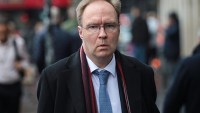
When so much of the Brexit debate has consisted of slogans and unexamined assertions (‘cliff edges’, ‘crashing out’ and the rest), it is welcome that a more substantial argument has been made by Sir Ivan Rogers, former UK ambassador to the EU. He has been making a series of well-received speeches, some of which have been so popular that they have been published as a book (and recently, on The Spectator’s website). He has long been pessimistic about the chances of reaching a Brexit settlement any time soon, and resigned in January 2017 when his concerns became public. He deplores the referendum decision but regards it as necessary for it to be carried out. But he is deeply pessimistic about the outcome.

Battle of Hastings

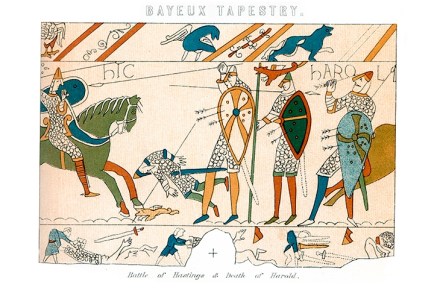
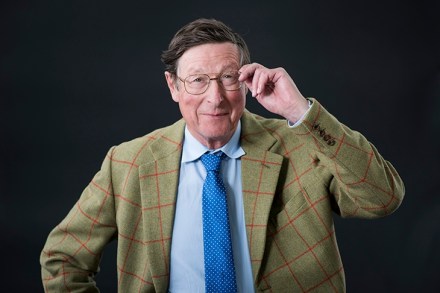
Sir Max Hastings, whom I engaged as editor of the Daily Telegraph in 1986 and who stayed in that role for about nine years, seems to have installed himself at the head of the rabid mob of journalistic haters of Boris Johnson. In recent pieces in The Spectator and the Guardian he has described Boris as ‘a tasteless joke’ interested only in ‘fame and gratification… a scoundrel or a mere rogue’ (a subtle distinction), and in any case a man afflicted by ‘moral bankruptcy’. Max concedes that Boris is likely to be the next prime minister and preemptively accuses him of conducting a ‘celebrity government as in Ukraine and the US’.

Doctor who? | 27 June 2019

Last October, Phil Coleman, a journalist on the Carlisle-based News & Star, went to cover the trial of Zholia Alemi, a 56-year-old consultant psychiatrist who was accused of forging the will of an 84-year-old dementia patient in an attempt to inherit her £1.3 million estate. During the trial, Phil realised this complex scam could not have been the work of an amateur fraudster, and suspected previous mischief. How right he was. It turned out that Alemi had been practising in the NHS for 23 years without a medical qualification. Originally from Iran, Alemi moved as a young woman to New Zealand where she claimed she had graduated in medicine from the University of Auckland in 1992.

Casanova Corbyn

He has been married several times, has a way with the ladies and always seems to land on his feet no matter how colourful his romantic life. Not even the 20-year age gap between him and his current squeeze has tripped him up in the court of public opinion. His looks aren’t conventional and yet women seem to find our potential new prime minister unfeasibly attractive. I don’t get it, personally. But maybe I’m in the minority. When an old schoolfriend of mine met him at a business event recently she posted pictures of herself on Facebook hugging him. He clearly had her completely captivated. But as he could be the next leader of our country, should we not think a little more closely about his private life?

Prophets of gloom

There’s a lot of anger about — and it’s not pleasant. But at least it means people are engaged as well as enraged. What’s more worrying and increasingly irritating is the negativity, the drip-drip of despondency that’s been allowed to seep into so much of daily life. Everything is broken! All is lost! The end is nigh! Which is fine if you’re a Jehovah’s Witness or believe that the eschatological prophecies of the Bible have pretty much all come to pass. Every day we are told repeatedly that ‘catastrophe’ awaits.

Alms for arms

In the rush to declare Isis dead now that its caliphate has been routed from Iraq and Syria, it’s easy to forget that its Nigerian fellow traveller, Boko Haram, is still going strong. April’s five-year anniversary of the Chibok schoolgirls’ kidnapping, for example, passed with barely a celebrity tweet to mark it, despite the fact that 112 of the girls are still missing. Nor is much fuss likely to be made next month, when an insurgency that has killed nearly 30,000 will enter its second decade as violent as ever. Out of sight and out of mind, Boko Haram’s power is growing. And to find out why, all you have to do is follow the children who beg on the streets of Nigeria’s northern cities.