Samir Shah

Dr Samir Shah CBE is the Vice Chair of History Matters at Policy Exchange. He previously served on the Commission on Race and Ethnic Disparities.

How will Rishi Sunak’s Hinduism inform his premiership?

From our UK edition

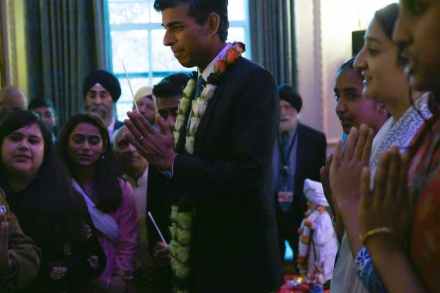
When Rishi Sunak was elected as an MP, he swore his oath of allegiance in the House of Commons on the Bhagavad Gita, one of Hinduism’s most sacred texts. Many – if not most – people think that Hinduism is a religion of peace: an idea that’s taken root thanks to Mahatma Gandhi and his philosophy of nonviolence. The truth is that the Bhagavad Gita is about war. The text consists of the dialogue between Lord Krishna and Prince Arjuna on the battlefield. Prince Arjuna is facing amoral and emotional dilemma. The battle is against his own kith and kin – many of whom would be sure to be killed. Arjuna asks Krishna whether he should renounce the war. Krishna’s counsel is unambiguous: Arjuna’s duty is to waste them. Arjuna wins the war, killing quite a few himself.

China and India are right to keep coal

From our UK edition

‘The end of coal is in sight’ declared Alok Sharma, president of this year’s climate summit, to delegates in Glasgow attending COP26. Sharma was heralding the fact that more than 40 countries had agreed at the conference to phase coal out in the coming decades. But (and it is a very big but) along with the US and Australia, two of the world’s largest producers and consumers of coal declined to sign: India and China. COP26 came to an end this week. But in the media coverage of the conference, there has been zero effort made to understand why two of the biggest consumers of fossil fuels have pushed back at attempts to reduce coal use. It is much more comfortable to run stories about how poor countries around the world are suffering instead.

The Oriel dons are right: Rhodes should not fall

From our UK edition

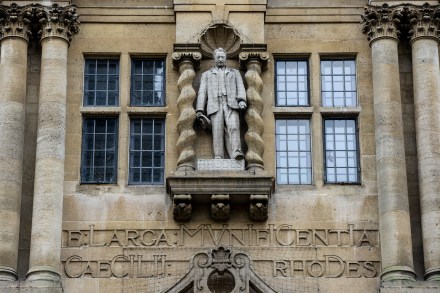
Cecil Rhodes’ contemporary, Rudyard Kipling, put it best: 'If you can keep your head when all about you are losing theirs…' That Rhodes’s statue will not fall is the result of a serious, difficult, but careful collegiate decision by the board of 47 fellows of Oriel College. It is good that Oriel dons kept their collective heads, for all about them – as Policy Exchange’s History Matters Project has documented in recent months – are institutions far too readily acquiescing to noisy activism, demanding that condemnation, denunciation and erasure is the only way to go. 'Retain and explain' is a far better path to follow than the one known as 'cancel culture'. What does 'retain and explain' mean in practice?

Faux fury against the race report is unsurprising

From our UK edition

Back in the 1960s, my brother Asim and I were smitten by the magical Manchester United trio of Law, Best and Charlton. We became London Reds and travelled on the MU Supporters’ Club coach to Old Trafford to watch our team — and we always went to see them play London clubs. But we stopped going in the 1970s; we feared for our physical safety. Marauding bands of skinheads outside the grounds were on the lookout for a spot of Paki-bashing. Instead, during the 1970s, we went on Anti-Nazi League marches and routinely confronted members of the National Front, a fascist party that was briefly the UK's fourth-largest party in terms of vote share.

The sheer hypocrisy of the food culture wars

From our UK edition

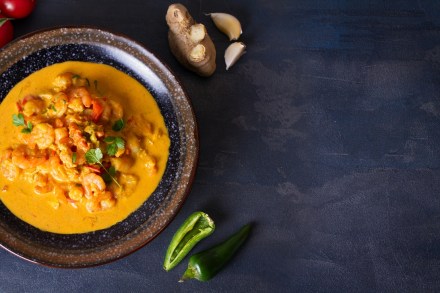
Alison Roman, a celebrity chef and Instagrammer, has come under attack from woke warriors because of her dish ‘#thestew’. Her crime? The recipe uses spiced chickpeas, coconut, and turmeric – and Roman does not call it a curry. Once again, we are witnessing the sorry sight of people, organisations and institutions crumbling in the face of those determined to bring ‘white’ culture to its knees. Food publishing companies are reviewing their recipes to check for cultural sensitivities.

The success of British Indians is troubling for some. Why?

From our UK edition

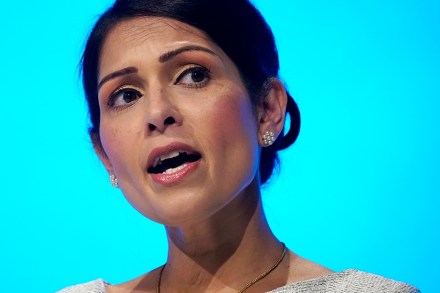
When Priti Patel told Labour MPs that she didn’t need any lectures on racism, they seemed to take it as a declaration of war. Last week, 32 of them signed a letter accusing the Home Secretary of ‘gaslighting’ black people’s experiences. The social media warriors were out in force, rebuking her for not being authentically ethnic. She was attacked for being a ‘coconut’, brown on the outside and white on the inside. It’s not the first time she has faced hostility for not conforming to expectations: one article last year called her ‘a product of internalised whiteness’. Mahatma Gandhi is also now under fire, with a petition to remove his statue in Leicester attracting more than 6,000 signatures.

The state of the political interview

From our UK edition

The humiliation of Chloe Smith at the hands of Jeremy Paxman last night was likened by one twitterati to watching a cat playing with a mouse before devouring it.   Of course, Smith was hung out to dry by Osborne&Co. But I want to address another, as yet unremarked upon factor: the age gap between Paxman and Smith. Paxman is 62; Smith is 30. In the words of Robin Day, politicians are ‘here today, gone tomorrow’. The result is that as the years go by, politicians get younger and political interviewers get older. In the days when the political class was a generation or two older than the interviewing class, the tone was deferential, which was no good for democratic accountability.

Race is not an issue in the UK anymore

From our UK edition

For the past decade Samir Shah has been chair of the Runnymede Trust, devoted to studying ethnicity. Now, he says, the real problem in Britain isn’t so much racism, but "cultural cloning". I first arrived in this country from Bombay in January 1960. Harold Macmillan had yet to make his Winds of Change blowing through Africa speech. Coronation Street hadn’t appeared on our television screens. As an eight-year-old child, I recall looking up at a huge advertising hoarding in Notting Hill Gate showing an attractive blonde offering very smart chocolates. I loved chocolates and they looked fantastic, but I was depressed. Why? Because I genuinely believed that those chocolates were for white people only. Fast-forward 27 years and I was appointed head of current affairs at the BBC.