Arieh Kovler

Arieh Kovler is a political analyst and writer based in Jerusalem.

Hamas is taking revenge on the gangs of Gaza

From our UK edition

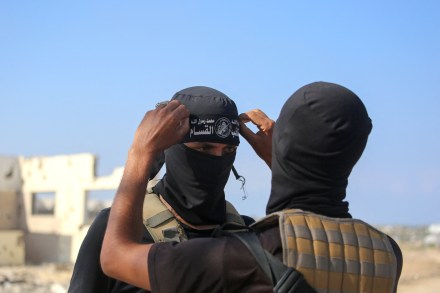
As the ceasefire between Israel and Hamas came into force, perhaps Gazans thought they might finally get some brief moment of peace. If so, they were wrong. Almost as soon as the IDF withdrew to the new Yellow Line inside Gaza, the bullets started flying and Palestinians were once again being killed: but this time, it was Hamas pulling the trigger. Their first target: the Doghmush clan.  Until it took power in a coup in 2007, Hamas was essentially just the biggest armed gang in Gaza, and it hasn’t forgotten this  Like every society, Palestinian society has its faultlines that divide its people into different smaller groups. There’s politics: Hamas, Fatah, the Popular Front for the Liberation of Palestine, and so on.

Trump’s Gaza plan is nothing but a mirage

From our UK edition

Since Donald Trump’s inauguration, Israelis and Americans have been living in two parallel worlds. Israel’s began with the hostage and ceasefire deal in Gaza, which has seen Israeli captives finally released by Hamas after nearly 500 days. Israelis have witnessed the grotesque spectacle that Hamas made of the hostages, forcing them to perform in front of screaming crowds before being bundled into Red Cross vehicles, and then the joy of those same hostages reuniting with their families and beginning to share their stories. All the while, Donald Trump and his special envoy Steve Witkoff have urged Israel and Hamas to keep the ceasefire and continue negotiations to free all the hostages.  What deal can Israel and Hamas possibly agree to now that satisfies Trump's demands?

How Trump shaped the Hamas-Israel ceasefire deal

From our UK edition

After days of increasing optimism, Qatari prime minister Mohammed bin Abdulrahman Al Thani summoned the press last night to announce that Israel and Hamas had agreed on a ceasefire and hostage deal. In the hours since, Israel has accused Hamas of backtracking on the agreement and dozens of people have been killed in Israeli strikes on Gaza. A planned cabinet vote on the deal in Israel has been pushed back, yet Hamas insists it is still committed to the agreement, which is due to come into effect on Sunday. The deal is complicated, delicate and full of moving parts. Phase one will see Hamas release 33 hostages, both living and dead: the old, the sick and women, including female soldiers.

The leak that’s haunting Netanyahu’s government

From our UK edition

Early September, days after the gruesome discovery of six murdered Israeli hostages in a tunnel in Gaza, a dramatic scoop appeared in Bild. The German newspaper had obtained a secret internal Hamas document, supposedly obtained from Hamas leader Yahya Sinwar’s personal computer, that revealed Hamas’s hostage negotiation strategy. The document claimed that Hamas was deliberately exploiting the divisions in Israeli society, manipulating the families of the hostages to help blame Benjamin Netanyahu’s government for not making a deal.

There may soon be peace in Lebanon

From our UK edition

If the leaks and briefings are to be believed, Israel is getting ready to end its war in Lebanon. With the US pushing hard, and after a successful military campaign, reports say that Israeli leaders are looking to make a deal. Lebanese Hezbollah joined Hama’s war against Israel on 8 October, 2023; around 100,000 Israeli civilians have evacuated the border area. Almost immediately after Israeli troops moved into the Gaza Strip, determined to oust Hamas and release the hostages captured on 7 October, there were negotiations, brokered by Qatar, Egypt and the USA, to try and reach some kind of deal that would free the hostages and end the war. Apart from a brief ceasefire in December, that deal is still being unsuccessfully negotiated today.

Why Israel didn’t hit Iran where it would really hurt

From our UK edition

In Christian countries, it’s typical to put things off until ‘after Christmas’ when the new year begins. In Israel, the equivalent is ‘after the festivals’. The Jewish autumn festivals begin with Rosh Hashanah, the Jewish new year followed by Yom Kippur and the eight-day festival of Tabernacles, Sukkot. Throughout his career, Netanyahu’s talent has been finding people he can blame for restraining him This year, Israelis cowered in their bomb shelters on 1 October, the day before Rosh Hashanah, when 180 Iranian ballistic missiles rained down on the country.

Can Israel ‘win’ its war against Hezbollah?

From our UK edition

Israelis awoke today to the unsurprising news that the IDF had crossed the border into Lebanon. The incursions, which had been expected for days and heavily briefed as imminent yesterday, are supposedly ‘limited’ and ‘targeted’ – aiming to destroy fortified Hezbollah positions overlooking the Galilee and prevent the terror group from using short-range weapons like RPGs against Israeli towns.  The IDF has learnt its lessons from the shame and failure of the 2006 war, while Hezbollah was overconfident after its successes The invasion came after two weeks of astonishing successes in the war against Hezbollah.

Israel wants war with Lebanon

From our UK edition

The war that neither side wanted began this week in earnest. After last week’s exploding pagers and walkie-talkies reportedly injured 1,500 members of Hezbollah’s military forces, the Israeli Air Force began a broad campaign of airstrikes against Hezbollah targets across Lebanon, assassinating several senior leaders of the group while targeting long-range missiles hidden in warehouses and the roofs of private residences. Hezbollah in turn fired long-range missiles for the first time, including a half-tonne monster that targeted the Tel Aviv region.  However, just days into the higher-intensity conflict, suddenly the media this morning was full of reports of an imminent ceasefire. What happened? This most recent round of conflict began on 8 October last year.

The Hezbollah pager bomb plot has Israel’s fingerprints all over it

From our UK edition

At the end of the 2014 film Kingsman: the Secret Service, the plucky spy hero is in trouble deep in an enemy base. Suddenly his tech wizard figures out that he can hack into the microchips inside the enemies’ heads and make them all explode. The bad guys all go boom. Hezbollah fighters must be asking themselves what other tricks Israel might have up its sleeves On Tuesday night, the spy thriller trope became real. Across Lebanon, Hezbollah operatives’ secure pagers exploded. Security camera footage showed the small explosions in supermarkets and shops, leaving Hezbollah terror operatives bleeding or worse. More than 3,000 people were injured in the hundreds of blasts, and at least nine were killed, according to the Lebanese Health Ministry.

America’s Russian influence media scandal is unlikely to be the last

From our UK edition

Tim Pool, Benny Johnson, Dave Rubin and Lauren Southern aren’t household names, but they each have enormous, dedicated followings online. Their podcasts and videos all promote similar narratives: liberal values are destroying the West, Ukraine is America’s enemy, Covid vaccines are harmful and pointless and that Donald Trump, though flawed, is the United States’ last hope before it becomes a Communist murderdome ruled by trans Venezuelan drug gangs. When these influencers came together in November last year to launch Tenet Media, it didn’t make a lot of sense. Each already had their own brand and platform. How would this new media company benefit them?

Netanyahu’s speech to Congress won’t achieve much

From our UK edition

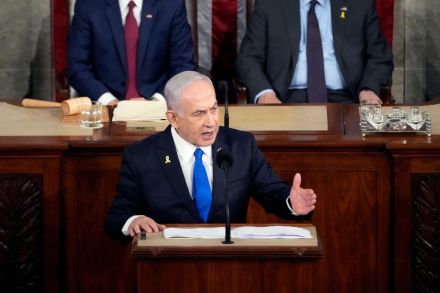
Nearly ten months after Israel’s worst day, Prime Minister Benjamin Netanyahu made history far away in Washington DC when he became the first world leader to address Congress four times. Even Winston Churchill only managed three. The last time Netanyahu spoke to Congress was in March 2015, as the Obama administration was finalising the Joint Comprehensive Plan of Action, better known as the ‘Iran Deal’. Netanyahu arranged the session with House Speaker John Boehner against Obama’s wishes, and made a charged and politicised speech urging Congress to reject the deal. The speech was seen as colluding with the Republicans to meddle in US domestic politics, and the damage it caused to the Israeli government’s relationship with the Democratic party hasn’t fully healed even today.

Why Israel’s ultra-Orthodox don’t want to serve

From our UK edition

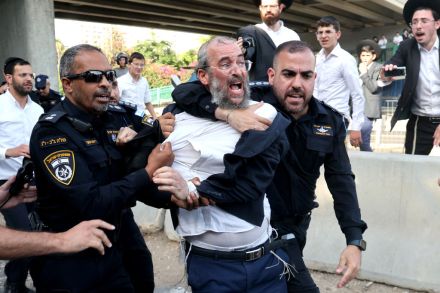
In the middle of a war, Israel’s government is wobbling. Not because of the policy failures that led to the country’s worst disaster ever when Hamas invaded on October 7, 2023; not because of the slow progress of the war, its high human cost or its failure to recover the hostages; not even because of the looming threat of a major escalation in northern Israel and Lebanon. No, the threat to the stability of Benjamin Netanyahu’s coalition comes from within, after the Supreme Court ruled that the government must start drafting Haredi (ultra-Orthodox Jewish) men into the Israel Defence Forces.

Netanyahu’s strategy in Rafah isn’t working

From our UK edition

On 7 April, six months after the October massacres in southern Israel, Prime Minister Benjamin Netanyahu told the public that the country was just ‘one step away from victory’ in its war against Hamas in Gaza. Nearly two months later, Israel hasn’t taken that step yet. The war continues. No more hostages have been released alive. Hamas rockets still fall inside Israel, including a barrage earlier this week that rained down on the suburbs of Tel Aviv. The two leaders of Israel’s war effort haven’t spoken to each other for a fortnight In the meantime, international public opinion has hardened against Israel. Some countries, like Colombia, have broken diplomatic relations. Turkey has announced a trade embargo.

Why Biden’s plan to sanction an IDF battalion could backfire

From our UK edition

The Biden administration is planning to announce sanctions against a part of the Israel Defence Forces (IDF). On the one hand, this would be the latest in a series of US and European sanctions targeting Israeli settler organisations linked to violence against Palestinians. On the other, it’s an unprecedented legal action by the United States against the Israeli military itself.  One of the long-running divisions in Israel society is between Haredi (ultra-Orthodox) Jews and the rest of the public. Originally a tiny minority, Haredi Jews now form nearly 14 per cent of Israel’s population. The biggest tension is over the issue of military service: while most Jewish men are drafted into the IDF at 18 by law, Haredi men are exempt.

Netanyahu can’t ignore the scale of Iran’s attack

From our UK edition

Today was supposed to be the day we sent our kids back to nursery. For two weeks, my toddler and baby have been home with a nasty stomach bug that turned out to be shigella, a bacterium that causes dysentery and that has been ripping through Israeli troops in Gaza. Then, on Saturday night, Rear Admiral Daniel Hagari, spokesperson for the IDF, announced that schools and nurseries would be closed nationwide today, due to the Iranian threat.  The parents' WhatsApp groups grumbled that this, alone, was a disproportionate response by Iran, throwing Israel into turmoil the week before Passover. But then the news reports became starker: we should expect a drone and rocket attack within hours.  Israel and Iran have been fighting a shadow war for decades At around 10.30 p.m.

Israel has faced its darkest day for 50 years

From our UK edition

While preparing to head out to synagogue to join the dancing and celebration for the Simchat Torah festival, the rocket sirens started sounding. As we grabbed the kids and ran to our safe room (all new Israeli houses are built with one), I assumed there must have been some incident overnight, some Israeli escalation to trigger this rare but not unprecedented rocket fire on Jerusalem. I was wrong. In a mass surprise attack, Hamas launched a huge barrage of rockets from Gaza at southern and central Israel. But this bombardment was only cover for the real attack: hundreds of armed Hamas terrorists, organised in military fashion, on technical vehicles, poured out of the Gaza strip and headed towards defenceless Israeli towns and villages nearby.

Israel’s politics is collapsing

From our UK edition

Here we go again. On Monday, Naftali Bennett, Israel’s Prime Minister, announced that he would bring a bill to dissolve the Knesset and trigger yet another election. After a seemingly endless procession of elections, Bennett’s rainbow coalition was a brief respite from constant campaigning that exhausted the populace and bankrupted the political parties. Comprising factions of the right, left and centre, and even including the Islamist Ra’am party, the diverse government agreed to park controversial issues like the Israel-Palestinian conflict. Instead, it’s been focused on policies that its members could agree on, like pandemic management, Iran and economic reforms. From the very beginning, things were shaky.

Naftali Bennett, the millionaire poised to be Israel’s next prime minister

From our UK edition

Jerusalem In April 2019, Naftali Bennett received an unpleasant surprise. As the votes were counted in Israel’s general election, it became clear that his New Right party had not passed the 3.25 per cent electoral threshold needed to stay in Israel’s parliament, the Knesset. Bennett had lost his seat, his new party had failed and his political career looked like it was over. Two years, three more elections and a global pandemic later, Bennett is on the verge of ending Benjamin Netanyahu’s 12-year rule. Barring a spectacular reversal, he is about to become Israel’s prime minister. He has found himself in the right place at the right time, heading (though not necessarily leading) an eclectic coalition of parties from the left, right and centre.

Israel scraps its redundant vaccine passports

From our UK edition

So farewell, then, to Israel’s vaccine passport, the green pass. Less than three months after coming into effect, the Covid vaccination certification scheme was scrapped today, along with almost all of the remaining Covid-19 restrictions in public places. Israel was the first country to introduce a vaccine passport back in March. Cafes, bars, restaurants, gyms and plays were allowed to reopen to the public after months of lockdown, provided they only admitted vaccinated (and recovered) people. The pass took the form of a QR code downloaded from the health ministry or stored in a phone app. The scheme was vocally opposed by a small and passionate minority, but most Israelis were just relieved to be able to return to something approaching normality.

Inside Israel’s Iron Dome

From our UK edition

A dramatic photo from the Gaza strip taken in the early hours of Friday morning looks like something out of a Marvel film. On the right, rockets fly from Gaza. The gentle trajectory of their parabolic curves shouldn’t fool anyone: these are unguided explosives travelling at hundreds of miles an hour towards an Israeli town. On the left, each one snaking a unique, winding path, interceptors from Israel’s Iron Dome anti-rocket system shoot up to meet the missiles. In 2001, when Hamas started firing rockets from Gaza into Israel (and, at that time, the still-extant Israeli settlements in Gaza), the terrorist organisation introduced a new weapon that would change the strategic picture of the Israeli-Palestinian conflict.