Exhibitions

Two of the most interesting British artists working today

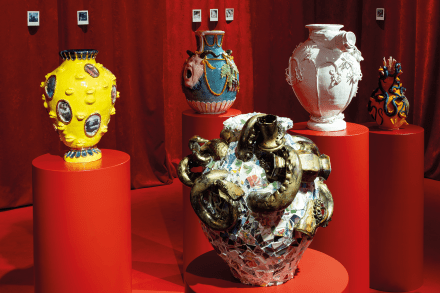
The Frieze fairs are the biggest event in London’s art calendar, and this year I managed to miss them. The reason for my non-attendance was the riotous opening of a group exhibition at a townhouse on Bloomsbury’s John Street. It was a blast but I awoke the next day feeling like I’d been hit by a freight train, and was thus ill disposed to pass the afternoon at yet another iteration of the capital’s silliest trade show. Her work is scary – I’ve yet to see a Pritchard sculpture that doesn’t emit pronounced hints of bad juju The party was great, but the art was better. The main draw was the work of a sculptor called Helen Pritchard, who is, I think, one of the most interesting artists working in Britain today. It’s not saying much, but Pritchard (b.
How I wish I could have seen Gordon Matta-Clark’s death traps in the flesh

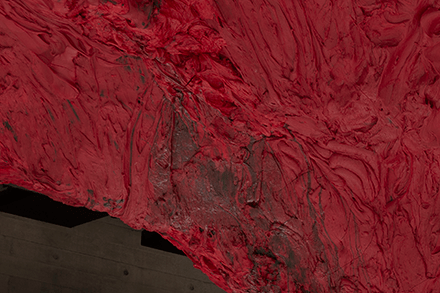
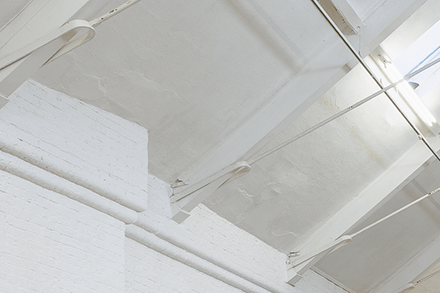
Architecture can’t be exhibited, other than indirectly in drawings, models and photographs. But this is even more true for Gordon Matta-Clark and his anarchitecture: drastic, geometric cuts carved out of derelict buildings that exist fleetingly, before being demolished with the buildings soon after. For the bulk of us not lucky enough to have experienced their monumentality in the flesh, his notoriety is established by his records. A new exhibition at the De La Warr Pavilion presents a modest slice of his vast archives. Matta-Clark’s architectural training at Cornell must have left him with a healthy contempt for the architectural establishment.

The RA’s triumphant new exhibition

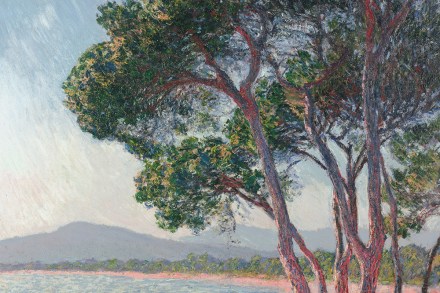
What a show at the Royal Academy. You go straight into a room of Cézannes and Renoirs and that is how it continues, with one coup de théâtre after another, at the hands of Monet, Signac, Braque, Matisse, Derain, Bonnard and more, all of them in thrall to the astonishing light and colour of the Côte d’Azur. The completion of the Paris-Lyon-Méditerranée railway suddenly made this spectacular seaside accessible It hadn’t always been like that. These artists, Cézanne excepted, came from northern France and knew nothing about the southern coast. What changed it all was the completion of the Paris-Lyon-Méditerranée railway in 1860, which suddenly made this spectacular seaside accessible. Cézanne was from neighbouring Provence, and he arrived on the coast before anyone else.

The Turner Prize is only 50 per cent dreadful

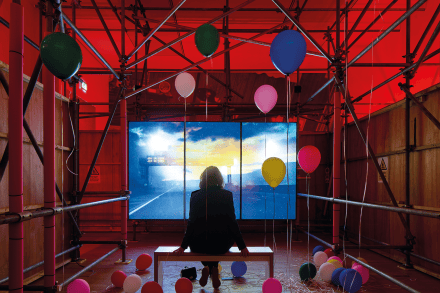
Nobody ever believes me when I tell them that my relatives founded Middlesbrough but it’s entirely true. Having raised the money to build Stephenson’s Rocket, my Quaker forebears realised that, if only there was a port nearby, there might be options for export. Their brainwave gave birth to ’Boro, a town now widely assumed to be the Detroit of England. It’s an interesting place: there’s no grand architecture, but it does at least have the vestiges of the old ICI chemical plant, a complex so prominent that it supposedly inspired the cityscapes of Blade Runner. There’s no romanticising it, though: Middlesbrough is deprived to the extent that I should probably be paying reparations.

The singular vision of Quentin Bell

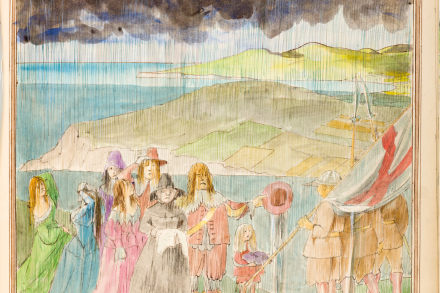
Every visitor to Charleston Farmhouse will know the work of Quentin Bell even if they don’t realise it. He made the distinctive clay colander lights there, and many of the zany sculptures and ceramics. The son of Vanessa Bell, he grew up at Charleston, and later, when he was of great age – and even greater beard – he led a campaign to ensure the place was properly preserved. But what was Bell’s work really like? This exhibition gives us about 100 examples so that his singular vision emerges, and guess what, for all the progressive modernism of his background, he had a taste for Victoriana, fairground illusionism and the Belle Époque. His reliefs are dancers out of Degas, his figurines dressed like Manet’s bar attendant.

When will the art world acknowledge this master?

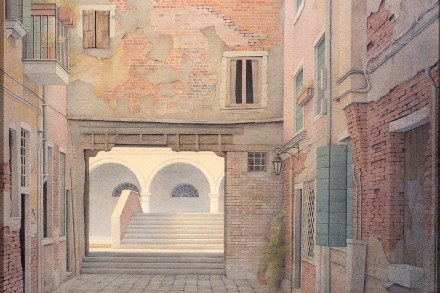
Watercolours can be fatal for your standing in the art world. ‘As soon as you say you paint in watercolour,’ says Gerard Stamp, ‘you can see people popping you into a pigeonhole – ah, you’re a Sunday painter doing vases of flowers.’ There are many flaws in the aesthetics of the ‘art world’, but this one is unusually absurd. Stamp’s paintings are some of the most beautiful of our time. ‘I presented one to Queen Elizabeth II when she opened Norwich Cathedral Hostry on behalf of all who love the Cathedral. I had an exhibition there… and showed her round together with the Duke of Edinburgh, who took me aside, pointed to a large charcoal drawing and said: “How the bloody hell did you do that?” I’m told the painting is still hanging in Sandringham.

The new fourth plinth is decidedly misjudged

As I sat down to write this article, an artist friend phoned me to deliver a pithy but convincing defence of public art: it exists, he said, to extract high culture from its supposedly elitist setting, making it visible to an audience who might otherwise feel excluded. This made me think back to my own formative encounters with the art world in the late 1990s and 2000s, most of which I owe to public commissions in the northeast of England. At that moment, a Newcastle-based commissioning body called Locus+ was in close dialogue with some of the world’s best artists: they had Douglas Gordon set fire to a grand piano and Chris Burden sail a model ship from the Fair Isle to Newcastle. They enabled Fiona Banner to melt down a Tornado warplane and reconstitute it as a giant bell.

Finally, a proper, grown-up retrospective from the Tate

A month ago in Hampstead, a work of art stopped me in my tracks. The piece was a vast rectangular painting on board, 7ft tall and 5ft wide, almost entirely covered in a thick layer of black acrylic save for three rectangular apertures cut through the board: windows onto something yet darker. At the composition’s fringes, where black faded to grey, it was just possible to make out the collaged vestiges of the images lying below: monochrome grids of old passport photos and shots of grand plantation mansions. Below the anger lies a depth of artistic soul-searching What looked like a long metal soap rack protruded from the surface, its bars encasing an image of a sculpture of a headless female figure.

Finally: a museum that refrains from moralising

Hull is a city of many quirks, but I didn’t expect a mermaid. Seriously: an actual mermaid, mounted in a case on the top floor of the Maritime Museum. From head to fishtail she’s about a foot and a half tall, and look away now if you treasure your illusions, because even allowing for the taxidermy process it’s clear that Disney has not been entirely frank with us. Her skin is leathery and the colour of tar. Her glass eyes stare beadily, and she bares tiny teeth in a silent, eldritch shriek. ‘Probably a monkey stitched to a fish,’ the curator told me. The Spectator always gets the inside track. Two old favourites – the stuffed polar bear known to locals as Erik and a 40ft right whale skeleton – are back Still, there are no spoilers on the signage.

A perfect little exhibition on the Isles of Scilly

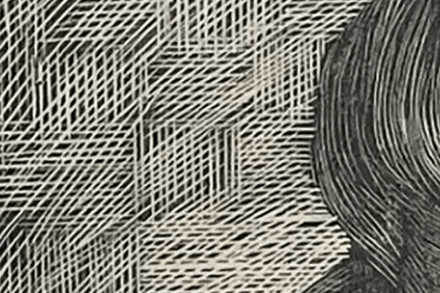
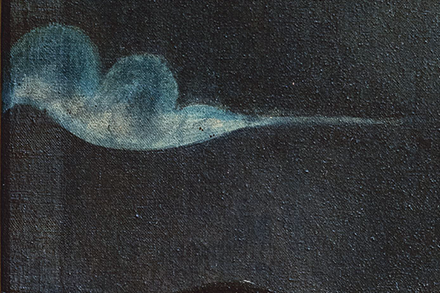
I was in the most south-westerly pub in Britain, the Turk’s Head, on the Scilly island of St Agnes (population: 75) when I noticed a poster advertising a local exhibition of the work of ‘renowned artist and birdwatcher Hilda Quick, 1895-1978’. I had never heard of her, but her work on the poster, ‘The Pursuit of Art’, was compelling. A stylish wood engraving from the 1920s, it showed female art students drawing a male life model. This was the new equality Hilda Quick would have discovered when she left her native Penzance to attend the Central School of Arts and Crafts in London in 1919.

Why does anyone take Ai Weiwei seriously?

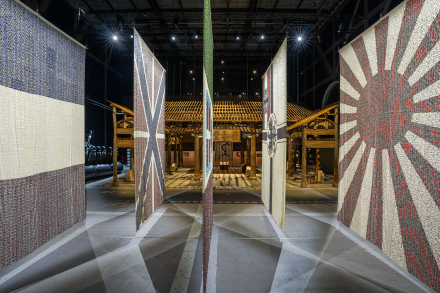
When Ai Weiwei (b.1957) arrived in Europe in 2015, fresh from state-imposed house arrest, he was greeted as a hero. Museums and galleries fell over themselves to host exhibitions devoted to the West’s new favourite dissident – even while those galleries continued, mysteriously, to participate in Chinese art fairs. Nobody dared say it at the time, but his actual art – vast, chaotic installations and whimsical sculptures that drew on Chinese folklore – was even then just a bit dull. Soon enough, the artist was positioning himself as the voice of the global dispossessed, in the process (to borrow someone else’s phrase) morphing into a kind of Chinese Banksy. His work became self-aggrandising in tone and ever more naff in form, in the process losing any trace of subtlety.

Bring back the old Tube seat designs!

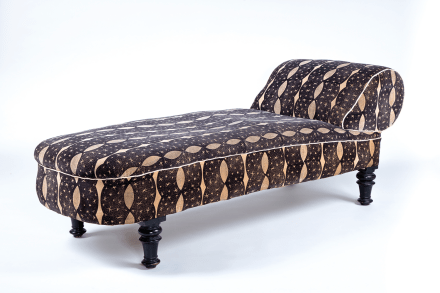
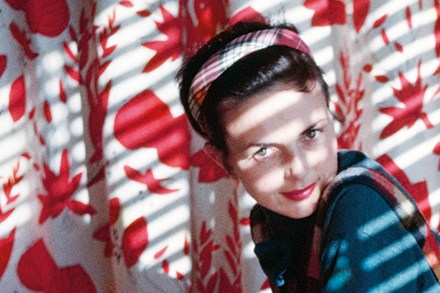
Enid Marx once pondered ‘whether postage stamps are fine or industrial art. In my view the question rests on the quality of a design rather than its purpose. It is generally agreed, for example, that the work of Thomas Bewick is fine art, even when it is merely the engraving of a “trade card”.’ Marx was a textile designer, book illustrator, lino-cutter, wood-engraver, poster illustrator and, yes, postage-stamp designer (‘The calling card of a nation’, as she put it) and in all these things, the quality was unquestionable. Her unique, memorable designs were absorbed, unknowingly, by any number of people. Her best-known work was the sturdy moquette fabric she designed for seats on London Underground in the 1930s.

Damien Hirst should burn down his gallery 

I love my friends at the loucher fringes of the art world, but every now and again, someone does something so obviously stupid that it calls certain such ties into question. Last week, a pal’s poor judgment engendered a Salo-grade spectacle so nightmarish that I can’t bring myself to elaborate. Suffice to say: some parties present will never shake off the trauma; and that the instigator was extremely lucky to avoid castration. It gets worse, too. I’d just returned from Margate, where I’d spent ages taking notes on the locale’s second-most-famous artist: a noisy, blue-haired ceramicist called Lindsey Mendick (b.1987). Mendick is fluent in the art-historical resonances and material subtleties of her chosen medium.

Lartigue’s photos are made for the Insta generation

Will photography as an art form survive the age of Instagram? Now that we think we are all photographers, and curators and collectors too, constantly cropping, sifting, saving and storing, our sensibilities risk becoming blunted, and our attitudes blasé. Two new shows confirmed to me that galleries are going to have to be clever to maintain photography’s hard-won status. In Milton Keynes, the MK Gallery hosts a new retrospective of the photographer’s photographer, Jacques Henri Lartigue (1894-1986).

The cult of Kahlo

A Max Beerbohm cartoon famously reduced Arthur Wing Pinero (author of that interesting play, The Second Mrs Tanqueray) to a single eyebrow and a fur coat. Frida Kahlo’s fame rests upon little more: not so much anything she painted but her eyebrows – or should that be eyebrow? – and her moustache. If you get the impression that her output contains an awful lot of images of her face, you would be right. She painted 55 self-portraits – more than a third of her output. Hers is a strange cult, but a cult it is, and Making of an Icon is what the Tate exhibition subtitle says, not ‘Making of an Artist’. The show is drawing the pilgrims in record numbers.

Anish Kapoor – spectacular, pompous and vulgar

I miss the New Labour years, when the government gushed money at cultural initiatives and Britain, previously a backwater in the art stakes, began to look like a serious international player. Sculpture was big and inescapable, and for a brief period it felt as though we’d found our groove: the Italians and Spanish had their old masters while New York bagged canonical modernism; France did both. But, from roughly the mid-1990s to whenever it was that Big Brother stopped airing, we had the best of the new – and ‘the new’, in character, was either ribald, bizarre or monumental. This last register, as executed by the likes of Antony Gormley and Anish Kapoor, was unashamedly populist but given legitimacy via the pseudo-philosophical rationale of its creators.

The joy of willow-pattern ceramics

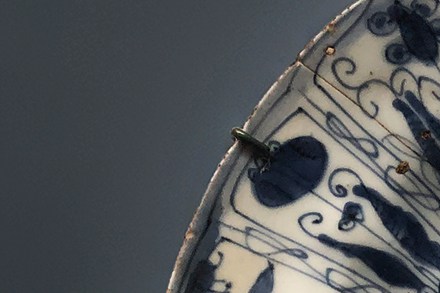
My granny used Spode willow-pattern crockery for everyday use. There was another grander service for Sunday lunch, also blue-and-white chinoiserie: Booths dragon, picked out with a gold border. Willow pattern evokes for me the taste of slightly stale ginger biscuits, which I liked very much, and coronation chicken, which I was less keen on. The idea of owning a table service now seems close to antediluvian; too formal and too much washing-up, although this was a ritual that mattered greatly to Granny. People now prefer plates that give a dull clunk when flicked, rather than fine china’s dulcet ping. Such changes of fashion were a factor in the 2008 closure of the Spode factory in Stoke-on-Trent, which had been producing willow-pattern plates since the 1790s.

Head to Deptford for one of the exhibitions of the year

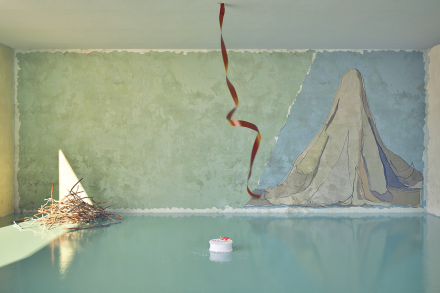
Grim news from gallery-land, where even Manhattan’s mega-blue chips are shedding jobs by the truckload. ‘The market’s fucked,’ one soundbite-handy dealer told me last week, admitting that the reckoning was probably long overdue. For artists, this is bleak: the oligarchs are stuck in Moscow, public funds have run dry and, short of shilling for the Saudis or tech barons, there remains only one street on which to beg: fashion. The prestige rag trade has always had a synergy with the art biz: both hawk luxury goods, at least nominally underpinned by visionary genius, for ludicrous prices. Artistic careers have been made by shows at tax-efficient fashion foundations and both domains are notoriously exclusive.

This Lucian Freud belongs on the compost

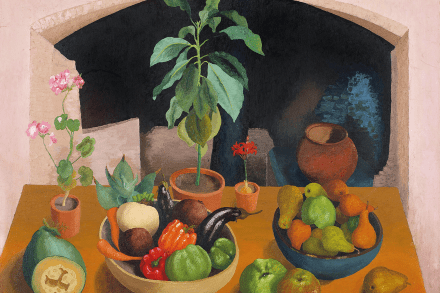
From 1940, at Benton End, near Hadleigh in Suffolk, the artist Cedric Morris brought his eye to breeding irises. Eliminating hated shades of ‘salmon or knicker’, he was, according to his biographer Hugh St Clair, ‘unstinting in his efforts to produce a pure, delicate pink’. Forty years of dedication brought a wild abundance to the garden, which was packed with cultivars, including ‘Benton Baggage’ (pale rose with a blue blaze), ‘Benton Persephone’ (very large white flowers) and ‘Benton Mocha’ (coffee-coloured, with a bright orange beard). A living flower painting.

How did so many fail to appreciate Whistler?

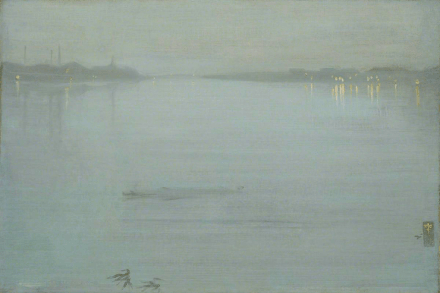
I approached this exhibition like a conscientious critic, poring over the catalogue, the signage, making notes… And then, about halfway through, I drifted. I dawdled. I stopped thinking and gave in to the aesthetic rapture, the rhyming half-tones, the ‘breath-like softness’ of Whistler’s paint. I was a disciple, briefly, of art for art’s sake, even though I wasn’t wearing white, nor carrying a peony. It was the room full of Nocturnes that sent me. Their opiate-like gloomth put me right beside the Thames at dusk. No, that’s too pedestrian. Not beside the Thames; with the Thames. Whistler lived on Cheyne Walk, but watching the river was not enough; he would take a boat out at night to prepare for his paintings.