I was on the way to Cecily Brown’s exhibition at the Serpentine last week when I heard that Kensington Gardens had been locked down. Word was that terrorist drones armed with ‘radioactive material’ were on course to blitz the Israeli embassy, presumably taking out a large part of west London with it. Scary though this was, it was also – as far as I’m aware – a wholesale fiction: an elaborate psy-op some would-be jihadist had staged to convince us that, yes, it could happen here. That it didn’t, and probably couldn’t, was irrelevant; what struck me was the fact that the security services didn’t consider it wholly improbable. The realisation felt unfamiliar and disturbing, a reminder that technological advance might pose a serious, sudden, existential threat of a kind unimaginable even a decade back.
Price’s film ‘Redistribution, 2026-2007’ is a bona-fide contemporary classic
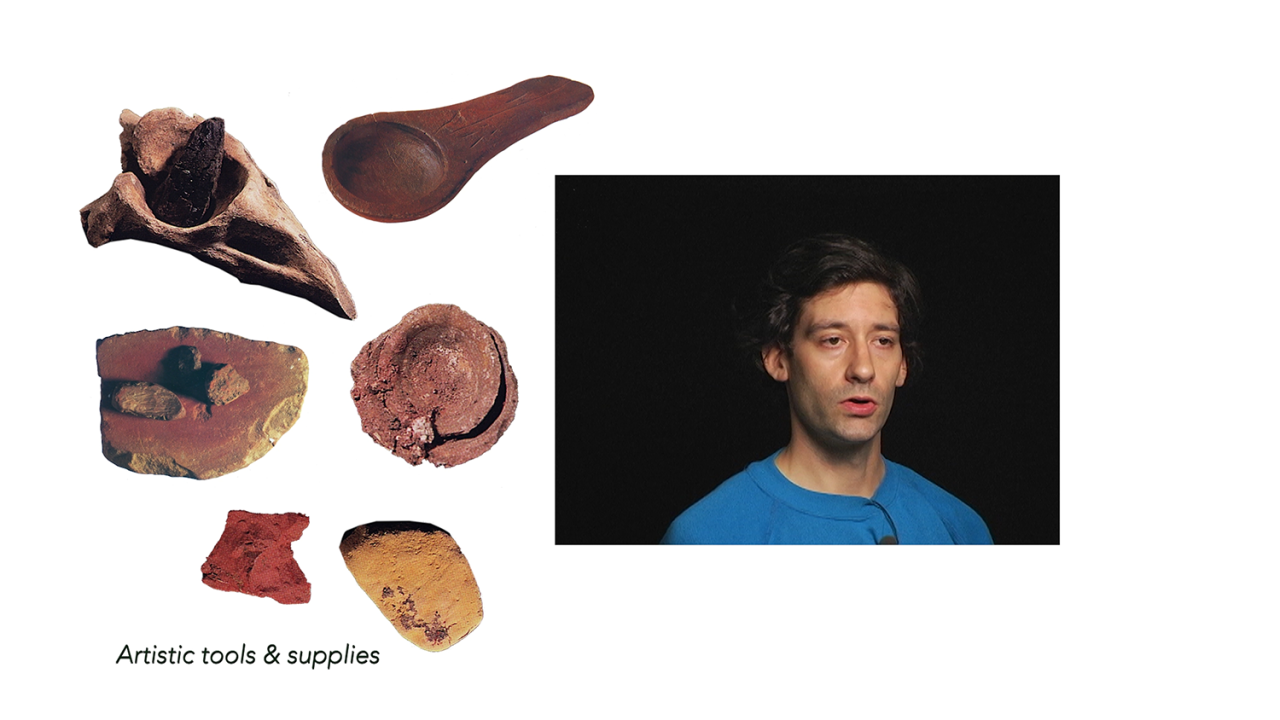
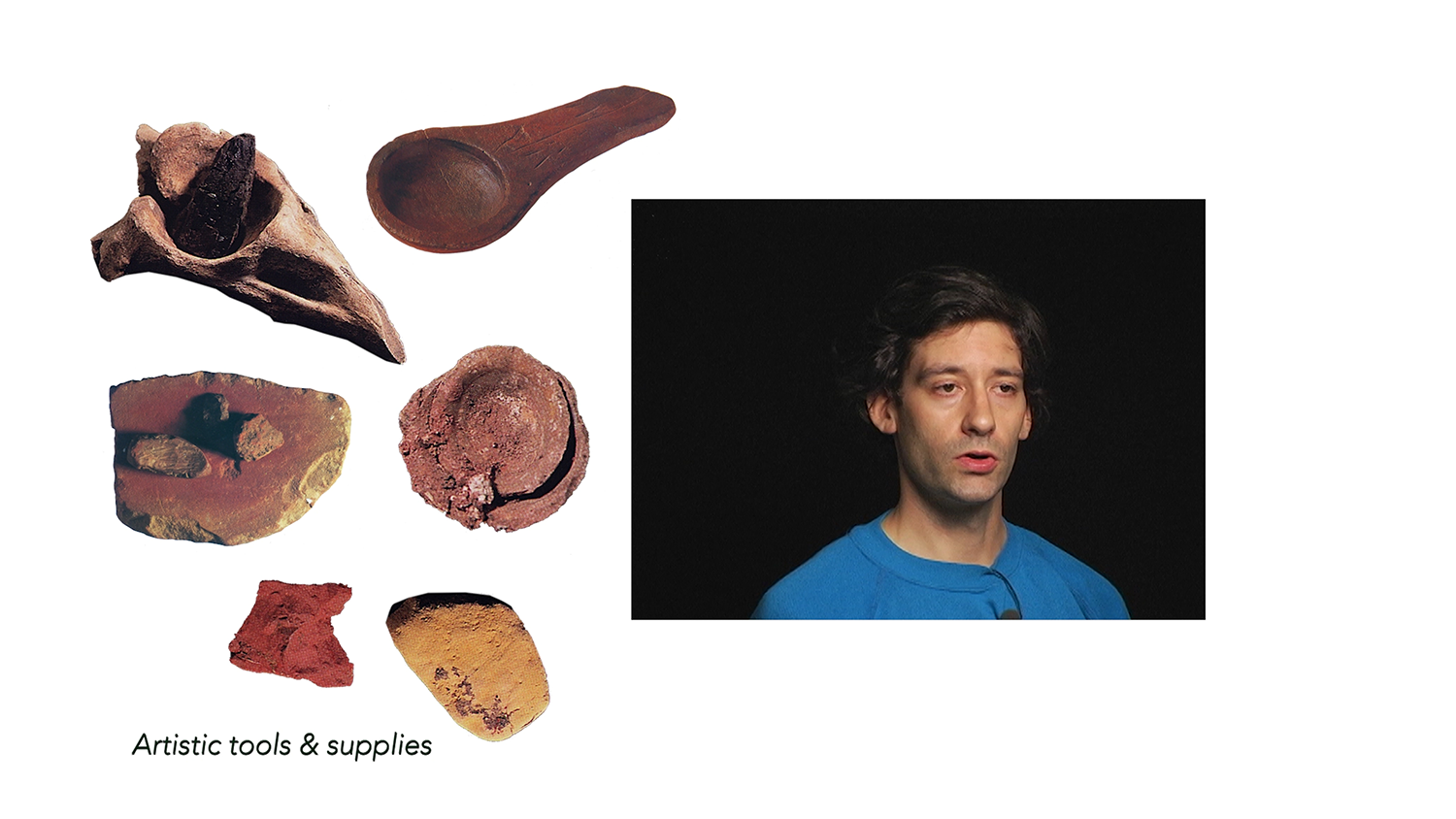
This strain of future-shock, I suspect, is something that Seth Price clocked long before the rest of us. Born in 1973, Price is an artist, author, film-maker and all-purpose hipster overachiever who was carried to prominence by the post-internet art boom of the 2000s. He is interested in technology and the societal changes it is ushering in, the politics of image-making, and, on the evidence of his new show at Sadie Coles HQ Kingly Street, his own anxieties around becoming a has-been. On the last count, he needn’t worry. His film ‘Redistribution, 2026-2007’ is a bona-fide contemporary classic. Offering himself up as a sort of American Adam Curtis, Price loses the simplistic theses but makes up for it with plenty of charisma. The movie is the latest iteration of an ongoing project that began with a slideshow lecture Price presented at New York’s Guggenheim in 2007, but much of the material – camcorder footage, taped voiceovers, handwritten notes articulating the artist’s precocious pensées – dates from the mid-1990s, when Price was Brooklyn’s answer to Nathan Barley.
It’s ambitious: a disjointed cinematic essay on the nature of art and the transformation that it has undergone in the internet age. There are sequences that variously see Price discussing his previous work with a teenage ‘digital native’ (to whom Gen Z already seem old); delving into Edison’s patenting of individual film stills; and expanding on everything from Palaeolithic cave painting to Tumblr, wine connoisseurship to 9/11. Every screening of the film will be slightly different – it resets and then remixes itself to undo any narrative logic – and no iteration quite makes sense, sequences succeeding each other seemingly at random. Yet what tied the version I saw together was a mood: to wit, Price’s palpable nostalgia for the 1990s, for what he calls the ‘old country’ of that (largely) pre-digital age, and for his younger, dumber self. Self-regarding as all this sounds, I found it actively moving.

‘The task of an artist is to demonstrate what an artist can do,’ reads a note in one of Price’s juvenile sketchbooks. What he thinks of this now is anyone’s guess, but it’s an instructive prompt for Multiple Conversations, the sculptor Veronica Ryan’s current retrospective at the Whitechapel Gallery. Ryan was born in 1956 in Plymouth, Monserrat – a city later razed by the 1995 volcanic eruption on the island. She moved to Britain as a toddler and studied at the Slade, then gradually transformed herself into the laureate of the landfill site. Her primary materials are the detritus of modern retail culture: the cardboard palettes used to stack eggs or avocados, used teabags and, repeatedly, plastic water bottles.
Ryan makes alchemy of this trash. She might stack those avocado trays into tall piles to create an installation resembling a dystopian high-rise diorama. She might wrap flesh-coloured blister plasters around a frame to fashion an eerie doll’s house with photographic slides for windows. She might cast her water bottles in plaster, or in one instance, shiny blue ceramic, piling these last into totemic towers, posed on a cheap synthetic rug that serves as a plinth. This could all so easily seem cutesy, homespun. Yet Ryan somehow imbues her sculptures with half-articulated associations: pain, fallibility, acute sadness. The artist has adequately demonstrated what she can do; read it in a post-colonial light, as environmental protest, or don’t analyse it at all. It’s thrilling, whichever way.
Incidentally: I did eventually catch that Cecily Brown exhibition and it was… fine. A suite of exquisitely tasteful and showily painterly paintings that couldn’t have looked more blue-chip if Larry Gagosian himself had dreamed them. Brown (b.1969) paints big tableaux that take elements of recognisable imagery and juice them through an optical blender, combining the academic with the mildly avant-garde to striking effect. These – mostly created since the pandemic – largely spring from her fascination with the rural English landscape. You’ll walk in, agree that her pictures are virtuosic, ingeniously composed – then forget all about them. I (sort of) recommend it.



Comments