Exhibitions

Why is divorce so seldom addressed in art?

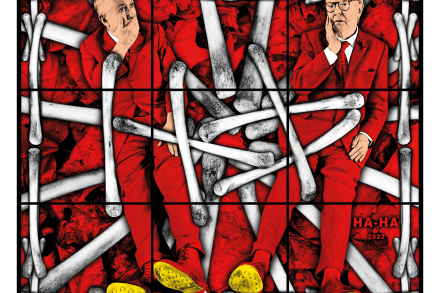
Two years ago I was flown to Reykjavik to interview the Icelandic performance artist Ragnar Kjartansson. It was a weird old trip, booked in at 48 hours’ notice, but Ragnar was consistently charming and generous. Indeed, the only slightly touchy moment came when I asked him about his 2012 video installation The Visitors, a berserk undertaking split across nine screens, in which the artist and an entourage of musician friends spend 52 minutes chanting the baleful refrain from a song written by his then recent ex-wife. The artist tensed up as he considered the question. ‘Shit, I gotta go,’ he said. He probably did, but his reticence might also have had something to do with the fact that the work was possibly conceived as a cathartic means of putting his first marriage behind him.

The genius of William Nicholson

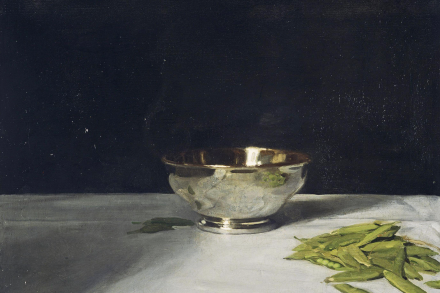
Even if you think you don’t know William Nicholson, it’s a fair bet that you’ve come across his work. If you’ve read those excellent children’s books, The Velveteen Rabbit or Clever Bill, you’ll have taken in his drawings – never wholly sentimental, even the rabbit – into your mental world. And if you’ve seen his woodcuts (they’re everywhere) – say, of Queen Victoria looking stout and dour – you’ll have noticed their economy, their clever use of space and their humour. This exhibition has the familiar elements of his work, but also the grander stuff: the still lifes, the landscapes, the portraits. Then there are the unexpected aspects – who knew he designed costumes for the stage production of J.M. Barrie’s Peter Pan?

London’s stupidest gallery

Everyone loves a private view, and I am no exception. I don’t know how many hours I must have spent trudging around central London’s art galleries in search of warm white wine – my social life doesn’t extend much beyond the confines of that circuit to be honest. Lately, however, I’ve been to some dreadful things; shows that seem to exist purely in order to enable their ritzy opening galas. I suppose I have only myself to blame for turning up to an evening at London’s stupidest gallery last week, but it was truly horrible: a party thrown for a scenester artist who turned DJ for the night, spinning butchered mash-ups of 1980s club hits to a scrum of pouting influencers. As for the art: suffice to say I’m not giving anyone the dignity of a namecheck.

This exhibition made my companion gasp

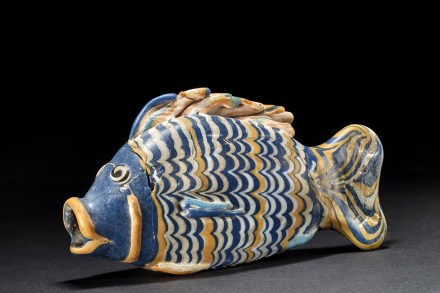
Numerous research academics have contributed to this highly cogent show celebrating the craftspeople of Ancient Egypt. My pre-teen companion, though a big fan of Egypt, was still slightly hesitant about whether this would be the most interesting angle. It began with a 4,000-year-old stele, or tombstone, on loan from the Louvre, praising the sculptural and painterly skills of an artisan called Irtysen, about whom, of course, nothing more is known. The perennial problem. General information, however, came thick and fast. We learned that a cooperative of skilled workers was a hemut, and a singular skilled worker a hemu.

The Two Roberts drank, danced, fought – but how good was their art?

The Two Roberts, Robert MacBryde (1913-66) and Robert Colquhoun (1914-62), are figures of a lost British bohemia. Both born in Ayrshire, they met on their first day at the Glasgow School of Art, becoming lifelong partners and painters. Well-connected in louche literary London, their conversational barbs were recorded by Julian Maclaren-Ross, their jig-dancing antics noted by Joan Wyndham, their drunken fights observed by Anthony Cronin – so that one sometimes forgets what sort of art they made. This show, staged in a former municipal building in Lewes, is a reminder. The work is haunted, unbeautiful British neo-romanticism, second cousin to Piper and Sutherland. They established this angsty, angular modernist style in the 1940s.

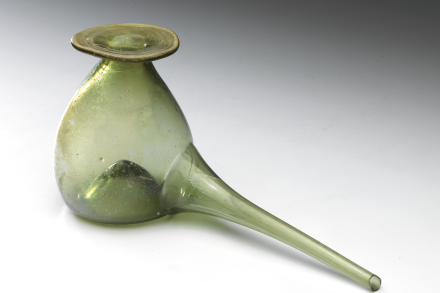
Lice combs, vaginal syringes and cesspits: at home in 17th century Holland

The room is dark, the lighting deliberately low. At its centre stands a solitary object: a yellow and green earthenware vessel decorated with biblical symbolism. It’s a fireguard – or ‘curfew’ – used to keep households safe as peat fire embers smouldered through the night. Around it is a mocked-up fireplace, conjuring up that liminal moment when everyone is still asleep and the day has yet to stir. Ths scene is set, the world outside silenced. This is how Amsterdam’s Rijksmuseum has chosen to answer one of its most frequently asked questions: what was daily life really like?

Unesco are idiots

Of all the moronic decisions made by cultural organisations over the past 50 years, probably the most insulting and retrograde is the decision, in 2021, by Unesco to strip Liverpool of its world heritage status. Unesco said the development of the docks amounted to an ‘irreversible loss’. The regeneration of the waterfront, including the building of Everton’s new £500 million stadium, was blamed for destroying Liverpool’s ‘outstanding universal value’.  I walked up Liverpool’s Regent Road for half an hour to see for myself. Doing so took me through one of the most derelict wards in the country, the old docklands. I didn’t pass another human being for a good 20 minutes, only cars screaming. There was some majesty in the buildings. The Tobacco Warehouse is beautiful.

The best artist alive? Probably

Taking place every October in Regent’s Park, the Frieze fair is probably the biggest event in London’s art calendar. It is also, as a spectacle, by far the least enjoyable. With works crammed into cubicle-sized booths, and punters battling a crossfire of air kisses and the palpable stress ricocheting around the flimsy partitions, I struggle to think of a worse context in which to look at art of any stripe. Still, it always used to be an occasion to take the pulse of the contemporary art world, to pick out the visual signatures of the reigning avant-garde tendency and clock what Jeremy Deller was doing with his facial hair at any given moment. This year’s iteration proposed no such insights.

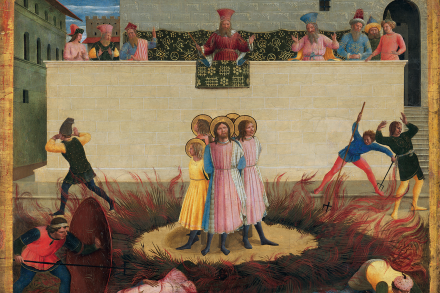
The staggering beauty of Fra Angelico

In 1982, Pope John Paul II surprised a few people by beatifying Fra Angelico, the 15th-century Dominican friar from near Fiesole. It’s not clear why he put Beato Angelico on the road to sainthood, given that the artist didn’t perform any miracles. And yet, after spending a few hours immersed in his works, which are both profoundly sacred but also staggeringly beautiful, you begin to understand the decision. He was certainly a hit with popes.

A remarkable insight into Le Carré’s working methods

When Richard Ovenden of the Bodleian Library wrote to John le Carré asking if the writer would leave it his papers, he got more than he could ever have bargained for. Le Carré not only responded with enthusiasm, explaining that ‘Oxford was Smiley’s spiritual home, as it is mine’, but also sent along 85 boxes of neatly arranged papers and memorabilia. After le Carré’s death in 2020 came a second larger tranche; the total archive consisted of more than 1,200 boxes. This was a writer who threw nothing out. Selected fruits of this vast haul can be seen in a new and impressive exhibition in the Bodleian’s Weston Library (formerly the New Bodleian).

This museum is a lesson for all curators

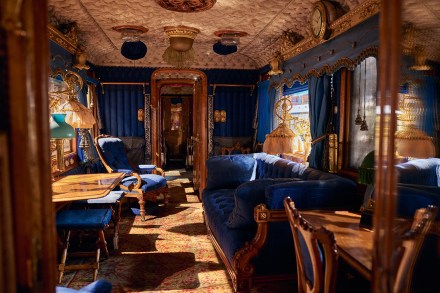
The National Railway Museum is 50 years old, and it’s come over all literary. A quote from Howards End stands at the entrance to the newly refurbished Station Hall: railway termini, proclaims Forster, ‘are our gates to the glorious and the unknown’. T.S. Eliot salutes you on the way out: ‘You are not the same people who left that station.’ Big claims, but as it turns out, largely to the point. The changes to the Station Hall are subtle but numerous, making the argument that as well as being the foundational technology of modern civilisation, railways are a culture in their own right. The aim, say the curators, is to reintroduce the human dimension to a museum that (fairly, and unfairly) is more generally associated with huge, gleaming machines.

The best Turner Prize in years

So, the Turner Prize: where do we start? It’s Britain’s most prestigious art award, one that used to mean something and now attracts little more than indifference. Taking place every year, it grants £25,000 to a winner chosen from four shortlisted artists, all of whom are obliged to display work together either at Tate Britain, or at a regional gallery. The latest iteration, at Bradford’s Cartwright Hall, is the best in a while – but before we get to that, some context. The Turner was established in 1984, but only really grabbed anyone’s attention when Channel 4 began televising the prize-giving ceremony in the 1990s.

Magnificent: V&A’s Marie Antoinette Style reviewed

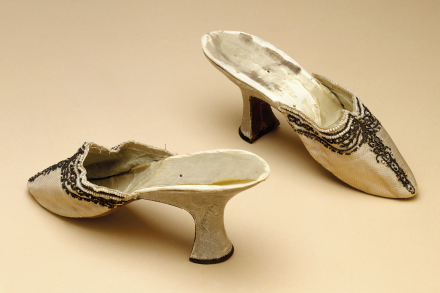
This exhibition will be busy. You’ll shuffle behind fellow pilgrims. But it’ll be worthwhile. It’s a tour de force that tells the story of Marie Antoinette’s 17 years on the throne with detail, focus and flair. There are 34 items here that she owned personally – opulent, carefree objects that resonate with impending disaster. These precious items need protecting from light, and in the first room curator Sarah Grant cleverly runs with this, evoking the candlelit ambience of a Versailles ball by hanging silver baubles from the ceiling and covering the walls with smoked mirrors. Here we have a taste of Marie Antoinette’s wardrobe – its annual budget peaking at £1.

Sondheim understood Seurat better than the National Gallery

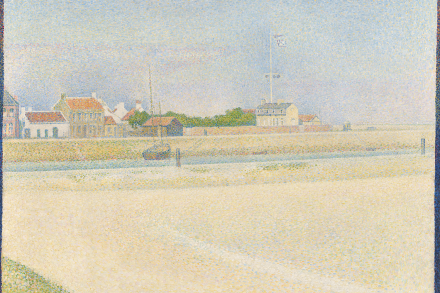
In Sunday in the Park with George, Stephen Sondheim catches something of what makes Georges Seurat so brilliant – not just his technical flair, but his engagement with ordinary life. Sondheim has Seurat sing, or rather woof, a little duet between two dogs meeting on the island of La Grande Jatte; later, Sondheim gives Seurat a pointillist melody as he works, crotchet-dabs of blue, blue, blue, red, red… Seurat’s muse, meanwhile, is called Dot. Seeing the National Gallery’s somewhat overloaded presentation made me long for the light touch of Sondheim.

Dartmoor’s forgotten painter

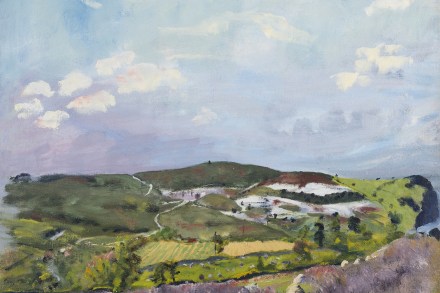
Asolo exhibition opened at Oxford’s Ashmolean in October 1980 that appeared to mark the belated arrival of a major new painter. ‘For an intelligent artist to paint the familiar, and clearly to enjoy painting it,’ wrote critic and dealer David Carritt in the catalogue, ‘now demands single-mindedness and courage. Jean Jones has both.’ The city’s intelligentsia arrived en masse to assess this 53-year-old’s achievements – among them her husband John who was the university’s professor of poetry and her closest friend Iris Murdoch. It looked that year as though Jones might be on her way to the upper echelons of British art.

I’ve had it with Anselm Kiefer

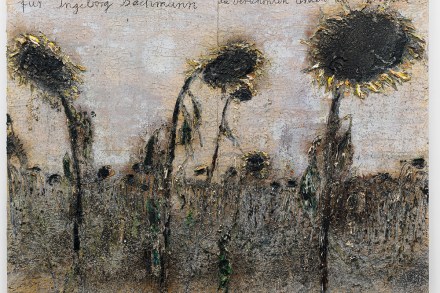
August is always a crap month for exhibitions in London. The collectors are elsewhere, the dealers are presumably hot on their heels, and the galleries are filled with makeweight group shows staged to hold the fort until the end of the holidays. This year, however, even events of that kind are thin on the ground: many establishments have simply shuttered for the month – and given the dire state of the art market, I’m inclined to wonder how many will reopen come September. The doom-auguring sunflower paintings here would look great on the cover of a Metallica record Still, I caught the two Anselm Kiefer shows running concurrently.

Modest, interesting – no masterpieces: Millet at the National Gallery reviewed

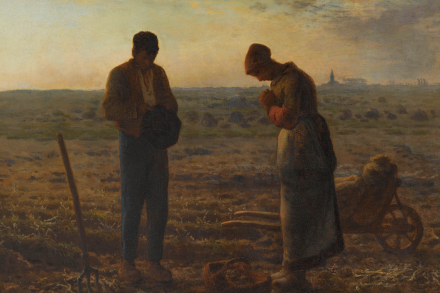
Jean-François Millet (1814-75). One Room. 14 items. Eight paintings. Six drawings and sketches. Modest, interesting. No masterpieces. The show appeals to the contemporary English preference for the unassuming, the humble, the unpretentious. Take ‘The Wood Sawyers’ (oil on canvas, 1850-2). Two figures are sawing a tree trunk with a long two-man bucking saw. Two thick sections have already been cut and the sawyers are busy with a third. The simplified trunk is like a salami, the bark corresponding to the floury skin. The main foreground figure with his blue rump has his foot braced against the trunk and commands our immediate attention. You can see the folds of flesh gathered at the back of his neck as he looks up from the task towards his fellow worker.

Wittily wild visions: Abstract Erotic, at the Courtauld, reviewed

If you came to this show accidentally, or as a layperson, it could confirm any prejudices you might have about avant-garde sculpture. Pretentious, ugly and resorting to kink. Those pendulous string bags, that enormous turd – gimme a break. Except that would be a mistake. Because the work here is the real thing: the 1960s originals that spawned a million imitations and parodies. The exhibition is perhaps a little cool about selling itself, so allow me. This is a snapshot of the work of three artists around the time they all took part in a 1966 New York show called Eccentric Abstraction. Two of the artists, Louise Bourgeois and Eva Hesse, were nascent superstars.

The masterpieces of Sussex’s radical Christian commune

Ditchling in East Sussex is a small, picturesque village with all the trappings: medieval church, half-timbered house, tea shops, a common, intrusive new housing developments down the road, a good walk from the nearest train station and the Downs on its doorstep. But the resonance of the place owes much to the remarkable artistic activity that has bloomed since Eric Gill moved his family there in 1907. It was part craft commune, part lay monastery, a living experiment in distributism, the radical Christian political philosophy that held that land should be distributed as widely as possible. It was an attempt to resurrect the medieval guild.

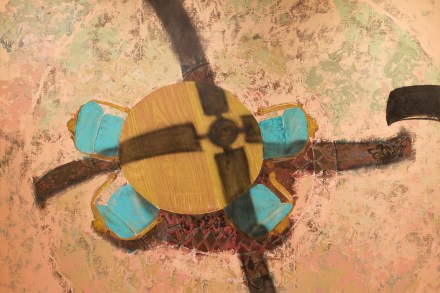
Beguiling grot, TfL surrealism and Insta-art: contemporary art roundup

Last month, I got the train down to Margate to interview the Egyptian-Armenian artist Anna Boghiguian (b. 1946), whose exhibition The Sunken Boat: A glimpse into past histories was about to open at the Turner Contemporary. Long story short, the conversation did not go well: Anna reacted to my questions with some irritation, swatting them away like low-flying bluebottles. I got flustered, she got bored, and eventually so did I. We wrapped things up around the 20-minute mark and I ran away to stare into the abyss. It was a shame, because the show was, for the most part, really good.