Diary

Diary – 21 March 2013

I learned on Wednesday that a row is exploding over freedom of the press ... in Australia. Surely some mistake. Australia is refreshingly open and its newspapers are free to say, often rudely, whatever they like. In fact, they are among the world’s the most tightly regulated, standing 26th and 29th respectively in the Reporters Without Borders censorship index — way behind Jamaica, Costa Rica and Namibia. Where, I wonder, will Britain stand after the events of this week? Much has changed in Oz since I spent my first day there as a Ten Pound Pom, looking comical in a grey suit on Bondi beach in midsummer, almost half a century ago. I left a stagnant Britain, beset by industrial strife and a Tory government whose only plan was to manage our decline.
Diary – 14 March 2013

The week starts with a bang — literally — when my 1986 Land-Rover explodes, mid-gear change: CLANK and the exhaust pipe burps blue smoke. The old girl rolls to a halt. All we lack is the tinkle of a dislodged hubcap. I feel like Peter Cook’s Maj Digby Dawlish in the 1969 film Monte Carlo or Bust after coming a cropper. Daughter Honor, ten, will be late for school so I palm her off on a passing car. Its driver seems friendly. I suppose Social Services would want me to have had her CRB-checked. The AA tows me to our mechanic in Ledbury. Lewis has a poke under the bonnet. His oily head emerges, teeth twinkling in his gums. ‘She’s well an’ truly knackerrrrred,’ grins Lewis. It made his day, though not mine.

Diary – 7 March 2013

My friend and colleague Roy Brown has just sent me the draft of a statement he will submit to the UN Human Rights Council this spring, on behalf of the International Humanist and Ethical Union. This is a group to which we both belong, which campaigns on freedom of thought and expression, women’s and children’s rights, education and much besides. Roy’s draft concerns discrimination against people who do not have a religious faith. It is extraordinary how many countries discriminate by law against nonbelievers, in violation of Article 18 of the Universal Declaration of Human Rights, which protects freedom of conscience.

Griff Rhys Jones: Burma, My Father and the Forgotten Army

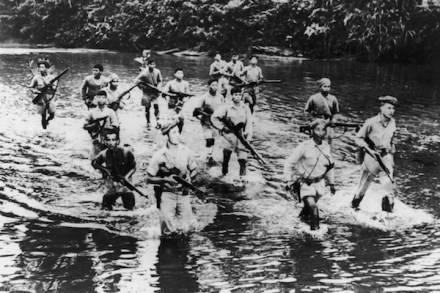
Burma, My Father and the Forgotten Army, with Griff Rhys Jones, is on BBC2 at 9pm on Sunday, 7th July. I have spent a week with old, old men, interviewing veterans who served with the West African regiments in Burma in the 1940s. It’s for a television programme about my father’s war. The young men who were shipped off to the Far East are nonagenarians now and, black or white, universally charming and calm: unhurried, unflappable and brimming with patient good humour. At first, I thought that that’s what must happen as you approach your own centenary. But then I realised it might be the other way round. Perhaps this admirable lack of neurosis was what kept them alive. So stop fretting. Get cooler. I fancy another 30 years myself.

Diary – 21 February 2013

Waiting for a match to begin at the gloriously situated Recreation Ground — home of Bath Rugby — I take a moment from shouting ‘Come on you Bath’ at the top of my voice, to consider wider issues. Rugby Union, for instance: the game is a civilising influence like literacy or clean drinking water. When it is played and appreciated, so is toughness of body and spirit, generosity and camaraderie. Some ugliness has accompanied its transition into the world of professional sport — that was unavoidable I suppose — but in the city of Bath the game is still played with a smile. It is also a better game than it was: cleaner, sharper, more exciting to watch.

Diary – 14 February 2013

The Jaipur Literature Festival, which I help to direct, has in just six years grown like some monster from an Indian epic. Each year it doubles in size and we struggle to keep up with the vast crowds who come to hear our authors speak. We’ve also inspired nearly 40 daughter-festivals across South Asia. The great Bombay poet Javed Akhtar aired a theory about why the region has suddenly taken to literature like this: ‘We abandoned language and arts in the last 40 years,’ he said. ‘We wanted cars and fridges. Now today’s generation takes them for granted. They want something else. They want arts and literature.

Diary – 7 February 2013

In a recent exchange of emails, my Member of Parliament, Mr Andy Slaughter, told me he intended to vote in favour of same-sex marriage. No doubt by now he has done so. He said he believed it to be an extension of human rights. I replied that, just as there can be reductio ad absurdum, so there can perhaps be extensio ad absurdum, but I am not sure that my Latin is correct. Anyway, MPs do not to have to reply to replies. Indeed, I feel slightly sorry for Andy Slaughter, bombarded not just by letters and emails protesting against same-sex marriage, but some of the million postcards distributed through Catholic parishes in the Diocese of Westminster. The postcard points out that same-sex marriage was not in the Conservative manifesto and that it will degrade marriage and the family.

Diary – 31 January 2013

It’s a rum go, working in sport professionally. Your business is everybody else’s fun; their frivolity is your seriousness. Still, at least I was able to watch the Australian Open Final in Norfolk this year. Two years ago I watched the semi-final in a landside bar at Terminal Three. When Andy Murray won, I invented a new sport that combined sprinting with weightlifting, crossed the terminal without dropping any baggage, checked in, made the plane, just, and flew to Melbourne for the final. Murray didn’t win a set. Sportswriting can be a daft business. This year Novak Djokovic beat Murray in the Aussie Open final again, and it was a triumph of athleticism. Not touch, not artistry, not, heaven forefend, subtlety. It was all about running hard and hitting deep.

Diary – 24 January 2013

Kofi Annan has just been in town for an evening organised by The Spectator. The 800 seats at the Cadogan Hall could have been sold twice over; the former UN Secretary General has a huge following. Having known and admired him since Bosnia in 1993, I was very pleased to be his interlocutor. He has just published a fine memoir, Interventions. This deals with involvements such as the UN’s fight against HIV/AIDS — in which he gives President George W. Bush high marks — as well as the UN’s sometimes controversial military interventions as peacekeepers. He is candid about his own and the UN’s failures, particularly in Bosnia and Rwanda. But he still retains faith in the organisation.

Diary – 17 January 2013

Washington DC: My elegant and sociable mother-in-law received an email this week warning that, should she wander on to her balcony to smoke on Monday, somebody might shoot her. The Secret Service is eager that nothing should go awry when our president is inaugurated for his second term. The inaugural parade route stretches a dozen city blocks along Pennsylvania Avenue from the Capitol, where the president gets sworn in, to the White House. The route is lined with office buildings and museums. There are few apartments with a view of the street, and my mother-in-law lives in one of them. When my father-in-law was alive, they’d throw a big party on inauguration day for friends, journalistic colleagues and a few politicians.

Diary – 10 January 2013

There is a lesson to be learned from the Francis Report into the NHS in Mid-Staffordshire, and from the police force’s current travails. Nigel Lawson once said that the NHS had virtually become a state religion, and until recently, most of us held the British police in complacent esteem. This is dangerous. Left unchallenged, highly admired by the public, it is easy for any bureaucracy to drift into bad habits (cf. the Irish Catholic church), especially if it is immune to competition and market forces. But waste, inefficiency and corruption are no less acceptable when they are perpetrated by institutions with noble goals. Once their standards slide, these bodies can end up by killing people. Corruptio optimi pessima. There is an exception.

Diary – 3 January 2013

I am re-reading D.H. Lawrence’s Sea and Sardinia. The opening line runs: ‘Comes over one an absolute necessity to move…’ He expands on the dilemma (I paraphrase): you are afflicted by wanderlust, you want to move, you don’t have any money, you’ve only recently moved but for some reason you want to move again. It is, for example, England in deep midwinter and it has been raining solidly for six weeks. Deracination is an occupational advantage of being a writer, which is otherwise a pretty absurd profession. Writers can live anywhere, or everywhere, or, at times, nowhere… For a while I lived in an airless flat in Alphabet City, New York, when it was still a seedy neighbourhood, and the only people with mobile phones were drug dealers and pimps.

Diary – 28 December 2012

Well, what a year it has been. Another one full of financial doom and gloom. I’ve never known such a prolonged period of anxiety and pessimism in my lifetime. With our breakfast news we imbibe daily the latest glum forecasts. George Osborne talks of a ‘healing’ of the UK economy but at the same time he warned of years of economic pain ahead. Where is the ‘can-do’ attitude that I’ve seen recently on several trips to America? Though the election exposed the US as a very divided society, there is still a definite spirit of entrepreneurialism over there. There is still an ‘American dream’ that even the poorest and most humble can succeed. The worst pieces of news in 2012 were to do with youth unemployment and ‘social mobility’.

Diary – 12 December 2012

I have been much teased for my book, Celebrate: A Year Of British Festivities For Families And Friends. Lots of journalists are saying that my advice is glaringly obvious. A spoof twitter account called @pippatips offers such pearls as: ‘Enjoy a glass of water by getting a clean glass and pouring in water from a tap or bottle.’ It’s all good fun, I know, and I realise that authors ought to take criticism on the chin. But in my defence, let me say this: Celebrate is meant to be a guide to party planning and, as such, it has to cover the basics. If I were to write a cookery book, for instance, I would be compelled to say that, to make an omelette, you have to break at least one egg. Actually, that’s not a bad idea....

Diary – 6 December 2012

Finding an outfit for a wedding is a doddle compared with finding one for an investiture and I wonder how sensible it was to buy my hat first. I love hats. My mother was a dressmaker and designer and she also made hats and wore them with style and aplomb, in the days when women never went hatless, even just to go shopping. When I was a child she embarrassed me beyond endurance when turning up at school events in one of her rakish creations. I remember the Christmas play and a small black felt number worn jauntily on one side of her head. It had protruding bright turquoise feathers and a turquoise satin slash. Worse was the one that turned up at sports day. That had cherries dangling from it and a sort of ribbon pineapple atop.

Diary – 29 November 2012

As I returned to the House of Commons, it was clear I had swapped one jungle for another. For the last few weeks I have been in Australia filming I’m A Celebrity Get Me Out Of Here! and the Conservative leadership were less than impressed. In desperation to prevent me from taking part, No. 10 drew a grenade from their armoury in the form of a whip suspension. It had no impact on my decision to join the show, but did help make me one of the best-known politicians in Britain. I wonder if that is really what they were trying to achieve? When I was first approached by the show’s producers, I politely declined. I couldn’t see any benefit in travelling halfway around the world to eat camel toe for the public’s amusement.

Diary – 22 November 2012

I once bred a racehorse, half-owned by my mother, born at my mother-in-law’s farm in Suffolk and named ‘Green Moon’ by my daughter. He won a race or two but never found his form, so we sold him to an Australian for not much. A few days ago, I was woken by a 5a.m. phone call from an ecstatic friend who told me that Green Moon had just won the Melbourne Cup — one of the best races in the world — bagging an immense prize cheque for his new owner. I’m not sure whether I will ever be able to forgive him, or myself. Late one evening, I find myself star-stuck in the company of Jeremy Clarkson. I’m not excited by cars — I’ve owned the same seven-seater diesel Toyota Previa for six years — but Top Gear is unmissable.

Diary – 15 November 2012

I have just returned from sunny Los Angeles, visiting Simon Cowell, the subject of my most recent biography. He told me about a visit by Cheryl Cole to his amazing house in Beverly Hills to patch up their arguments. ‘My book is number 1,’ boasted Cheryl. ‘Mine was number 1 for six weeks,’ countered Cowell, enjoying a rare moment of self-congratulation amid a sharp drop of The X Factor USA’s ratings on Fox TV. Everyone, it seems, is having a crisis. I am grateful to John Birt for offering me my first job in TV (at Granada). But I blame his legacy for the current crisis, the latest in a long line since I joined BBC current affairs in 1970.

Diary – 8 November 2012

People constantly ask travel writers: where are you going next? They hope to hear about a camel-party in Mongolia. But last week I had to answer blandly: Italy. I travelled with my wife to a friend’s wedding on Lake Orta among the Italian lakes, where the bride arrived by boat at the garlanded jetty of the town hall. There she and her fiancé vowed, according to the quaint-sounding Italian law, to establish their family residence (this sent a shimmer of laughter through the guests — the couple had been cohabiting for years) and educate their offspring. Afterwards I hoped to show my wife the Italian gardens I had loved 40 years ago, but to drive through Lombardy and the Veneto now is to traverse an industrial wilderness.

Diary – 1 November 2012

Air Canada has outwitted the superstorm and I am about to return to Canada after my nine-day stay in London following an absence of seven years, and nine years since I actually lived there. I was launching the British edition of my book, A Matter of Principle, which describes the legal onslaught against me in the United States that consumed most of those years. As these matters have been amply aired in the London media this past week, I avoid them here. As Truman Capote famously said to a British (male) television interviewer, ‘Why don’t you read the book, darling?