Tom Bower

Is my book about Meghan and Harry a ‘deranged conspiracy’?

From our UK edition

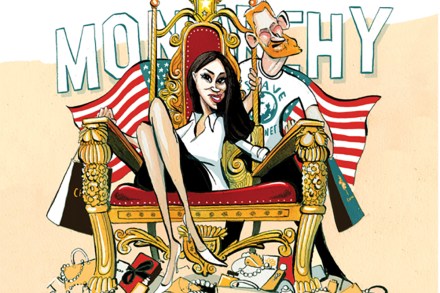
‘Deranged conspiracy’. That’s the Sussexes’ verdict of Betrayal, my second blast at Harry and Meghan, after the serialisation was in the papers at the weekend. Naturally, I’m grateful. The book now ranks No. 1 on Amazon. My biography of Robert Maxwell also benefited from his endless writs. Similarly, Richard Branson sued twice to prevent publication. He lost and was denied the licence to run the National Lottery. The tycoon Tiny Rowland was more subtle and effective. ‘Bower’s book,’ he announced, ‘is boring. He’s missed all the good bits.’ That hurt. My new book exposes the vainglorious Duke and Duchess’s downwards spiral over the past five years towards an inglorious endgame. Dwindling fame and fortune is forcing them to revalidate their royal status.
Labour is destroying London’s nightlife

From our UK edition

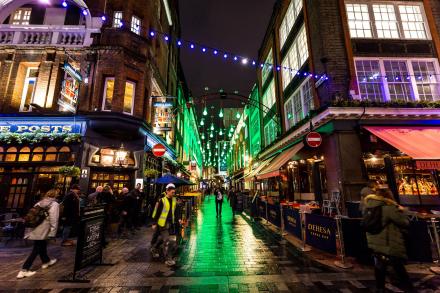
As a teenager back in the early 1960s, on Friday afternoon I would head down to Soho after school with friends. Our sanctuary was Les Enfants Terrible in Dean Street, a heaving bar and dark basement dance floor. With luck, we found girls who came along later that evening to any of the dozen other Soho music clubs, not least Le Kilt or the 100 Club in Wardour Street. That was the beginning of the unforgettable Swinging Sixties. Fifty years later, Soho’s wonderful nightlife has been destroyed by Westminster Council, the Mayor of London and the Labour government. Welcome to the Twilight Twenties. Proof of Labour’s deliberate destruction of London’s music scene was the recent publication of Westminster Council’s ‘Draft Westminster After Dark Strategy Summary’.

The flight of the millionaires will impoverish Britain

From our UK edition

Steel magnate Lakshmi Mittal is considering leaving the UK because of the Labour government’s abolition of the ‘non-dom’ tax regime. This confirms that Keir Starmer’s politics of envy is successfully destroying the British economy. Mittal would join tens of thousands of millionaires and billionaires – British and foreign – who have already abandoned Britain to avoid paying even more tax: all of them ranked among the 1 per cent of British residents, contributing 29 per cent of all the taxes raised by HMRC. These tax exiles had been willing to pay fair taxes, but many baulked at Starmer’s decision not only to tax their offshore income but also their foreign-based pensions and trusts.

The truth about Mohamed Al-Fayed

From our UK edition

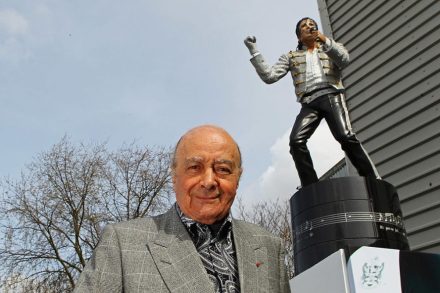
Even from the grave, Mohamed Al-Fayed dictated his obituary. When news of his death emerged in September 2023, Al-Fayed’s loyal spokesman Michael Cole pronounced that the former owner of Harrods had been ‘full of great humanity’. ‘Many people', Cole said, 'were beneficiaries of his kindness and generosity'. When I was approached by the BBC to give my verdict on Fayed, my contribution that he had been a ‘pimp, rapist, fraudster and a habitual liar' didn't make the cut. Even his name 'Al' Fayed was phoney, a concoction he dreamt up with his partner in crime, the Dubai ambassador Mahdi al Tajir in 1970.

Why Beckham’s wait for a knighthood goes on

From our UK edition

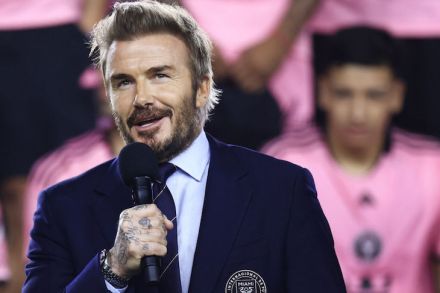
The newspapers’ front page photograph of David and Victoria Beckham entering Buckingham Palace’s State Dining Room was a publicity triumph for England’s global icon. Beaming with pride, Posh – wearing one of her own designs – and Beckham in a specially tailored white tie and tails – had worked hard to secure the invitation last December to King Charles’s dinner in honour of the ruler of Qatar. Alex Ferguson had spotted Beckham's weaknesses As the photographs revealed the King’s surprise guests, it was reported that the monarch was certain to propose a knighthood for Beckham. The tabloids’ headlines “Make it ‘Sir Becks” relaunched the bandwagon.

Can Boris save himself?

From our UK edition

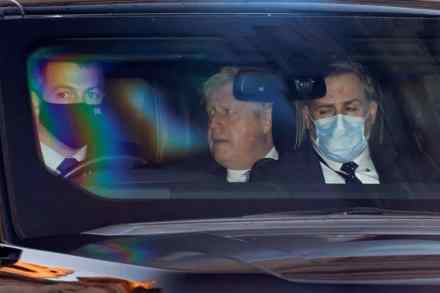
The ugly spectacle of Boris Johnson’s self-destruction will reach a new climax at the end of this week. Many think that only a miracle can save the great escapologist from the official Partygate inquiry. The Gambler himself is convinced that his determination will crush his enemies and once again he will survive to fight and win his next challenge – the local elections in May. Even Johnson’s closest admirers are baffled how an experienced politician could have orchestrated such an extraordinary succession of self-inflicted wounds. Just what went wrong in Johnson’s life since he won a stunning 80 seat majority just over two years ago?

How Charlotte Wahl Johnson’s troubled life shaped her son Boris

From our UK edition

Attractive, accomplished and admired as an artist, friend and mother, Charlotte Wahl’s promising life could have been wrecked, first by cruel sicknesses and then by an adulterous husband. Instead, she bravely defied adversity and found happiness in a second marriage, her four children’s success, her friendships and painting. Her death at 79 will be particularly painful for Boris Johnson, the eldest of her remarkable children. Despite all the pressures, he regularly visited his mother at her comfortable flat in Notting Hill Gate, recognising how much he owed her. In frail health from Parkinson's and other complications, Charlotte agreed to meet me in September 2019 for the biography I was writing about Boris. I had met her several times over the previous 20 years.

How the BBC can save itself

From our UK edition

All those esteemed generals of hindsight screeching ‘more governance’ as the cure to BBC’s cover-up of the Martin Bashir’s dishonesty 25 years ago share with Lord Dyson a misunderstanding about the essential cause of the Panorama catastrophe and all the ensuing BBC scandals including those involving Jimmy Savile, Cliff Richard and Alistair McAlpine. Namely, ‘Birtism’. Under John Birt, the BBC’s director general from 1992 to 1999, an ever-increasing number of new structures, controls and governance were imposed upon the BBC’s creative talents to suppress and remove risk.

Tom Bower’s Diary: Resuming hostilities with Richard Branson

From our UK edition

This week marks another milestone in my 15-year battle with Richard Branson. Ever since he unsuccessfully sued me in 1999 to prevent the publication of my first damning biography, we have exchanged shots. His anointment on Sunday as Britain’s most admired businessman coincides with my appearances to promote Branson: Behind the Mask, my second book. Inevitably, the book sparked his fury, summarised in a 29-page letter of complaint. Our war is now focused on whether Virgin Galactic, his Heath Robinson rocket, will ever carry him 62 miles into the border of space. For ten years his regular predictions of imminent take-off have proven wrong. Last Christmas he announced he would fly this month with his son and daughter. I derided his forecast. Now he says take-off will be next March.

Diary – 15 November 2012

From our UK edition

I have just returned from sunny Los Angeles, visiting Simon Cowell, the subject of my most recent biography. He told me about a visit by Cheryl Cole to his amazing house in Beverly Hills to patch up their arguments. ‘My book is number 1,’ boasted Cheryl. ‘Mine was number 1 for six weeks,’ countered Cowell, enjoying a rare moment of self-congratulation amid a sharp drop of The X Factor USA’s ratings on Fox TV. Everyone, it seems, is having a crisis. I am grateful to John Birt for offering me my first job in TV (at Granada). But I blame his legacy for the current crisis, the latest in a long line since I joined BBC current affairs in 1970.

Dangerous liaisons | 28 April 2012

From our UK edition

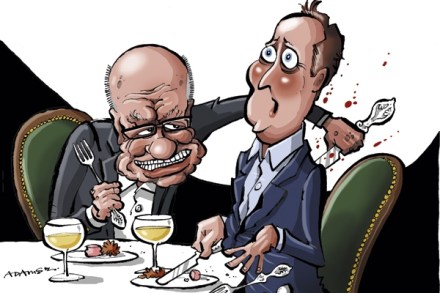
Ever since Andy Coulson was forced to resign as Downing Street’s media supremo, Westminster’s malcontents have gossiped about the prospect of Rupert Murdoch wreaking revenge for Cameron’s impulsive creation of an inquiry into press ethics. More recently, cynics whispered that the Sunday Times exposure of Peter Cruddas, the Conservative treasurer offering access to the Camerons in exchange for donations, was the gypsy’s warning of horrors to come. And now we have the revelations about the Murdochs’ secret negotiations with the government to take full control of BSkyB. The Murdochs’ appearance this week at the Leveson inquiry fatally threatens the Cameron project and probably destroys Tory hopes of recovering their reputation for competence and honesty.

The real villain of BP

From our UK edition

At Tony Hayward’s inquisition in Washington last week, the hapless BP chief executive resisted the temptation to condemn his predecessor, Lord Browne of Madingley, by name. Instead, pressed repeatedly to explain why BP had breached safety regulations on over 700 occasions, Hayward described 2006 as the corporation’s worst year. That was John Browne’s last full year as chief executive. He left the job humiliated, having been exposed for signing an untruthful court statement. Ever since, Browne has defended that dishonesty as a unique aberration. But as the American investigation of the Gulf catastrophe develops, the blame for the poisonous legacy inherited by Hayward will increasingly be heaped on Browne.

Diary – 3 October 2009

From our UK edition

A week to enjoy the autumn sunshine by the sea. Gluttony is no longer fashionable but what better way to celebrate my birthday on Monday than to spend a few hours at the Royal Native Oyster restaurant in Whitstable? Sitting by the Kent beach, I confess to consuming 24 oysters, a crab, a lobster, two bottles of Pouilly Fumé, a plum crumble and Irish coffee. Thankfully my wife was more modest. All her entreaties for restraint were answered by my description of Samuel Pepys’s vastly superior daily consumption as described in Claire Tomalin’s wonderful biography. Inevitably, I later collapsed on the shingle rereading that day’s lead entry in the Times’s ‘Happy Birthday’ column.

A bracing walk through Vienna with Mr Opec

From our UK edition

Tom Bower talks to Ali al-Naimi, the Saudi oil minister, at Opec’s meeting and is struck by how this master manipulator escapes censure in the great oil blame game Speculators are back in favour, especially the fund managers bidding up the price of oil. Cursed last year for tipping the world into recession, the same traders are now praised by some for once again betting on rising prices. Last year’s sinners are now cast as the Good Samaritans. The conductor of that topsy-turvy world is Ali al-Naimi, the Saudi oil minister. Choosing his words carefully as he walked through the centre of Vienna towards last week’s Opec meeting, the 75-year-old geologist smiled enigmatically about the speculators: ‘I’m not concerned.’ The opposite is the truth.

Brown has come full circle since 1988

From our UK edition

Tom Bower, the Prime Minister’s biographer, says that Gordon’s reinvention as the socialist who can save capitalism is just the latest in a series of convenient masks he has donned Gordon Brown would probably prefer to forget his magic moment in the crowded House of Commons exactly 20 years ago, on 1 November 1988. In the midst of a withering attack against Nigel Lawson’s management of the faltering economy, the Labour front bencher pierced the Tory’s façade with deadly accuracy: ‘This is a boom based on credit.’ Labour MPs frenziedly cheered as Brown artfully mocked the forlorn-looking Chancellor for allowing consumption to spiral out of control and for offering consistently wrong forecasts.