Columns

‘Tea-towel-gate’: another British travesty

During last September’s freshers’ fair at Royal Holloway, University of London, two students got into a brief verbal tiff that became subject to the administration’s immediate alarm. Our characters: Brodie Mitchell, a self-described non-Jewish Zionist, and Huda El-Jamal, the female president of the Friends of Palestine Society who is of Palestinian descent. Mitchell says El-Jamal taunted him – ‘Here’s the wannabe Jew’ – and questioned why he wasn’t wearing a yarmulke. Referring to the keffiyeh El-Jamal was wearing as a headscarf, Mitchell taunted back: ‘You’re wearing a tea towel over your head.’ A monstrous exchange, we can all agree. Naturally, Royal Holloway suspended Mitchell for nine weeks – nine weeks!

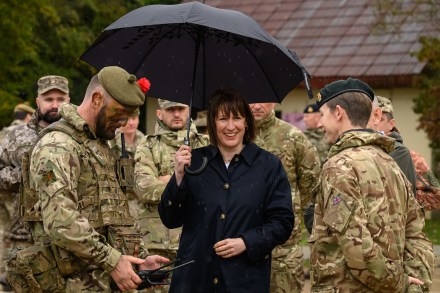
Is Rachel Reeves blocking defence spending because of ‘gender parity’?

When John Healey was asked, on stage at the London Defence Conference, whether the armed forces were ‘ready’ for war, the Defence Secretary replied: ‘Yes.’ One of those present says: ‘That was greeted with near incredulity in the room.’ Another attendee compared Healey’s plight to someone ‘playing French cricket’, with critics from all sides hurling balls at his ankles while he tried to bat them away. ‘You can’t score any runs in French cricket.’ George Robertson, Healey’s most respected Labour predecessor and a former secretary general of Nato, was not present; he was in Scotland celebrating his 80th birthday. But he returned to give a withering interview to the FT and a speech.

Trump’s goals in Iran have always been clear

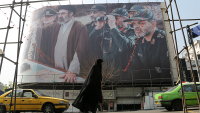
The bombing of the Revolutionary government in Iran is drawing comparisons with the war in Iraq. But the comparisons are with the wrong war. In 1981 there was an attack on Iraq which much more closely resembles what Donald Trump is trying to achieve in Iran. The story goes back to 1976, when the government of Jacques Chirac in France sold a nuclear reactor to the Iraqis – a deal for which the French have always managed to avoid much criticism. The French charged the Iraqi government twice the going rate. But as one of the Iraqi nuclear team later recalled: ‘We were happy to pay. After all, who else was going to sell us a nuclear reactor?’ Who indeed.

Tomorrow belongs to the vegetarians

Can there be any thinking person who has passed a lorry filled with live animals peering out through the slats on their way to slaughter, without a momentary shudder? How many of us would take an opportunity to inspect what happens there? Be honest: you recoil from the thought. ‘Slaughterhouse’. So unpleasant we frenchify it as ‘abattoir’. Hunting leaves me cold yet has an honesty about it: you see and choose your prey, and kill it yourself: morally a million miles from the systematic industrial slaughter of creatures we never look in the eye, couldn’t bear to see killed, and so turn away, pay others to do the killing, and deny our own agency. There are things we’d rather not think about. Take note of them. They’re the first signs of rejection.

What happened to Britain’s fighting spirit?

When war is in the air, young men traditionally sign up – and they traditionally sign up, disproportionately, from the north-east of England, where I grew up. The country must be prepared for war, says Air Chief Marshal Sir Richard Knighton, head of our armed forces. But what use is all this puffed-up talk of a battle-ready Britain if we have no soldiers? In the north-east, the supply of soldiers has slowed not just to a trickle but to a drip. Sunderland, for instance, home to nearly11,000 veterans, sent just ten men into the army last year. A reporter called Fred Scul-thorp went to Sunderland for Dispatch magazine last month, to work out what had happened to the north-east’s fighting spirit, but all Fred found was apathy: why sign up when you can sign on?

The ‘Tory-fication’ of Reform

Nigel Farage likes a gamble. Crypto bros and hedge-fund managers bankroll his enterprises; his social circle is filled with traders, bridge players and money men who fancy a flutter. It was Malcolm Muggeridge who claimed that ‘to succeed pre-eminently in English public life it is necessary to conform either to the popular image of a bookie or of a clergyman’. Farage is firmly in the former camp. But the man who has never been afraid to take a punt is now betting on playing it safe. In his bid to kill off the Conservatives, Farage has sought to woo the party’s voters by poaching their talent and ridding Reform UK of all suspect economic baggage. The manifesto of 2024 has been binned; full-fat nationalisation is out, save for British steel and key strategic industries.

Do you suffer from ‘excited delirium syndrome’?

Hadiza Atunse, a 25-year-old PA, smashed her Toyota Auris into a Mini Cooper, spun out of control and flipped into a hedgerow in Wilmslow, near Manchester. When the coppers turned up, she declined to partake in a breathalyser and the police, mysteriously, did not give her a tongue swab to determine drug use. I say ‘mysteriously’ because the young lady was also found with a large bag of coke in her car.  Later it was discovered that she was driving without insurance. Yet Ms Atunse copped only a £730 fine because the judge seems to have accepted the defence’s argument that she had been suffering from ‘excited delirium syndrome’, which, coincidentally, is what afflicts me in the moments before Bargain Hunt comes on the TV.

The rise and fall of Tariq Ramadan

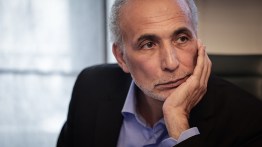
There has been so much news of late that stories which might once have caused a splash have sailed by all but unnoticed. One in particular seems worthy of bringing into a greater light, not least because it has been almost entirely ignored by the English-language media. Tariq Ramadan is the grandson of the founder of the Muslim Brotherhood. In recent years he was probably the most famous Muslim intellectual in the West. Last month, a court in Paris found him guilty of the rape of three women and sentenced him to 18 years in prison. To Islamic audiences he preached one message, to western audiences he told another The case is the culmination of several trials since allegations were first made against him in 2017.

The conversion therapy we should really ban

In 2012, California was the first US state to ban ‘conversion therapy’ for minors, the better to stop the forcible brainwashing of gays and lesbians into fancying the opposite sex. Picture kidnappings, violent fundamentalist interventions, gruelling electric shock treatments and Clockwork Orange aversion therapy. But here’s the rub: most of this stuff was 1) already illegal and 2) not really happening. A solution in search of a problem, then. Successive UK governments have also entertained a conversion therapy ban. Yet among 108,000 respondents to a governmental LGBT survey in 2018, just 5 per cent claimed to have been ‘offered’ such therapy, while only 2 per cent said they’d undergone it. Even there, the survey didn’t define what constituted ‘conversion therapy’.

What if the UK hadn’t voted for Brexit?

Someone in Brussels has a sense of humour. One of the euro elves let it be known this week that the deal which the UK hoped to sign this summer has stalled over migration rules. Keir Starmer and his minister--negotiator Nick Thomas-Symonds are seeking a deal on food and agricultural products in exchange for one on youth mobility. However, the number of young people coming to the UK, Thomas-Symonds insists, has to be capped. Cue, with exquisite chutzpah, a leak that the EU is instead prepared to offer Britain an ‘emergency brake’ on the arrival of under-30s if the numbers get too much. Sound familiar? An emergency brake on free movement was exactly what David Cameron asked for in his 2015 negotiations (and even Tony Blair had talked of wanting an emergency brake before that).

Can the chaps in chaps smash fascism?

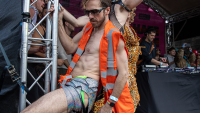
I have spent a small portion of the past week wondering what I would do if I thought communists were about to take over our country. At the more civil end of things, I could see myself going on an anti-communist protest, though I would shrink away if I noticed that my fellow marchers were flying swastikas. I don’t exactly know what I would do next. Perhaps I would hope for another election soon, and do what I could to unite other anti-communists. One thing I am fairly sure I would not do would be to dance. In fact, were this country facing the prospect of Stalinism coming at us full force, the last thing I would do would be to get a DJ, book a stage in Trafalgar Square, hire some go-go dancers and rave it up.

Why I failed my Lent resolution

It’s the end of Lent as I write this and I’ve almost entirely failed to give up X, which is what I said I’d do. The webpage just seems to materialise in front of me, and I find I’ve been slapping little hearts on Peter Hitchens’s posts for 20 minutes before I realise what I’m up to. Then that deceitful little mental voice pipes up, the internal chatbot which specialises in justifying bad behaviour: ‘Keep scrolling! How else will you know what’s happening in the world?’ Yesterday, as I found myself ogling X again, the little voice really scraped the bottom of the barrel: ‘Now that you’re here,’ it told me, ‘you really may as well get stuck in. Have a long session, go on. It’ll still only count as one Lent infraction.

Iran’s secret weapon of self-sacrifice

Much has been made of the adjective ‘asymmetric’ when discussing warfare in recent years. The word enjoys a renewed currency now that Israel and America are engaged in combat with enemies who, unable to match them with comparable armed forces, instead disperse, hide and strike at the soft underbelly of their foe. David and his sling, I suppose, when David met Goliath thousands of years ago, was a forerunner of this strategy. But I want to discuss another kind of asymmetry, and another Old Testament hero, Samson. Alone, captive and blinded, Samson reached for a secret weapon unavailable to his captors: the weapon of self-sacrifice. The Islamic Revolutionary Guard Corps and their forces do not fear death.

‘We’re into 1973 territory now’: How bad could the energy price crisis get?

The energy price surge caused by war in the Middle East has sent shockwaves through Westminster. It has pushed up inflation and the cost of borrowing, causing panic in the cabinet and the recognition that government intervention could be needed on a vast scale to support the cost of living. The Prime Minister told a private audience: ‘The assumption that the growth of the developed countries can proceed steadily on the basis of cheap energy has been shattered almost overnight.’ He further observed: ‘The problem is not simply one of inflation. It is the whole structure of the economy.’ In the Treasury there is something approaching a siege mentality. The Chancellor has ‘to spend [her] time firefighting’.

The real reason the left hates Israel

‘Listen to what the man on the left of the camera has to say about Israel, the man who is addressed as Nick,’ a radical Corbynista friend suggested to me the other day in a social media message designed to change my mind about the Middle East. It’s part of a sustained campaign on his part which dates back at least ten years and is usually conducted with good grace, if never accord. So I listened to what this chap Nick had to say, with growing hilarity. Not because of what he said – which was what you might expect from a rank anti-Semite, but because of who he was. For it was none other than Nick Griffin, the former leader of the British National party.

How to brainwash the British public

During the Cold War I am fairly certain that films, TV dramas and other popular entertainment did not remain silent on the threat posed by the Soviets. In fact my memory from those times was that popular culture was filled with Russian baddies, drunken homosexualist double--agents and great western super-heroes who were intent on taking down the commie threat. As cineastes know, this culminated in David Zucker’s 1988 master-piece The Naked Gun. In the opening scene, Lieutenant Frank Drebin of Police Squad disrupted a meeting in Beirut where an attack on America was being planned by Idi Amin, Yasser Arafat, Colonel Gaddafi, Mikhail Gorbachev and the Ayatollah Khomeini. Our hero duffed up each of them one by one.

We’ve already given up on novels

Late last year, I was notified that one or more of my novels might have been fed to an Anthropic large language model, because in a class-action suit the company had reached a copyright settlement with authors who’d never given an AI Goliath permission to gorge on their work. Sure enough, a website verified that 11 of my books had been used as silage for this insatiable digital leviathan. Each of the LLM’s tasty Shriver mouthfuls may merit compensation of about $3,000. But before I take out a loan against that $33,000 sure thing to buy myself a Chinese EV, I should read the fine print: ‘court-approved costs and fees’ will be deducted, meaning I may garner funds sufficient to buy a whole new packet of extra-fine felt-tips. Fees or no, this is chump change for Anthropic.

Trump should ditch the faux concern for the people of Iran

Live long enough and all your cherished memories of childhood will end up besmirched somehow. For many of us Boomers the 1970s are now nothing but a long, brownish and noisome stain. We might have expected Gary Glitter would be outed as a nonce and ditto the unequivocally foul Jimmy Savile. But come on, who would have thought there was a darker side to Benny Hill? His harmless and uplifting degradation of women was one of our regular delights, especially the bits where semi-naked babes chased him around parks, with a silly expression on his face, accompanied by fruity music. How we laughed. And so to find out now that all the time he was living a double life as a murderous IRA terrorist is kind of too much to bear.