Features

Features

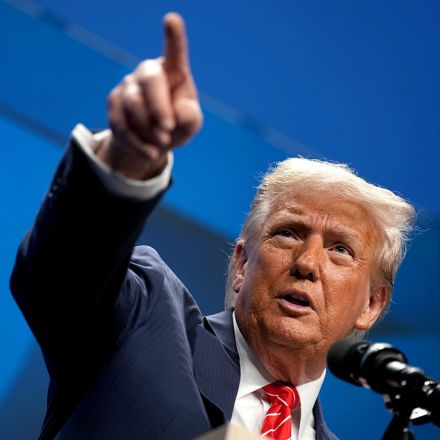
Trump’s brave new world

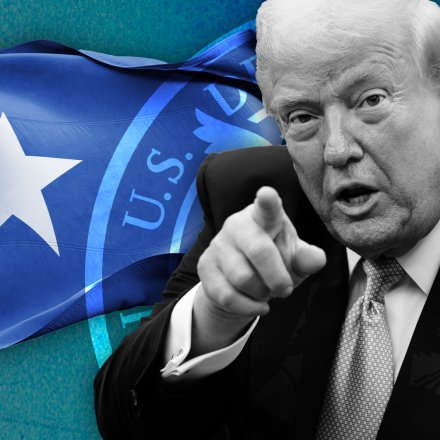
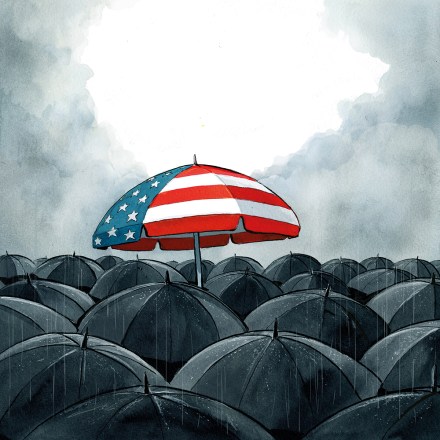
No one ever tucked themselves up in bed to read a government document – at least not in the expectation of enjoying it. The standard format is one of hundreds of pages of impenetrable jargon yielding no more than nuggets of significant ideas. The Trump administration has admirably cut through that tendency to produce a National Security Strategy (NSS) that is worth reading: a coherent outlining of America’s strategic intentions on the world stage. Originally composed by Michael Anton, a brilliant mind who is sadly leaving the State Department, the document concisely lays out a Trumpian vision of America’s role in the 21st century.

Portrait of the year

January For three weeks wildfires raged around Los Angeles. Perhaps 30 people were killed but 200,000 were evacuated, 18,000 homes and structures destroyed and 57,529 acres burnt. Donald Trump was inaugurated as the 47th President. On his first day he issued about 1,500 pardons for people charged in connection with the attack on the Capitol in 2021; he created the Department of Government Efficiency (DoGE), led by Elon Musk; he signed executive orders on gender and immigration and withdrew the United States from the World Health Organization. The state funeral of Jimmy Carter, the 39th president, was held in Washington, DC. Israel and Hamas agreed to a ceasefire and the return of hostages held in Gaza.

A chief White House usher of 21 years is the ultimate insider

Gary J. Walters knows where a lot of the bodies are buried in the White House. He was chief usher for 21 years, worked there for 16 years before that, and has served and come to know intimately seven presidents and their families. Now he has written a book about his extraordinary career, White House Memories 1970-2007: Recollections of the Longest-Serving Chief Usher. Think what he must know of the skulduggery (Nixon), the marital strife (the Clintons), the chastising of children (the alcohol-inclined Bush daughters) and the shouting matches (doubtless all of them). As I gently prod Gary for gossip, he smiles mischievously – at 79, he still looks smart and spry enough to be running the White House machine.

How Garrison Keillor is living at 83

I’ve been having a wonderful year since I turned 83 and decided to lighten up on world affairs and let other people agonize over corruption in high places and the fate of American democracy, which concern me too. But at this age one can only take on so much. Time is running out. Time to leave the problems to the young and energetic and devote myself to writing limericks. Better to do one thing well than wave your hands and yell at a brick wall. One day an old man in ManhattanSaid at the library he sat in,“Enough politics,I’ll write limericks.So light up your pipe and put that in.” A remarkable metamorphosis:One door opens, one closes.What a reliefTo give up that griefAnd happiness is the prognosis.

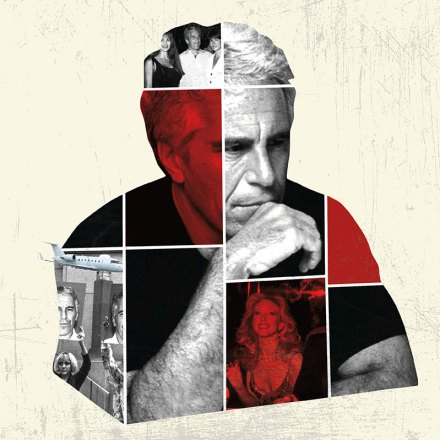
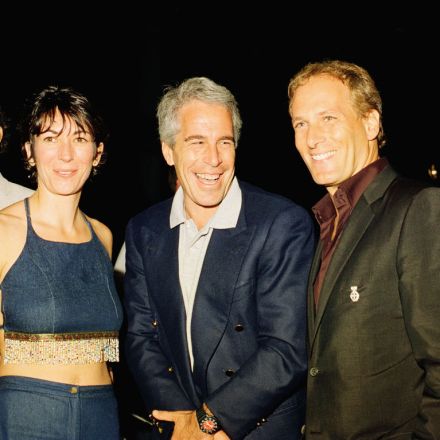
Will we ever know the truth about Epstein?

Now that Congress has passed a law – not a flimsy resolution, but a law – mandating that the Trump administration release all its files on Jeffrey Epstein, here’s what we know, and what we still need to know. The basic elements of Epstein’s crimes were established back in 2006 by the Palm Beach Police, who began investigating the previous year after a woman reported that he had paid her 14-year-old stepdaughter for a massage. Over the next 13 months, the police gathered sworn statements from dozens of witnesses, including five underage girls who said they’d been paid $200 to $1,000 to engage in sex acts with Epstein. “The more you do, the more you get paid,” one of his assistants told a girl in a phone call recorded by the police.

Jeffrey Epstein

How the ‘deep state’ enabled Epstein to operate

How do characters like Jeffrey Epstein come about, really? One way to find out is to read his emails, 20,000 of which were released by the House Oversight Committee in November. What they show us is that people like Epstein were a product of the second half of the 20th century, their existence more or less impossible outside this era and its conditions. After World War Two it was decided that majoritarian democracy was too dangerous and had to be replaced by international law, human rights and expanded bureaucracies. Epstein took this state of affairs for granted. In a 2016 email to the New York Times journalist Landon Thomas Jr., he talks blithely about the existence of what we would now call a “deep state”: “In politics the USA meant the white house. now there is pentagon.

Epstein, like Russiagate, damns the elite

As President Trump’s first year back in office drew to a close, his enemies had high hopes they’d hit on a scandal that could do to his second term what the “Russian collusion” story had done to his first. Donald Trump didn’t have to be found guilty of any wrongdoing tied to Jeffrey Epstein’s sleaze. All that was necessary was to stain his reputation indelibly and distract his administration from its work. The Epstein weapon even had an advantage over the Russia allegations of yesteryear – it resonated with much of Trump’s own MAGA base. Trump campaigned in 2024 on releasing the Epstein files, and many in MAGA considered it a betrayal when he resisted doing so once back in the White House.

Peter Thiel predicts the future

Peter Thiel has been described variously as “America’s leading public intellectual,” the “architect of Silicon Valley’s contemporary ethos” or as an “incoherent and alarmingly super-nationalistic” malevolent force. The PayPal and Palantir founder, a prominent early supporter of Donald Trump, is one of the world’s richest and most influential men. Throughout his career, his principal concern has always been the future, so when The Spectator asked to interview him, he wanted to talk to young people. To that effect, three young members of the editorial team were sent to Los Angeles to meet him. What follows is an edited transcript of their conversation.

Why I corresponded with Jeffrey Epstein

Olivia Nuzzi, the young and talented Trump reporter, committed the apparently cardinal sin of becoming romantically entangled with a subject. And, worse than that, the subject was widely reviled, particularly among journalists: Robert F. Kennedy Jr., the anti-Kennedy. And then it turned out –her jilted fiancé, another journalist, was telling all – that there were other politicians she’d been involved with, too. This scandal, which has consumed the journalism world, was good for me because it forced the heaps of opprobrium I was getting from other journalists for my emails with the reviled Jeffrey Epstein off the front page.

european leaders

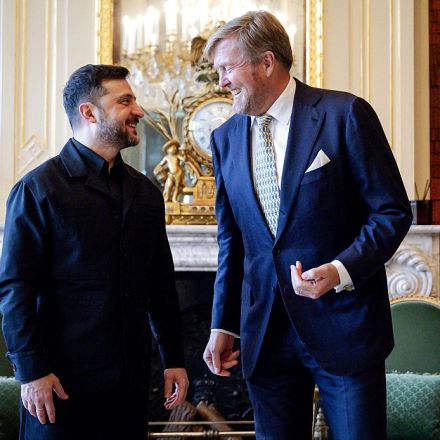
European leaders have changed their tune on war

Ten days after Thanksgiving, news watchers were exposed to one of the more culturally incongruous images in recent history: Ukrainian President Volodymyr Zelensky and French President Emmanuel Macron beaming in front of the British Prime Minister’s house at 10 Downing Street, giving each other the locked-thumbs handshake familiar to African-American jazz musicians and professional athletes of the 1970s. Right on, brother! At that moment, according to Ukrainian media, thousands of Zelensky’s soldiers had been encircled by Russian troops near the city of Pokrovsk (or Krasnoarmiisk, as it may well soon be renamed). Large gaps were appearing in the Ukrainian front, desertions were rising and Russians appeared to be opening a new front east of Kharkiv.

Pete Hegseth is a polarizing figure who doesn’t quit

Pete Hegseth’s Saturday begins with personal training. The Secretary of War, @SecWar on your socials, is very fond of working out with the troops – something most defense secretaries have done without someone dutifully filming the experience for Instagram. Then he heads off to the Reagan National Defense Forum, the annual gathering of war hawks, policy nerds and defense contractors in Simi Valley, California. Hegseth, the veteran of the Global War on Terror, is there to fulfill his mission of denouncing the neocons. “Out with idealistic utopianism, in with hard-nosed realism,” he declares, insisting the United States will no longer be “distracted by democracy-building, interventionism, undefined wars, regime change, climate change, woke moralizing and feckless nation-building.

Christmas in Los Angeles and London

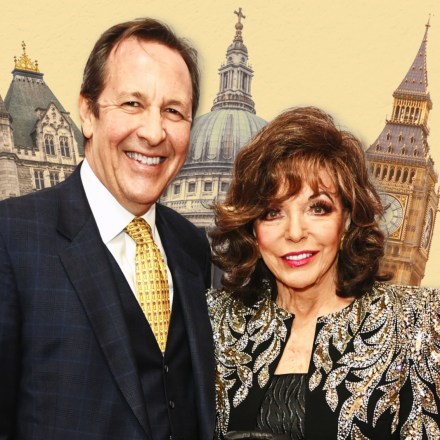
“Never again!” I sigh every January 6, as I pack away the abundance of Christmas decorations lovingly collected over the decades. “It’s too much!” I moan to Percy. “Let’s go to a hot island next year and get away from it all…” But I never do, because I just love Christmas. Every year in early November I eagerly unpack multiple boxes tenderly packed two years earlier because we like to spend Christmas in London one year and in LA the next, as we love both cities. I have quite a lot of extended family in each, so we know that celebrating in either one will be very “happy families.” But it’s the run-ups to Christmas in each city that are quite different. In the US, everyone celebrates Thanksgiving, which comes at the end of November.

Jared Kushner’s international friendships with benefits

In 1998, the conservative intellectual and moralist Bill Bennett published a book, The Death of Outrage: Bill Clinton and the Assault on American Ideals. Bennett had to rush the book out after “I did not have sexual relations with that woman” changed to: “Indeed, I did have a relationship with Miss Lewinsky that was not appropriate.” But the Death of Outrage is almost too quaint a title to capture the age of Donald Trump, especially now that his son-in-law Jared Kushner is back as his closest foreign policy advisor. Trump told reporters who questioned Kushner’s role: “I have Jared. Find anybody more capable.

The West has become ungovernable

My favorite opinion poll of recent times was the one which showed that Donald Trump is disliked by more than 90 percent of Danes. This is a glorious achievement and one of which the President should be proud, and perhaps boast about from time to time – averse though he may be to boasting, of course. This was the lowest favorability rating for Trump anywhere in Yerp and I suppose is partly occasioned by his determination to pry Greenland from the grasp of these ineffably smug Scandis because they have no idea what to do with it and have mismanaged its meager affairs for decades. A personal admission: I cannot stand Danes.

How Queen Camilla is spreading the joy of reading

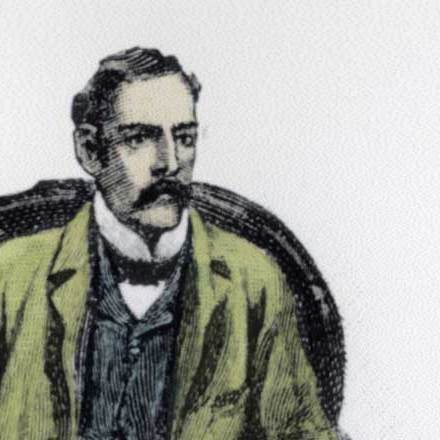
Queen Camilla loves a book. Almost any book will do. "There’s something so tactile about a book," she says. "I like the smell of the pages when you open the cover. I like turning the pages and folding down a corner ready for next time…" The Queen, 78, has loved books for as long as she can remember. She says her father, Bruce Shand, inspired this lifelong passion: "He read to us as children. He chose the books, and we listened. He was probably the best-read man I’ve come across anywhere. He devoured books." Bruce Shand was a soldier. His father was a writer, about architecture, food and wine. His father was another writer, who, incidentally, was briefly and secretly engaged to Constance Lloyd, who went on to marry Oscar Wilde. This is a family with literary leanings.

Queen Camilla’s recommended reading list

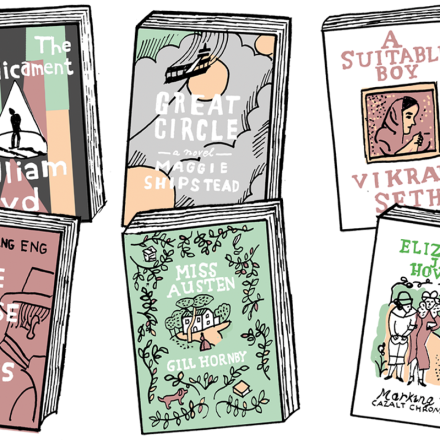
As Christmas approaches and we wrack our brains to find something that suits everyone, there is no present quite like a book. Whether it’s an unputdownable novel, a heart-stopping crime series, a thought-provoking biography or a collection of beautiful poetry, a book provides an escape, the perfect antidote to the hurly-burly of everyday life and, above all, hours and hours of pleasure. Here are half a dozen of my favorites, previously recommended on my Queen’s Reading Room, which you might like to add to your Christmas present list… or (if preferred) keep for yourself! The Cazalet Chronicles by Elizabeth Jane Howard This is a series of books that I return to again and again, to reacquaint myself with the irresistibly charming Cazalet family.

Bonnie Blue: I stand with Nigel Farage

I have sweet memories of Christmas. My dad is proper old-school and would set up the video recorder. I don’t think we’ve ever watched the footage; I don’t know if he was even filming. But we couldn’t do anything until it was filmed. We never had loads of money, but Mum always went above and beyond. There was gold wrapping paper for presents from Santa. My family say I’m impossible to buy for now I’m better off. This year, I’ve asked for Disney princess pajamas. Christmas is a time for me to give back. Last Christmas was a bit of a shock. I was due to be in Australia but was then banned for my sexual stunts. My family was glad because it meant they got me for Christmas. Not that I’m much help. Cooking isn’t my forte.

What England’s old folk songs can teach us

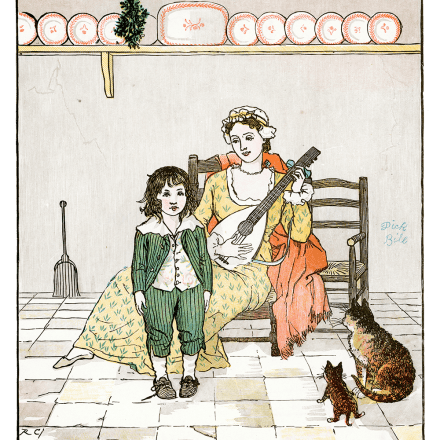
I grew up in the 1980s but in many ways it was more like the 1880s. We lived with my grandmother on the Northumbrian coast and the routine of our days echoed the routines of her youth, perhaps her mother’s and grandmother’s, too. We were like an elephant family in an African game park, following our matriarch around ancient migratory routes, oblivious to the rise and fall of regimes outside. Lunch (no elbows on the table), a walk to the sea, sherry time (Amontillado dry); then my grandmother and my clever younger brother would play Piquet while the children of lesser focus played with the open fire. And we sang around the piano, my grandmother playing, folk songs and ballads from the northeast: "Barbara Allen"; "The Raggle-Taggle Gypsy," "The North Country Maid," "The Golden Vanity.

The joy of crossing people off your Christmas card list

It’s that time of the year again, the time when 12 months’ worth of pent-up malevolence comes flooding out, mixing malice, schadenfreude, one-upmanship and virtual punishment beatings. Yup: it’s time to start writing our Christmas cards. Has there ever been an activity better designed to bring out the worst in people than that dedicated to the season of goodwill? We all know that Christmas is a time to celebrate bitter familial enmity, but the Christmas card tradition goes one better and gets the rest of the world in on the act. This came to me as I was efficiently consulting the list of my Christmas card recipients from last year: I landed on a couple who recently canceled on the day of a dinner party for which it had taken my husband and me three days to prepare.

Are angels real?

One day while out walking, William Blake saw angels sitting in the trees: “bright angelic wings bespangled every bough like stars.” He was eight years old. His fascination – some have called it an obsession – with angels lasted for the rest of his life. When he sat to have his portrait painted by Thomas Phillips, the two men began to argue about who painted a better angel, Michelangelo or Raphael. Phillips, not unreasonably, suggested that since Blake had never seen even an engraving by Michelangelo, he was not qualified to give an opinion on the matter. “But I speak from the opinion of a friend who could not be mistaken,” replied Blake. “And who may he be, I pray?” asked Phillips. “The Archangel Gabriel, sir.

Immigration policy should discriminate

Many years ago, a friend described one of my serious literary novels as “clever.” I was offended – but I shouldn’t have been. The friend was from across the pond, where I now understand “clever” means smart. For Americans, cleverness implies a shallow, facile intelligence. Applied to people, it hints at sly, calculating deviousness or cunning. It has no positive moral qualities, as westerners understand them. Tax evasion can be “clever.” Let’s move on to “culture” – a big, fuzzy word we throw about with careless abandon, that often summons images of traditional clothing and cuisine. But parsed in its most profound sense, culture might best be defined as “what a people admire and what they deplore.

A late Congolese ruler with a new following

At the exit of the National Museum in Kinshasa, capital of the Democratic Republic of Congo (DRC), is a whiteboard for visitors to leave their comments. On that whiteboard, full of underlinings and exclamation marks, are messages like this: “Thank you for your life.” “Thank you for our national unity.” “You left behind a glorious historical legacy. We plan to follow in your footsteps.” A giant photograph of the man the messages refer to hangs in the museum’s main hall as part of its new exhibition, a man in dark glasses and leopard-skin toque, smiling down at his people. More than 28 years after fleeing into exile, Mobutu Sese Seko, once known as “The Leopard” and “The Great Helmsman,” is back in the limelight in the DRC.

How the Roman ranking system actually worked

For otherwise healthy plebs in the Roman world, survival depended on four Fs: farming (the sole source of food and money), fighting, family and friends. Everything else that made life worth living meant having some degree of political control over your own existence, which could be summed up in a fifth F: freedom, or political equality. But the elite had little time for such goodwill towards men. For the plebs, there was the rub. In the 20s BC Livy began writing a history of Rome from its foundation in 753 BC. It was first ruled by a series of seven kings (none actually Roman) who were finally thrown out as tyrants in 509 BC.

roman ranking

Jung Chang: what the West gets wrong about China

No writer has done more than Jung Chang to bring the horrors of Maoist China to the attention of western readers. In her monumental memoir Wild Swans (1991), she recounted the Chinese Communist Revolution, the Great Famine and the Cultural Revolution through the stories of her grandmother, her mother and herself. Its influence was enormous: Wild Swans sold more than 15 million copies, making it one of the best-selling nonfiction books of all time. In Mao: The Unknown Story (2005), co-written with her husband, the historian Jon Halliday, she blew apart decades of Chinese Communist party propaganda to reevaluate Mao as one of history’s greatest monsters, as bad, if not worse, than Hitler or Stalin.

Will US businesses profit from a return to the Russian market?

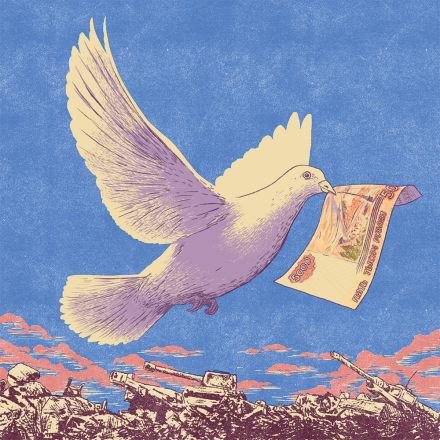
Rome Will peace in Ukraine also prove to be a great deal for US business? Vladimir Putin would certainly like Donald Trump to think so. Within days of Trump’s election victory last November, the Kremlin ordered major Russian corporations to prepare detailed proposals for economic cooperation with Washington. Coordinating these efforts were Maxim Oreshkin, deputy head of Putin’s presidential administration, and Kirill Dmitriev, the US-educated Harvard, Stanford and Goldman Sachs alumnus who heads Russia’s sovereign investment fund.

The battle to stop US universities aiding Chinese repression

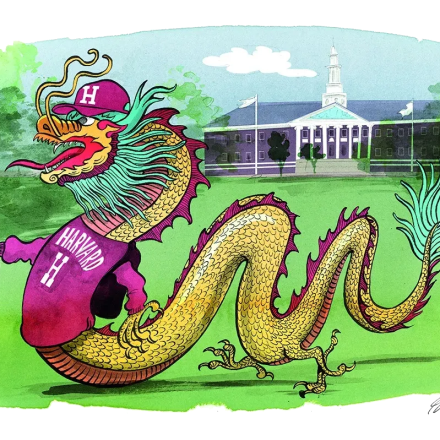
It goes by an innocuous name – “Integrated Joint Operations Platform” (IJOP) – but it’s one of the most sinister components of China’s surveillance state, managing what has been described as a genocide against the Uighurs. The IJOP combines multiple systems of repression – location, messages, contacts, social media and other data from phones, together with information from checkpoints, cameras and biometric records. It then flags “suspicious” individuals for detention and forced labor. Now leading US universities have been accused of extensive collaboration with Chinese laboratories which develop technology that may be deployed or adapted for use in this system.

I want 1989 for Christmas

Here is my list of things I’ve been fantasizing about getting for Christmas, in no particular order: encyclopedia set, piano, record player, landline. In other words, I want 1989 for Christmas. I’m yearning for an analog world. For tactile experiences. Cool piano keys I can stumble over. Encyclopedias I can flip through, getting lost in whatever the pages land on when I open the book. I yearn for the stereo sound of a record when an entire side has played, uninterrupted. I want people to have to reach me on my terms, when I’m home or available, not at any and all times. Growing up in the 1980s and 90s, I spent a lot of time alone with my thoughts, or running around wild with siblings, friends and cousins.

The Sherlockians’ game

There is no better time to read a Sherlock Holmes story than a winter evening. As the rain lashes against the windows and the fog descends, we can imagine ourselves sitting companionably with the great detective and the good doctor around the Baker Street hearth, waiting for the step of a visitor upon the stair. Unfortunately, our 21st-century climate rarely cooperates. The rainstorm arrives when we’re far from a hearth, fighting with an umbrella that turns inside-out at the first breath of wind. And when were you last enveloped in a London fog? The savagery of the elements beating down on 221b seems to belong to another world. "It was a wild, tempestuous night, towards the close of November… Outside the wind howled down Baker Street" ("The Adventure of the Golden Pince-Nez").

Taki’s life as a writer

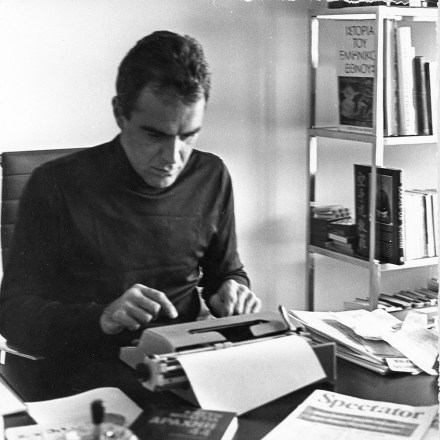
It was roughly 55 years ago, at the tail end of the 1960s, that I took the monumental decision to become a writer. It wasn’t exactly an agonizing one. By then I’d been on the European tennis circuit for a decade, and was kaput. Joining the circuit at 19, I traveled nonstop seeing the world. I was never tired or hungover no matter how much I partied – and I partied relentlessly. And, needless to say, there were constant thump-thumps in the heart, as at every opportunity I pursued beautiful women. I had a great advantage in this regard. As one of the worst players on the circuit, I was usually free to chase the fairer sex by the second day of the tournament. To the losers go the spoils! Except in those days the females who followed tennis looked more like losers than the losers.

david mamet

The myth of human sacrifice

Most of us indulge in mild fortune-telling. We think "If the light changes before I count to five, I’ll get the job" or "If the solitaire hand comes out my tests will be negative’, and so on. We understand prophecy as the ability to foretell the future. But biblically, prophecy was not prediction but castigation. And prophets were those who were inspired by God to describe the present. Dr. King, Malcolm X and Charlie Kirk were modern prophets. Their lives and speech forced the populace to confront the unacceptable and obvious, which is why they were killed. Mass murderers and political assassins are incapable of facing the truth that their fury is not caused by "the other" but by their own mind.

America’s free-speech war on the EU

If I were a bookie, I would be making odds now about when the European Union will finally unravel and die. Unless there is an imminent and drastic course correction, the blessed event cannot be far off.  I might need a Doomsday Clock akin to the one publicized by the Bulletin of the Atomic Scientists. Their clock hovers near midnight, which signifies nuclear Armageddon, the minute hand pushed closer or farther away from the blast depending on minatory world events. My clock would measure the EU’s proximity to implosion. Its recent decision to fine Elon Musk and his company X €120 million for “non-compliance with transparency obligations” has me nudging the minute hand closer to midnight. “Non-compliance with transparency obligations.” What do you reckon that means?

What’s wrong with the West?

It is 25 years since Theodore Dalrymple published Life at the Bottom: The Worldview that Makes the Underclass. In this now famous set of essays, Dalrymple, who worked as a psychiatrist in British prisons, describes the damage done to the poorest in society by the West’s progressive middle-classes, who encourage criminals to see themselves as victims and cheer on the destruction of the traditions and norms that once guided working-class life. On the other side of the Atlantic – and the other side of the middle-class divide – the writer Rob Henderson came to the same conclusions as Dalrymple.

The pleasure in not knowing

A few years ago, the podcaster Lex Fridman published a list of books that he was hoping to read in the year ahead. It included works by George Orwell, Fyodor Dostoyevsky, Hermann Hesse and others. If he had published this in the world of print media he might have got back some encouraging noises. But because he put the list online – worse, on the platform then still known as Twitter – he received mostly mockery. “Who hasn’t read Animal Farm?” was the general tenor of the blowback, as though a man who had been a researcher at MIT was next to being a Neanderthal.
douglas knowing

No, America isn’t fundamentally flawed

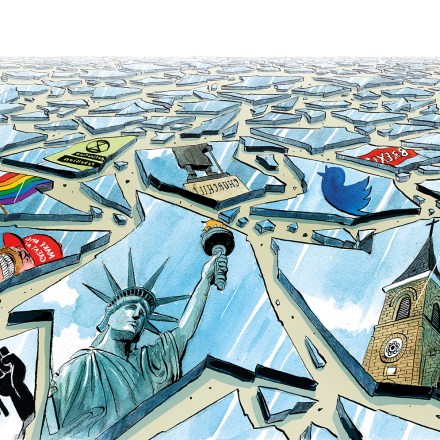
What has gone wrong for Americans? To listen to an increasing number of politicians and pundits on both sides, from Tucker Carlson to Alexandria Ocasio-Cortez, from Nick Fuentes to Zohran Mamdani, the answer seems to be: everything. Americans are unable to get a job; to afford the necessities of life; to get married or have children; to find religious meaning or form friendships. And all of this can be laid at the feet of corrupt institutions and a corrupt system. This conspiracy-tinged, vitriolic take on the American system is a lie. Yet it contains a grain of truth. Our institutions have been led self-servingly by a coterie who disdain American values.

The terrible logic of looksmaxxing

For years, I’ve had a fantasy of destroying my own life by following every piece of extreme self-improvement advice the internet offers. Not the wholesome stuff. I mean the industrial-strength protocols: starvation diets, rhinoplasty, Invisalign followed by double-jaw surgery, chemical peels that promise an entirely new layer of skin. Whatever surfaces in the algorithmic swamp. The appeal is the same as another, more respectable fantasy: the one where a doctor scans your chart, finds The Problem and hands you a pill. You swallow it and everything clicks. Your suffering had a single, nameable, diagnosable cause. The cure might give you rashes or IBS, but who cares? You finally know what’s wrong, and what’s wrong can be treated. The uncertainty is over.

looksmaxxing
slipshod

Slipshod: a short story by Sarah Perry

It was months before the difficulty with Marnie and Addison was talked about, or even alluded to. The sight of their names in emails circulated around the department was enough to cause a pall to settle on everything, like ash from fires only just put out. Besides, the nature of the difficulty (that was the word we all used) was both so opaque and so distressing we’d have had trouble talking about it, even if we’d wanted to. It fell to me to piece things together. My brief from Helen was simply to satisfy the university that nobody in the department was to blame. It fell to me because I am, she tells me, part of the furniture: unremarkable, functional, predictable.

The peril of playing with viruses

If a military team made a mistake during a nuclear war preparedness exercise and accidentally obliterated millions of people, you would not expect to find some of the very same people merrily admitting a couple of years later that they have carried out the very same kind of exercise with different live nukes and slightly fewer safeguards. Would you? That is roughly what I recently found out has apparently been going on in China. The Wuhan laboratory that conducted risky experiments on bat viruses at inadequate biosafety levels and almost certainly caused the pandemic has now revealed that it has done the same kind of risky experiments on another lot of horseshoe-bat viruses at low biosafety levels. Is accidentally killing millions not enough to give them pause?

The scientific case for the existence of intelligent alien life

The foundation of science is based on the humility to learn, not the arrogance of expertise. When comet experts argued that the interstellar object 3I/ATLAS must be a familiar water-rich comet as soon as it was discovered in July, they behaved like artificial intelligence systems: only able to reflect the data sets they were trained on. For decades, the data set that established comet expertise largely comprised icy rocks in the solar system. My counterpoint is simple: humanity launched technological objects into space, so we must conclude that alien life forms could do the same. This possibility must be added to the training data set of comet experts when studying interstellar objects.

An interview with the physicist David Deutsch

The Amazon reviews for David Deutsch’s The Beginning of Infinity don’t alert you to the fact that this is a book on theoretical physics. They sound more like a weepy divorcé’s YouTube comments below a Mark Knopfler guitar solo. “I didn’t so much read it,’ says one. “It read me.’ ‘I was honestly sad when it was over,’ writes another. “This book changed my way of seeing the world, politics, science and, most importantly, of seeing what I will understand as containing some truth.” When I talk to Deutsch – one of the most sensationally interesting theoretical physicists of our age – on Zoom, I see two beady eyes peering at me over some non-spectacular spectacles under a mess of thin white hair, borne by a thin white man in a thin white shirt.

For most people on Earth, learning is just another form of entertainment

When the anthropologist Bronislaw Malinowski traveled to Papua New Guinea in the 1920s, he discovered a group of remote and mostly naked tribes, none of whom had encountered literacy before. And without writing, he found, they organized knowledge in a different way from the rest of the world. Rather than label and categorize everything that exists into linear encyclopedic facts, for instance, they only bothered to record and give names to local flora and fauna if they were useful in their own lives. Animals that were neither food nor dangerous, for example, were treated as unimportant. That is just a bush, they would say, or, merely a flying animal. After centuries of mass literacy, we’ve forgotten that our brains still work like this, too.