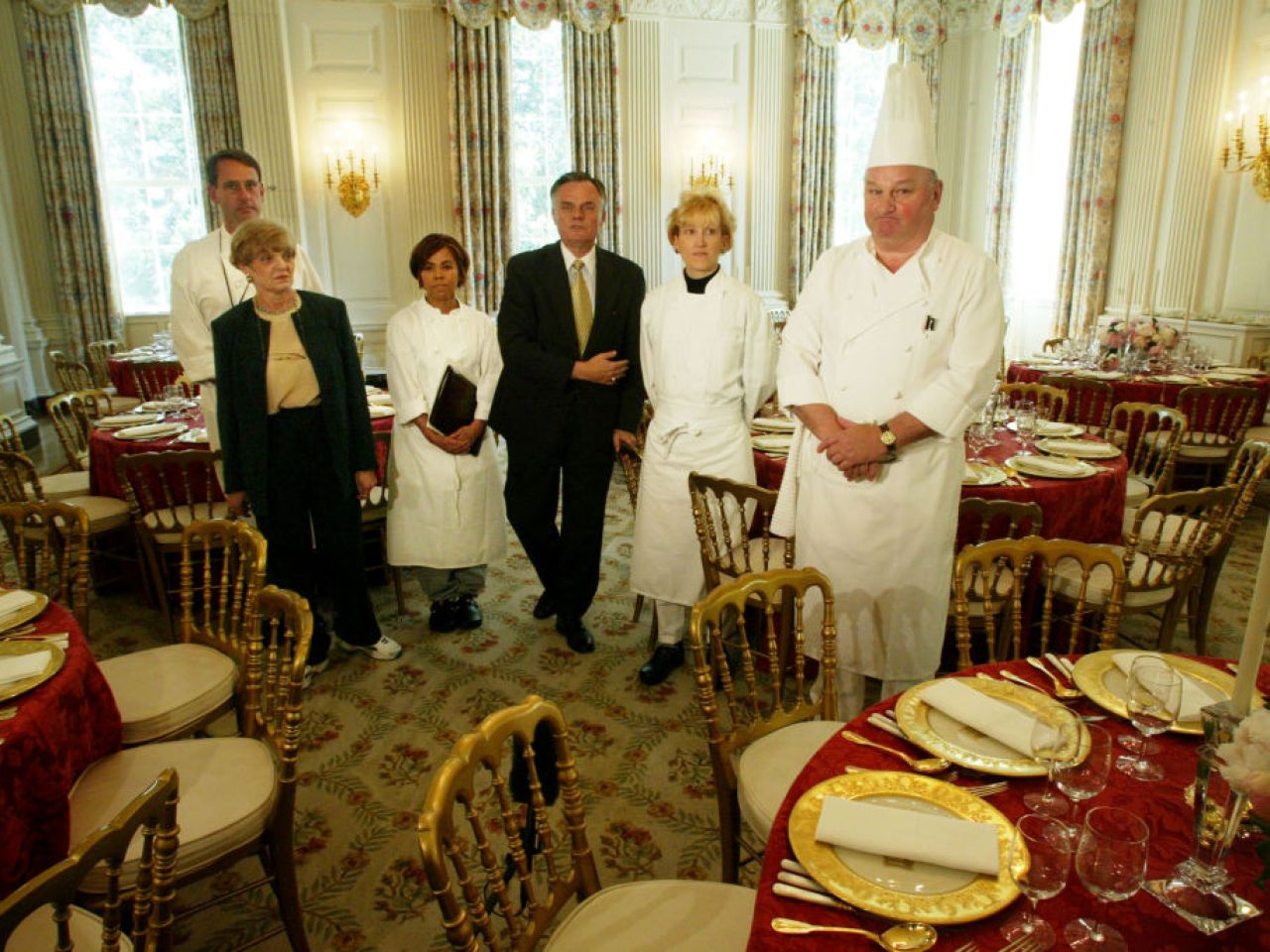



Gary J. Walters knows where a lot of the bodies are buried in the White House. He was chief usher for 21 years, worked there for 16 years before that, and has served and come to know intimately seven presidents and their families. Now he has written a book about his extraordinary career, White House Memories 1970-2007: Recollections of the Longest-Serving Chief Usher. Think what he must know of the skulduggery (Nixon), the marital strife (the Clintons), the chastising of children (the alcohol-inclined Bush daughters) and the shouting matches (doubtless all of them).
As I gently prod Gary for gossip, he smiles mischievously – at 79, he still looks smart and spry enough to be running the White House machine. Gold-trimmed photos of his ex-bosses hang on the study wall behind him, with a big Ronald Reagan waving over his left shoulder. “Most of it will go with me to the grave. Mrs. Reagan taught me a very good lesson, and it was ‘just say no.’”
Gary began working at the White House under Nixon as a Secret Service protection officer. In the course of his duties he would occasionally speak on the phone to a receptionist in the East Wing to discuss tour groups. In 1976, he put down his gun and became assistant usher under Gerald Ford. Instead of guarding the doors he was now satisfying his curiosity about what happened behind them. And finally he met the receptionist, Barbara, in person. She was, it turns out, “a nice-looking young lady.” He denies going after the job to meet her but admits, “I can’t say that meeting her wasn’t interesting to me.” They dated, married, had a daughter – and have just celebrated their 48th wedding anniversary. Barbara is “still nice-looking,” he adds with a grin. He was promoted to chief usher in 1986.
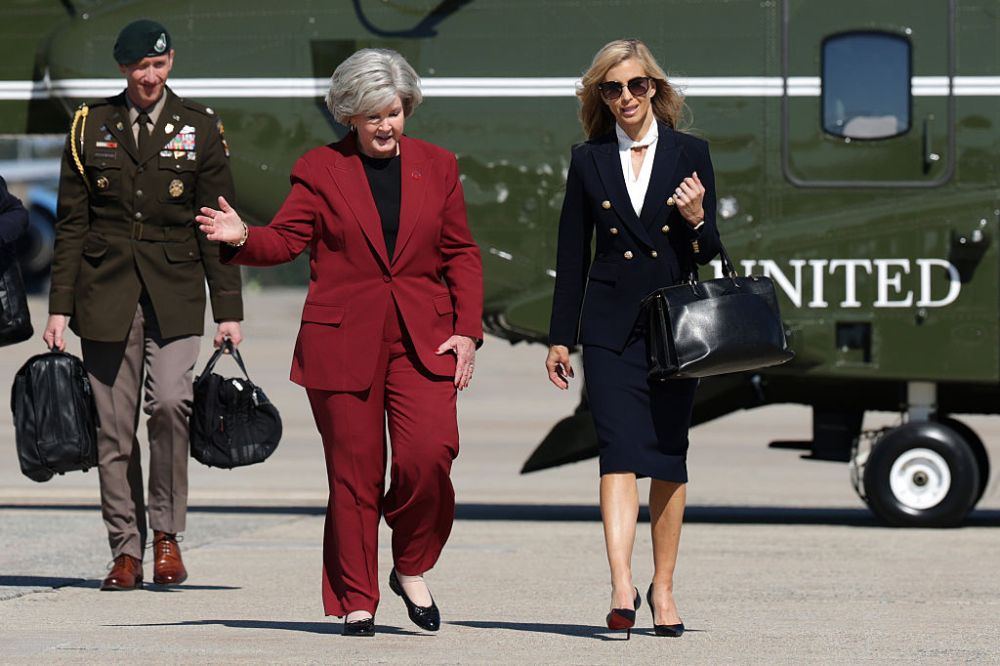
One issue Gary is candid about, though, is Donald Trump’s new ballroom. Critics have been quick to label it a gauche eyesore. Gary backs the big, beautiful project. “There’s always some kind of construction going on,” he says. “And all the presidents I’ve worked for wanted more space to entertain more people, dating back to the Nixon administration. When the Vietnam PoWs returned to the United States [in 1973], we had 1,600 people on the South Lawn in tents at a black-tie dinner. It did not go easily.
“All presidents have talked about a larger space for the presidential use. When they go overseas on major trips, they’re entertained in large facilities. And there’s always been a little bit of lamenting by all the presidents and their staff about the White House.”
Gary knows the Trumps a little, after he was asked to help them settle into their new life when the Donald won his first term. “I met with members of his staff and actually with him and Mrs. Trump in New York about the transition from one family to another.” He thinks they’ve settled in well, and he also approves of how Melania has decorated the White House for Christmas this year. What she’s chosen to honor military families and highlight the country’s 250th anniversary is “breathtaking in some cases.”
But is the Christmas spirit the only spirit present in the White House? Ghosts of presidents, first ladies, maids and even a British soldier killed in 1812 are rumored to stalk the corridors at night. Has he ever seen them? “I haven’t, but one gentleman walked into the Lincoln Bedroom to move furniture and he noticed a rocking chair. He said it was still and then it started rocking and he felt the presence of Abraham Lincoln in the room. There were maids who said things were moved around at times that they couldn’t explain.”
Every visit by a head of state or government was notable, but sometimes the most memorable moment was meeting their partner. “Mrs. Thatcher was saying goodbye to the president, and her husband Denis was kind of left behind in the residence. I took him outside to show him the places when the war of 1812 was fought and the British came through and burned the White House. We kept a portion of the exterior stone that had flame marks. I showed those to him and he said, ‘You didn’t have to do that.’ And I said, ‘Yes, I did!’ He was wonderful, absolutely wonderful.”
The most important and demanding duty of a chief usher will always be the presidential transition. A divorce and a marriage all on the same day. “The current president and first family are the president and first family until about noon on Inauguration Day. And four hours later, we have a new family coming in and now it’s their home. Their furniture is in the right place. There are no boxes unopened. Their clothing’s hung in the closets. Their favorite foods are in the kitchen, snacks in the pantry.”
Awkward conversations sometimes had to be had – such as when Gary explained to Nancy Reagan that the president and his family have to pay their own bills. “She was a little taken aback. She had no idea that the president was responsible for personal meals, guests’ personal meals, dry cleaning and all their personal activities.”
The memory that stands head and shoulders above others is 9/11. “It was the most frightening day. I still believe those brave Americans who brought the plane down in Pennsylvania saved my life because I still believe that plane was coming to the White House, not the Capitol. That evening, the president came back to the White House to talk to the American people from the Oval Office. And then he came back to the residence and he was exhausted. It was a very difficult evening.” Other remarkable memories from his “magnificent ride” before his retirement in 2007 include organizing a 1950s-themed party for Hillary Clinton, complete with a Harley-Davidson in the Blue Room; arranging for Ronald Reagan to have his favorite food taken from the White House kitchen to the hospital after the assassination attempt; and racing in to work to help move the Clintons out after a plane crash on the South Lawn in 1994.
Does he miss the place? “When you leave, you leave it behind,” he says firmly, without a trace of regret. And why would he have regrets, with such wonderful memories, a ringside view of history and, most important of all, Barbara?
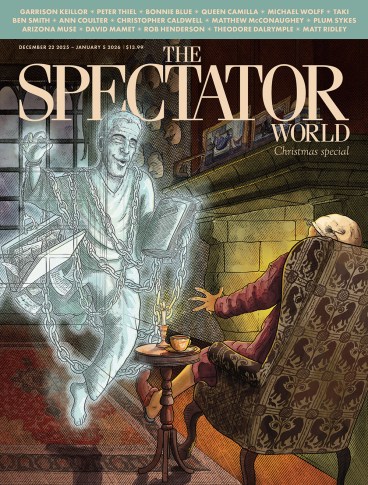
This article was originally published in The Spectator’s December 22, 2025 World edition.



Comments