Books & Arts

Books and Arts

Why are Lawrence Osborne’s novels suddenly popular in Hollywood?

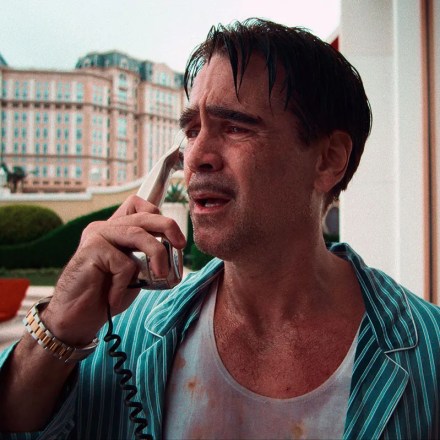
The film Ballad of a Small Player opens with a blast of classical music, a shot of the Macau skyline and Lord Doyle (Colin Farrell) waking up in a hotel suite littered with Champagne bottles, cigarette butts and designer loafers that are starting to show their wear. While he dresses and shaves, a voice-over informs us he has three days to live. A sharp observer might notice he seems to have considerably less than that. Either way, for the next 100 minutes, director Edward Berger (All Quiet on the Western Front and Conclave) treats us to a sumptuous vision of one English con man’s final spree before oblivion. It will take an even sharper-eyed observer to catch, as the final credits snap past, that they have just watched an adaptation of a Lawrence Osborne novel.
anthony bourdain

The Anthony Bourdain Reader leaves a reader hungry

Charismatic, handsome and with a great white shark’s feral cool, Anthony Bourdain was someone that everyone wanted to be. The chef, writer and TV presenter described the premise of his award-winning shows, No Reservations and Parts Unknown, as “I travel around the world, eat a lot of shit and basically do whatever the fuck I want.” They cemented his image as a gadabouting, kamikaze gourmand. Bourdain scarfed down andouillette and warthog anus, drank sun-bear bile and polished off the still-beating heart of a cobra, plonked into a shooter of Vietnamese firewater. He showed Barack Obama the correct way to slurp bún chả noodles on a steamy Hanoi side street, and he and his team watched from their hotel pool as Israeli jets strafed downtown Beirut during the 2006 invasion.

Michelle Obama’s new book about style lacks substance

First lady is a strange role. Even when your husband is the first black president, and you’re a Princeton and Harvard-educated former corporate lawyer, America still projects its most regressive ideas about gender onto you. So I understand that Michelle Obama, like Hillary Clinton before her (skipping Laura Bush, a more classical first lady, along with, more recently, Jill Biden and Melania Trump), might have felt constrained, faced with expectations she could never satisfy. I don’t doubt that being black added enormously to that burden. Yet there is nothing more irritating than the person of Michelle Obama complaining. And she is always complaining.

michelle obama
mitfordmania troublemaker

Mitfordmania in Carla Kaplan’s Troublemaker

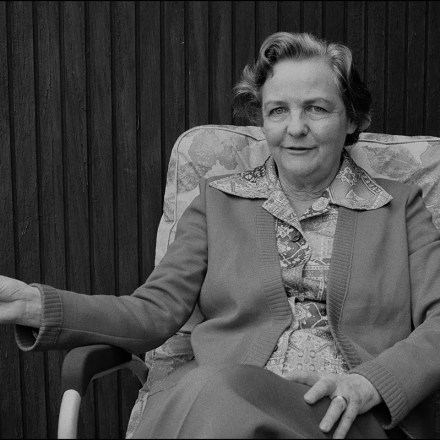
I won’t attempt to explain Mitfordmania; we’d be here all night. Suffice it to say that fascination with the British sisters – Nancy, Pamela, Diana, Unity, Jessica and Deborah, born to the 2nd Baron Redesdale between 1904 and 1920 – shows no sign of waning. This year alone, the six have inspired Outrageous, a lavish (and fatuous) multi-episode television drama available on BritBox; The Party Girls, a play by Amy Rosenthal; and Do Admit: The Mitford Sisters and Me, a graphic novel by cartoonist and fangirl Mimi Pond. Now comes biographer Carla Kaplan’s Troublemaker: The Fierce, Unruly Life of Jessica Mitford. I did wonder if there was anything left to say. Famous for the muckraking classic The American Way of Death, Jessica also wrote two well-received autobiographies.

Louis C.K. fails to follow in Faulkner’s footsteps

The Great American Novel is a holy obsession – the Everest every writer dreams of summiting. For most, that dream begins and ends with William Faulkner, whose winding sentences and sunburned Southern landscapes birthed prose that seemed to breathe. His words marched; crookedly, yes, but always with purpose. Louis C.K., a would-be Faulkner disciple, trudges into the same swamp in Ingram, minus the map, the bearings and any sense of control. What was presumably intended to echo the Mississippian’s hypnotic disarray becomes instead a masterclass in incoherence. The story, told in long and sweaty first-person narration, follows a boy wandering through a Texan landscape of mud, hunger and half-formed memories. The intention is noble; the execution is catastrophic.

louis ck
wikipedia

The Seven Rules of Trust sees Wikipedia as a blueprint

Everybody criticizes Wikipedia, but everybody uses it. Having spent my childhood cross-legged on my carpet reading dictionaries and encyclopedias, I found it a revelation and refuge from the get-go. Google could never emotionally compete. While some AI products have become useful knowledge tools, there is still nothing like Wikipedia’s hyperlink paradise, which allows nights to slip away as you click through slices of world history or science. Now its co-founder Jimmy Wales has written a book (with the help of author Dan Gardner) about what enabled this impossible project to become one of the world’s favorite utilities. When reading The Seven Rules of Trust, two things jump out at you.

What monuments stand to teach Americans about themselves

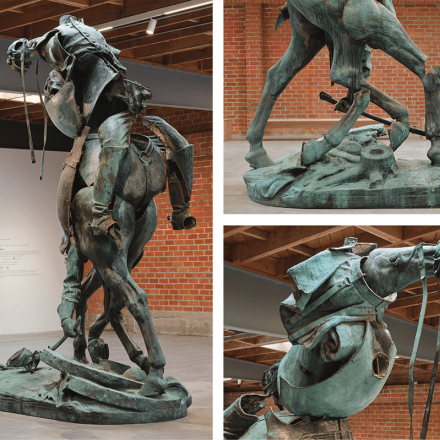
Why do we raise monuments? Why do we tear them down? These questions hover over MONUMENTS, now on view at Los Angeles’s Museum of Contemporary Art and the Brick. The premise is straightforward enough: gather the remains of America’s shattered sculptural conscience – decommissioned Confederate statues and their graffiti-marred plinths – and display them alongside contemporary works on racial topics. This comparison is supposed to reveal something about America’s nature and history, and it certainly does: it shows us just how attached we are to grievance. Both the raising and the destruction of monuments nourishes convictions on either side, ensuring that the argument can never end.

monuments
renoir

In defense of Renoir’s pretty pictures

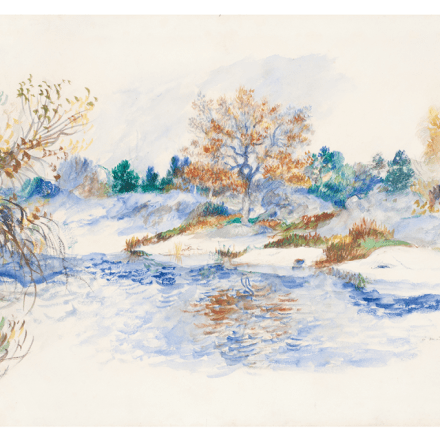
Those who think it’s chic to dismiss Renoir have a rethink coming, courtesy of the absorbing, highly informative exhibit Renoir Drawings, now on view in New York. Not so long ago, the idea of ousting Pierre-Auguste Renoir (1841-1919) from the canon of western art sparked a movement of sorts. “RENOIR SUCKS AT PAINTING,” proclaimed a protester’s sign at the Museum of Fine Arts in Boston in 2015. The performance artist Max Geller had organized the demonstration to condemn Renoir as a purveyor of “treacle.” His female nudes objectified women, it charged; even when clothed, they smiled and blushed too prettily. Indeed, Renoir’s work held value only for the unsophisticated and its popularity represented the triumph of the cliché.

Stoppard, Sappho and me

Many years ago, and well retired, I was working in my study at home when the phone rang and a voice said, “This is Tom Stoppard. David West put me onto you.” David was the professor of Latin at Newcastle University and it emerged that Tom used him when he had queries about Latin, but now had a question about the ancient Greeks. When he couldn’t answer it, David suggested that Tom should call me. I felt a vast chasm of ignorance opening in front of me and have no memory of what the question was – but my reply must have satisfied him because he continued to throw the odd leg-break my way. To give some idea of his range of interests, on one occasion he became interested in the Greek perfect tense. Don’t ask me why, but that was at least something I could do.

tom stoppard
liberation

Liberation is a witty, genuine snapshot of second-wave feminism

In the second act of Liberation the main cast quietly, and without fuss, starts to undress. By the time the lights go up, all six women are naked. In this masterful play by Bess Wohl, the moment does not feel shocking or gratuitous but somehow comforting. In 1970s Ohio, a group of women meet weekly to fight for equality through “consciousness-raising.” Mostly that consists of free-ranging conversation, of which the women have a lot and which is always smart, funny, vulnerable and eye-opening. But after reading an article about body positivity in Ms. magazine, they meet in the nude.

Have Americans lost their sense of humor?

Humor has become serious business. A nation of anxious primates trapped in a silicon casino of likes, retweets and dopamine-soaked drudgery, America is suffering from what the comedian Norm Macdonald called a “crisis of clapter.” Terrified of saying the wrong thing, needing punchlines to be spoon-fed – what was once the funniest place on Earth has become a tight-lipped, tongue-twisted society where jokes are rewarded with polite applause instead of genuine laughter. It’s the old stink of a well-mannered aristocracy, and very un-American indeed. From his beginning, the ugly American – wild-eyed and rabble-rousing – rankled the Old World.

humor
arcade fire

Arcade Fire extinguished

Amid the many disappointments and commercial flops the music industry saw this year, perhaps the most egregious was the complete failure of Arcade Fire’s album Pink Elephant. The failure represents not merely the probable end of the band, but also the death of Obama-era rock. Pink Elephant received dismal reviews and didn’t even chart on the Billboard 200. Given that their last album, We, reached #6 as recently as 2022, and their previous LPs, Reflektor and Everything Now, topped the charts, this is a near-unparalleled fall from grace for a once-mighty act. That the married pair who compose the nucleus of the band, Win Butler and Régine Chassagne, announced their separation a few months later was the particularly rancid icing on the already-stale cake.

When Dylan went folk

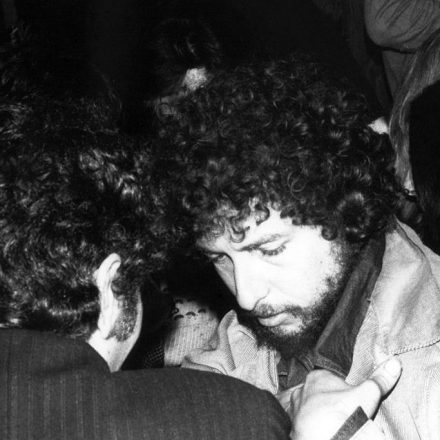
For all the billions Taylor Swift has made from guiding her career into carefully delineated “eras,” it was Bob Dylan who pioneered this career path. With practically every new album, Dylan traded one persona for another. There’s the folkie hobo of The Freewheelin’ Bob Dylan, the pill-popping beat poet of Blonde on Blonde, the cleaned-up country crooner of Nashville Skyline, the Christian revivalist of Slow Train Coming and many, many others. This year marks the 50th anniversary of Dylan’s The Basement Tapes, a tranche of previously unreleased hoedowns, goof-offs, shaggy-dog stories and barroom ballads that was never meant to be a proper album, but might be the closest we can get to seeing the man behind the mask.

bob dylan