

For years, I’ve had a fantasy of destroying my own life by following every piece of extreme self-improvement advice the internet offers. Not the wholesome stuff. I mean the industrial-strength protocols: starvation diets, rhinoplasty, Invisalign followed by double-jaw surgery, chemical peels that promise an entirely new layer of skin. Whatever surfaces in the algorithmic swamp.
The appeal is the same as another, more respectable fantasy: the one where a doctor scans your chart, finds The Problem and hands you a pill. You swallow it and everything clicks. Your suffering had a single, nameable, diagnosable cause. The cure might give you rashes or IBS, but who cares? You finally know what’s wrong, and what’s wrong can be treated. The uncertainty is over. Now you just follow the protocol.
This is the gravitational pull behind looksmaxxing – a subculture with its own logic, vocabulary and science. Softmaxxing covers the noninvasive rituals: skincare, gym, grooming, clothes. Hardmaxxing is the medical escalation: fillers, surgeries, steroids, Chinese peptides. If you pursue looksmaxxing relentlessly enough, you “ascend.” The word is used almost religiously. You forcibly transcend your original genetic tier and enter a higher caste of face. The promise is simple and constant – you can make the world treat you better by making yourself better.
I first encountered this years ago on a forum for women who saw themselves as objectively ugly. That was back when “femcel” meant an unattractive woman with no romantic prospects, not a radical feminist opting out of dating. Users collected studies on attractiveness bias: who gets hired, who is granted basic empathy. The premise was brutal in its clarity. The world is calibrated for pretty women. Everyone else lives their life in hard mode.
Such forums were more honest than mainstream body positivity ever was. A typical post translated as something like: “I am not overweight or unkempt; most of my issues require extensive cosmetic procedures to fix while others are not fixable at all.”I understood the arithmetic intimately. The constant calculation of whether your face is subtracting opportunities, relationships, respect. The suspicion that something fundamental is wrong with you, something visible to everyone but unspeakable. I thought that knowing I was ugly would make the world a more navigable place. I was wrong.
The refuge didn’t last. What began as a community for self-identified ugly women gradually filled with “7s” and “8s” seeking to become “9s.” One longtime user described it as a hostile takeover by beautiful women bragging about procedures and compliments. Another put it more starkly: “Most here already benefit from pretty privilege and just want more and more of it. I guess I’m an anomalous abomination for which there is no hope.”
At first, I thought this was just the usual trajectory of niche communities going mainstream. Now I think it was the deeper logic of looksmaxxing unfolding exactly as designed. If the goal is always more, no one ever gets to stop. The “7” chasing “9” is as trapped as the “3” chasing “5.”
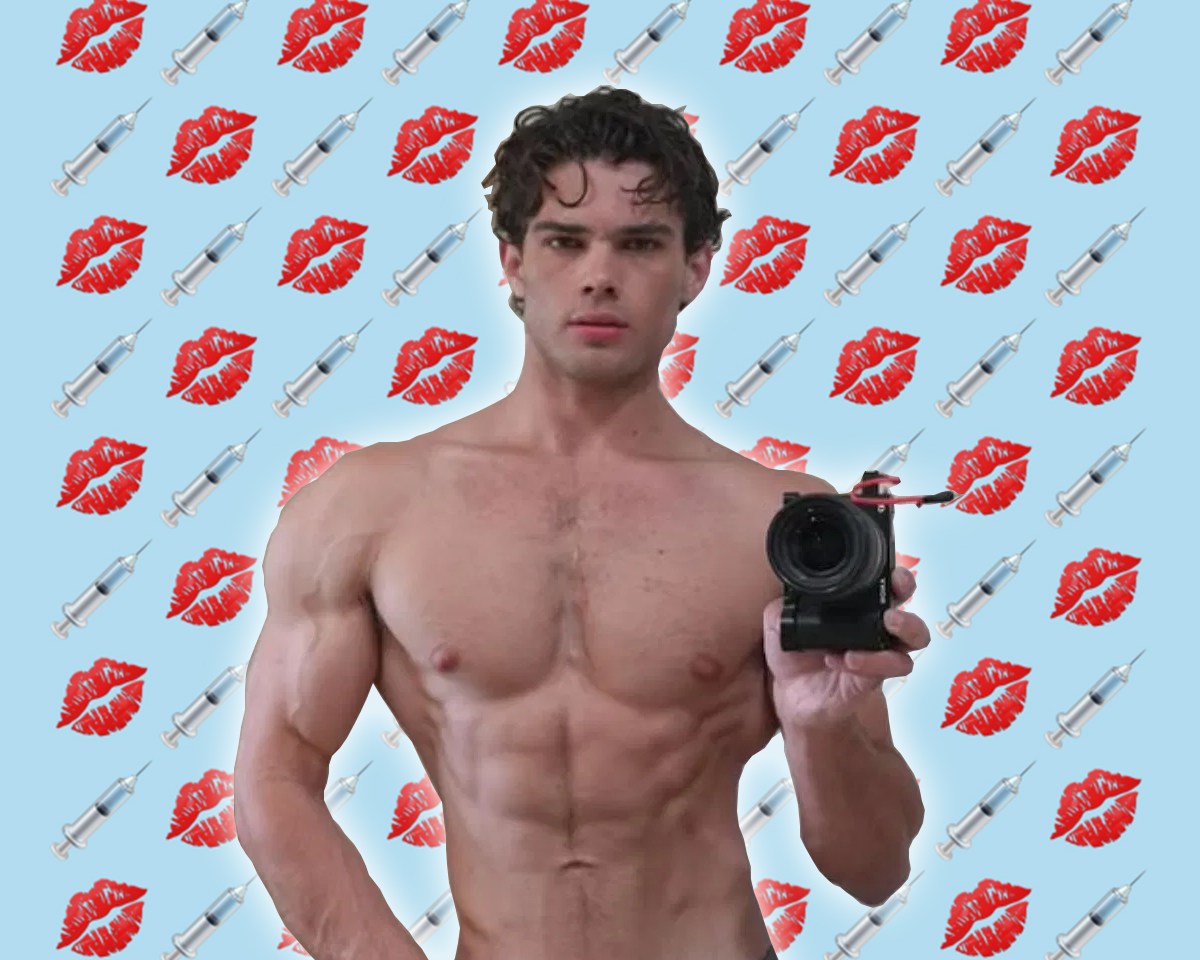
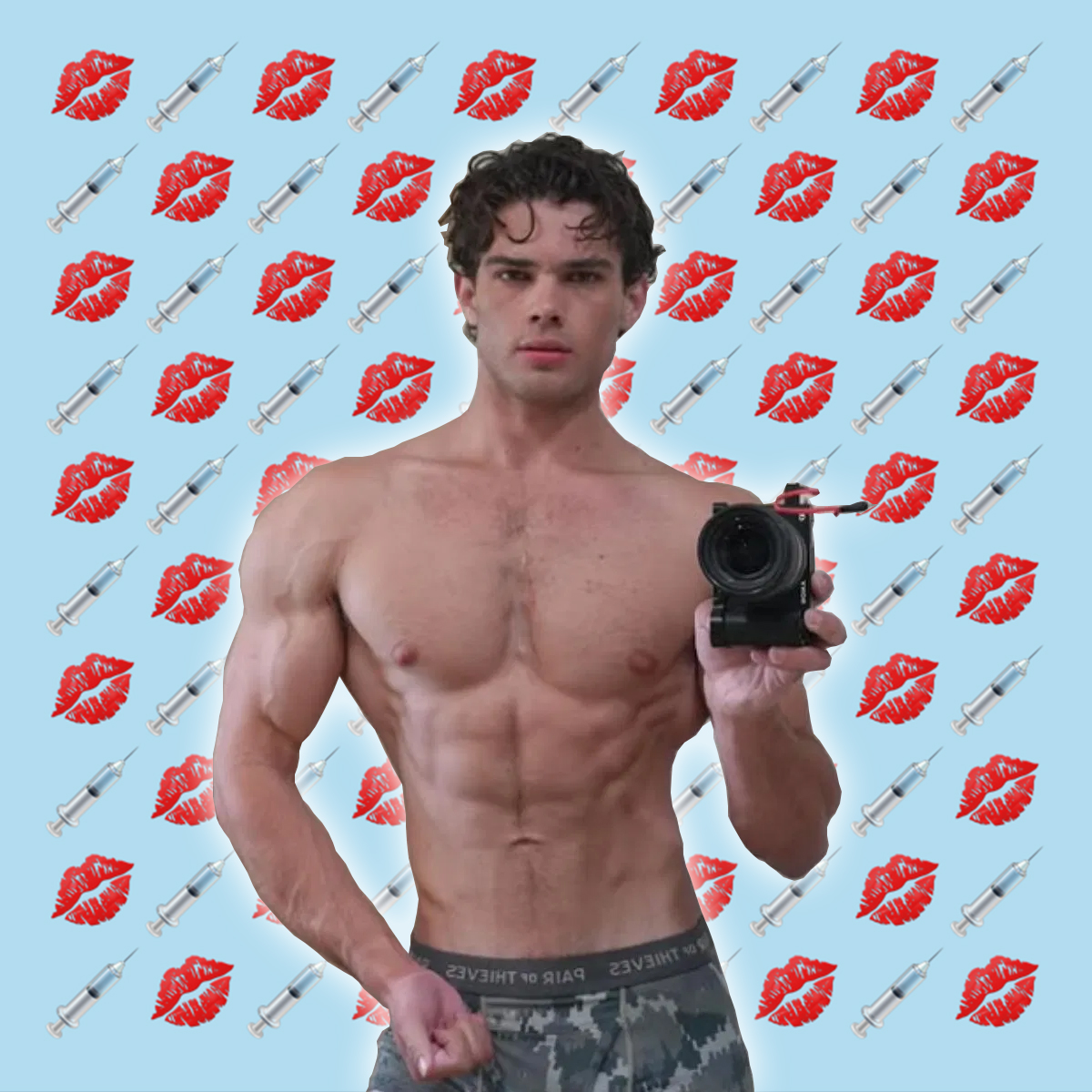
Somewhere amid this evolution, a figure emerged from the male equivalent of these spaces: a 19-year-old streamer and looksmaxxing-forum moderator from New Jersey who calls himself “Clavicular,” after the collarbone, the quintessential symbol of leanness. Teenagers make edits of him on TikTok set to moody music, half-mocking, half-reverent. He streams himself injecting steroids, fillers, peptides. He posts diagrams of future procedures, some of them DIY. He confesses, casually, to wrecked hormones, legal trouble, a body that no longer produces testosterone. He sells a course teaching others how to follow him. By the community’s metric he is a success story. He ascended. And what he received for his devotion was a permanent obsession with his appearance.
The deeper cruelty is that looksmaxxing isn’t really a subculture. It’s American culture with the mask off. The same impulse animates the performance of political virtue and the compulsive need to demonstrate moral, social and professional improvement. Individualism promised that you could define yourself. Instead, it made you responsible for justifying your existence. The self became a project, then a test, then a burden.
There are only two responses in this world: optimize the self until it collapses, or dissolve the self into something larger – fandoms that consume your identity, political movements that offer total belonging, social worlds that promise absolution in exchange for conformity. Both paths arise from the same sense that you, alone, are insufficient. Watching Clavicular, I recognized my own fantasy: the hope that if I just fixed enough pieces of myself, I would finally be free.
The fantasy of destroying your God-given face through self-improvement is not, at its core, a fantasy about becoming beautiful. It is a fantasy about being done. About reaching a point where the answer to “What should I do with myself?” is “Nothing.”
I don’t yet know how to imagine a world where people who will never ascend are allowed to remain anyway, where an unoptimized life is still a life. But I know what the alternative looks like. It looks like Clavicular plotting how to get to Turkey, or wherever, to get a Le Fort II osteotomy that will never deliver him from himself.
And it looks like me, staring at my reflection and seeing a new flaw every time I blink. My crooked teeth, the jaw that so desperately needs surgery, my asymmetrical nose with the bulbous tip, the eye that sits a few painfully noticeable millimeters higher than the other.
This article was originally published in The Spectator’s December 22, 2025 World edition.






Comments