Spectator Life

Spectator Life

An intelligent mix of culture, style, travel, food and property, as well as where to go and what to see.

Home cooking, but idealised: 2 Fore Street reviewed

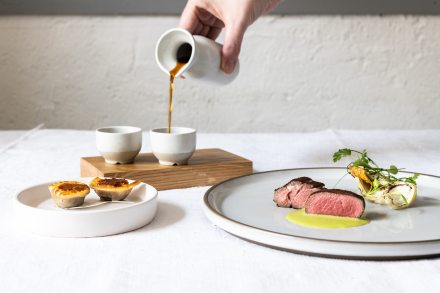
The restaurant 2 Fore Street lives on Mousehole harbour, near gift shops: the post office and general store have closed, leaving a glut of blankets and ice cream, the remnants of Cornish drama. It’s a truism that Mousehole is hollowed out – tourism changes a place, and no one knows that better than Mousehole. Eating at 2 Fore Street gives the visitor the opportunity to examine what they have done with what they call love. There’s a mania for creating 30 perfect soufflés a night thatI cherish  Mousehole is one of those cursed villages that gather in the south-west: haunted in winter and glutted in summer, to paraphrase ‘The Pirates Next Door’.

With Eddie Huang

23 min listen

Eddie is an American author, chef, restauranteur, presenter and former attorney. He has recently brought his famous Taiwanese bao buns over the UK, and they are now available at Neighbourhood in Islington and Shelter Hall in Brighton.  On the podcast he tells Liv and Lara about his early memories of cooking with his mother, how to make the perfect fried rice, and the process of setting up his acclaimed restaurant Baohaus in New York.

Forget cod – there are plenty more fish in the sea

When it comes to seafood, Britain is a curious place: surrounded by water, in which you can find some of the best fish and shellfish money can buy, and yet so often we are averse to eating it.   There have been numerous campaigns promoting British fish led by just about every chef on television. Hugh Fearnley-Whittingstall is one. It seems almost every month that the River Cottage fellow is trumpeting the virtues of our fish stocks. Rick Stein is another; a little more successfully, from his empire in Cornwall. When was the last time you spotted a John Dory in Tesco or a fresh megrim sole on ice in Sainsbury’s?

The strange allure of wine tinnies

Some years ago, on a trip up America’s Pacific Northwest, I spent a night in Portland in a hotel that was depressing in the way that not-quite-posh, not-quite-cool hotels can be. As part of its attempt to inject a sense of pizzazz into my cavernous room, there was a welcome pack whose starring feature was a can of Pinot Noir – the size and shape of a Diet Coke can, with a joke on the side about this being ‘soccer mom’ wine. The reference to hassled housewives ferrying their progeny about to games, desperate for surreptitious booze, depressed me further and I added ‘wine in tins’ to the list of vulgar American inventions I’d forever resist.

The Britishness of Bordeaux

Burgundy or Bordeaux? We were discussing that unending question during dinner over the weekend. I think that there is only one answer: ‘Yes.’ ‘But which, you clot?’ ‘Either. Better still, both.’ It is so much a matter of sentiment, and of which great bottle you have been lucky enough to drink most recently. But there is an argument, which is nothing to do with quality, that Bordeaux – claret – is more British. This is as true in North Britain as in England. There are various versions of a well-known piece of doggerel. My favourite is: ‘Proud and erect the Caledonian stood / Auld was his mutton but his claret good.

How to make your own burger buns

Do you ever find yourself holding forth on a topic you hadn’t realised you cared about? You know, someone asks you an innocuous question in passing about the merits of slow cookers, or the best way to grow cabbages, and before you know it, 20 minutes has passed and you're still grandstanding. There are a few topics that have crept up on me like this during my life: I have found out that I feel extremely strongly about pyjamas (pro), low-calorie cooking spray (anti) and the TV show Stars in their Eyes. And, it turns out, burger buns. I truly didn’t believe I had anything approaching an opinion on burger buns. But the moment I turned my mind to it, I realised that, to the contrary, I had very strong opinions on this apparently benign subject. So what is required of a burger bun?

Confit: the best (and most delicious) way of cooking duck

Of all the myriad ways of preserving, confit always strikes me as wonderfully improbable. The ability to preserve meat just through cooking it slowly in its own fat feels particularly wild. And the fact that this simple, unlikely process makes the meat more tender, more flavoursome than any other way of handling it only adds to the magic. Of course, if I pause for a moment and engage my brain, it’s very obvious why it’s such a successful method: most preservation relies on salting to reduce water levels, or excluding oxygen from the preserved food, both of which prevent bacteria from growing. Duck confit takes a belt and braces approach. The duck is salted (and sometimes spiced) for 24 hours – and once cooked, it is entirely submerged in fat, which protects it from air.

Wuthering Heights in Devon: the Pilchard Inn, Burgh Island, reviewed

The Pilchard Inn sits at the entrance to Burgh Island, a minute tidal island off the coast of south Devon. The island is home to the Burgh Island Hotel, an eerie Art Deco masterpiece built by the son of a screw mogul, which dominates the view from Bigbury-on-Sea like Coney Island: it is more apparition than hotel. The hotel is faded, fascinating, plated in Art Deco and decorated with vast screws. I wonder if this is a joke: there is little information about the early years of the house, which vibrates with depravity and things unsaid. To compound the mystery, Agatha Christie wrote here in a shack by the sea, eating cream from a tub as she murdered people in her head, and wrote it down for money. The hotel inspired And Then There Were None and Evil under the Sun.

Save our cheese sandwiches!

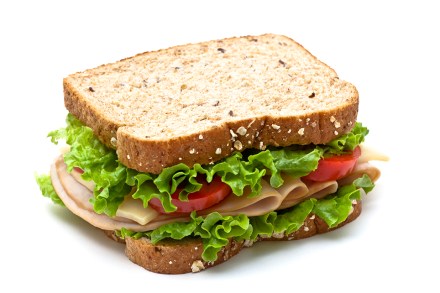
Sad things, cheese sandwiches, especially in their most basic form. Most would add a garnish: pickle, tomato and onion are the most popular. Cowards. The point of a cheese sandwich is its beigeness. This is fuel, not food. Consoling sad corporate workers at their desks. Rows upon rows of sandwiches on Tesco shelves: ‘Cheese – no mayonnaise.’ No mayonnaise is important. That would be too much fun. Everyone knows how the Earl of Sandwich repurposed bread and beef and started an eating revolution. No one really knows who first put cheese into the mix, however. The first mention seems to be from William Shakespeare’s The Merry Wives of Windsor, where Nym refers to a dish of ‘bread and cheese’. It’s hard to tell whether he meant a sandwich, of course.

With Sarah Woods

28 min listen

Sarah Woods is an author and cook, who left her corporate job behind to pursue her real passion after reaching the final of BBC1's Best Home Cook 2020. Her first cookbook, Desi Kitchen, has recently been released.  On the podcast she tells Liv and Lara about her upbringing in a Punjabi household and how she was inspired by Desi communities around the UK.

Why now is the time to visit Aldeburgh

I have been reading Ronald Blythe’s Next to Nature which came out in October, just a few months before the great man’s death aged 100. And so a weekend holiday in Suffolk was calling to me. I went to Aldeburgh, on the coast, north of the river Alde. The town appears to be thriving – full of bustling cafés and London money. It is fashionable and chic. In many respects it is a world away from Blythe’s Akenfield. But there is much here to charm you. I lingered by a wonderful second-hand bookshop, Reed Books 4, its window display with Peter Kent’s Fortifications of East Anglia, George Ewart Evans’s The Farm and Village and Hugh Barrett’s recounting of a rural Suffolk morning in Early to Rise. Is this what Scruton meant by oikophilia? Here was heart-warming local pride.

Do London’s oldest restaurants still cut the mustard?

When George William Wilton opened his shellfish-mongers close to Haymarket in 1742, he could never have imagined that his business would still be thriving 280 years later. The place has outlived ten monarchs and is as old as Handel's Messiah. Before visiting, I imagined a typically Hogarthian scene with portly gentlemen in dandruff-flecked suits feasting on potted shrimp and vintage port. Perhaps they had dropped by for a 'spot of luncheon' before toddling off to their various clubs at nearby St James's.  Up until relatively recently you might well have witnessed just such a quintessentially English scene; sadly, the agreeable old buffers who would once have frequented places such as Wiltons no longer exist in quite the same way.

Tinta de Toro: the Spanish red that helped Columbus make waves

I am assured that this is not a legend. But a few years ago, an Irishman’s life was twice saved by a raging bull. The Irish fellow was running with the bulls at a town near Pamplona. He tripped and was virtually impaled. The bull’s horn went into one side of the chap’s stomach and out of the other. He was rushed to a neighbouring hospital, which was accustomed to bull wounds, and the surgeons saved his life. While they were doing so, the aeroplane that he should have been catching took off. There were no survivors. Fifteen years later, the Irishman developed gut rot. One doctor wondered whether scar tissue from the horn wound might be causing the problem. So the patient was opened up. Scar tissue was indeed present and was excised, as was pancreatic cancer at a very early stage.

Alison Roman: ‘My desserts are consistently imperfect’

Alison Roman’s cooking is a counsel of imperfection. She serves dinner late (fine, as long as you have snacks), gets her guests to pitch in on the washing up and won’t make her own ice cream – ‘it simply will never be better than what you can buy, sorry’. ’Her ‘pies leak, cheesecakes crack and pound cakes are pulled from the oven before they’re fully baked. Lopsided and wonky, occasionally almost burned, unevenly frosted, my desserts are consistently imperfect’. In her new book, Sweet Enough, Roman wants to free the home cook from the dessert ties that bind them. ‘My hope for you,’ she tells her reader, ‘is that you strive for the animalistically irresistible, not aesthetically pristine’. The two, she finds, are ‘rarely the same’. ‘Baking is annoying.

London hotels with a literary twist

There’s something rather wonderful about the idea of settling down for the night in the spot where one of your favourite writers once slept, played or dreamed up a plot. There are a range of hotels across London with a vast array of bookish associations: some have played host to writers both famous and infamous, while others have been commemorated in novels, poems and short stories. Their present-day owners are all too happy to show off their literary heritage, should you ask nicely. Here are six with the most interesting tales to tell. Hazlitt’s [Alamy] There are few London hotels with so existential a literary connection as Hazlitt’s on Frith Street in Soho.

A themed restaurant done right: The Alice, Oxford, reviewed

The Alice lives in a ground-floor room of the Randolph Hotel in Oxford, which venerates the fantastical and the savage, as Oxford does. The savage lives in the Randolph’s dedicated crime museum with cocktails: the (Inspector) Morse Bar. The Alice is named for two women: Alice Liddell, the daughter of the ecclesiastical dean of Christchurch College – the grandest and most unfinished Oxford college – who posed for photographs for Lewis Carroll, became Alice of Wonderland and later invented a ladyship (an act as English as anything that ever happened here).

Food worth flying for

Somewhat by accident, I’ve become a professional glutton. The sort of person who’ll traipse for an hour in the wrong direction, just to try the breakfast burrito that a friend of a friend’s chef boyfriend won’t shut up about. By some miracle, I get to write about it. I’m often asked about the best thing I’ve eaten recently, and where. It’s hard to quantify the exact chemical make-up of the perfect meal, but I know this to be true: it’s the company that makes a place stick. A treasured friend or a spanking new one; a cheeky flirt in a fresh city. I like a busy open kitchen, lighting low enough to hide my eye bags, quietly great service and maybe a bit of hip hop on a crackly record player. These are the places I flew to try, and would again. Choose your company wisely.

With Niki Segnit

35 min listen

Niki Segnit is the author of the hit cooking books The Flavour Thesaurus and Lateral Cooking. Her new book The Flavour Thesaurus more flavours: Plant-led pairings, recipes and ideas for cooks, is out this Thursday 11th May. On the podcast she speaks to Lara and Liv about weird and wonderful flavour combinations, her childhood fascination with Oxo cubes and why she has gone plant-led for her new book.

In celebration of street parties

There is something very equalising about a street party. At one gathering I attended last year on a central London mews, a trust fund baby peered nervously out from his living room window before deciding to emerge, carrying two bottles of champagne and a flower vase filled with a tumultuous mess of a Platinum Jubilee trifle. When the lemonade for the Pimm’s ran out, the champagne was mixed in instead. He didn’t seem to mind. It’s good for us British to be thrust into these social settings. I get the impression that some of the Mediterranean peoples do this sort of thing every weekend: long balmy evenings help I suppose. But we are less accustomed to letting strangers in on our mealtime rituals.

Charlotte Royale: a celebration cake fit for a king

The big bank holiday weekend is about to begin. You’ve made that spinach and broad bean quiche. The bunting’s ready for your street party. You’ve crafted a coronation drinking game. But there’s something missing, isn’t there? An itch that just needs to be scratched. Where’s the pizazz? Where’s the cake? As the oft-misattributed quote goes: a party without cake is just a meeting. I know, I know: a quiche can be fun, but is it celebratory? No, what we need is a good old over-the-top, lily-gilded showstopper of a cake, that you can cut into with appropriate levels of pomp and circumstance. And, boy, do I have the pudding for you. It’s hard to think of a more appropriate pudding to celebrate the coronation of a King called Charles than a Charlotte Royale.

The joy of real beer

England. Despite being a Scotsman, partly brought up in Ulster, I have taken so much Englishness for granted over so many years. So do most Englishmen, to at least as great an extent as the inhabitants of any other major country. But I hope that I am just enough of a historian to enquire about this for-grantedness, and to wonder how it happened. I had chosen a good place to ruminate. We were sitting in the garden of the Mayfly pub near Stockbridge in Hampshire, watching the river Test glide by almost saucily. I have occasionally tried – and failed – to catch a trout on such a chalk stream, and have indeed been given sceptical instructions on the subject by Jeremy Paxman: sceptical because he was certain that my heavy footfall would always frustrate my efforts.

How to celebrate the coronation weekend

Lots of things seem to get described as ‘once in a lifetime’ experiences nowadays, but for many of us the coronation really will be just that. So, how to make the most of the historic long weekend? Clock off from work at a reasonable time on Friday and while getting dressed into your glad rags pour yourself a glass of English sparkling wine. Nyetimber and Hattingley Valley both have appealing coronation edition cuvées. Have some friends over – as with Christmas or new year, I think the tantalising eve of the big day is always the most fun time for a party. Serve some nibbles, such as Tyrrells's coronation chicken crisps, and a Jack Russell cake from the Waitrose coronation collection (at £24.99 their Leckford Estate Brut is also worth getting as a good-value English sparkling).

The ultimate guide to coronation food

There was nothing actually wrong with coronation quiche, Buckingham Palace’s suggested dish for a coronation lunch. Spinach, broad beans, cheddar: all fine. The trouble was, it wasn’t coronation chicken. When you’re following an actual classic, it’s impossible not to be overshadowed. And coronation chicken is that marvellous thing, a recipe which feels as though it has always been around because it’s so right as a combination of flavours and textures. But like every classic dish, it’s been traduced: take commercial mayonnaise, stir in curry sauce and a bit of mango chutney and a few raisins… and it’s cropping up in all sorts of weird combos now (CC scotch egg, anyone?).

Yorkshire puddings: is there anything as satisfying?

My mother, a Yorkshire woman, would occasionally take shortcuts in the kitchen, but not when it came to a roast, and certainly not when it concerned a Yorkshire pudding. She even owned a specific Tupperware shaker for the job: like a plastic cocktail shaker, in 1970s orange colour, with a propellor insert, and a lidded pouring spout. The batter would be prepared in this shaker and handed to anyone foolish enough to pass through the kitchen, and woe betide anyone who stopped shaking before they were so instructed. There are few things more satisfying than filling a perfect Yorkshire pudding with gravy I didn’t inherit my mother’s Yorkshire pudding shaker, but I make do with a vigorous whisk and then a short rest.

Faultless food with the promise of vengeance: The Trough, reviewed

Lady Bamford’s Cotswold fairy-land Daylesford Farm has sprouted leaves. It is no longer a farm shop, which should be a humble thing. I went to the Chypraze farm shop at Morvah last month, for instance. The proprietor only had honey, he said, and also pork, because he had just killed a pig. Daylesford is a sort of Las Vegas-themed hotel, invoking something half--imagined from something half-real. Caesar’s Palace; the Paris; the Luxor; the Venetian; Le Petit Trianon; Moreton-in-Marsh! It is not uncharming – many of us have a parallel life in which we live in Lady Bamford’s Cotswold fairy-land, on a pile of Lady Bamford’s dragon gold – but it is a travesty, and it should have a floor show.

Where to get your Lapsang (now Twinings has ruined theirs)

Tea drinkers erupted in a fit of caffeinated rage on Monday; kettle cosies were dashed across the kitchen, bone china was placed down hastily and many people were all very cross. Twinings sparked the uproar after axing its Lapsang Souchong tea and replacing it with something called ‘Distinctively Smoky’. It has been met with near universal disapproval and branded a stain on the company’s 300 year history. Famously Winston Churchill’s brew of choice, Lapsang Souchong is a centuries-old tea thought to have originated in the Wuyi Mountains in the Fujian Province of China, with the first record of it in 1646. Legend has it Wuyi locals fleeing Qing soldiers dried fresh batches of tea over fire to expedite their escape.

Inside London’s first community-owned pub

When Enterprise Inns closed the Ivy House in April 2012 – with plans to sell it to a property developer – things looked bleak for the south London pub. Its well-established status as a community and live music venue, which has hosted artists like Joe Strummer, Elvis Costello, and Ian Dury, was under threat. What followed is a story of civic triumph.  Nestled in the residential backstreets of Peckham Rye, The Ivy House has the proud title of being London's first cooperatively-owned pub. When its existence was threatened, members of the local community stepped forward, campaigning successfully for a Grade II listing and raising £1 million to buy the freehold and refurbish the building.

With Guy Tullberg

25 min listen

Guy is the managing director of The Tracklements Company, providers of artisan chutneys, relishes and preserves, all made in small batches and to traditional recipes.  On the podcast they talk about the joys beef dripping on toast, the thriving food scene in Wiltshire and Guy's desert island meal.

In defence of the hash brown

The English Breakfast Society has cancelled the hash brown, calling it a ‘lazy American replacement to bubble and squeak’. Guise Bule de Missenden, the society’s founder (sounds European to me), warned that giving hash browns the stamp of approval would only encourage the adoption of other ‘unsuitable fillers like chips’, or worse ‘fish fingers’ and ‘kebab meat’. (Seriously Guise, unless you are an infant or a drunk, the latter two are not part of any normal diet.) The boffins at the English Breakfast Society need to get with the times ‘Someone has to draw the line and say no to hash browns,’ he said. ‘They are served by those who lack pride in the full English breakfast tradition.’ Well, I've had enough. I’m taking a stand.