Spectator Life

Spectator Life

An intelligent mix of culture, style, travel, food and property, as well as where to go and what to see.

The bottle I’m most looking forward to pouring

There is one advantage to a stay in hospital followed by confinement to barracks: time to read and to think. I have devoted a lot of thought to great topics; do I hear ‘sublime’ and ‘ridiculous’? My two subjects have been the existence of God and the prospects of the Tories winning the next election. I have become fed up with hearing about serious bottles and not partaking God first. I have reaffirmed the conclusion which I’ve held for many years. There is no route from reason to faith. You either believe or not. I remain someone who is deeply religious by temperament but who cannot believe. There it is. Recently, on the subject of religious observance, there has been some debate in the press.

Bring back the railway restaurant car

It’s six o'clock and you’ve fought your way on to a train at a major London terminus. The carriage is rammed – heavily pregnant women, the stricken and the young stand in the corridors like it’s A&E – and everywhere people are diving into takeaways. The pungent egg and cress sandwich from Pret is bursting at the seams next to you; on the other side of the table there’s a lout blasting music from his phone speaker and eating the smelliest katsu curry money can buy.

A French revelation: how to make Breton galette complête

When we were little we used to go on holiday to the same place in Brittany, a picturesque, quiet coastal town. There wasn’t a lot to do there for children, but I always looked forward to the holidays because of the food. It was the first time I was exposed to French food, and it was a revelation. The finished galette, unlike paler, softer crèpes, is dark gold, crisp and lacy I was an adventurous eater, taking after my father. Anything he ordered, I would try. Even as a little girl, I remember a sense of pride in my fearless eating: huge pots of mussels, big shell-on prawns, strong  cheeses – I was game for anything. But there was one exception. Brittany has its own crèpe, the savoury  galette, and I could not get on with it.

Still thrilling: the Wolseley reviewed

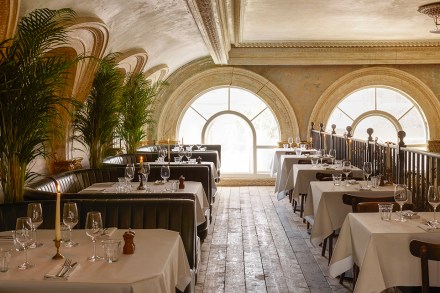
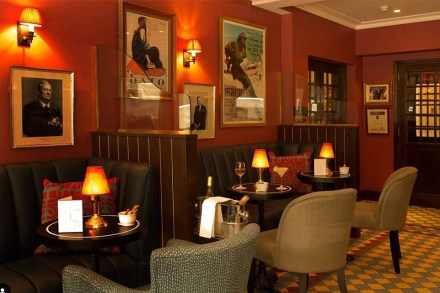
Restaurant and dog years are similar, and so the Wolseley, which is 20 this year, seems as if it has always been here. Other restaurants fall so swiftly you have only fragments of impressions. Breakfast on Bond Street in what feels like a one-bedroom flat belonging to Patrick Bateman. Pasta in a cellar with art, and they only care about the art. Salad at an Aslan-style stone table without mice. Nudity and berries. The original Wolseley was so good it spawned a slew of bad impersonators It was opened by Chris Corbin and Jeremy King, the best restaurateurs of the age, in the old Wolseley building at 160 Piccadilly, between Caviar House and the Ritz hotel. Wolseley is a forgotten brand of motorcar, and this was its preening showroom.

The horror of gastropubs

Last week saw the publication of the 14th annual Estrella Damm Top 50 Gastropubs of Great Britain, a list consumed by middle-class foodies as eagerly as a £27 fish finger sandwich served on a piece of slate, washed down by a non-alcoholic cocktail in a jam jar. Couples scroll through former drinking holes transformed into Michelin-starred restaurants with ‘wacky’ names such as the Unruly Pig and the Scran and Scallie, noting the ones they have been to and others to put on a gastronomic bucket list – the bucket probably being what their sweet potato fries are served in. It’s a far cry from George Orwell’s 1946 essay ‘The Moon Under Water’.

With Harriet Hastings

20 min listen

Harriet Hastings is the founder of hand-iced biscuit delivery company Biscuiteers which delivers over 2 million biscuits worldwide every year.  On the podcast she speaks to Lara and Liv about growing up as a fussy eater, the trials and tribulations of starting her own business, and her desert island meal.

Where to break Dry January

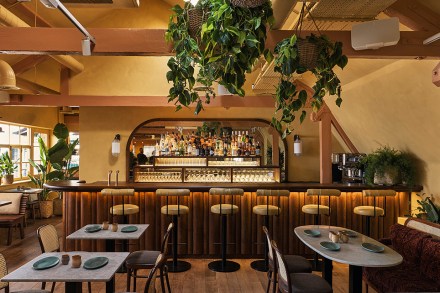
Anyone who did Dry January will by now be eyeing the door and contemplating a night on the town. Because it would be a shame to break your sober streak with any old rubbish, here’s a list of the very best places in London to drink right now. Even if you did that very British type of Dry January where you don’t go out for pints but have a bit of wine at home, you’ve definitely earned yourself a treat and should read on. Seed Library X Ruben’s Reubens, Shoreditch The barbecued bar snacks at Seed Library are unbeatable drinking food [Caitlin Isola] The East London hideout of cocktail avant-gardist Ryan ‘Mr Lyan’ Chetiyawardana slides into February with a fresh menu and barbecued bar snacks.

A slice of comfort: how to make a proper apple pie

Apple pies are synonymous with domesticity: both here and across the pond, the image of an apple pie, fresh from the oven, possibly cooling on a windowsill, speaks of family, and of homeliness. While they’re not difficult to make, they take time and care, and the making of one is an act of love. Perhaps that’s why they are such a simple and clear shorthand for comfort.

In praise of drunkenness

Europe, I’m told, is entering the age of the ‘sober-curious’. Curiosity is a wonderful thing; why, then, did hearing this make me want to drink whisky until I talk in tongues and pass out? I’ve had such a long and varied relationship with alcohol since we met when I was a shy provincial child. It’s been my naughty secret (12-16), partner in crime (twenties), dangerous obsession (thirties/forties), toxic bestie (fifties) – until, somehow, now I’m almost 64, it’s ended up as casual restaurant date, always welcome but never needed. I’ve done some dumb things on alcohol, but I’ll always believe that it gave me more than it took from me. Because of this, I feel defensive of it when I hear people dissing it.

The surprising joy of involuntary sobriety 

I have just finished a sojourn with a curious twist. Readers of Thomas Mann’s The Magic Mountain will remember Hans Castorp, who set off to visit a cousin confined to a sanatorium in the Alps. Nothing went according to plan. The cousin fell into a sharp decline and died. Castorp himself was diagnosed as suffering from a lung ailment and spent the next seven years in the sanitorium. This ended only with a social, political and cultural upheaval, followed by a -conflagration. St Thomas’ Hospital is hardly the Alps. But I spent five weeks there, having expected a three-day sentence. A surgeon told me that it was one of the most complicated wrist fractures he had ever seen. That may have brought him some consolation. It was not ideal to spend Christmas and new year in an invalid bed.

10 Scotch whiskies to try on Burns Night

Burns Night always feels like a particularly well-timed celebration. Hot on the heels of ‘Blue Monday’ – supposedly the most miserable day of the year – it’s certainly nice to have a reason to get merry. It also happens to be the perfect refutation to those killjoys determined to make Dry January the new Lent.  ‘O thou, my muse! guid auld Scotch drink!’ So wrote Robert Burns in the winter of 1785 in his ode 'Scotch Drink'. The Scottish bard’s love of the stuff is no surprise and no Burns Night celebration is complete without a few drams.

The best cocktails for Burns Night

Tomorrow evening, fans of whisky, poetry and sheep offal will come together to celebrate the birthday of the great Robert Burns. In the dog days of January there are few pleasures as great as demolishing a plate of haggis while trying to twist your tongue around Burns’s immortal verse. No Burns supper is complete without a few drams to raise in tribute. However, you need not feel constrained to drink your Scotch only neat or with plain water. These cocktails are intended to show the range and versatility of Scotch whisky. There’s also a gin number thrown in for good measure in case your guests prefer to raise a glass of Scotland’s other national drink.

London’s best bakeries

If anyone knows how to do winter, it’s the Scandinavians. The concept of snuggling up with a steaming mug of something caffeinated and a buttery pastry is at the heart of their culture, from the Danish concept of hygge (cosiness – often involving sugar and carbs) to the Swedish ritual of fika (taking time for coffee and cake). Take a leaf out of their book and make a beeline for these five bakeries, which are sure to put a smile on your face this January.  Pophams Bakery, London Fields  Every Saturday, rain or shine, a jolly queue wiggles around the al fresco tables outside Pophams and into the street. London Fields is not short of places for coffee and pastries, but Pophams is a cut above the rest – and the queue shows it.

Sussex pond pudding: the perfect January pick-me-up

I always feel pulled toward citrus at the start of the year. Initially it was subconscious: I’d just find myself in the kitchen making a lemon drizzle cake. But now I actively plan my citrusy January. As Christmas recedes, I make notes of recipes that I’m craving, and almost all of them call for a whack of lemon or grapefruit or orange. It doesn’t take much analysis, does it? It’s a bit like having a dream about doing an exam unprepared – what could it possibly mean?! The literal brightness of the fruit and the figurative brightness of the flavour – its zinginess – bring you back to life; it is the perfect ingredient for fresh starts, for leaves turned over. This is so much more than a lemony sauced pud.

Better than the original: Scott’s Richmond reviewed

Scott’s, Richmond, is a fish, champagne and oyster bar, and a new branch of Scott’s, Mayfair. The original Scott’s was part of what became the Trocadero Centre. (Ian Fleming was a regular. He would take captured U-boat officers there to get them drunk and chatty. James Bond visited too.) It moved to Mount Street and was bombed by the IRA in 1975. This Scott’s is on the Thames at Richmond and is part of a development by the King’s favourite architect Quinlan Terry, who managed, in the mid 1980s, to throw up a Domestic Revival village on the water. It looks very weird, but I’ve always liked it because the alternative is worse.

English food has always been a moveable feast

There is a lot to like about Diane Purkiss’s English Food. It’s a hefty thing, packed full of titbits to trot out down the pub, but also a serious consideration of how English food has changed over time, and of the perils of assuming there has ever been a golden age, or even a very stable one. The layout is good, organised thematically rather than a chronologically, which saves the book from getting bogged down in repetition, and avoids the common trap of listing endless menus and foodstuffs. The best chapters are often the shortest. The one on apples includes a fascinating collection of facts, folklore and recipes, as well as a consideration of just how difficult it is to work with historic definitions. The section on codlins – a big or small apple? One that cooks to a foam?

With Luke Farrell

28 min listen

Luke Farrell is a restauranteur and founder of two of London's fieriest new openings, Plaza Khao Gaeng and Speedboat Bar. He has spent the last few years dividing his time between Thailand and his nursery in Dorset, where he grows a 'living library' of south-east Asian herbs and spices.  On the podcast they discuss memories of Chinese cuisine, the thrill of Thai speedboat racing and why, despite his adventurous pallet, he can no longer eat raw oysters.

In praise of meatless steak

Sirloin, rump, tomahawk, fillet, rib-eye. However it comes, is there any food that gets salivated over more than steak? Restaurant reviewers compete to outdo one another with their florid descriptions of the sensual delights of tucking into a particularly prime example. But then steak comes loaded with far more than a dollop of garlic butter or hollandaise. More recently, tucking into a juicy slab of meat has also become a bold statement of ‘I will eat – and live – as I please’, a carpe diem rejection of vegan-botherers and eco-worriers. Veganism is on the rise, with the number of vegans in Britain quadrupling between 2014 and 2019.

Pasta bake: a recipe to cure the January blues

I love pasta bake more than is reasonable: I would struggle to name a dish that brings the same level of comfort even from first thought. From the moment I consider making one, I am already reassured: confident in the knowledge that it is a dish which will deliver everything that is required for culinary succour. This isn’t your average student pasta bake: slow-cooked ragu, a topping cooked at a hot temperature until blackened in places and blistering; a time investment that means delayed gratification, but for the most part can be left to its own devices, to simmer, to bubble, to bake. Saucy and deeply savoury, hot and packed with carbs: it can’t fail to please.

Noma and the death of fine dining

The Menu is a horror film about fine dining that revolves around a psychotic head chef (Ralph Fiennes) who runs a destination restaurant on an American island. The island is uninhabited apart from the chef and his staff, who pluck it for the most refined marine treats to serve the obnoxious clientele on a nightly surprise menu. As I sat in the cinema watching it recently, I felt delighted, then sick, then scared – and then enlightened. Enlightened because I finally understood that fine dining – once the summit of high living and my own former obsession as a greedy twenty-something working in lifestyle journalism – is over. It is not just that in this era of obsessive authenticity and sentimentality fine dining feels passé.

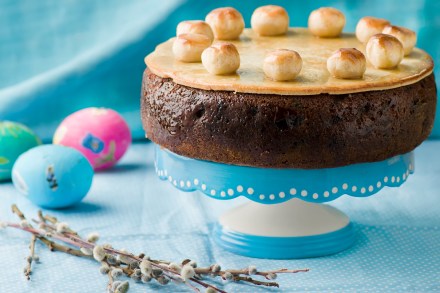
It’s time to tuck into Twelfth cake

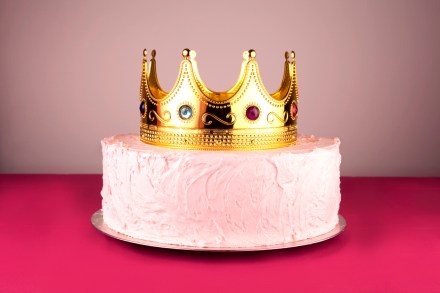
This week we get to Epiphany, the Twelfth Day of Christmas, when the wise men finally make it to baby Jesus in Bethlehem. Properly, the feast starts the night before, so Twelfth Night is the evening of the 5th, which in some parts of Europe is the climax of the Christmas season. And, as with every good thing, it’s an occasion for cake – king cake to be precise. There are several variants from different parts of Europe. The best-known here is the galette des rois, which features in French patisseries: a lovely almond paste encased in puff pastry, and, in shops, surmounted with a cardboard golden crown for whoever gets the bean on the inside. I make it in a version by Joël Robuchon with slices of pineapple. Delicious.

In defence of duck à l’orange

Duck à l’orange is so deliciously retro, it’s almost a cliché of kitsch. It seems hard to believe that there was a time when it was genuinely regarded as elegant, or subtle-flavoured, let alone exciting; that it wasn’t always a byword for naff. But as its name suggests, duck à l’orange had chic origins. And perhaps (contrary to its name) Italian ones. The French may have made it one of their defining dishes, but it’s often suggested that it may have Italian roots: brought to the French court by Catherine de Medici when she married the Duke of Orléans, the son of the King of France, in 1533.

Rich pickings: Alex Dilling at Hotel Café Royal reviewed

Alex Dilling at the Hotel Café Royal is a minute restaurant above Regent Street, which has the type of British imperial architecture that looks most like a cake: that is, the most preening, deceptive and pale. For someone who did almost no exercise, the Prince Regent built quite a lot of roads and there my interest in him ends, like the road itself. In this hotel, which is very fine, stone cake vies with the tepid luxury of this age, which indicates invisibility, and with it guilt. There’s not much to do in central London nowadays beyond watching wealth aesthetics fight it out. The Hotel Café Royal used to be more interesting. This is the hotel where Oscar Wilde decided to sue the Marquess of Queensberry for libel. I think he was drunk. I hope he was.

Dry January is cruel

Allow me to set the scene for you. It is the coldest month of the year and also the darkest. The sun sets not long after lunch, ruling out any after-work revelry more exciting than testing your antifreeze. It’s too chilly to go for a walk; even a trip to the gym looms like an endurance test. Despite blasting the heat at all hours, you still can’t get your house warm. Your girlfriend hasn’t been seen in the four days since she took refuge under that blanket with the Friends logo on it. The Christmas season has ended, stripping the winter of its festivity: no more twinkling lights or Andy Williams. You took down your tree weeks ago, lest you become one of those freaks who still has decorations up in February, but without it your house just feels bare.

Confessions of an energy drink addict

So 2022 bowed out with one last surprise. Who can honestly say they had 'crowds queueing outside Aldi at 5 a.m. for a viral energy drink' on their bingo card? The must-have product in question is Prime, a caffeine-free energy drink created by YouTube influencers Logan Paul and KSI. Since going on sale in the UK recently, it has quickly generated the sort of frenzied hype once reserved for cryptocurrencies or pictures of cartoon monkeys, with stock running out, brawls breaking out and one shop reportedly cashing in by charging £10 a bottle. On the face of it, the Prime story is baffling. But tempting as it might be to scoff at the sight of the wide-eyed obsessives rushing for their fix, I am also painfully aware that I cannot really judge them. For I myself am an energy drink addict.

With Amber Guinness

22 min listen

Amber Guinness is a cook, author, journalist and co-founder of The Arniano Painting School. Her first book, A House Party in Tuscany, is out now.  On the podcast she discusses growing up in Tuscany, how to host a successful Tuscan dinner party and the best places to eat in Florence.

The best mocktails for Dry January

It’s the new year, and that means time for resolutions. Many of us will pursue food-and-drink-related goals: eating healthier, eating out less, or trying a 'Dry January' – giving up alcohol for the month. Non-drinkers have more interesting options these days than coffee or Diet Coke. Commercially bottled kombuchas are a plausible substitute for something stronger. Non-alcoholic beers, wines and cocktails are also multiplying, judging from the crush of Instagram ads I receive. As someone in a semi-permanent state of trying to drink just a bit less, I’m always interested in tactics to facilitate sobriety. This year, I tried out mocktail recipes that might help a Dry January feel livelier.

The rise of the high-end curry house

Back in 2000, not one Indian chef in the UK held a Michelin star. For many people, dinner at a curry house meant a formica table, plastic cutlery and warm salad garnishes on Brick Lane.  Two decades later, all that has changed. There are seven Michelin-starred Indian restaurants across London and haute cuisine curry houses are taking over swathes of Mayfair and other upmarket areas that were previously the domain of chic French bistros and Italian osterias.   So what’s behind the rise of the high-end Indian restaurant? And which are the dishes not to miss? We spoke to four top chefs at our favourite upmarket Indian eateries in the capital to find out.

Smoked salmon blinis: bitesize luxury for New Year’s Eve

I tend to hunker down on New Year’s Eve, eschewing parties for my own home. Even when I was young, the prospect of sleeping on someone else’s floor or braving the night bus home in the early hours of the morning didn’t really appeal. But sometimes I worry that that can lead to the night being a damp squib. The way to fix this is a little bit of luxury. Perfect bitesize tastes of luxury. And for me, that means blinis topped with the fanciest, most delicious morsels I can lay my hands on. Drink them with something cold and sparkly, and you won’t regret staying in for one moment. If you are more sociable than I am, these also make the most impressive party snacks – and ones that suggest far more preparation and skill than they actually require.