Spectator Life

Spectator Life

An intelligent mix of culture, style, travel, food and property, as well as where to go and what to see.

I’m too British for la dolce vita

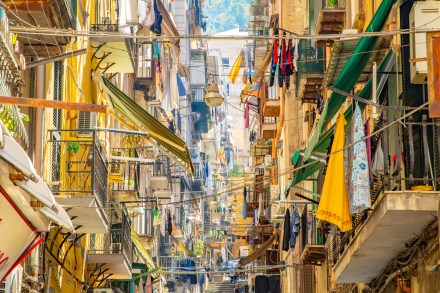
At this time of year, the heat of Naples wakes me up around 7. A five kilometre jog takes me over Monte Echia, from where I can see Vesuvius, Capri and the city below me framed in bright blue. After a cool shower, I go to a café for breakfast: a pastry and puddle of strong coffee paid for out of loose change. I spend the day sweating in front of a pizza oven, before strolling home, stopping to pick up some pungent tomatoes and red wine for dinner. Truly, this is a life I dreamt of, so why do I go to bed each night wracked with anxiety? If life is slow here, it’s out of necessity La dolce vita, the sweet life, is a term I heard before I even knew Fellini’s 1960 film existed.
The problem with pintxo

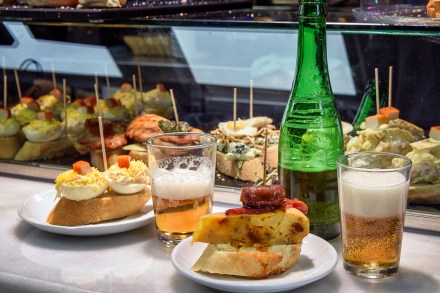
Visiting San Sebastián last month, I was reminded of the joys and hazards of grazing. The speciality in this chic city, and throughout Spain’s northern Basque region, are pintxos – miniature open sandwiches topped with everything from chorizo and padrón peppers to anchovies and baby eels. Pintxoing, as I’ll call it, becomes almost like a game in San Sebastián’s labyrinthine Old Town, in which the regional delicacies are colourfully displayed in bar-top glass cabinets. The goal is to eat enough pintxos to keep hunger at bay, but not so many that you don’t have room for one more. You’re never starving, but the flipside is that you’re never entirely satisfied, either.

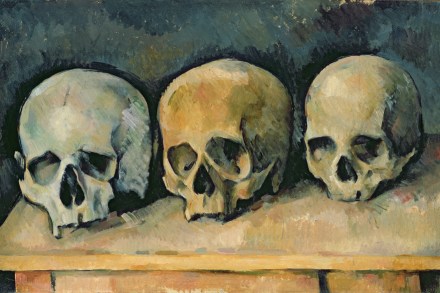
The two summers I was nearly killed

Summer is the season most associated with the enjoyment of life. It’s when people forget their cares, down tools, and head for the beach to enjoy sunny days and sexy nights. That’s how it was for me anyway until I came close to life’s polar opposite – barely surviving two close brushes with death. So for me summers are now indelibly associated with a sudden end that I twice narrowly escaped. Tearing off my soaking shirt, I stood bare-chested in the rain, feeling the same sense of mingled relief and ecstasy as if I were Caesar The first close encounter with Mr Death came in the Dordogne. My wife, daughter, and I had hired a horse-drawn caravan to explore the highways and byways of that enchanting province.

Vive le Supermarché!

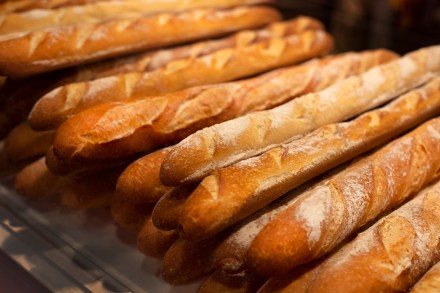
It’s 7.54 a.m. and we are waiting for the doors of the Intermarché St Remy de Provence to open. A vast sense of excitement is building within our group that spans the ages of nine months to 68 years. My mother wants espadrilles, my husband wants wine, my brother-in-law wants cheese, the children want toys, et moi? Just the experience, the delicious joy of the French supermarché. And possibly some soap.

Japan is great, but it defeated me

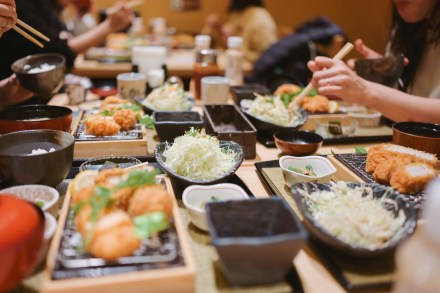
It’s great having toilets with warm seats that shoot water up your bum until you need somewhere to throw up. After eating two kilos of raw, vengeful tuna, I was leaning over a hotel loo in Osaka and all I wanted was to rest my clammy forehead on a cold plastic seat. Six hours earlier, I had watched a man carve up a metre-long bluefin tuna on Dotonbori Street. It appeared very much still alive, apart from the limp way its mouth fell open when the fishmonger turned it upright on its belly. ‘Very, very fresh!’ he hollered, whacking it to bits. ‘Very, very, very delicious!’ I took his word, like the tourist sucker I am, and ate an entire bowl filled with chunks of chutoro and kamatoro, and 13 more pieces of nigiri.

My canal boat obsession is causing me trouble

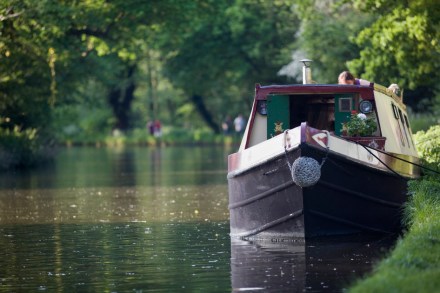
We had steered our narrowboat into the lock at Swineford on the navigable section of the Bristol Avon before 8 a.m., heading upstream, back towards Bath. Two and a half hours later, we were still there. We were stuck. Having worked the lock’s paddles, our boat had climbed the requisite 10 feet to be level with the stretch of river ahead. We were poised to open the lock gate and press on towards the Kennet and Avon canal. This, however, meant having to push against the swirling waters of a tidal river. There were only two of us, one still recovering from hip surgery, and pushing the gates of this particular lock open was a job that would need a strong team of helpers. A pack of rugby forwards would be ideal, a recently hospitalised wife less so.

Spanish food is deliciously obsessed with death

The moral absolutist in me believes that in every city, with its finite number of restaurants, there is such a thing as the best of all possible lunches. I don’t have to find it, but I have to get close. Mediocre doesn’t cut it. In fact, on holiday, the idea of wasting a meal on mere ‘mediocre’ fills me with crippling guilt over wasting not just money but time. What if I die before I see Paris again? I would be ashamed that I had wasted my precious mortality eating that Pret tuna niçoise salad. Laurie Lee described Spain as a place of ‘distinct appetites...

The joys of Canada by train

There cannot be a lazier way of travelling across Canada than in the Rocky Mountaineer. There are luxury trains, and then there’s this. For two days, I sat in a sumptuously upholstered, air-conditioned carriage, looking out at the vast wilderness of Canada’s interior, as waiters plied me with wine, chocolates and three-course meals. When imagining my trip across the Canadian Rockies, I had envisaged plenty of bracing walks and fresh air. But by the end of my journey, I had gained five-and-a-half pounds. I went on a walk around the frozen lake accompanied by a guide who warned us about a bear known as the Boss who weighs 497lbs Admittedly, I was in GoldLeaf, the most luxurious section of this glass-domed, double-decker train.

Give me nonsensical Naples over sterile Singapore

Naples is dirty, noisy, haphazard, and full of kamikaze scooter drivers. It is also sensual, liberating, and jolly. But that doesn’t seem to appeal to many people today, who prefer everything to be ordered, measured; all uncertainty removed. In city form, it’s known as Singapore: unlike Naples, everything there is clean, tidy, and works. It’s also a sterile, soulless, mini dictatorship. Everyone looks a little sticky, ruffled; no one cares about a sweat patch breaking out – shock horror J.G. Farrell’s wonderful book The Singapore Grip describes the fall of Singapore during the second world war. There are many parallels between the city back then and Naples now: the elegant decay and human vitality.

How to avoid the tourist backlash

Europe is revolting against the tourist invasion. This summer, Venice has started charging a tourist tax to keep visitors at bay. Mallorca, Menorca, Ibiza and Formentera have just set up inter-island protests under the slogan, ‘Let’s change course – let’s set limits to tourism’. Barcelona is planning to ban Airbnb. In the Cinque Terre, on the Italian Riviera, some of the coastline is now one-way, to restrict tourist traffic. On another bit of the Ligurian coast, plans are afoot to charge walkers. You can see why – the famous cities and resorts of Europe have become one vast Queueworld, where tourists gather in great numbers, intense heat – and, increasingly, intense misery.

Why the French are so pessimistic

I am sitting in a little bar overlooking the jaunty marina of Trinité-sur-Mer, on the opulent south-east coast of Brittany. My Kir Breton is cold, fizzy, sweet and rubescent. Everyone around me is swigging Sancerre and cidre as the sun slowly nods below the green, southerly Celtic hills. The water glitters, the pretty people parade, the douceur de vivre is palpable. If you look at what has happened to Paris and Marseille, you can see how this can easily go wrong, how France’s good fortune can be squandered I've been here in Brittany five days, having got the ferry over from Portsmouth. And, quite frankly, the difference in life quality has been stark.

Katy Balls, Gavin Mortimer, Sean Thomas, Robert Colvile and Melissa Kite

31 min listen

On this week’s Spectator Out Loud: Katy Balls reflects on the UK general election campaign and wonders how bad things could get for the Tories (1:02); Gavin Mortimer argues that France’s own election is between the ‘somewheres’ and the ‘anywheres’ (7:00); Sean Thomas searches for authentic travel in Colombia (13:16); after reviewing the books Great Britain? by Torsten Bell and Left Behind by Paul Collier, Robert Colvile ponders whether Britain’s problems will ever get solved (20:43); and, Melissa Kite questions if America’s ye olde Ireland really exists (25:44).  Presented by Patrick Gibbons.

How hard is it to design a hotel room?

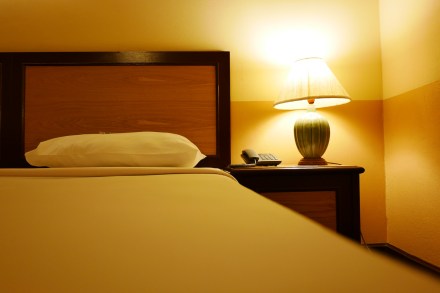
I belong to a generation of foreign correspondents whose first move, on entering a hotel room, was not to turn down the bed or to check (hopefully) for hot water, but to examine the phone, screwdriver in hand. Could you detach it from its socket? Could you open it up to get at the wiring? Did you have a compatible adaptor, and even if you did, could the line transmit data back to your editor in London? The rooms had recently been redone, according to the owner’s redesign, and this entailed removing the tables There were more than a few times when I whisked my long-suffering husband out of an otherwise more than acceptable hotel back on to the rain-drenched road in pursuit of communications.

Why Japanese women are hitting the bottle

Older Japanese women are boozing more than ever, according to a new survey conducted by Tokyo Metropolitan Government. The study found that while binge drinking by men decreased over the last ten years in all age groups, the percentage of women in their 40s, and especially those in their 50s, drinking dangerous amounts of alcohol, has shot up. For the latter cohort the figures were particularly alarming: 9 per cent a decade ago and 17 per cent now. Public displays of drunkenness are not especially frowned upon Why would this be? The most popular theory is that life for many middle-aged women has simply become much more stressful in recent years as a result of heavy-handed and perhaps ill thought through government efforts to get a more gender balanced workforce.

Now the National Trust is wrecking the Cotswolds

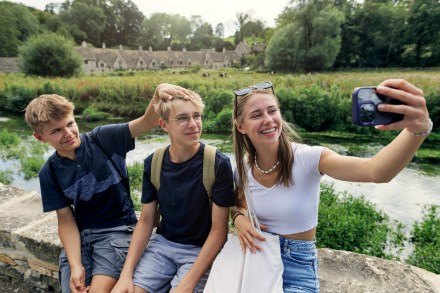
Gawping at the famous sights of the Cotswolds has been a popular pastime for centuries. So too is writing about the huge numbers of people gawping at the famous sights of the Cotswolds. The Times, Telegraph, Express and the BBC have all covered the explosion of mass-tourism since the pandemic, which is driven mainly by social media algorithms bombarding the globe with irresistible Cotswolds images. You can now tour the Cotswolds to gawp at the sight of thousands of other people gawping, or buy a paper and gawp at a professional gawper gawping at gawpers.

The forgotten forests of Italy

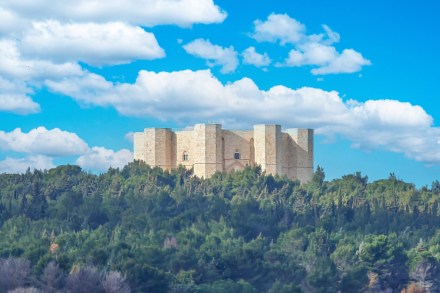
Everyone knows that Italy is a boot. Many people know that the boot has a heel – the rocky, sunburnt region of Puglia. Perhaps a few know that the heel has a spur – the Gargano Peninsula. Yet virtually no one knows that the Gargano hides a magical woodland – the Foresta Umbra – a national park and treasure. And one of a dozen or more Italian parklands that are practically unvisited by foreign tourists.

The horror of airports

You really have to force yourself to love flying. Sitting on the tarmac for an hour and a half with an air conditioning unit that won’t turn off and two babies locked in a battle of who can scream the loudest is not in my ‘Top 10 Days Well Spent For Zak’. But the plane is an experience. Though commercial air travel has been a possibility since 1914 – some argue earlier in the case of airships – we still go through that shudder of glee (or fright) when the plane does the impossible and leaves the ground. For all of the pitfalls of flying, the miracle of air travel means there’s always something endearing about planes. The world doesn’t make sense here. Drinking a pint of lager with a Nando’s at 3.50 a.m. is perfectly normal This does not apply to airports.

How to hack your summer holiday

Since it’s June, here is your cut-out-and-keep guide to hacking your summer holiday. One possibility. Don’t bother. Unless you have school-age children, why book your main overseas holiday in what is the nicest part of the year at home? As my late father often reminded me: ‘The three worst things about living in Britain are January, February and March.’ If you head south in these three months, almost anywhere will be an improvement. When flying in July, you risk sitting on the tarmac at Gatwick on a perfect summer’s day destined for a place where your shoes will catch fire. And you miss out on the long, light evenings, too.

Am I too sleepy for wellness?

‘Melt your heart,’ said Simone, the Kiwi sleep therapist, stretching her generous body as elegantly as she was able on the yoga mat. Waves lapped the beach nearby. ‘Glow it violet, then allow the violet to flow up, up, up into your chest, your belly, now your legs and arms…’ Well, I tried, honestly I tried, but my heart stubbornly refused to melt, or even, for that matter, to glow. As sturdy English hearts of oak appeared to be melting all around me, I felt I was rather letting the side down. And as for the violet? Nada. The beginning and end of this ju-ju ordeal was bracketed by bells tinkled around our heads like some vaguely asiatic-version of a Catholic mass Faith is at the heart of the health business, but why does no-one call out the Emperor for his déshabillage?

In praise of lazy tourism

Like a lot of people who didn’t know him, I felt sad hearing of the death of Michael Mosley on the Greek island of Symi, being familiar with him as a doctor whose pleasant voice I often heard on the radio. He had the gift of giving advice without being patronising or preachy. Mosley seemed to be a wise man – and for this reason, the way he died seemed all the more shocking. I found it particularly poignant that his body was found just 30 meters from the perimeter fence of a beach resort. Somewhat sheepishly, I immediately identified with the inhabitants of the beachfront compound; if I’d have been on that island, that’s where I’d have been, flat out by the swimming pool, cocktail to hand and no trek more adventurous planned than that between beach and bar.

The timeless appeal of Clacton Pier

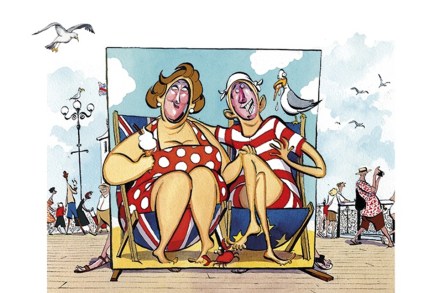
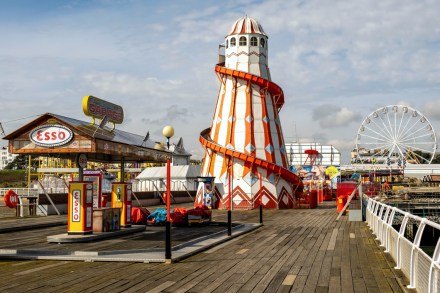
You approach the pier at Clacton-on-Sea by passing under an elegant bridge, one which in Venice you would probably stop to admire. But this is Essex and the stonework is emblazoned with the town’s coat of arms and motto, Lux, salubritas et felicitas – light, health and happiness. Here you can admire the turning blades of the 172-megawatt Gunfleet wind turbine array or the grey masses of distant container ships Those familiar with this East Coast town will know that these qualities are in pretty short supply here – the constituency in which Nigel Farage hopes to be elected the next MP. Indeed, if George Orwell were chronicling Britain’s social failures today, this would be just the place to come.

Avoid the Maldives

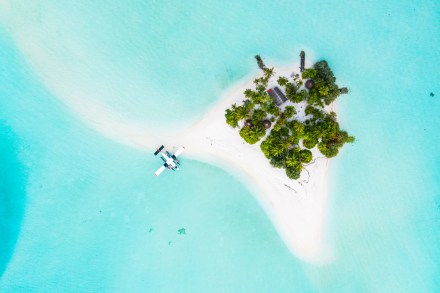
On reading that the Maldives are to ban Israeli passport holders from entry as an alleged protest over the war in Gaza, I hooted with laughter. That dump – I wouldn’t go there if you paid me, – which is exactly what happened in 1995, when the Sunday Times sent me abroad for the very first time. I was 35, and due to a combination of being very keen on London, where I lived, and not wanting to have extra sex with my first and second husbands (which I’d heard was probable when one went en vacances) I’d never missed visiting the rest of the world. If I wanted to swim, I’d go to Brockwell Lido; if I wanted to sunbathe, I’d go and play sardines in Soho Square. But in the honeymoon stage of my relationship with my new young mistress, I was keen to show her a good time.

The Farage factor

45 min listen

This week: The Farage factor. Our cover piece looks at the biggest news from this week of the general election campaign, Nigel Farage’s decision to stand again for Parliament. Farage appealed to voters in the seaside town of Clacton to send him to Westminster to be a ‘nuisance’. Indeed, how much of a nuisance will he be to Rishi Sunak in this campaign? Will this boost Reform’s ratings across Britain? And could it be eighth time lucky for Nigel? The Spectator's political editor Katy Balls joins the podcast to discuss, alongside former Clacton and UKIP MP, Douglas Carswell (2:32).Then: Gavin Mortimer reports from France ahead of the European and local elections this weekend, where the country is moving to the right.

Inside Portugal’s new theme park for wine lovers

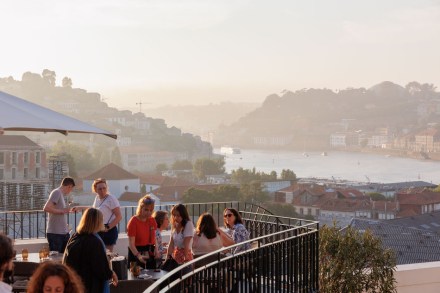
I’ve always loved Porto and need little excuse to visit. Not uncoincidentally, I’ve always loved port and need little excuse to drink it and so, invited to stay in this fine city and road-test its latest attraction, the ambitiously-monikered World of Wine, who was I to resist? There’s been a mixed reception to Wow locally. One person told me that it was garish and vulgar Porto is really two cities, Porto itself and Vila Nova de Gaia, separated by the mighty Douro River, along the banks of which lie the precipitous vineyards responsible for the finest of all fortified wines and some increasingly tasty red and white wines too. I was billeted in the swanky Yeatman Hotel.

I’ve finally succumbed to a canal boat holiday

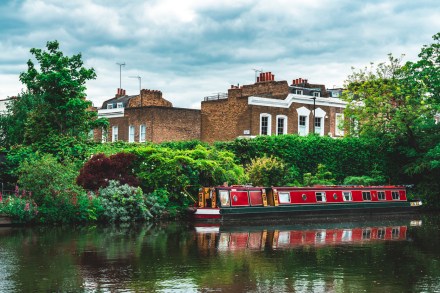
All my life I’ve wanted to take a narrow boat holiday down one of Britain’s canals but have never got round to it. There’s always been something easier and more pressing, perhaps even a touch more glamorous than a week spent floating around Britain – a trip to Andalusia, a city break, a train-ride round Siberia – but this year, in my mid-fifties, I’m finally making it happen. With my cousin and both our young daughters as crew members, I’ve shelled out on the rental of a four-berth narrow boat – painted a resplendent red and racing green, a bit like a Hornby train.

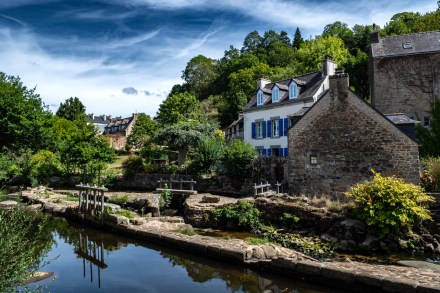
Sick of Cornwall? Visit Cornouaille

I am Cornish. Indeed I am so Cornish my sister lives about three miles from where my echt Cornish ancestors lived in the 13th century (near Falmouth), and my mum makes working-class Cornish recipes so obscurely Cornish most of the Cornish have barely heard of them (‘date and lemon pie’). As such, I am pretty fond of the place, and I like to go back as much as I can. Except in summer, when it’s crowded. And increasingly May. Or September. Or October. Or the rest of autumn. And Christmas, And Easter. And New Year. And any weekend at any time, ever.

Facing death in the African bush

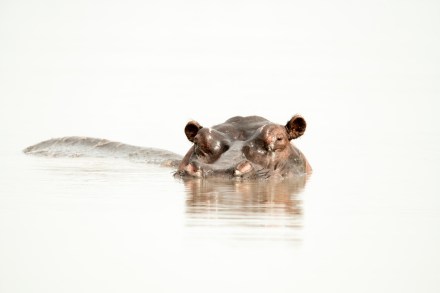
I travel to the African bush frequently, at least once a year. It takes my mind of British politics. The trips often involves watching predators hunting down their prey and then tearing the poor animals limb from limb. Red in tooth and claw, the African bushveld reminds me of the fragility and brevity of life and the ever-presence of death. My insignificant place on the planet was thus confirmed A week ago I was in the Botswana’s Okavango Delta, at the safari operator Natural Selection’s new North Island camp, when I suddenly found myself confronting my own mortality. I had gone to bed early after a pleasant meal in the camp’s mess with several fellow guests, including two eminent Americans, a wealthy New York investment banker and a prominent Miami medical professor.

Real Southerners never liked Elvis

Cowboy boots are ubiquitous in Nashville – although not hats. ‘That’s Texas,’ one woman told us earnestly. Locals say, ‘y’all,’ ‘yes, ma’am,’ and make eye contact when they speak to you. Despite the lack of cowboy hats, this is still the South. Welcome to Music City, the capital of country and the gleaming buckle of the Bible Belt. Nashville is home to over 700 churches and numerous evangelical choirs. The Union Gospel Tabernacle, built in the 1890s by a Tennessee businessman, was once the largest church in the city. Now its simply the Ryman Auditorium. After the first world war, the owners found they made more cash booking secular performers.

My battle with a Puglian pugilist

To nearly any English tourist, the small southern Italian town I’m currently living in, half an hour from my daughter’s school, would seem idyllic. It has an old castle, a monastery and olive groves in all directions, but in Puglian guidebooks it barely rates a mention. It’s the scruffy, down-to-earth cousin of richer or bigger towns nearby, places like Monopoli or Bari, but has nearly everything I could want. There are arches and stone stairways, pot-plants everywhere (80 in my alleyway alone), and that delicious, ivory-coloured stone which paves the streets in Puglia and which long use has polished to a shine. At night the street-lanterns turn the white buildings orange, and the sky above is inky blue with stars.