Spectator Life

Spectator Life

An intelligent mix of culture, style, travel, food and property, as well as where to go and what to see.

Why Britain needs Shinto

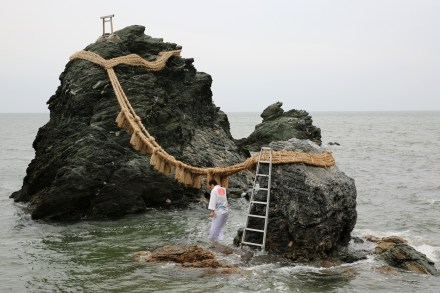
Ise, Japan They say of Japan that if you come here for a week, you want to write a novel about Japan. After a year, maybe a few essays. After a decade, a page. It is one of those countries which seems to get simultaneously more fascinating and opaque. Possessing an ancient monarchy is like having a Gothic cathedral in your back garden So it is for me, on this, my first trip to Japan in 30 years (I lived in Kyoto in the mid-1990s). This time around I have been doing prep by reading the early history of Shinto, the ‘state religion’ of Japan, an animist creed which sees the divine in everything – trees, rocks, lakes, rugby balls (really) – all in the form of kami – which can be spirits of place, mood or idea.
Canary Wharf is better than ever

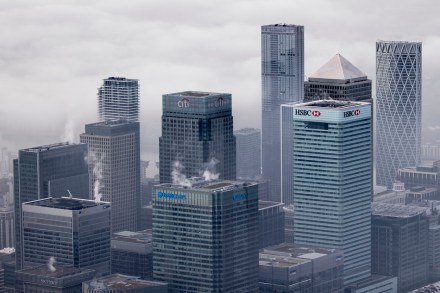
For the kind of people who think London ought to be all Farrow and Ball-coated quaintness and whiffs of Dickensianism, Canary Wharf is a rude assault, an obnoxious jungle of the anti-quaint. It is also, to many, an embarrassing paean to a moment that only the 1980s could have produced: one of gauche capitalistic, deregulatory optimism soused in international finance. One Canada Square, the frontispiece of the development and once Britain’s tallest skyscraper, is named in honour of the Toronto-based property developer who bought the project in 1988 (and a few years later went bankrupt).

York is Britain’s Florence

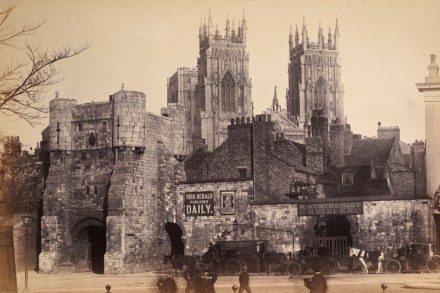
Have you been to York? Have you sauntered along its narrow, meandering medieval streets, with their peculiar names – such as Swinegate, Lendal, Ogleforth, or Fossgate – that evoke a pre-modern age? Have you strolled up Museum Street, passing medieval walls and imposing crenellated stone gateways – known as bars for some reason, where severed heads were once displayed on spikes? Have you turned a corner in this city and suddenly found yourself confronting the enormous west façade of York Minster, soaring above you? York is magnificent, as magnificent as any medieval city in Christendom Because if you have, then you will know something about this great city – something you may not have voiced.

A beginner’s guide to Hungarian food and drink

The first time I tried the well-known Hungarian wine Tokaj, which I bought from an eastern European delicatessen in London, I was so taken with it that it quickly became a verb – and the expression ‘I was a bit Tokaj’d last night’ stuck. But I soon realised that there are so many wonderful versions of this wine that you will find one to suit every occasion, and a match for pretty much anything you eat. Options include bone dry, light as a feather, sweet, robust, and tannin-rich red. And I’m lucky enough to be drinking the dry variety here in Budapest. It has just a hint of honey, making it perfect with the dishes made with cheese and paprika sauces that are so popular across this landlocked nation.

The new divide between first class and economy

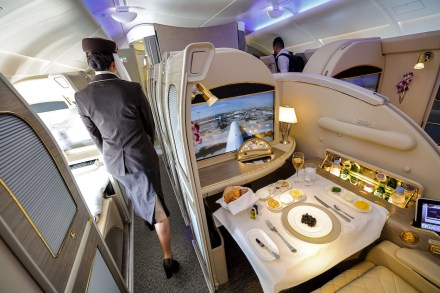
As cabin crew for an international airline, I love working in first class. In the briefing room, when all the crew are scrambling to bag their favourite positions before the start of the flight, I make sure to insist I’m the first-class dolly for the day. Usually no one minds, as some people are averse to tending to the whims of the upper-class jet set. What they might not realise is, since the dawn of the Ozempic age, working in first class is now much, much easier. There’s barely anything to do. Why? Because nobody eats anymore. Remember that famous line from Kim Kardashian, ‘no one wants to work anymore’? Well, nowadays, no one wants to eat anymore.

Sard times: Exploring Sardinia’s secret south

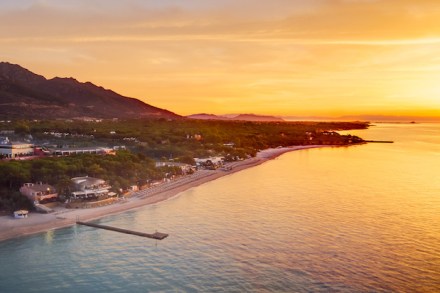
Sardinia hasn’t always been the tranquil, picture-perfect paradise of today. The island was once ruled by bandits; its rugged landscape the perfect place for criminals to hide. Things weren’t much better on the coastline: slap bang in the middle of the Mediterranean, the island was an easy target for pirates and was vulnerable to plague. Life in Sardinia was once truly miserable. Head west from Cagliari and it isn’t long before you’re in a Sardinia that many visitors don’t get to see Thankfully, the pirates and plague are no longer a problem in this part of the world. But there is another ‘p’ you might have to watch out for in Sardinia: the politician.

Meet England’s octogenarian matador

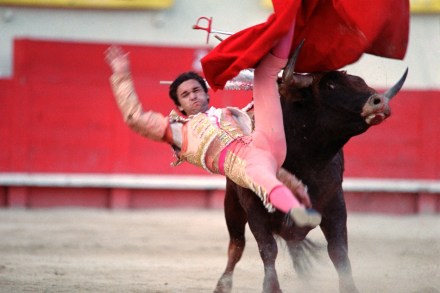
It’s a sunny October morning at a bull-breeding ranch north of Seville, and 82-year-old Frank Evans is preparing to step into the ring. Born in Salford, Evans is one of the few British men ever to become a professional bullfighter, or torero. There is something of the retired rock star about him. He is dressed in the traditional matador’s outfit of black trousers, white shirt and red-and-black waistcoat. Although a little frail, he is toned. His thinning hair is dyed brown but still reaches his shoulders. ‘There are a million people in the local cemetery who’d love to have my eye problem’ Evans and I are here for a tienta – a practice session in a private bullring, in which young cows and bulls are assessed for breeding.

Staying at the King’s Transylvanian home

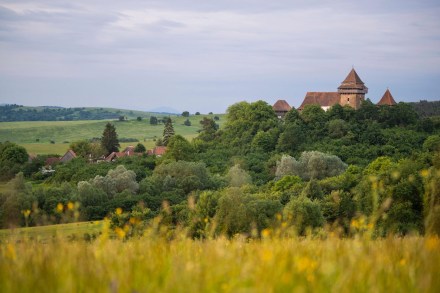
We hit downtown Zalánpatak at rush hour, and it was gridlocked. True, you get used to livestock on Romanian roads; the 30-minute gravel zig-zag from the nearest main road had brought us up against stray dogs, horses and carts and free-range pigs. A shepherd huddled near the roadside in a sheepskin poncho – crook in one hand, iPhone in the other. But it’s when you’re sitting immobile on a village street with a herd of cows pushing past on either side – when you feel the vehicle rock as bovine flank thwacks against the car door – that you start to grasp why King Charles III might have a bit of a soft spot for the place.

London is a great Eastern European city

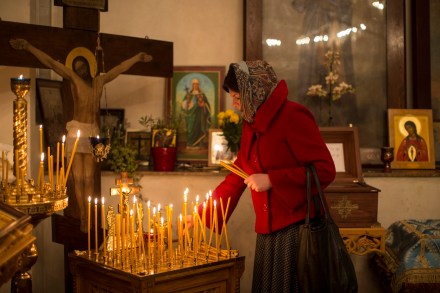
When, after three years of living in Eastern Europe, I came back to the UK, I found myself acutely nostalgic for the post-communist world. Life over there had a charm and directness that London seemed to lack. Luckily, I discovered that even in the capital you can find the best of Eastern Europe all around you – if you know where to look. A lovely place to walk into on a winter afternoon, or to visit at Orthodox Easter, as people teem outside and priests scatter holy water about I was aware of course, even in my teens, of Polish London. There was the restaurant Daquise in South Kensington which, before its 2012 refit, was one of those places you couldn’t imagine the area without.

Euston station is the best of London

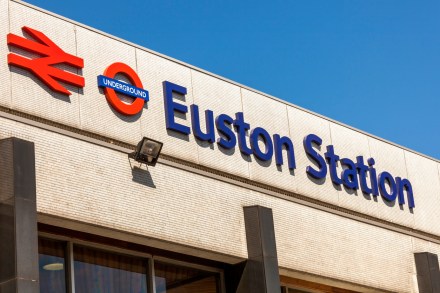
Euston Station has been in the news again, and that’s never good. After a summer of overcrowding and delays, public anger forced the Transport Secretary, Louise Haigh, to intervene last week, shutting down the monstrous, flashing digital advertising screen that spans the concourse and which has made passengers feel like battery hens trapped in a seizure-inducing neurological experiment. A ‘five-point plan’ of further improvements is promised, but no one believes it’ll work. This is Euston. It’s irredeemable. Everyone – just everyone – hates Euston. This has always been a station with its sleeves rolled up and serious work to do Well, I don’t. I hate what they’ve done to it, sure. I detest the lazy excuses, the neglect, and the tawdry retail outlets.

If Spain doesn’t impress you, what will?

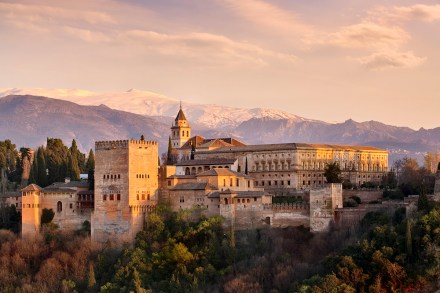
As a Brit who has lived in Spain for almost a decade, I must take issue with Zoe Strimpel’s recent article arguing that it’s the ‘worst country […] in western Europe’, at least as a holiday destination. My four years in Granada and almost five in Malaga have shown me that it’s the best place in western Europe to live – but not because of anything to do with ‘progressive’ politics or a Gen-Z dating trend. I find it hard to imagine what city would appear beautiful and romantic to someone who’s unmoved by Granada, Cordoba, or Seville The ‘buzzing terraces’ that Strimpel praises for distracting customers from horrible tapas aren’t just for tourists – they’re an integral part of the Spanish lifestyle.

What Robert Jenrick can learn from Oktoberfest

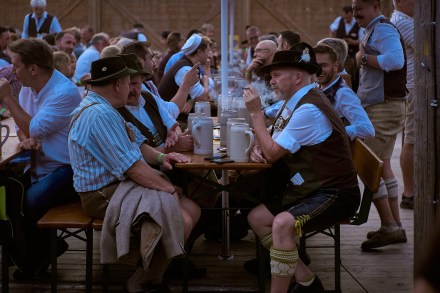
Sitting in a gigantic marquee on the green edge of Munich, surrounded by thousands of boozy Germans singing along to a Bavarian oompah band, I wonder how I got talked into coming to another Oktoberfest. Last time I came, ten years ago, I hated it and swore I’d never come again, but this time feels different. Maybe it’s the beer talking, but this year the atmosphere seems less manic, more relaxed. There are lots of couples, old and young, and hardly any stag parties. Amid the endless rows of trestle tables I see numerous families in traditional Bavarian dress (the women so alluring in their dirndls, the men faintly ridiculous in their lederhosen), tucking into huge hearty platters of carnivorous Bavarian grub.

Life lessons from a 2,000-year-old plant

Iona, Angola East of the gulps of cormorants along the Skeleton Coast by the Ilha da Baia dos Tigres, Atlantic mists are rolling in across the Angolan desert. A red, alien sun dips towards the horizon and I’m crouching down on the sand, with my face close to the oldest living thing on our planet. If the oldest living thing in the world dies, that’s not a cheery message for the rest of the planet Some say the Welwitschia mirabilis plant, which can grow for 2,000 years, looks like an octopus, with its green leaves spreading like tentacles in a circle. In Afrikaans it’s apparently known as the ‘tweeblaarkanniedood’ – two leaves that will not die.

Spain makes for an awful holiday

Spain is busy with an image update. Thanks to a host of savvy media stories, we’re now supposed to think of Spain not just in terms of package holidays, sangria, and Catholicism but also as chic, romantic, stylishly left-wing – the macho anti-fascism of Hemingway’s Spain updated for the #MeToo age – and devastatingly cutesy. Take the recent viral trend among Spain’s youth: a supermarket pineapple gimmick that’s gone global. A TikTok video has Gen Z storming the Mercadona chain between 7 and 8 p.m., under the notion that placing an upside-down pineapple in their shopping trolley signals romantic availability. ‘Spanish singles found a new dating strategy. It’s in the fruit aisle,’ crooned the Washington Post. How utterly adorable.

Montenegro’s lost interior

How many Spectator readers are aware that tiny Montenegro, that silver sixpence of south-east Europe, so long lost in the jumbled purse of geopolitics, has some of the deepest canyons in the world? Not many, I’d bet – we know the luscious Montenegrin Mediterranean coast, if we know anything. And I’d wager even fewer know that one such abyss, the Tara River Canyon, is one of the fastest watercourses on the continent. I’d imagine no one at all, including me until five seconds ago, knows that the longest stretch of rapids on this giddying torrent is called Borovi. It’s like Utah hooked up with Iceland, somewhere in Sicily, and brought a friend from Dartmoor I only know this because I’ve just fallen in.

The joy of hiring an old banger

There is always much to look forward to on a holiday with friends in France (the day one supermarket sweep, boules under plane trees, foie gras on demand); but, for me, one of the greatest joys is the hire car. That’s entirely due to my indulging in the niche pastime of driving around in the worst, most clapped out vehicle possible. You can do this quite easily in France using an Airbnb-style platform called Turo which allows you to go directly to the – usually bemused – owner and, for not very much money, drive off in whatever they have to offer you. And so it was that I found myself this summer burbling down vineyard-flanked routes départementales in a 32-year-old, one-litre Peugeot with paint flaking off and every panel dented.

Why Genoa is my new favourite city

Getting to Genoa is quite a schlep and, unforgivably, like a spoiled child, I got grumpy. The only direct flight is from Stansted and who the heck wants to travel from Stansted? Nobody. Especially those of us who live in Brighton. So, Mrs Ray and I flew from Gatwick to Milan Malpensa, took a train to Milano Centrale, kicked our heels for 90 minutes and then took another damn train to Genova Brignole. We were delayed every step of the way, and it took bloody ages: 13 hours. We were knackered and I was shirty – we should have gone from Stansted. Idiots.

An apocalyptic dog walk in Seville

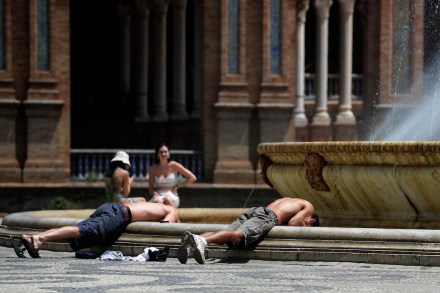
She looked up at me imploringly from the simmering pavement as the sun beat down on one man and his dog in Seville. ‘You haven’t peed yet, Amaya, we need to walk on a bit more,’ though I realised the injustice, as we were both so dehydrated neither of us had much chance of fulfilling such obligations. I found myself unexpectedly dog-sitting in the Andalusian capital after my English landlady got rather tipsy and, in a moment of reckless abandon, committed to booking a flight back to the UK to spend time with her family for the first time in a year.

Cambodia’s return to joy

In Cambodia, everybody is looking forward to Bon Om Touk. If your Khmer is a bit rusty, this means the mid-autumn New Moon Water Festival, celebrated in late October. This fervent, noisy, firework-banging festival has multiple, colourful meanings. For a start, it marks the end of the endless summer rain – which turns everyone’s laundry mouldy and gets a tad annoying. It also marks the moment when the fertile Tonle Sap river, which rolls through the sprawling, youthful, trafficky, heat-struck, palm-shaded, jacaranda-adorned, busy-yet-languid, skyscraper-sprouting city, does a handbrake turn.

My teenage Interrailing adventures

Dante’s Beach, Ravenna In my life I have nearly killed myself mainly with cigarettes and alcohol and dangerous journeys into the night. I have experienced what awaits you in those places but it is not the sort of thing you can easily talk about or even put into words. It is perhaps too secret. I am also usually skint, so all in all I do not exactly fit the bill as a solid and reliable father figure who commands respect. Yet I have six children, aged nine to 21, who live with me and their Italian mother, Carla, and I try to do my best. We have been talking about whether we would allow two of our daughters Magdalena (16) and Rita (15) to travel round Europe alone for a month on Interrail tickets.

I’m glad my wife had a medical emergency at sea

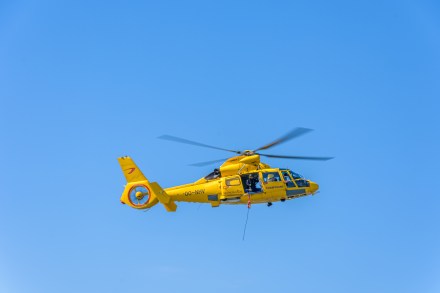
My wife had already been given morphine and they had just topped her up with ketamine. She was now so high she didn’t seem even to know where she was. And this was probably a good thing, given she was strapped to a stretcher on the rear deck of a ferry in the Bay of Biscay, 100 miles off the French coast, and about to be hoisted some 75 feet into the night sky to a helicopter that was struggling in an increasingly stiff wind. I asked her what the flight had been like. She said she had been so out of it she thought she was appearing in a remake of Apocalypse Now The reason for all this drama was that she had abruptly dislocated her hip as we sailed from Portsmouth to Santander. Before I relate what happened next, though, some background.

The timeless beauty of Shropshire’s canals

Shropshire is a strange county, little known by those beyond its border, and perhaps that’s part of its appeal. It not only has no coastline, but no city officially either. Phone cover is shaky and transport links sparse (at some times in the day, only one bus every two hours will leave my market town, and they cease abruptly around 6 p.m.). But what it does have are medieval towns, lush green landscapes, and enormous numbers of farm animals – cows, sheep, and horses (for someone coming, as I do, from relatively arable East Anglia, this has a certain H.E. Bates charm to it). The town I’ve moved to, built on a canal, has a livestock auction house on the outskirts, the lowing of cows-for-sale emanating through the carpark outside.

The UK’s phone signal is infuriatingly poor

As I have been driving across England’s green and pleasant land visiting friends and family this summer, I discovered that the UK’s phone signal is really, really terrible. I expected poor connectivity on coastal paths in Cornwall, but everywhere I went I experienced problems: network dropouts as I tried to navigate the M1, recurrent outages as I tried to work remotely from Sussex, endless loading and buffering screens (even though my phone promised me 4G) regardless of whether I was in London or the Lake District. The signal in a friend’s home in south east London is so terrible you would think we were trying to beam through the Great Pyramid of Giza. I have had more reliable phone service on safari in Tanzania than I have on Great Western Rail.

From the archives: An atheist goes on a Christian pilgrimage. Why?

23 min listen

Writer Guy Stagg threw in his job to undertake a pilgrimage to Jerusalem via Rome - choosing a hazardous medieval route across the Alps. It nearly killed him: at one stage, trying to cross a broken bridge in Switzerland, he ended up partially submerged in the water, held up only by his rucksack.  On this episode of Holy Smoke, from the archives, Guy explains why his journey was a pilgrimage, not just travels. And Damian Thompson talks to Harry Mount, editor of The Oldie, about why he’s irresistibly drawn to church buildings while remaining an unbeliever - albeit an agnostic rather than an atheist.

Italy is a land of beauty and death

I was nine. It was Florence, in mid-July. My parents bravely led my younger brother and me through a day of sweaty sight-seeing. We had just been up and down the Duomo and were cooling ourselves with ice cream in an adjacent square when there was a hideous bang. At first, we thought it was an explosion. Then, as we passed the Duomo again a few minutes later, we saw something so grisly I still remember it with a shudder: paramedics trying to get a stretcher covered in a white sheet into the ambulance, and on the ground, a huge splat of what looked like spaghetti sauce. It took a moment for me to get my head around what that must be, and how it related to the bang, and then I couldn’t unwrap my head from it.

The fury of the Med

Scylla and Charybdis are said to have sat off the Sicilian coast, where Mike Lynch’s boat foundered, and where 3,200 years before, Odysseus navigated between the monster and the whirlpool. Many think of the Med as a gentle sea, more like an oversized eternity pool, unbothered by the killer storms and cliff-high waves that rage beyond Gibraltar. The howling wind had ripped along the coast, whisking the beach away overnight I thought that, too, before I was bashed up by wild tempests in the two years I criss-crossed the Mediterranean in Odysseus’s wake. One morning, I turned up at a hotel on Mykonos. As I made my way to the breakfast table, the agitated maître d’ shimmered up and said, ‘I’m so sorry, sir, the beach has been washed away overnight.

The loneliness of the digital nomad

Young people have always wanted to leave Britain. Once upon a time, they joined the merchant navy. In the 1970s, they headed to Australia. Leaving seems mysterious and risky. It’s boring to never want to escape. ‘I just got back home after being in England for two days,’ said the former Geordie Shore star Sam Gowland, who lives in Bali. ‘What a depressing, grey, cold, gloomy, miserable × 100 place. If it’s possible, and you’re at an age where you can, move abroad.’ I could sustain a pale imitation of the life of a 19th-century Mexican silver magnate from two hours of Zoom work Today, influencers offer advice for those looking to become digital nomads. The website Nomad List recommends an array of destinations, including ‘Places with Attractive Women’.

How bus travel lost its magic 

At the former Chiswick Works in west London, I recently celebrated the Routemaster’s 70th birthday. I owe my existence to this majestic mode of transport. My mum was a conductress on a Routemaster – the No. 16 – which cut a merry swathe from Cricklewood to Victoria, right through the centre of London. My dad, like a lot of young Irishmen, had arrived in London in the 1950s to help rebuild a city still recovering from the second world war. Every morning, he’d catch the first bus from his digs off the Edgware Road to various building sites. One morning he got chatting to the young clippie, and married her a few months later. ‘Open the front door,’ he’d say to me years later, ‘and the whole world’s outside.

When cabin crew feel fear

‘How do you cope with this?’ The poor woman is looking up at me with the big Bambi eyes I’ve seen grown men adopt when extreme turbulence hits. I have to say something comforting; it’s part of my job description as cabin crew. They even tell us what to say on the cabin crew training course. Get down to eye level with the passenger, adopt a comforting tone, agree with their distress, and reassure them everything will be fine. I hate the kneeling down bit; it feels a little insincere and overly intimate. Plus, I’m ashamed to say, you can probably hear my knees cracking from the cockpit. Unfortunately, I’ve still got a rather large chunk of my mortgage to pay, so I duly launch into ‘the routine’.