Spectator Life

Spectator Life

An intelligent mix of culture, style, travel, food and property, as well as where to go and what to see.

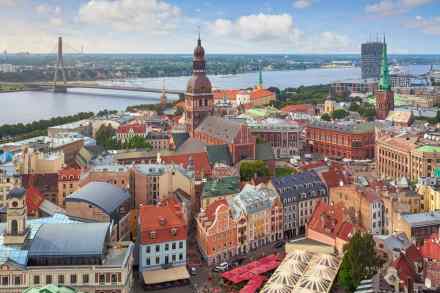
How to spend a weekend in Riga

In Ratslaukums, Riga’s central square, there is an ugly brutalist building which encapsulates the contested history of Latvia’s beautiful, battered capital. This modernist eyesore was erected in 1970, when Latvia was part of the Soviet Union. It was built as a museum dedicated to Lenin’s crack troops, the Red Latvian Riflemen, who helped him overthrow the Tsar and win the resultant civil war. Without them, the Russian Revolution might have been stillborn. Today the content of this museum is completely different. The only relic of the Latvian Riflemen is the Soviet statue in the street outside.
How to eat and drink your way around the Dubrovnik Riviera

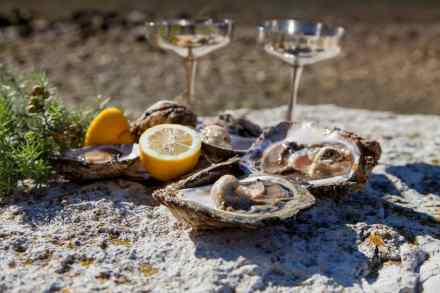
‘I hope you’re hungry,’ crows a fisherman, setting down a plate piled high with freshly shucked oysters. They say you should face your worst fears head on. Well, here I am addressing mine – but I never thought it would be done in quite so idyllic a spot. I’m in Mali Ston, a small, picturesque town on Croatia’s Pelješac peninsula, about an hour’s drive from Dubrovnik. It’s 9.30 a.m. and many shops are still shuttered, but already Game of Thrones fans are out in force, taking selfies along the hillside’s 14th-century network of towers and fortresses. (The three-and-a-half-mile walls doubled as King’s Landing and the Eyrie in the fantasy drama.

The scourge of the beach tent land grab

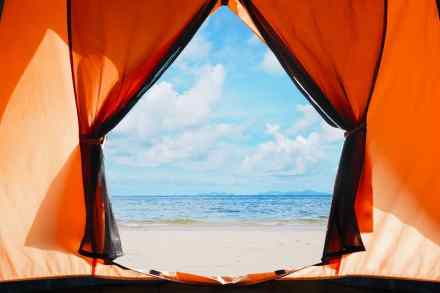
‘Ah,’ says my husband at the top of the cliff path at Overstrand, ‘it’s just like a Shirley Hughes illustration.’ There are sandcastles, wooden groynes, children and dogs running in and out of the waves. Then his eye falls on the first land grab of the day. Three generations of the same family are hard at work constructing their citadel: popping up polyester tents to form a wide arc, shovelling shingle into the flaps to secure them, unfurling windbreaks across either end to mark the outer limits of their encampment. We – like the family in a favourite Hughes picture book from my childhood, Lucy and Tom at the Seaside (1976) – have travelled with just ‘the picnic things and bathing bags and buckets and spades’.

Sixteen cathedrals to see before you die

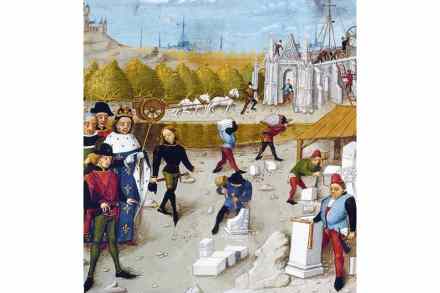
There can be no clearer illustration of the central role that great cathedrals continue to play in a nation’s life than the outpouring of grief that greeted the catastrophic blaze in Notre-Dame in 2019. President Macron described the building as ‘our history, our literature, our imagination, the place where we experienced all our greatest moments’. Indeed, it is impossible to conceive of any major European city without a cathedral at its heart. Emma J. Wells has written an accessible, authoritative and lavishly illustrated account of the building of 16 of ‘the world’s greatest cathedrals’.

What’s new in New York City

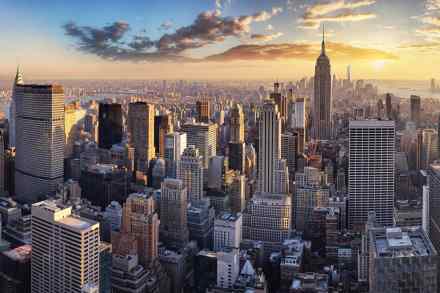
‘It is ridiculous to set a detective story in New York City. New York City is itself a detective story,’ said Agatha Christie. More than 60 years later, the Queen of Crime’s words still hold true. The Big Apple is a constantly changing beast: an enigma that, just as you think you’ve cracked it, coils itself into a new form for you to get your head around once more. That is what makes it the ideal return city break. Each time you travel there’s a new restaurant, hotel or show to try. And with many launches delayed by Covid-19, this year has brought an even greater glut of openings – making it the perfect time to visit. So, whether it’s your first time in New York or your 100th, which of the latest additions are worth seeing?

The brutal truth about holiday packing

The general flying advice this year, with airports resembling cattle markets and when you can’t be sure if you’re ever going to take off, is: only travel with hand luggage. Packing a fortnight’s holiday into the tiniest of bags has become an art form. Social media is awash with tips on minimalist packing and dedicated websites on travelling light have sprung up, with experts advising what you should, and shouldn’t, pack. It’s depressing. Yes, the lighter the plane the less fuel it uses, which is no bad thing for the environment. But a holiday is meant to be an indulgence, a chance to experiment with new outfits. Instead, the less-is-more principle is being abused to such an extreme that we’re having to do clothes-washing while away on holiday.

The books Spectator readers take on their summer holidays

Recently, Spectator writers shared their all-time favourite summer holiday reads. In response, Spectator readers have been offering their own recommendations for what books to take to the beach… 'You might try Helen Thompson’s Disorder: Hard Times in the 21st Century, a history of oil politics. It starts with the simple fact that in evolving from the steam to petroleum age, the old western powers no longer had direct access to fuel and faced a growing dependency on oil from Russia, initially, and then the Middle East. The US, of course, is an exception as it has domestic resources – but foreign policy errors led to it being the guarantor of petroleum resources to the rest of Nato.

What I learnt on my grown-up gap year

Earlier this year, quite unexpectedly (and for personal reasons too tedious to share), I was forced to be outside the UK for ‘a while’. At the outset, I had no idea how long my exile might be: maybe weeks, maybe months. To add to the ambiguity, I had no particular place to go, except two already arranged travel writing trips of a week each (in the USA and Greece). So I decided: why not make a pleasing virtue of necessity? Why not, at the age of 58, do a geriatric version of a gap year, wandering freely about the globe? And that is exactly what I did. I packed my suitcase, headed out, and let whimsy and the weather dictate where I went next.

Off the books: there’s more to Hay-on-Wye than the literary festival

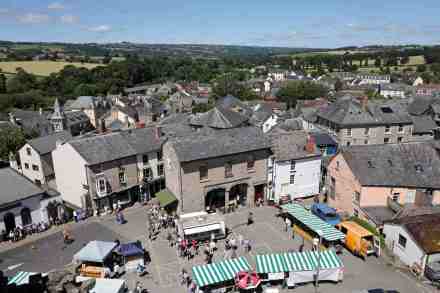
Chances are you will have heard of Hay-on-Wye. You might even have been. It’s the town on the Anglo-Welsh border where more than 30 years ago a man called Peter Florence began what has become the world’s most famous literary festival. Now some 200,000 people descend on the place each May and June, and for 11 days it feels like the centre of the literary universe, with hordes carrying tote bags traipsing hither and thither and pubs and restaurants overflowing like Venice in high summer. If that’s what floats your boat, then get stuck in. But for my money, Hay is worthy of a visit in its own right – and preferably when all those other visitors (not to mention ex-presidents and Booker prize-winners) aren’t there.

Iceland’s scenery takes your breath away – but so do the prices

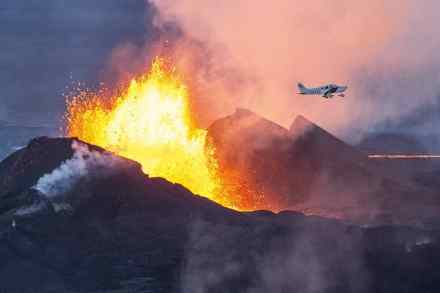
I’m writing this on the plane back from Iceland, a fact that fills me with relief. Not because I didn’t enjoy my trip to the land of fire and ice – far from it – but because there was a serious risk I might be stuck there indefinitely with Caroline and my three sons. In the 24 hours before our departure, nearly 4,000 earthquakes were detected in the southwestern region known as the Reykjanes peninsula, which is where the international airport is located. Such unusual seismic activity is often a sign that a volcano is about to erupt and that, in turn, can create an ash cloud that necessitates the grounding of all aircraft, as happened in 2011. There are worse places to be stranded, of course.

What Spectator writers read on their summer holidays

The flights are booked, the passports are dusted down and it’s time to pack. But which books deserve space in your suitcase? Here, Spectator writers share their all-time favourite summer holiday reads… Matthew Parris My all-time favourite re-read at any time of year is Thornton Wilder’s The Bridge of San Luis Rey. A very short novel with the kind of perfection a geometrical proof may command, it starts with the death of a group of travellers crossing a Peruvian rope bridge who are linked only by the fact that they were on the bridge when it snapped, and traces the life of each up until that point. Wilder’s quest is to discover whether there exists any divine plan. Toby Young For pure escapism, I Am Pilgrim by Terry Hayes is hard to beat.

The curious rhythm of life in Spain’s Santiago de Compostela

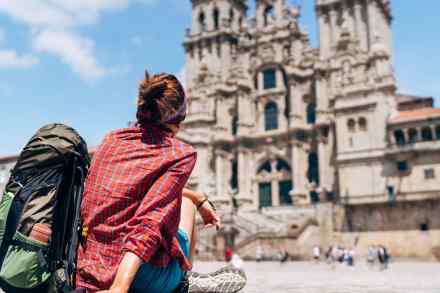
Surely no other city can claim to have so many backpacks and walking sticks on its narrow cobbled streets. In Spain’s Santiago de Compostela it always looks like there is a giant hiking convention going on. These aren’t your average ramblers, though. They are pilgrims, as the city marks the end of the famous Camino de Santiago pilgrimage. The Camino, or the Way of St James, is most associated with the 500-mile route from the base of the French Pyrenees westward though Pamplona, Burgos and Leon.

Is the world’s first supersonic business jet a flight of fancy?

It was Barbara Amiel, whose copy I used to edit at the Sunday Times, who first alerted me to the important point that one private jet isn’t enough. One jet is always in the wrong place. Or having heavy maintenance. Two was the minimum, she said. Plenty of others appear to live by the same maxim. Roman Abramovich has five jets, including a Boeing 787 Dreamliner worth $350 million. Elon Musk, Bill Gates, Jeff Bezos et al. are not short of a jet or two either. But soon all these symbols of tycoonery may be made obsolete by the world’s first supersonic business jet, announced by a start-up unfortunately named Boom Supersonic (presumably after the noise its aircraft will make when it passes overhead).

How Italy’s most famous coastline stays crowd-free

A five-minute taxi journey costs €50, a single drink can set you back more than €20 – and if you want to avoid shelling out €60 for a plate of pasta, you might struggle to find a supermarket. But the Costa Smeralda offers one luxury that's hard to put a price on at the peak of the summer holiday season – a surprising lack of crowds. Back in the 1960s, this 20km stretch of beaches and pine forest on Sardinia's northern coastline was uninhabited and deemed of little value to the country's farmers. But the Aga Khan spotted a business opportunity. He purchased the land and began the process of turning it into a tourist destination for the upper classes, establishing a consortium to ensure all future development remained tightly controlled.

Could Stranger Things inspire your next American getaway?

Great TV shows have a knack for immortalising their locations. Think what Fargo did for the otherwise unloved Dakotas, or Vince Gilligan turning New Mexico into the heart of the 21st century’s greatest neo-Western with Breaking Bad. While the Duffer Brothers’ Stranger Things might have secured its place on the podium of brilliant box-sets, could it also inspire your next US getaway? Admittedly, a show revolving around a terrifying alternate dimension might not seem a natural candidate for inspiring wanderlust.

The secret holiday spots beloved by the Spanish

Ask a Spaniard where they vacation, and you may get a touch of the Matador effect in response. The chest lifts, the head is tilted up with the bottom lip pushed out accompanied by the reply: 'España! My country.' For like the Greeks, when you have so many domestic splendours to choose from, why would you go anywhere else? It’s estimated that about two out of three vacationing Spaniards remain in country for the holidays. But where do the Spanish go? It’s a bit of a mystery—perhaps intentionally so. With swarms of Brits inundating their land, you can’t blame the Spanish for wanting to safeguard a few vacation refuges. Recently I’ve been encountering Spaniards on the move for their holidays.

Why Italy’s Emilia-Romagna beats Tuscany

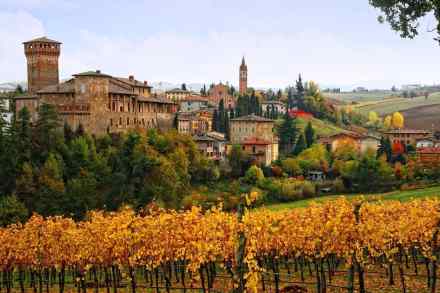
The guidebooks will tell you that Emilia-Romagna is Tuscany without the crowds. It’s generally true, though at the moment – in the peak summer season and when all the world seems to be descending on Italy after years of Covid-imposed separation from la dolce vita – there’s really tourists everywhere in Italy. But yes, with a savvy itinerary, Emilia-Romagna does offer the prospect of lesser crowds than Tuscany or the Amalfi Coast while still getting all the sun, sea, sightseeing and sensationally good food that Italy is all about. Bologna Bologna - a Mecca for foodies Italy’s culinary capital, Bologna is a city in which you can eat exceedingly well.

Where to escape the crowds in Cornwall and Devon

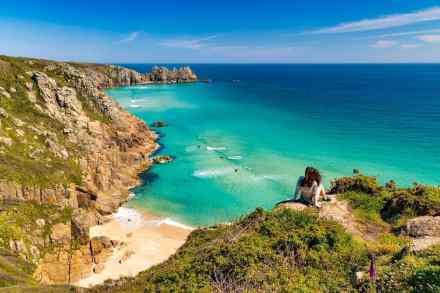
The wild, rugged beauty of the far southwestern tip of the UK needs no introduction. The appeal of life by the sea is at fever pitch. Nowhere in the UK boasts quite the same breadth or quantity of excellent, award winning beaches - picturesque stretches of sand, coves and swimming spots can be found peppered up and down the coastline. Keeping away from the crowds is increasingly difficult, but it can be done. In this list of some of the best beaches in Devon and Cornwall, we’ve focused on a good balance between accessibility and facilities, and those more secluded beaches that require a little more effort to get to.

The curious rise of Soho House

The San Lorenzo neighbourhood of Rome, a short walk from the murderous environs of Termini, the central train station, is not particularly old or beautiful. A working-class neighbourhood once connected to the Wuehrer brewery and freight yard, it was bombed heavily during the war, the only massive bombing in Rome. But like Wedding or Neukolln in Berlin, San Lorenzo’s old working class roots have translated neatly into arty cool, and the area, still scruffy, is now a left-wing hipster paradise, its walls cheerily scrawled with anarchist graffiti.

Where is Britain’s best beach?

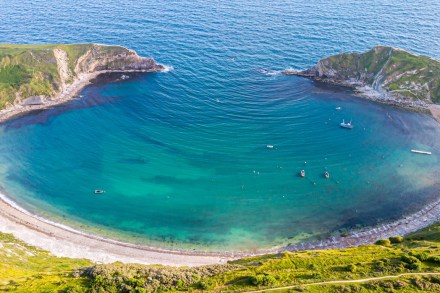
Many of us are opting for a seaside jaunt in old Blighty this summer. Our local beaches might not boast the sunshine levels of Greek islands, but with spectacular vistas, tolerable water temperatures and even the chance to take your dog along, there are plenty of reasons to find somewhere new to hammer in your windbreak this summer. For picturesque perfection – Barafundle Bay, Pembrokeshire After a gentle amble across windswept fields from Stackpole Quay, your first glimpse of Pembrokeshire’s prettiest beach is framed by a crumbling old stone archway. Duck under, traversing the rocky path down towards the waterfront and you’ve reached Barafundle Bay – arguably Britain’s most beautiful beach.

The finest hotels in Marrakesh

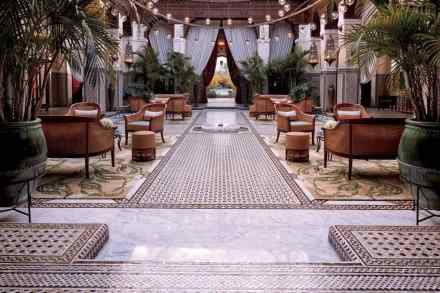
British travellers have found solace in Marrakesh for many years. In early February, I visited the city and happened to be on the first flight out of the UK to Morocco after travel restrictions were lifted. The plane was full of all sorts of characters – old hippy types desperate to feel the thrill of the city once more, stylish couples dressed in matching head-to-toe black, younger families keen for some not-too-faraway winter sun. The city has many hotels and riads tucked away within its walls. Here are a few of my favourites. The Royal Mansour The Royal Mansour is the jewel in the crown of Marrakesh’s hotel scene, in large part because the King of Morocco is the man behind its creation.

The surprising appeal of Sweden’s second largest city

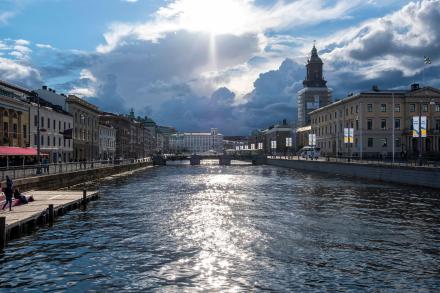
Sweden is often overlooked as a holiday destination by Brits due to lazy misconceptions about the Scandinavian weather and prices. Yet Swedish summers are arguably more predictable than our own, with average temperatures in the low 20s throughout June, July and August and the food, whether dining at a seaside café or grand hotel, is almost invariably of excellent quality, using local produce, and at prices similar to those back home. Sweden's second largest city Gothenburg has typically sat in the shadow of Stockholm as far as international tourists are concerned, but it has much to reward those who are prepared to venture off the beaten track.

There’s more to Salzburg than The Sound of Music

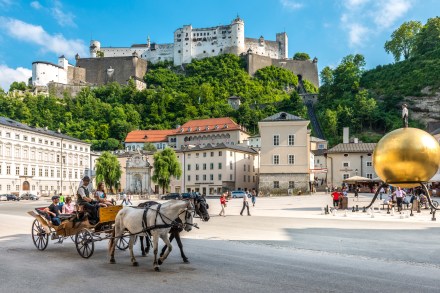
Returning to Salzburg last week, for the first time since Covid, I’d almost forgotten what a beautiful city this is. I’ve been here umpteen times, but each new arrival takes my breath away. An ornate cluster of domes and spires, set against a backdrop of snowcapped peaks, it’s implausibly picturesque, like the setting for a movie – which is apt, because for most Britons it’s still synonymous with that kitsch classic, The Sound of Music. Salzburg does have its schmaltzy side, but it’s also a highly sophisticated place, a city of classical music and antiquities, and it’s this blend of highbrow and lowbrow which makes it so appealing.

Is this the next glamping fad?

The spot where Forrest Gump gets offered a seat is pretty well where the shower is now. I’m spending the night at a campsite in Suffolk, sleeping aboard ‘Texas’, the first converted vehicle offered by American School Bus Glamping. Until this time last year the bus was transporting students to and from school in the Lone Star state. Now it sleeps up to six (double bed, two bunks and a sofa bed, all John Lewis linen provided), has a funky little kitchen (oven, hob, high-end crockery, plus a barbeque outside) and that (exceedingly decent) shower. Unlike some glamping companies, this one fully recognises that the first syllable denotes ‘glamorous’. My favourite touch is the fridge – its front is disguised as a Marshall guitar amp.

In defence of Blackpool

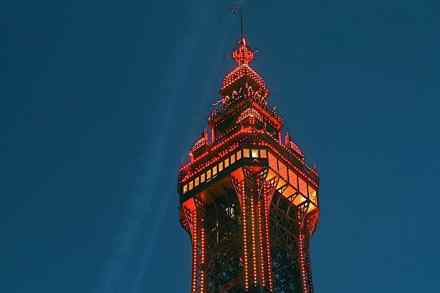
As a typically cynical son of Blackpool, I'm often one of the first to stick the boot in when the town hits the headlines. And who can blame me? In a top trumps of misery and woe, the seaside resort is declared the victor time and again. Once dubbed the 'most unhealthy place in England', life expectancy languishes at the foot of any table. Three years ago, a government poverty report found the town was home to the most deprived ward in England out of a total of 32,844. Unemployment? It runs at just 6 per cent — not bad. Though, as The Spectator has previously reported, another 26 per cent are out of work and not even looking for a job so don't count towards the unemployment figure — again, the worst in the country.

The European holiday spots easily reached by train

Imagine a holiday where you don’t need to arrive hours before departure…where there are no expensive taxis to inconvenient out-of-town locations or extra charges for daring to bring a medium-sized suitcase, and where the journey begins on time. All this is well within the realms of possibility – and has been for decades. Train travel is enjoying something of a revival. Although the travel time is longer on paper, you often find you win hours back, as the train takes you to/from a central location without a wait for your luggage and a bumpy transfer bus at the other end.   More often than not, the journey itself is an adventure. So what are you waiting for? Here are seven ideas for a rail-based escape.

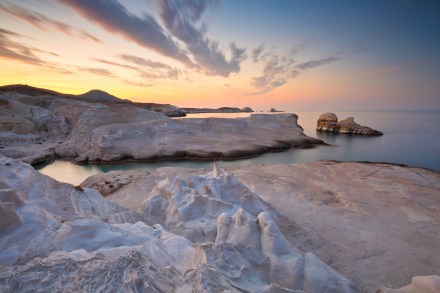
Why you should swap Mykonos for Milos

Choosing an island in the Cyclades is a familiar summer conundrum for those who love Greece. The array of choice is so dizzying that many opt for the safety of well-known options: Santorini and Mykonos. But if you’re seeking something off the beaten track, why not venture away from the tourist centrals? With a population of roughly 5,000, Milos strikes the perfect balance between adventure and unspoilt natural beauty. Situated between Piraeus and Crete, the 150km2 horseshoe-shaped island is the rising star of this group of well-trammelled islands. It gained significant attention from tourists in the last decade, with 2019 recognised as its best year before the inevitable shake-up of the pandemic, a local says.

The death of the gap year

When the University of Cambridge’s vice-chancellor Stephen Toope told the Times that students’ gap year projects abroad can build less resilience than the everyday lives of students from modest backgrounds, he was of course right. In today's culture, the three months I spent attempting to teach English in southern Malawi in the late Noughties now feel like a dirty secret of over-privilege; something that’s deserving of the same discretion as having a childhood pony or the fact that you spent the Easter holidays in the Alps.

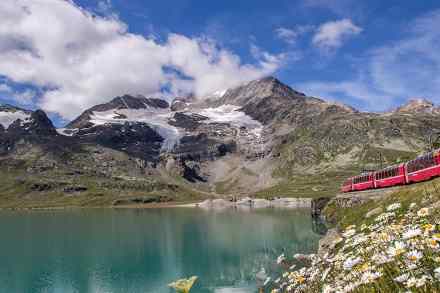
Follow Michael Portillo and experience Switzerland’s best railway experiences

Since the advent of the modern railways, the majestic landscapes of Switzerland have been home to some of Europe’s most stirring train journeys. This reputation continues today as modern luxury combines with age-old wonders to provide millions of passengers with an unforgettable premium railway experience. Of the many rail journeys that cross Switzerland, the eastern canton of Graubünden is home to two of the best known and most loved: the Glacier Express and the Bernina Express. As jewels in the Alpine crown, these routes are celebrated the world over for their ability to astonish even the most seasoned of travellers. https://www.youtube.com/watch?