Spectator Life

Spectator Life

An intelligent mix of culture, style, travel, food and property, as well as where to go and what to see.

I miss the Cold War

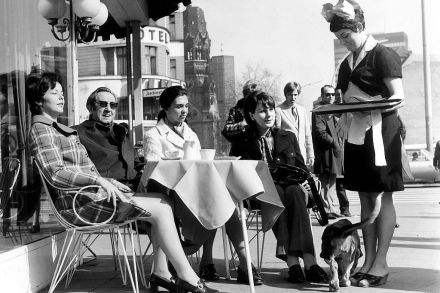
Berliner Luft is a popular peppermint-flavoured shot downed in the city’s bars. It also means Berlin Air and is a colloquialism for the city’s spirit of unfettered freedom and rebellious abandon. Given what this city went through, reduced to rubble by the furious Russians at the end of world war two, and then rent in two for more than 40 years during the Cold War, it’s not surprising that after the Berlin Wall came down in 1989, the populace needed to let off steam.
Britain’s best boltholes for under £50 a night

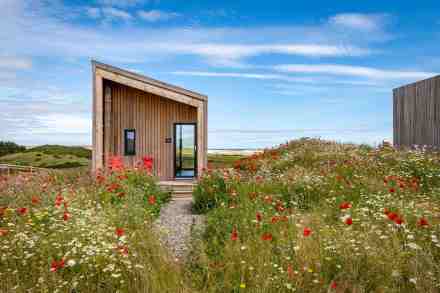
Whether it's train fares, energy bills or the supermarket shop, prices are rising and belts are tightening. But if you’re desperate to get away from it all, it’s still possible to have a break on a budget – however many people you’re taking with you. From cosy couples’ cabins to beach houses big enough for two families, and from Scotland to Sussex, these seven boltholes offer spring getaways with plenty of wow factor – and all cost no more than £50 per person per night. For couples  Tahuna Bothies, Aberdeenshire Sleeps: 2-4Price: From £100 a night (£50 each for two people)  [Lee Fowlies] These wooden huts on a corner of Scottish coast are a stargazer’s dream.

Nicola Sturgeon and the truth about motorhomes

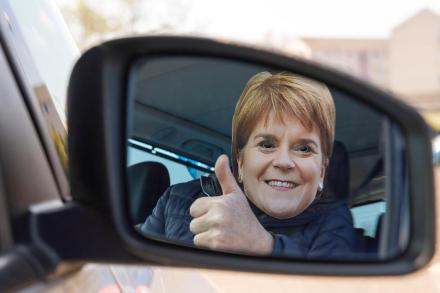
Watching the narrative arc of the Sturgeon family campervan – removed from the drive of Nicola Sturgeon’s mother-in-law as part of an SNP fraud probe – is an opportunity to review the campervan. Or motorhome, if you prefer. The Mrs Murrell model is a stylish Niesmann + Bischoff ‘iSmove’, priced at £110,000 or thereabouts (her son, Peter Murrell, it should be said, has been released without charge pending further investigation). There’s an irony in being accused of embezzling money for an independence campaign and then supposedly spending it on driving away. Nationalism is about standing still, but campervans contain people and people contain multitudes.

Did Jesus visit Cornwall?

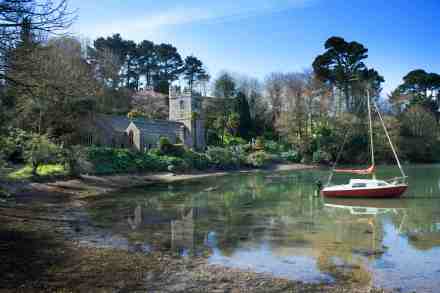
I remember the ephemera at the back of St Barnabas. The church stands in Oxford’s suburb of Jericho, near the University Press. It had proper church clutter: stumps of candles, dogeared pamphlets and reminders of long gone diocesan initiatives. St Barnabas – a beautiful Italianate monstrosity, plonked by the high Victorians, with their classic tact, amid a cluster of crabby little houses, once slums but now worth millions – is good at collecting this stuff. In the sacristy is a vestment made from the coronation hangings of Tsar Nicholas II, smuggled out of Petrograd at the revolution; now the double-headed eagle peeps through the incense, delighting porters, dons and motor workers alike on high days and holidays.

The other side of flamenco

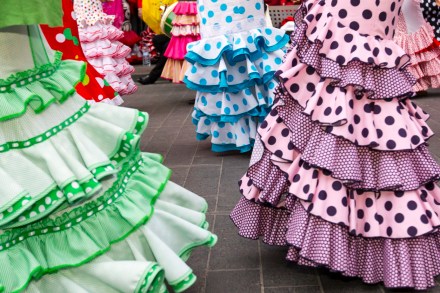
When you hear the word flamenco you probably think of a lady dancing in a polka-dot dress, stomping her feet, accompanied by guitars and singing. And in the fair capital of Andalucía, Seville, you would have no problem finding such a sight. All across the old town, around the cathedral and in the lee of its 12-century minaret turned cathedral bell-tower, glamorous flamenco dancers are busy at it, stirring up passion on the cobbled streets and in the city-centre tourist shows. There’s no denying such flamenco demonstrations will raise your pulse and the tourists, not surprisingly, love them.

The new age of sleeper trains

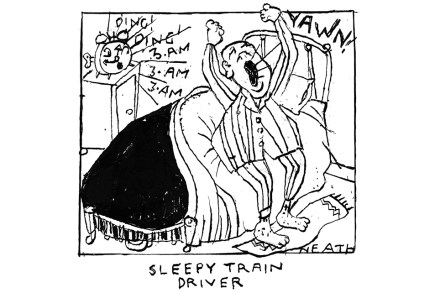
It’s a fabulous combination: travelling by train and sleeping. And the good news is that the concept of sleeper trains is being revived. The bad news is that, like trams and trolleybuses, a wonderful form of travel was allowed to decline in the first place. The first sleeper carriages – as opposed to trains you happened to fall asleep on – were introduced in the US in the late 1830s, but these provided little more than hard wooden benches. It was George Pullman who built the first luxury sleeper coaches when he founded his eponymous company in 1867. America, with its vast expanses and a newly opened transcontinental line, was fertile territory, and Pullman coaches were soon being attached to long-distance trains.

Diary of a digital nomad

As the pandemic gently recedes into history, many of us have been embracing the liberties that have followed. For anyone whose work relied on a desk, a chair and a computer, video-conferencing services such as Zoom left us questioning long-held assumptions about the need for those increasingly anachronistic offices to which we once trudged. The thought of traipsing across town to sit in front of the same computer perched on a slightly different desk suddenly felt absurdly outdated.   But just as we became accustomed to typing in our slippers, more adventurous feet began to itch. Being stuck in a corner of the sitting room all day could be just as stifling as those open-plan offices we thought we'd escaped.

In praise of cruise holidays

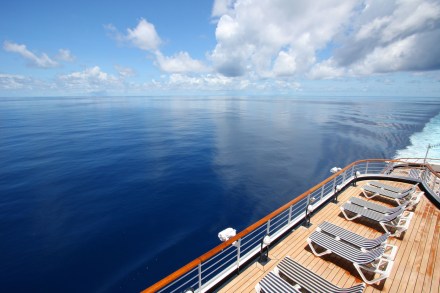
While many travel addicts went into hibernation during the pandemic, as public health scolds around the world turned our joyful compulsion into a sin, I kept roving despite the hassles. On an Easter Week trip to the Dominican Republic in 2021, I watched police battalions forcibly remove masked people from the streets of Santo Domingo at the 8 p.m. curfew. I spent a fortune on Covid tests for visits to Germany, Azerbaijan, Ecuador, Brazil, Argentina, Uruguay and various Caribbean ports. And I was badgered about wearing masks, even outdoors, on three continents.

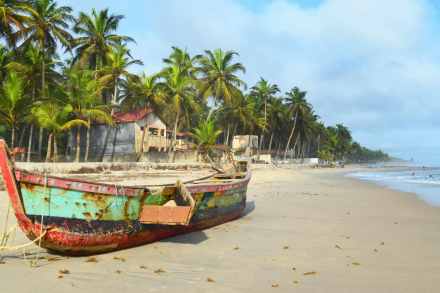
Is Cote d’Ivoire the perfect place to have an affair?

‘Côte d’Ivoire, eh?’ said the businessman in the seat next to me on the Air France flight from Paris to Abidjan, as he flicked through the wine list. ‘Perfect place to have an affair.’ Seriously? I’d had endless friends prior to my departure sniggering that I – middle-aged white female – was tragically going to West Africa as a sex tourist, to patrol the bars and beaches, barnet possibly culturally appropriated into dreadlocks, in the hope of snagging a ripped Rasta (will I get cancelled for writing all that?) or two. And Mr 7A was now indicating it was an ideal destination for a planned romantic getaway too. Crikey! I pondered his words as he hesitated between the Chablis and the Pouilly-Fumé.

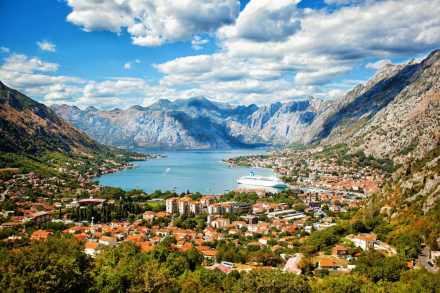
The hidden charms of Montenegro

The first thing you should know about Montenegro is that it is wildly more dramatic than you might imagine. It would be frankly rude not to pull up on its precarious mountain roads and gawp. In summer the Adriatic shines; in autumn the mountains compete with New England for glorious, rich colours. The second thing you should know is that there is a relaxing lack of big-hitting sights. And anything you do want to do won’t take long. Even the most beautiful and Venetian of the tiny Balkan state’s towns take an afternoon at most to peruse, leaving plenty of time for lingering coffee stops and long fish lunches in the family konobas strung along the coast (which, if you were pushing it, you could drive end to end in around three hours).

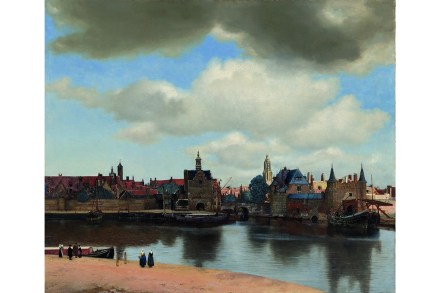
How to see two sides of Vermeer in the Netherlands

Why is it that the world of critics, gallery-goers and art-lovers is so overwhelmingly enthralled by Johannes Vermeer? His subjects – quiet interior scenes with women writing letters or playing music – are hardly the stuff of radical innovation or surprise. He wasn’t even that original: his works often have a similar focus to those by his contemporaries from the Dutch Golden Age, from Pieter de Hooch to Jan Verkolje. Nor is his biography the perfect fodder for endless books and feverish interest. So little is known about the man, and his way of painting, that the moniker he was given by the French art critic Théophile Thoré-Bürger in the 19th century – 'the sphinx of Delft' – is still used today to imply his inscrutability, his opacity and his ambiguity.

How to spend 48 hours in Montreal

‘You’ll see when you get there,’ my friend said. ‘There’s just a different vibe in Montreal.’ He wasn’t wrong. I travelled from Toronto by train – a five-hour journey made infinitely more bearable by the impressive landscapes that flashed past the window – to find that Montreal is a tale of two cities. Still distinctly North American – and Canada’s second most populous metropolis – Montreal is dotted with all the chrome skyscrapers and wide, bustling intersections you would expect. Yet around each corner there is also a dose of seemingly incongruous European flavour: a cobbled street, an old stone church, a statue in a tree-lined square. For every modern vista, there is a strip of café culture that kids you into thinking you have strolled down a French avenue.

Is this the end of travel writing?

Thirty years ago, in the days when friendships were sustained not by email but by air mail, a friend of mine was spending time in some exotic faraway place. He would send me beautiful, florid accounts of his travels and I would read out the most hilarious passages to the flatmates I was living with at the time. When I next replied to him, I sent him their regards and let him know how much they had enjoyed hearing about his adventures. The next letter was angry. Although part of me understood why (I suppose I had rather naively and stupidly shared something that was supposed to be private), another part of me struggled with an expression that was new to me. I had apparently committed what he called an act of ‘cultural appropriation’.

How to dress for air travel

Even though I fly a lot, I retain the notion that air travel should be treated as a special occasion for which one should dress accordingly. I am writing this from Gatwick, accompanied by one of those canvas bags you get for a fiver at Sainsbury’s Back in the day, if you showed up looking as though you’d made a bit of a sartorial effort, the check-in person might pick up the phone, announce to reservations that a Mr Sutherland was ‘SFU’, and would rip up your boarding pass to replace it with a nicer one. In airline argot, SFU stood for ‘Suitable for Upgrade’. Now that upgrades almost never happen, it won’t be long before people start turning up in dressing gowns. And, though I hate to say it, one of the best tips for modern airline travel is to wear naff clothes.

How to escape the cold without jet lag

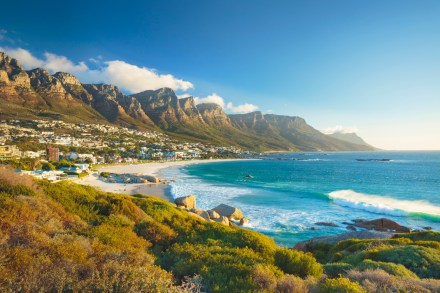
My mum yelped. The kayak bucked back and forth as we both mouthed: ‘Dolphins!’ The pair zigzagged around us while we tried to paddle after them. Afterwards, we were paddling back towards land for a busy afternoon of exploring coffee shops and wine bars when a penguin bobbed its head up from the water. In moments like these it's hard to believe you're in a city – but there was Cape Town spread out on the shore ahead of us. The taxi driver who met us at the airport had summed it up: ‘In Cape Town, you can do everything.’ There’s nature in spades (from antelope to whales), incredible food, culture, world-class wine and, according to our kayak guide, ‘some of the best hiking and biking trails in the world’.

How to see Bangkok without the crowds

In the deliciously darkened corners of the Vesper cocktail bar, in the central quartier of the Siamese capital known as Silom, the patrons are guzzling some of the finest cocktails east of Suez: from the exquisite complexities of the 'Silver Aviation' (Roku gin, prosecco, maraschino, coffee-walnut bitters, almond and lavender cordial), all the way to the heady simplicity of the 'Mango Manhattan' (bourbon, vermouth, white port, absinthe). What’s more, everyone seems to be having a good time. Which is maybe not surprising – this place was recently ranked the 14th best bar in all Asia (by the same people that bring you the World’s 50 Best Restaurants, Hotels etc), and the top-of-the-class cocktails are quite considerately priced at around £12 a pop.

The fast and furious world of reindeer racing

Don’t ever ask a Sámi person how many reindeer he owns. It’s about as polite as asking someone in Britain how much cash he’s got in the bank. But enquire after the health of his reindeer, or which are the ‘stand-out’ specimens in his herd of between 300 and 1,000, and you will be fine. In fact, get ready for a detailed response from someone whose Arctic community often still lives symbiotically with its animals.  Racing reindeer has been popular among Sámi people for hundreds of years, but began receiving wider attention in 2005, when the Midnight Sun Marathon organisers and the Sámi Valáštallan Lihttu sporting body arranged the first championships to be run in Tromsø in Norway.

The rise of the ‘workation’

The biggest single driver of last year’s property boom was the surge in working from home. For many, the commute went from daily chore to occasional concern, enabling them to move to areas that previously seemed beyond reach, from the Cotswolds to Cornwall. But others have gone further still – swapping ‘work from home’ for ‘work from anywhere’. These digital nomads typically ditch the nine-to-five or find flexible employers to enable them to decamp to sunnier climes in the greyest months of the year. And during a winter of high energy bills and soaring living costs at home, the trend has been growing.

How to combine a ski holiday with a city break

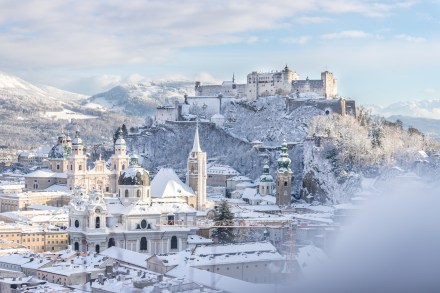
There’s always part of me that dreads the start of a ski holiday. Not because of the skiing (I adore that), but because of the journey. As a child it meant 16 hours in the middle seat jammed between brother and sister as we argued over who felt most car-sick. Nowadays it means faffy transfers and days off eaten up by travel. This year, I decided to try something different: why not make the journey part of the holiday? Rather than undertaking a mammoth day’s travel, I would split it up with a break – a city break to be precise. Austria immediately sprang to mind. Excellent skiing – naturally – and smaller than France and Italy (with more cultural caché than Switzerland), so resorts are bunched close to great cities. I considered the options and settled on Salzburg.

Murder most romantic: Burgh Island Hotel reviewed

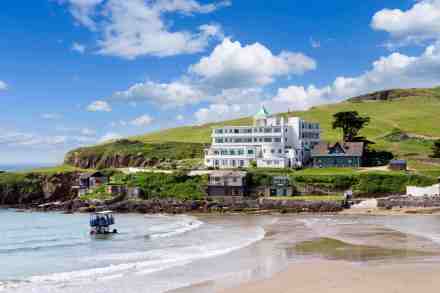
The Burgh Island Hotel lives on a tidal island in a deserted part of south Devon. The directions for visiting are very detailed. You drive along the deserted country road, and at a certain point – just before you lose mobile telephone reception – you must stop to telephone the hotel, and they tell you where to park your car on the mainland, and they will send the car across the beach and meet you in Bigbury-on-Sea. You drive on and eventually you see a brightly lit Art Deco palace under a cliff. It was built by a filmmaker called Archibald Nettlefold (Human Desires, The Hellcat), the heir to an engineering fortune. I think he was a very odd man. There is very little information about him, but he left this hotel, and there is probably an old monastery underneath it.

Why it’s time for a pilgrimage revival

At 3 a.m, with sleepless hours slipping by as storms besiege my tent, it’s easy to ask: why? Why swap the security of a home for a pilgrimage on foot with no itinerary beyond a smudged path on a 14th century map? And no comforts beyond those carried on my back or offered by strangers? Back on the bright path next morning, though, the question answers itself. The way is its own reward: the land resonates; the past speaks; my soul sings – and so do I. But my departure had not only been inspired by the pull of the open road. There were push factors, too. The economic attrition of the past two years had caught up with me, as it has with many. A bad bout of Covid; the apparent end of a cherished relationship; the loss of a pilgrimage charity which I had started.

Will child-free flights take off?

At first glance, I wasn’t sure if an email I got recently about 'adults-only flights' was a joke. I’m a parent of two teenage boys who has observed with dismay the growing intolerance for children in the public square in recent years. But I’d never heard anything like this. So I reviewed the study of 1,000 adults conducted by PhotoAID, and while I don’t know how scientific it was given that it was carried out by a company that sells passport and visa photos, the results are striking. Eight in ten survey respondents said they want adult-only flights, and 64 per cent said they’re willing to pay a premium of 10 to 30 per cent more to avoid the possibility of encountering children.

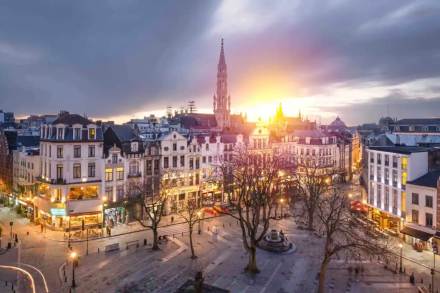
In defence of Brussels, Europe’s most underrated city break

Strolling around the Belgian Comic Strip Center, admiring the elegant artwork of Hergé (creator of Tintin), I wonder for the umpteenth time why so many of my British friends are so disparaging about Brussels. It's one of my favourite cities, but most Britons I know wouldn’t dream of planning a break here. They don’t know what they’re missing. I’ve been here countless times, yet on each visit I discover something new. It’s full of quirky shops and exquisite restaurants, and there are some excellent museums too. If your idea of fun (like mine) is nosing around art galleries and antique shops, with plenty of pitstops en route, you’ll have a terrific time. I’ve never eaten better than in Brussels – and the beer (and the coffee) is superb.

My night with Beyoncé at Dubai’s most lavish hotel

Last weekend, Beyoncé was paid $24 million (£19.5 million) to perform for 1,500 invited guests in Dubai. Somehow, I was among them. Her set, which was her first live performance in four years, was 85 minutes long. That’s £230,000 a minute or £13,000 per head. And those millions are the mere tip of the air-conditioned iceberg. Queen B’s record-smashing fee barely surpassed my own champagne and beluga caviar bill that evening – covered by the host. This was all in aid of the opening of a hotel – Atlantis The Royal – which cites itself as ‘the most ultra-luxury resort in the world’. Never has a ribbon-cutting ceremony been so decadent. It brought to mind the Shah of Iran’s notorious 1971 party amid the ancient ruins of Persepolis, but designed for Instagram.

The unique style of Seville

If you want to feel scruffy, head to Seville, the outrageously attractive capital city of southern Spain’s Andalucia region. It’s not just the abundant exquisite architecture – the city has one of the largest historic ‘old towns’ in Europe, with every bar, café and restaurant looking tiptop – but also the sartorial elegance that abounds among the local population, made even more striking by it coexisting in apparent easygoing harmony with the often plain awful turnout of us tourists and visitors. If Santiago de Compostela in north-western Spain is the city of rucksacks and walking sticks, then Seville – currently Google’s most searched-for flight-only destination – is the city of smart shirts.

Snow question: Europe’s most reliable ski resorts

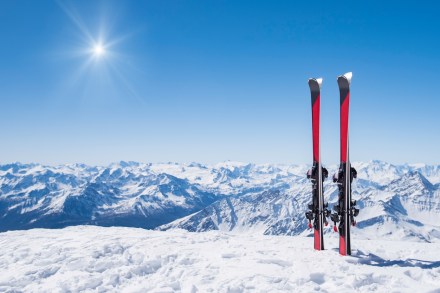
It’s every skier's holiday nightmare. You turn up to the slopes and, instead of fresh white powder, you’re greeted by a mass of sludge slowly liquefying into green-brown mud.  The Alps have had a torrid season, with higher-than-average temperatures and heavy rain forcing many resorts to close, sometimes within weeks of opening. For long stretches it was too warm even to operate snow cannons, which can magic up artificial snow but require low temperatures to work. While snowfall has picked up in time to save the season in some places, in Italy alone there are now 200 fewer ski resorts than in the 1980s.  But there are still some pockets that can offer a reliable season.

Not enough snow on the slopes? Try Tromsø

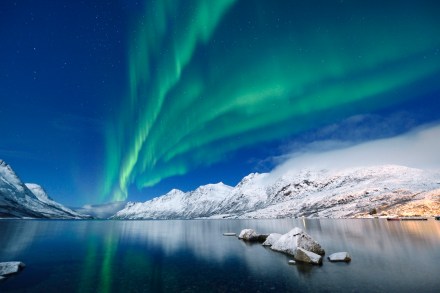
Europe’s ‘winter heatwave’ has left large parts of the Alps and Pyrenees bereft of snow over the past fortnight, causing grassy pistes and cancelled ski holidays. So where to go for a guaranteed winter wonderland? Well, Tromsø in Norway is 350km north of the Arctic Circle, so reliably snowy. In an average winter, it sees 160 days with at least 25cm of snow on the ground – and at the moment locals are having to dig out their cars. This small yet sophisticated city on the periphery of continental Europe is well worth a trip, especially if you’re after some wintry pursuits a little less high octane than downhill skiing.

My comically awful Airbnb break

Caroline likes to rent somewhere on Airbnb between Christmas and new year to break up the winter holiday. No, not in Courchevel or Barbados, I’m afraid, but something a bit more affordable. Last year, we spent three days in Margate, which worked out quite well, save for the eggy smell on the seafront. This year, she decided to rent a house in Cardiff. It was not a success. On arrival at the Airbnb, the first thing we noticed was howcold it was The reason for choosing that particular city is that QPR were playing Cardiff at 5.15 p.m. on Boxing Day. The plan was to embark on the drive after lunch, drop the bags off, then head to the stadium. We’d stay in Cardiff until 29 December, at which point we’d drive back to London in time for our home game against Luton.

Would you co-own your holiday home?

Imagine dividing up your holiday time between your farmhouse in Tuscany, your villa on the French Riviera, your Mallorcan townhouse, your cottage in the Cotswolds and your apartment in Chamonix. Instead of dealing with the hassle of renting such properties, or the upkeep of owning each one of them, you just turn up and everything is ready and familiar.  Belgians Hilde and Henrik love the concept of co-owning five holiday homes, enjoying two or three weeks in each a year. ‘Everyone treats the house as if it’s their own, and we even found the fridge half full of beer when we arrived at Soller [in Mallorca],’ says Henrik, in his late fifties.