Spectator Life

Spectator Life

An intelligent mix of culture, style, travel, food and property, as well as where to go and what to see.

The competitive cult of the summer camp

‘Before you ask, Mummy, the answer is no.’ While this could be any number of conversations that I have with my seven-year-old daughter, this one has a particular tang. It is the thrice-annual bargaining round that I do in the run-up to any school holiday in which I try to get her to go to a kids’ camp. An executive at Goldman Sachs in equity sales does not work as hard as I do to seal the deal – but I fail every time.  For a brief, prelapsarian period when she was five and more biddable, I had some success. I managed to get her into all manner of summer holiday camps in Oxfordshire: activity camp, Shakespeare camp, tennis camp, even God camp. You name it, I signed her up. Sure, we had some argy-bargy at the moment of drop-off, but in she went.

London is due a lido renaissance

There are 1,000 spaces available for the 6-9 a.m. lane swimming session at Tooting Bec Lido in south London. On Sunday it was fully booked. After a few frantic lengths (at 91m, it is Europe’s longest), we are all shooed out at 8.50 a.m. by the lifeguards to make way for the daytime swimmers. Those slots are like gold dust and sell out within minutes of becoming available. Across London it’s the same story: swimming spaces are a precious commodity. After three heatwaves so far this summer and the warmest June on record for England, it’s easy to see why so many people are craving access to outdoor water. In total, the capital has just 15 lidos (if one includes a couple of ponds). Even the Serpentine is fully booked on good days.

Why I’m still wearing black

When my father passed away suddenly in April, I committed to wearing only black until after the funeral. I’m still struggling to properly articulate my feelings, but wearing black seems like a mark – albeit a feeble one – of respect to the memory of the best man I will ever know, and a small hold-out against fully returning to real life. I’m obviously not the first to wear black in mourning; the colour has held a near-mystical appeal for millennia. The Romans used to don a toga pulla when grieving. In the early medieval period, black symbolised malevolence, but by the 12th century the colour was associated with dignity, austerity and moral authority. It was adopted by many religious orders, including the Benedictines and the Dominicans.

How to deal with a crying woman

A woman crying elicits sympathy – even if, à la Rachel from Accounts, she is some kind of nightmare soap-opera figure from the suburbs of south London. When a woman we do not know bursts into tears in public our gut reaction is to assume she must have a good reason for doing so. She has, until proven otherwise, right on her side. And even if she does not, it does not usually matter. She may be wrong in terms of the rational truth, but she is right instinctively. Otherwise she would not have cried – would she? Let us be clear: women often cry, men rarely do. I speak from experience. I live with an Italian wife and our three disco-age daughters. We have three boys as well, but there is no doubt that it is the four femmine who rule the roost in Casa Farrell.

Pixels are replacing paper

Those of us of a certain vintage will remember the National Record of Achievement, a brown, crummy-looking folder, sent (personally, I like to think) by Tony Blair to every schoolchild in the country. We were encouraged to keep our certificates within its corporate leaves, from Swimming Level 1 Goldfish to Duke of Edinburgh. Presumably, before the government had this idea, people didn’t know what to do with certificates. Perhaps they were used as kindling, or eaten. Receiving a certificate was a moment of fulfilment. If it came in the post, anticipation was part of the process. Being awarded one in person had extra frisson. Some certificates were better than others. The Associated Board of Royal Schools of Music (how the name hums with authority!

How to humiliate a Range Rover driver

Aston Martins are sin, personified: everyone disapproves of them, but everyone wants one. That is why James Bond, a sex-addicted fictional civil servant, is suited to them – at least until he died in No Time to Die (clearly it was). Of course he died. He became emotionally available. If Bond isn’t ripping the knickers off death-stalked maidens, what is the point of him? Why is he feeding a child mango? Next! If you don’t want an Aston Martin, you are either dead like him or – more likely – you have never driven one. Recite the technical specifications by all means and pretend this is why you bought it: numbers. That’s just the denial of the captured. We know why you want the car. For the British, there is no hotter marque – and there never will be.

Hot weather is overrated

Having spent more than half my life living in Scotland, I found weather was probably the most common topic of casual conversation with colleagues. This is because Edinburgh, where I worked as a physician, is freezing for 11 months of the year, and Glasgow, where I was a consultant anaesthetist, rains for the same period. Hot weather was as unrequited a desire as George Clooney walking into the surgical theatre coffee room. When we were blessed with the one month that the sun shone weakly down on us for a few minutes, we basked. Never mind that the warmth was so faint we had to take a woolly jumper everywhere – out we would come in our summer garb, turning to the distant orb like sunflowers, insisting on sitting outside in pubs and cafés while shivering.

The Poundland paradox

‘Poundland sells for a pound’ is one of those stories of which sub-editors dream – not to mention the beleaguered company’s PR department. But irony aside, the news does draw attention to a paradox: why do discount stores seem to suffer more in bad economic times than they do in good times? It’s like Ratners, which boomed during the loadsamoney years of the late 1980s, only to flounder during the early 1990s slump, admittedly with a bit of help from its chief executive, Gerald Ratner, who called one of his company’s products ‘total crap’. Shouldn’t recessions, or times of anaemic growth as we have now, be good for shops that sell things cheaply? Surely they attract customers who are forced to trade down.

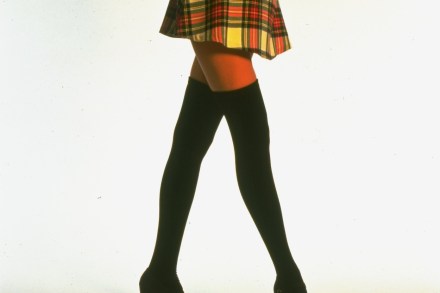
Save the miniskirt!

What is it about men and miniskirts? A few months ago, I read with horror – but sadly not surprise – about a school that was considering banning girls from wearing skirts. Apparently, residents in Whitstable, Kent, were so alarmed at the ‘inappropriate skirt lengths’ spotted around town they had complained to the local school. Headteacher Alex Holmes (you guessed it – a man) immediately dashed off a letter informing parents that all pupils could be forced to wear trousers as part of a new ‘gender neutral uniform’ in response. The miniskirt is a symbol of women’s liberation – not sexual servitude I’m sorry, what? Are we talking about a pretty seaside town in Kent or downtown Tehran?

When did we become so boring?

Recently, I found myself trying to explain to a much younger colleague who Oliver Reed was. We’d got on to the subject of the hell-raising actor because I was bemoaning the fact – perhaps rashly – that today’s world is completely anodyne. Fear of offending others means it’s better to keep your thoughts to yourself; after all, who needs the police investigating them for a non-crime hate incident? Brave is the person who brings their whole self to work, as many of us are encouraged to do. The government’s Employment Rights Bill, which some are calling the ‘banter ban’, may mean we’re even more reluctant to speak our minds. This prohibition against saying anything even vaguely controversial extends to all walks of life – including television.

There is no dignity in dyeing

Growing up, like a lot of English girls, I was what was known as a ‘dirty blonde’. (An evocative phrase, the Dirty Blondes are now variously a theatre troupe, a pop group and a restaurant.) In the summer, I would put lemon juice on my hair and watch in wonder as it bleached in the sun; I mainly did it to irritate my mother, who found overly blonde hair ‘tarty’. When I grew my impressive rack and shot up to 5ft 8in at 13, what I thought of as ‘The Bothering’ started – grown men attempting quite openly to pick me up, especially when I was wearing my school uniform. Blonde hair was the last thing I needed. Like many a dreamy teenager of the time – I’m not sure it still happens – I was drawn to the mythical beings of Hollywood.

Who will stand up for swingers?

Is there any intrinsic problem with sex parties? Of course not. At least, not for those of us who believe in the liberal tenet of living and letting live. This tenet has been put to the test by recent events at Belair House, a Georgian pile in subdued Dulwich. Hired last month by the company Heaven Circle, which puts on ‘naughty events’, including ‘online parties’ (you can join with face blurred or wearing a mask), the event at Belair was very much offline, with 2,000 condoms provided, a naked fire show, plus ‘500 candles, 500 roses, two DJs, THE BIG BED, three playrooms, five performers, one shibari artist, one Domme, 2,000 condoms and 60 toys,’ according to the company’s Instagram post. Shibari is the Japanese art of knot-tying.

What was so great about the 1990s?

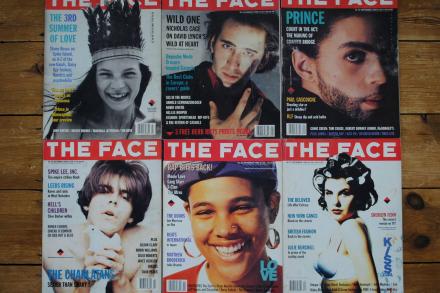
‘They’re selling hippie wigs in Woolworths, man… the greatest decade in the history of mankind is over,’ laments Danny the Dealer of the 1960s at the end of Withnail and I. These days, given the apparently insatiable appetite for all things 1990s, you could be forgiven for assuming that they've pinched that title. Nineties fashion and music are back: Pulp have just released their first album in 24 years, while Oasis are reforming for a series of mega gigs. There’s even been a Labour landslide.

How I made Tyler, the Creator uncool

I tried getting my husband to go with me, but wild horses wouldn’t have dragged him so I forced a friend’s son to come instead. I’m talking about going to see Tyler, The Creator at the O2. That’s Tyler, The Creator, the magnificent hip hop artist who was banned from the UK in 2015 by then Home Secretary Theresa May on the grounds of supporting homophobia and acts of terrorism.  What, you’ve never heard of him? Well, that’s clearly because you are not as down with the kids as me. I may be a middle-class boomer from Chiswick but I’m also a raging hip hop fan and I know my stuff. Hip hop, drill, rap, trap: you name it, I love it – the more guns, the more swear words, the more misogyny the better. You call Hamilton rap? Oh, please.

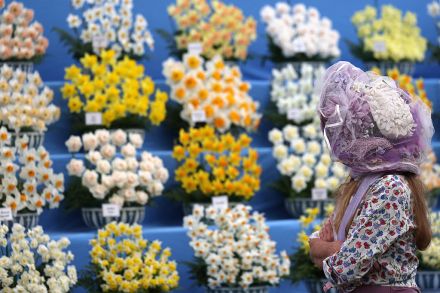
The cheapening of the Chelsea Flower Show

‘I have died and gone to heaven,’ the gentle-faced, fortysomething American beside me murmured into her phone. I turned and stared. Too late I remembered the instructions repeated in childhood not to stand with one’s mouth open. But I couldn’t help myself. In the glorious sun at Chelsea Flower Show, I – unlike my neighbour – felt like I had died and gone to hell. Tuesday morning at Chelsea Flower Show is among life’s rare treats. At least, it used to be.

Stationery is quietly making a comeback

All of a sudden, our local stationery shop – the Write Stuff – has grown a shelf labelled ‘Letter Writing & Correspondence: Original Crown Mill’. And there, in ranks, are pads of beautiful writing paper – vellum and laid, cream or white, A4 or A5 – plus boxed writing sets, decorated top and bottom with flowers and/or butterflies. All with colourful envelopes to match. ‘Goodness!’ I said to Antonia, who owns the shop. ‘Who is writing letters these days?’ ‘The young,’ she said. I was astonished and charmed. Immediately, I bought a pad of Original Crown Mill Laid (Finest quality since 1870) and decided to write to the granddaughter currently studying philosophy at York University, whom I rarely see or hear from.

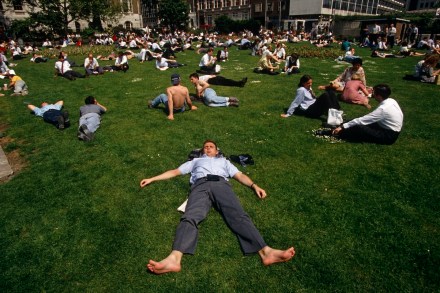
Britain is now a slackers’ paradise

My friend recently told me about a young Chinese woman who was staying with them and kept tittering to herself. Asked what she was finding so funny, the answers were telling. In one case, it was because she had seen so many people lounging in parks that she had assumed the working day had been cancelled from on high – and was amused to find out it was a normal weekday. Then there was the way that all the shops and cafés were shut by 9 p.m. Again, the private merriment. ‘Nobody works here!’ she exclaimed gleefully. In a sense, she’s right. Of course some people work – those in manual and service-sector jobs, for instance.

The tyranny of the talkative

When I was a child, all I wanted to do was talk. In fact, it got so bad that my primary school teachers were forced to give me a ‘wriggle cushion’ – an inflatable seat designed to pacify hyper children. I’m sure there’s a diagnosis in that somewhere. And as the years went by, I became known for my loquacity. Teachers at parents’ evenings would look at my mother with compassionate eyes and say things like, ‘My, my, our Zak is quite the communicator, isn’t he?’ Translation: your son is a gabby little monster. It was only when I reached maturity that I realised over-talking is a serious affliction and not a commendable virtue. It’s a sure-fire way of ostracising yourself from others.

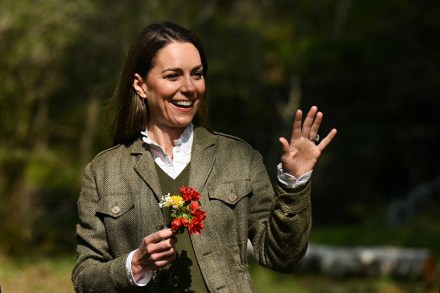
Women don’t want to dress like Kate Middleton any more

Look, if you will, at Kate Middleton on the Isle of Mull for her wedding anniversary. There she was in skinny jeans, tucked-in blue shirt and tweed blazer, shod in what looked like sensible walking boots. It’s a look I like to call Royal Prep School Mummy, and she’s been at it for years: on school runs, at charity netball matches, and Anmer Hall photoshoots. It works, as it always has done, by combining registers. The tweed blazer nods to all sorts of Balmoral-ish, elitist accents – but we forget all about that because of the blue shirt and skinny jeans, items we might well own ourselves. Hilary Mantel may have famously called Kate a ‘shop window mannequin’, but I want to know which one. Joules, Boden or Cath Kidston? https://twitter.

How the internet turned ugly

Consulting a website on my phone recently, I was struck by how painful it has become to use the internet. All I wanted was to read some local news and check the spread of a power cut in my area. Instead, as I scrolled, I was assailed by interruptions from integrated adverts which – in the best case – wanted eagerly to tell me about the charm and usefulness of a new BMW. In the worst case, I was urged to consult some lawyers immediately because I had been mis-sold an insurance or financial product in the past and was due an enormous payout, if only I would contact the least credible-looking advocates in the country.

Nigels may soon go extinct

I have never been a big fan of my own name. The name ‘Nigel’ has romantic origins – it means ‘dark champion’ in Celtic lore and Sir Arthur Conan Doyle titled one of his dashing medieval historical novels Sir Nigel. But by the time of my birth the name had become indelibly associated with cerebrally challenged upper-class twits with protruding teeth, and then a silly song about ‘making plans for Nigel’. The most prominent bearers of the name during my lifetime – such as Nigels Lawson, Havers, Mansell and Kennedy – have done little to enhance its prestige.

Is Subaru turning me into a lesbian?

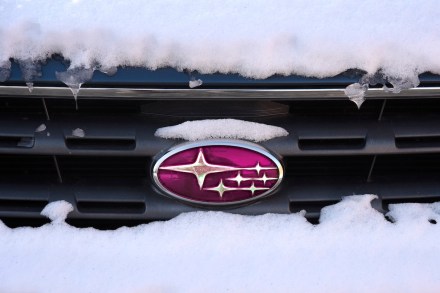
I was recently lent the latest Subaru Forester to test drive, and I enjoyed its sturdiness, its space and the frugality of its 2.0 hybrid engine. But as my mileage progressed over the course of a week’s bombing around the back roads of north Norfolk, I started to have a hankering for a nose ring, a tattoo of interlocking female glyphs, and to dye my hair pink and blue and wear dungarees. I put on a k.d. lang playlist, drove home, and watched Angelina Jolie in Gia. Was the Subaru turning me – a bloke, with no unusual pronouns – into a lesbian? Let me explain. In the 1990s, Subaru launched a calculated and groundbreaking advertising campaign on the US market.

An ode to my old Nokia

Without much fanfare, the Nokia phone has died. I got my first mobile phone, a Nokia, at an age that is by most lights too young. I was in what Americans call the fourth grade, which means I was ten or 11. The phone in question was a cutting-edge Nokia 6820, which a contemporary Nokia press release claims was ‘specifically designed for enterprise use, with a full keyboard to offer faster text-input and easy navigation for advanced messaging like mobile e-mail’. I certainly had never sent an email at that stage in my life, and I operated no enterprises.   At first I thought very little of that phone, by which I mean I thought very little about it. Our relationship was not a passionate one. I liked that it was silver and light blue.

Are you a high agency individual?

Hello and welcome to my podcast Are you a high agency individual? My name is Muscle McSteroid Face, but my friends call me the Beast for short. Please enjoy the next 135 minutes while I talk about myself and make you feel inadequate. I am a high agency individual. I was born this way, but you can learn my skills for an introductory offer of $59.99 a month (link in my bio). A high agency person is a risk taker. We are mavericks. We are the writers of our own destiny, the authors of our own story. We are leaders. We make tough decisions. If you were stuck in a rancid prison cell on the corner of some godforsaken slab of land, who would you call? You would call me. When a bouncer tells me that I’m too drunk to get in, do I simply walk away and go home? No!

Bring on the banter ban

Any sane proponent of Britain’s liberal democratic values should be angry. We are facing an apparent crackdown on our once-robust freedoms in the form of a ban on banter. A tweaked clause in Angela Rayner’s Employment Rights Bill, currently making its way through parliament, says that employers must take ‘all reasonable steps’ to prevent harassment of their staff by third parties. It is intended to relieve ‘anxious’ staff of the fear of going to work and being upset by colleagues or punters, and has caused a total meltdown on the free speech right. Rightly so. The bill could indeed equate to a clampdown on normal back-and-forth between human beings. There are fears that pubs could be sued if their employees are offended when overhearing customers’ conversations.

Flawed women are hot

Think how many times you’ve seen the ‘Mona Lisa’. You’ve seen her in movies, in books, in cartoons; you’ve seen her as icon of female beauty, as an emblem of feminine mystique, as a commentary on the male gaze, or an amusing face on which to paint a moustache. But in all that time I bet 94 per cent of you have never noticed: she hasn’t got any eyebrows. It is, however, true – go look again. La Gioconda is eyebrowless. Why? A few ‘Mona Lisa’ truthers claim the brows have gone awol, but the consensus is they were never there. She shaved them off, because that was the quirky beauty standard of the day.

Men, baldness is nothing to fear

I am bald. Over the past few months, three events have reminded me of this fact. The first was on X (formerly Twitter). I was defending an article I had published in the British Medical Journal, in which I argued that doctors should behave professionally on social media. In response to my post, an irate doctor called me an ‘egghead’. The second was the revelation that my close friend Calvin, 46, had flown to Turkey for a hair transplant. He was not even bald, just thinning. Et tu, Calvin? The third took place only moments ago, and prompted me to write this piece. I was trying to spice up a WhatsApp message with an emoji. As I wanted to thank someone, I tapped into my Japanese heritage and chose the ‘bowing’ figure.

The truth about Macron’s smell

Like many teenage girls, I was a committed boy-sniffer. By which I mean a Lynx-sniffer, since this delightfully cheap but heady deodorant was synonymous with all the raging hormones – and the promise that went with them. Even the geekiest, ugliest, runtiest of the litter could be transformed into an object of mystique and allure by the waft of Lynx – perhaps Apollo or Voodoo, the two late nineties variants I remember best. Even today, I can’t entirely shake my soft spot for male cologne, and I’m embarrassed to say that when it’s plastered on some vulgarian on the Tube sporting a gallon of hair gel and one of those puzzlingly horrid moustaches bleeding into beard, I fail to recoil.

The return of the Young Fogey

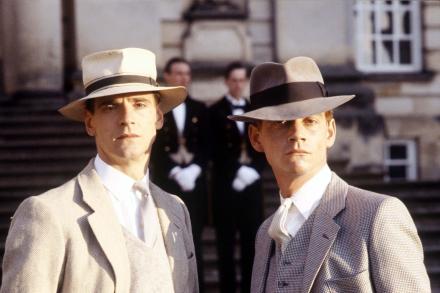
At a recent lunch where I was sitting next to A.N. Wilson I couldn’t help but take a good look at his suit. After all, this was the man often described as the original Young Fogey. He was dressed perfectly well in an austere two-piece, though while I (ever the try-hard) was sporting a pocket square, he was without one. On another occasion, chatting to Charles Moore in the colonial surrounds of the Foreign Office’s Durbar Court, the Lord was indistinguishable in dress from the other mandarins and journalistic bigwigs there. In bygone days, a Young Fogey such as he would have donned a seersucker suit and shantung silk tie for the occasion. The Young Fogeys’ flamboyance of dress evident in their heyday is gone.