Spectator Life

Spectator Life

An intelligent mix of culture, style, travel, food and property, as well as where to go and what to see.

Why ladies love the Land Rover

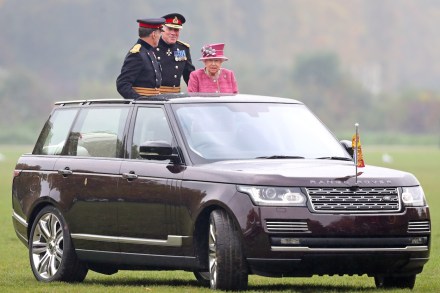
It was when I nearly reversed into two brand new Land Rover Defenders in the car park at my daughter’s prep school that I realised something was going on. Of course, I had seen them before. I live in Oxfordshire where the A-roads are one long parade of Land Rover Discoveries, Range Rovers and Volvo SUVs from one junction to the next. But recently Defenders seem to be the ‘it’ car on the block. Land Rovers used to connote a certain kind of rarified upper-class masculinity – think Prince Philip, think chins hanging out of them on a shoot – but the new Defender, puffed-up and boxy like a fat peacock, unintentionally parodies what marketeers might pompously call its ‘brand heritage’.
My solution to ghosting

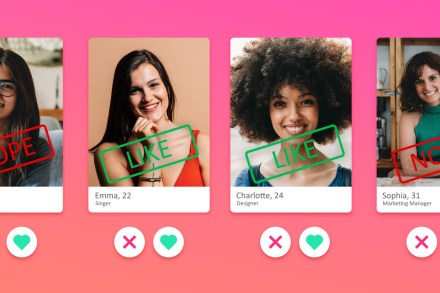
Let me tell you a ghost story. I began texting Becky two weeks ago. Soon the messages were flowing. A date was set, a table booked. Friday night. Soho. Here we go. Then, a day before the date, the texts stopped and the lady vanished – leaving me to cancel the restaurant and spend the evening in the company of Wordle. It might be ten years since ‘ghosting’ was added to the dictionary, but the disappearing act has lost none of its sting. It’s also as common as ever: four out of five singletons say they’ve been ghosted. Received wisdom blames the apps. The industrial scale of dating today causes collateral damage. With everyone furiously swiping, matching and texting, there’s not enough time to close every administrative loop.

Recollections of a 1980s indie kid

It is the evening of Monday 23 September 1985. A band called the June Brides are playing a free gig in the bar of Manchester Polytechnic’s Students Union, the Mandela Building (of course) on Oxford Road. I find myself among the audience of freshers’ week first-year undergraduates. I am 18, a small-town boy who’s been living in a big city for just 48 hours.  The place is half empty, the audience awkward. But I am quite taken with the band and the following day go to Piccadilly Records to buy their just-released mini album, There Are Eight Million Stories. The US novelist Dave Eggers would later recall being a teenage Anglophile indie fan in the suburbs of Chicago and cycling 20 miles to get this record that autumn. I could just get the 85 bus from Chorlton.

Why I’m a pro-screen parent

Have you ever looked after a child that doesn’t nap from 5 a.m. to 7 p.m.? I have. Just to be clear, I’m talking about a 14-hour day with no relief whatsoever from grannies, nannies or DHs, the ghastly acronym that Mumsnet uses for fathers to signify ‘darling husband’. Next question: have you ever looked after a child for the standard 14-hour shift and not turned a screen on? Don’t lie, because no mother on this planet will ever believe you. Seasoned mothers know that the only way to make it to the business end of the day – 5 p.m., give or take – is to fill chunks of the never-ending day with screen time, sometimes quite large chunks since you’re asking.

Finally, I’ve been forced to get a phone

I’ve never cared about status symbols, because my talent is the only one I need, so of course I wasn’t concerned with mobile phones, which were once tremendous markers of rank. Since then, not having a smartphone (or pretending not to) has become a thing some high-status people boast about now that 95 per cent of the UK adult population (and a great deal of the child population) own them. Ed Sheeran claims to have dumped his in 2015, Elton John describes himself as a Luddite, while Simon Cowell sensibly told the Mail on Sunday way back in 2007: ‘It was actually stopping me from working or living properly, so I just turned it off and I went a month, three months, then a year, then two years, then three years and I love it…it’s absolutely made me happier.

It’s time to buy a British jumper

When did you last bump into the words ‘Made in Britain’ on a jumper, shirt or pair of trousers? There’s a chance, if you’re under 40, that you’ve never actually seen those words printed in an item of clothing – ever. And that’s quite a problem, particularly when you consider that we find ourselves in an era when the Prime Minister’s favourite two words are ‘national resilience’. The simple fact is that when it comes to clothes we aren’t resilient. In fact quite the reverse: in the past year Britain imported something like £15 billion-worth of textiles and clothing (compared with clothing exports of around £3 billion).

‘CleanTok’ and the psychology of spring cleaning

Thousands of years ago, housewives living in what is now Iran would prepare for the spring equinox and Persian New Year by cleaning their homes from top to bottom. Today, ‘cleanfluencers’ on social media earn a living all year round by demonstrating how to keep your home sparkling. That might mean road-testing their new robot vacuum cleaner or going old-school and scrubbing grubby grouting with baking soda (spoiler alert: stain-removing toothpaste works better). Times have changed but the tradition of spring cleaning is alive and kicking.

Do you have Dryrobophobia?

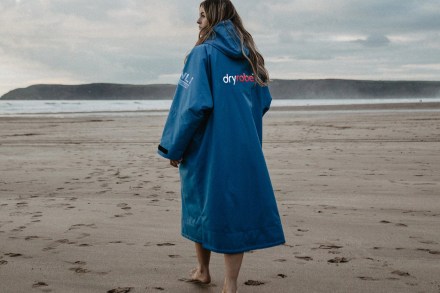
You first start to notice them in that desultory way you become aware of the floating specks across your vision that signify a migraine is on the way. Perhaps you saw a woman in Waitrose wearing a black one and wondered why she was sporting a giant version of the Umbro football manager’s coat from the 1990s. Then someone pointed out the hot pink camo combo on the sidelines at an under-12s rugby tournament and, looking across the pitches, you realised just how ubiquitous they have become. By the time you spot my own hate-favourite – the Dryrobe Advance Abstract, a limited edition now out of stock which looks like the old Channel 4 test card – you may be experiencing full-on throbbing temples.

Who’s still laughing at Donald Trump’s hair?

At last month’s Bafta ceremony, David Tennant attempted to make a joke about the state of Donald Trump’s hair, but it barely raised a chuckle. Not surprising, perhaps, when you consider the dramatic vibe-shift sweeping the western world. In a desperate attempt to stay relevant many on the progressive left are suddenly choosing to distance themselves from the luxury beliefs they once held as sacrosanct. But this has led to confusion, especially when it comes to comedy. For progressives, laughing at the right jokes became an indicator of moral virtue and political allegiance, so it was highly amusing to see all those nervous thesps wondering which segments of the ceremony they should be finding funny.

Let men do the housework!

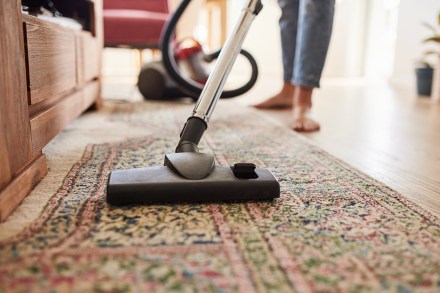
Why are women still allowed to do housework? The question used to bother me during the years of my marriage when housework became a running sore between us. Perhaps the friction was inevitable. I was born in revolutionary times, the 1960s, and my mother taught me and my siblings to cook, clean and wash up for ourselves. We turned out as independent, self-sufficient adults. I would never ask a woman to make me a cup of coffee any more than I’d ask a bumblebee to build me a lighthouse. And doing jobs around the house suits my life as a writer. During the day I take frequent mini-breaks and do chores while my mind empties itself of clutter and my batteries recharge. Then I return to my laptop, renewed and refreshed. It’s like meditation – but with concrete results. Clean carpets.

Why possum beats cashmere

In 1990, an exotic Swiss-Canadian teenager of purportedly Habsburgian lineage descended on Cambridge in a cloud of cashmere. His wardrobe was unfeasibly organised, shelf after shelf of cashmere arrayed in all the hues of the rainbow. We regarded him as a thing of wonder. In those days most of us British undergraduates were deeply unsophisticated, many of us impoverished. We were just about graduating from high-street polyester to Scottish lambswool. Cashmere was unheard of. Life moves on, and who today hasn’t indulged in a spot of cashmere? My wife is addicted to the stuff – jumpers, cardigans, polo necks, gloves, scarves – good God, the scarves. These days cashmere is everywhere. Even Uniqlo regularly knocks it out at sub-£100 prices.

A pensioner’s guide to being broke

I’m a broke pensioner – quite a jolly one – not like those people Age Concern show wrapped in blankets, the caption informing viewers that she daren’t put the heating on. I’m not like those pathetic old people, I tell myself (untruthfully). I do put the heating on but, like the poor old dears in shabby armchairs, I worry about how I’m going to pay my heating bill – especially now Labour has taken away my wonderful winter fuel allowance. Being broke at 68 is humiliating. But it is also only to be expected, given how little money I’ve managed to make in my quite long life. Sometimes I get resentful and start to do a Cleopatra’s Nose on my life: what if I’d stayed married to the father of my children?

Nurses shouldn’t have tattoos

Of all the aspects of dating that make me grateful I came off the market when I did – ghosting, choking, sober socialising, facial hair like Brahms’s beard – it’s the spread of large-scale visible tattoos that makes me feel like I got the last chopper out of ’Nam. Neck tattoos and sleeves were once either indicators of prison gang allegiances or the preserve of thrash metal bands and their fans. Although perhaps the most heavily inked man in rock is Travis Barker, drummer of pop-punk crossover tarts Blink-182. His whole head is tattooed, as is Kerry King’s of Slayer, who also has ‘God Hates Us All’ down his left arm. Among Phil Anselmo of Pantera’s extensive body art is a portrait of himself as a demon with his now ex-wife riding an extending tongue.

Is Kate Moss… basic?

Could it be? Could the world’s sexiest, coolest woman be turning... basic? It has come to feel as if that effervescent, mercurial quality that kept her aloof from the cut and thrust of the celebrity rabble – the endorsement-chasers, the tell-all-interview mongers – has evaporated. Kate Moss is turning into the very thing she had always been at pains to shun. Moss once called an EasyJet pilot a ‘basic bitch’ after being escorted off the plane for swigging vodka from her carry-on after Sadie Frost’s 50th birthday. Now she is becoming a basic bitch (to say nothing of her daughter Lila, whose bare nipples at London Fashion Week have been the talk of the internet town). It began when she embraced Topshop as its designer, launching in 2007.

What Sandhurst teaches you about self-care

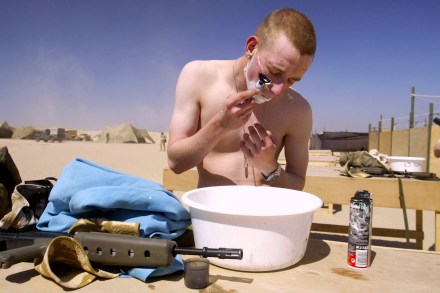
Anyone who attended the Royal Military Academy Sandhurst will never look at a shaving razor in the same way. Ever since my officer training days, when you had to shave on exercise at 4 a.m. in a cold, wet forest, unable to feel your fingers, shaving has been an important topic. Having escaped those dank woods, I’ve tried to embrace shaving at its most comfortable and alluring: using a stylish cut-throat razor, aided by rose-scented shaving cream whipped into a lather by a badger-hair brush. That doesn’t cut it in airport security, where even a lone razor blade could get you pinned down on the floor. So I have tried to find a happy medium, reverting to the type of Gillette razor I used at Sandhurst. But good luck trying to find a two-bladed Gillette Excel blade.

We need a cat lockdown now

I have always marvelled at the attitude of cat owners who point to bloodied arms or dramatic scratches and explain – with docile, almost apologetic acceptance – that Jasper or Bella just got a bit annoyed. It was all the human’s fault for patting them in the first place. Violent animals are a form of domestic abuser and should be treated as such. Why would anyone allow something to attack them – or their children – rather than simply removing the animal from their home? Sure, they are unlikely to maul you to death, unlike the technically banned XL Bullys, but it’s a different story for wildlife. Domestic cats, the wily rotters, are thought to kill around 270 million birds, mammals and reptiles per year across the UK. They’re the nukes of the animal kingdom.

Of course my dog sleeps with me

It's 4 a.m. and my German shorthaired pointer, Percy, is lying on top of me. This isn’t a giant infraction on his part. Percy and I have long shared a bed. We start the early evening as we always do – me reading and he beside me at my invitation, the light on his side of the bed is on too, in case he wants to read as well; something German perhaps, like Thomas Mann. Later, when I decide to go to sleep, I turn out both of our lights and we glide off – his paw often in my hand – into the great unconscious. At some point during the night, he leaves his designated strip and inches towards me, which is probably why my dreams always seem to orbit around being strangled with a velvet ribbon.

Why are women so unromantic?

If you’ve bought a card for your partner this Valentine’s Day, I would guess you’re more likely to be a man. This is because men are generally more romantic than women, which is something that’s widely known but seldom acknowledged. It’s actually quite a serious issue. According to a female counsellor I once interviewed, one of the most frequent causes of marital discord – and sometimes divorce – is unromantic women. Not convinced? Think of heterosexual couples you know. Who would you say is the more romantic of the two? Now think of your favourite romantic songs. The vast majority will be paeans of love for a woman, written and sung by a man.

Smoking is sexy again

It’s a summer’s day in Suffolk, some time in 1992. My best friend Rebecca and I are both 14 and lying on our backs in a field. We have a packet of ten Silk Cut between us, and we are practising blowing smoke rings that will make us irresistible to boys. Everyone we fancy smokes: Slash, Kate Moss, half the Lower Sixth at the boys’ grammar school. It might be 40 years since Richard Doll and Austin Bradford-Hill made the link between smoking and lung cancer, but we don’t care. There’s Brad Pitt in Thelma and Louise with his cowboy hat and a Marlboro Red. Johnny Depp – smoking in every sense – in just about everything. It is, durrrr, a truth universally acknowledged that pretty much anyone looks hotter with a cigarette.

What kind of woman envies her daughter?

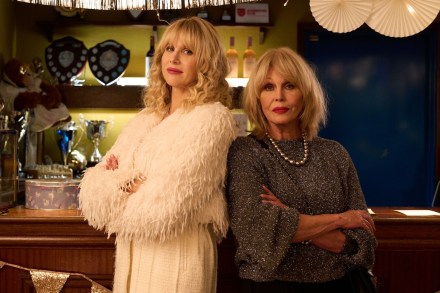
My mother hated Motherland, storming out after five minutes, saying Julia’s frantic school drop-off was too much like real life. She’d have loathed Amanda, the self-styled ‘alpha mum’. But I loved it – and was happy with the spin-off Amandaland, where Dame Joanna Lumley plays Amanda’s mother with gleeful froideur. When interviewed alongside her screen daughter, Lucy Punch, Lumley commented that one of the reasons for their characters’ taut relationship is how ageing women are resentful of their pretty daughters. Maternal envy, being rather destructive for all concerned, has provoked much debate in the papers (and no doubt consternation at dinner parties across Middle England).

I’m a ruthless declutterer. It has cost me

There are two types of people: the hoarders and those who are always chucking things out because they hate clutter. I fall into the latter category. In my view, a well-ordered environment makes for a well-ordered mind. So you’ll not see my desk buried beneath the usual office detritus, nor my car strewn with apple cores, empty crisp packets, and scrunched-up receipts. In moments of boredom, I enjoy going through a drawer or cupboard to weed out items no longer required. However, my long-standing urge to jettison useless stuff has led to trouble. One episode still haunts me. I was in the kitchen with my mother, who was cooking an elaborate meal.

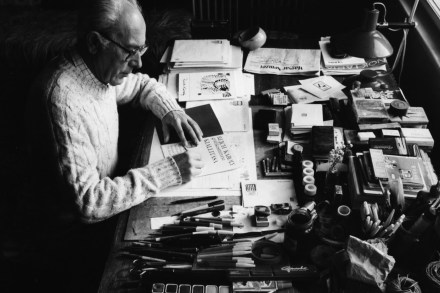
The sad decline of stationery

The news that WHSmith is facing closure seemed inevitable. Good stationery may be one of the pleasures of life, but is anyone actually buying much any more? Of course, people will always need pens, string, bubble wrap and so on, yet the heyday of stationery has definitely passed. There was a time, when people still wrote letters to each other or used writing implements as a matter of course, that it was a large part of our shopping, especially if you were a school kid. We wrote in pen and ink (no biros), and for a child of the 1970s or 1980s, this usually meant the choice between a Sheaffer No Nonsense pen, chunky and with a screw-on top, or a Parker 25, stainless steel and, with its ‘stepped down’ barrel, faintly futuristic.

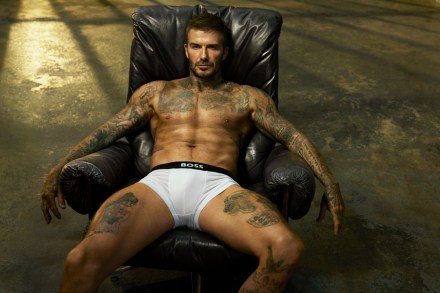
Does anyone actually fancy David Beckham?

Unless your Wi-Fi has been down this week, you’ll be aware that David Beckham has got his kit off again. He’s back in his underwear for a ‘steamy’ (Daily Mail) ‘full frontal’ (Daily Mail again, though it really isn’t – and I had to watch it, dispassionately I stress, three times for the purposes of this article in order to be sure) campaign for Hugo Boss which, in that hackneyed and usually inaccurate phrase, ‘broke the internet’. Did you have problems putting your Ocado order through? Me neither.

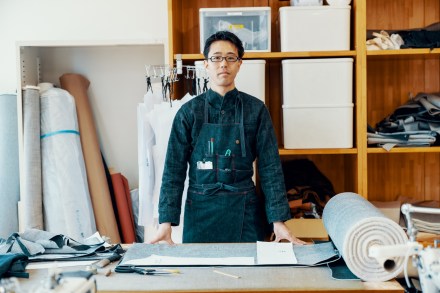
Why Japan is best at whisky, tailoring, cheese, pastries… I could go on

Many people visit Japan because of its food but few, surely, have pastries in mind. In fact, Japan has no discernible tradition in this culinary realm at all. But that didn’t stop a trio of Japanese bakers from winning the biannual pastry world cup, pushing the fancied host nation France into a chastening second place. Japan won last time too and thus became the first country ever to retain the title, which you might suppose would make this big news here in Tokyo. But the media has hardly mentioned it, probably because this kind of national stereotype-busting triumph is becoming quite normal. For example, Japan, believe it or not, is now one of the best countries in the world for pizza, especially the Neapolitan version.

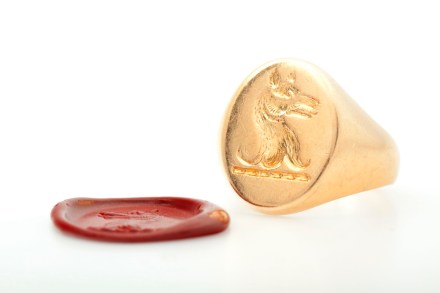
The signet ring is back

The signet ring is back. Perhaps, like King Charles, who has worn his since the 1970s, you think it never went away, but I can confirm that it did – sometime around the time of the New Labour government, when being seen as a raging toff was bad for business. Now, thanks in part to the Instagram account Signet Ring Social and posh television and film dramas such as Saltburn, the signet ring, or ‘siggie’ as it is referred to by Gen Z devotees, is making a comeback. Perhaps, instead of the hemline index, used as an indicator of bull or bear economic markets, we may consult the signet ring index as a guide to prosperity. Do you see more or fewer ‘siggies’ in a recession, and what exactly does that tell us?

My plan for a better dating app

It’s 30 years since a website called Match.com opened the Pandora’s box of online dating. Until then, with the tiny exception of the classifieds, meeting a mate had to begin out there and in person. But from 1995, dating retreated to a desktop computer – a virtual shop window of real people. Match.com was launched as a minimum viable product that sold, so said the wags, other minimum viable products. Today, the online dating industry makes more than $9 billion. By 2033, its revenues are expected to double. There are now tons of apps, yet still so many loners. According to one survey, 44 per cent of Londoners are single. If Pandora’s box opened years ago, today it’s surely shattering.

Heaven is a Trad Dad

M y husband earns more than me. A lot more. I am, of course, extremely fortunate to be in such a position and am extremely grateful, especially when a large bill arrives on the doormat. So what, I hear you say. And you’re right – this is hardly a newsflash. According to the Office for National Statistics, the majority of couples in this country operate at a persistent gender pay gap in which the wife earns less than their husband. When we had our first child, the door to economic parity slammed shut behind me and has never opened since In our highly gendered arrangement, my husband – a ‘Trad Dad’– does the earning, and I do the ‘home-making’ or, as one woman puts it: ‘He brings the bacon home, and I fry it up.

Pity the perpetual student

I can’t remember the exact date of my departure from university. It was sometime in the summer of 2021. My flatmates and I packed up our things, had a sombre pint at the pub, hugged, and then went our separate ways. I boarded the train at Bristol Temple Meads with a degree in English and Philosophy and no feasible job prospects. I was also broke. Three years had come to a precipitous end, and it was time to move back home. I was worried about my future. The thought of becoming a bum terrified me: the sort of graduate who day drinks, listens to Limp Bizkit, starts a true crime podcast from his bedroom, and screams at his mother for not washing his pants. But I returned home in spite of my fears, largely for one reason: I couldn’t bear the thought of becoming a university hanger-on.

How the phone colonised my life

I read recently that this month marks 40 years since Britain’s first mobile phone call was made. It was in the early hours of New Year’s Day 1985 in Parliament Square, when one Michael Harrison rang his Vodafone chairman father, Sir Ernest Harrison. It would, of course, take many years – and much hankering and hysteria – before I got my own mobile A few years later, one sunny Saturday morning, my father took delivery of his first company car. I must have been about ten years old and can recall the sheer thrill of seeing something outside our house that wasn’t one of my mother’s seemingly endless succession of Volvos.