Spectator Life

Spectator Life

An intelligent mix of culture, style, travel, food and property, as well as where to go and what to see.

Why now is the time to (re)visit Chartwell

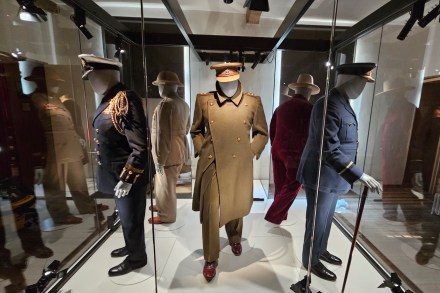
There has always been something really rather magnificent about Chartwell, Winston Churchill’s beloved country home in the Weald of Kent. Sure, it’s no Blenheim or Chatsworth; in fact – say it quietly – from certain vantage points this redbrick Tudor house is verging on unremarkable. It’s even, at a pinch, conceivably the sort of place that Kirsty or Phil might claim lacks kerb appeal. But they, just as any visitor does, would immediately recognise that the true appeal of Chartwell is not in its architecture (although all those walls Churchill built when he modernised it are handsome). No, it’s in the property’s connection to its former owner, and the view – over a seemingly unspoiled Kent arcadia which stretches for as far as the eye can see for some 40 miles.

My toxic affair with my Land Rover

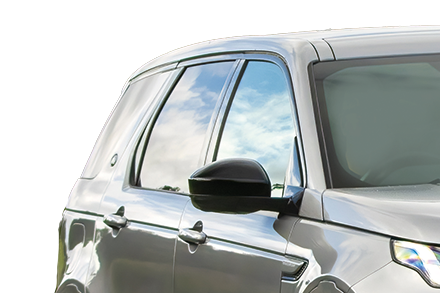
For the past decade I’ve been in a toxic relationship. Sure, there were red flags – most of them on the dashboard – but it was love, or at least lust, on my part. My Land Rover seduced me with its size and strength, its rugged interior, how safe it made me feel when I was behind the wheel. I was love-bombed with promises of passing the 300,000-mile mark, manipulated by the ease with which three Isofix booster seats slotted into the back. Yet my Land Rover has cost me dear, both in terms of friendships – my left-leaning, EV-driving neighbours sneered when we lived in London – and in the money I’ve lavished on it: thousands of pounds a year to keep our relationship on the road. It also drank heavily.

Leave Barbour alone

Please, make it stop. No sooner had I dug out my Barbour for the wet and windy winter months than I saw another of the brand’s distressing collaborations, this time with fashion designer Sir Paul Smith. Sir Paul, luvvie fashion grandee and founder of the eponymous line that began as a Nottingham-based shirt outfit in the 1970s, has teamed up with Barbour to distil ‘the wit and character’ of both brands. But I don’t need Sir Paul’s ‘signature stripe trims, colour pops and patchwork’ to be persuaded to wear a Barbour. And I’m pretty sure most people who live in the country would say the same. I like my 12-year-old Bedale Barbour as it is: pretty bashed up, in need of a re-wax, the pockets stuffed with bits of rope, chocolate buttons, dog poo bags and lighters.

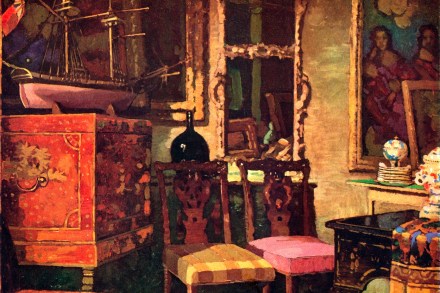
Why antiques are cheaper than Ikea

As we all know, only the best friends can deliver bad personal news. And so it was for me about six months ago, over a seafood lunch, that one of my closest pals gave me the ghastly tidings. My friend had just stayed in my small but fabulously located London flat for a fortnight, while I was travelling. He was suitably grateful, but less than effusive about the living conditions. After some humming and hahing, he got to the point. ‘Mate, your flat is a dump. Great location and all that, but eesh, when did you last do it up?!’ O for the gift to see our homes as others see them. Armed with this gift I went back to my beloved domicile, and realised, my God, he’s right.

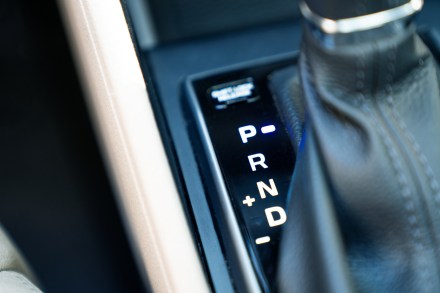
Driving an automatic car is cheating

Most of the time cheating is frowned upon, but a quarter of all driving tests in Britain are now taken in automatic cars and apparently that’s fine. The trend is only set to continue, too, as more and more people pretend to care about the environment to take advantage of this loophole and obtain a driving licence without the slightest concept of clutch control. It’s absolutely outrageous, not to mention completely unfair. I spent hundreds of pounds being taught to drive properly, in a manual, only passing on my second attempt, because mastering a gearstick is hard. Copping out and taking your test in a glorified fairground dodgem isn’t just shameful, it’s basically fraud. No matter what it says on your certificate, you can’t drive, you can just steer and brake.

What makes a gentleman?

The venerable magazine GQ, or Gentlemen’s Quarterly, has issued some 125 diktats about what it takes to be a gentleman in this world of Zoom calls and equality. GQ is, however, no longer quarterly, and some might say it hasn’t been read by gentlemen for some time. Ought we, then, to listen to it? Many of its ‘expert’ pronouncements are baffling: what is ‘popping a Zyn’? Most of the suggestions are about bringing fancy olive oil or luxury candles to parties. (Note to readers, though you won’t need it: don’t.) It also suggests that gentlemen should beclothe themselves in ‘loungewear’, a word which ought to make anyone shudder. Well, I’m sorry, but unless it’s a silk dressing gown from Jermyn Street, I think not.

How to stay grounded

I was at a party recently where a self-important woman looked disdainfully at my proffered hand before limply shaking it as if it were a wet dishcloth crawling with E. coli. After briefly touching my fingers, her lip curled as she demanded to know who I was and what I did for a living. It felt like an audience with a medieval monarch – the hauteur was extraordinary. As a youngster, such imperious behaviour would have crushed me. But my older self was amused by the Lady Bracknell schtick. Some people, regardless of their exalted position in life, manage to be effortlessly down-to-earth, putting you instantly at your ease. The difference, in my experience, is that the latter don’t take themselves too seriously.

Ferrari and the rise of petrol nationalism

I used to think I wasn’t attractive enough to drive a Ferrari. I still think that, but you reach an age, like Lester Burnham in American Beauty, when you don’t care any more, and in that despair you can pull off anything. I am now exactly that age: the same age as the man driving the nervous-breakdown orange Lamborghini on the prom in Penzance. When I see him, I have to stop myself screaming the betrayed wife’s words to her adulterous husband in Moonstruck: ‘Cosmo, I just want you to know, no matter what you do, you’re gonna die. Just like everybody else.’ (‘Thank you, Rose.’ ‘You’re welcome.

Carrying Peter Mandelson’s coat

As coats go, it was very nice. A dark blue cashmere Loro Piana number that reeked of quiet luxury. But for a man who once identified as a communist, it was laughable. It was 2016 and I was standing in the atrium of the newly remodelled Design Museum on Kensington High Street. As assistant to the museum’s director, I was engaged in a normal day on the job: as Peter Mandelson’s coat bearer. Other humdrum days at the coalface involved talking to Terence Conran about his dogs, making sure Alexandra Shulman had a hard hat on and holding then culture secretary Matt Hancock’s champagne glass while he posed for pictures. Mandelson, soon to be announced as the chairman of the museum’s trustees, was in the museum for a state visit.

I don’t work for the police, honest!

I was 20, and in the recovery room of my local hospital, coming round from general anaesthetic after minor surgery. My mind was lost wherever our minds go in such conditions, steering itself gently back into its familiar harbour. But then, suddenly – or as suddenly as anything can be when you’re in that numbed nirvana – I became aware that someone in the next pallet along was addressing me. He was staring at me from his own fugue state, and slurring the words, ‘You’re that copper. You are. You’re that copper.’ Now, talk to any nurse, and they’ll tell you the very peculiar and often entertainingly uninhibited things that people come out with as they drool back into consciousness.

Meghan Markle’s TV show is a balm for desperate housewives

The Duchess of Sussex has achieved something quite remarkable. After the brickbats hurled at the first season of her Netflix show With Love, Meghan – the furious pro-monarchy outrage, the eye-rolling from critics, the memes that lampooned her syrupy anecdotes – many TV personalities would have flinched. They would have called consultants, tweaked the format, apologised by going in a ‘new direction’. Meghan Markle (or should I say Sussex) has done the opposite. Season two arrived last month: unchanged, unrepentant and every bit as twee as the first.  Like her homemade ‘jam’, that’s not to say it’s gone down well. ‘Painfully contrived’, ‘irrelevant meets intolerable’ and ‘tone-deaf’ were just some of the newspaper reviews.

Lime bikes are dangerous. That’s why I love them

London on Monday night was mad and hilarious. At the Hyde Park Corner crossing, the number of people on Lime bikes must have been approaching 100. Invariably described as menaces, murderers and leg-breakers, these Lime bikes and their riders waited for the traffic light to turn green. When it did, battalions of these 35-kilo machines toppled and wobbled around each other, as the same number came in the other direction, green and white overwhelming the eyes. Yet no knees were crunched, no one fell off and those brave enough managed to render the tube strikes a minor inconvenience. If you believe in the state as protector, nanny and moraliser, and the world as a perfectible place where hazard can be eliminated, they should be banned It was good to see.

The rise of the godless godparent

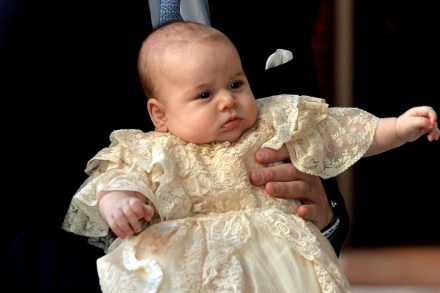
I realised that the whole thing had become absurd when I was squeezed in by a female vicar for photos around the font of an Anglican church. There we were, all six godparents grinning back at the camera as the baby was held aloft (screaming) by its proud parents. But out of the six godparents assembled, only two of us had been baptised and confirmed in the Christian faith, leaving four godparents out. Not really godparents at all, then. Witnesses or mentors perhaps, but not godparents. In our increasingly secular age, the distinction bears recognising. If you don’t believe in God, this isn’t going to work.

Don’t condemn plus-sized models

I remember it quite clearly, that moment I first clocked that fat models were now advertising clothing – fitness clothing no less. I was in America and, left with time to kill in a shopping centre, I went into an outlet of the trendy athleisure store Athleta (owned by Gap), which I had pillaged on previous visits for its generous yet clingy apparel. I stepped in, looked up and noticed the walls were covered in big proud pictures of silky-skinned but decidedly chunky women. They were sporting leggings and tops, even sports bras, with rolls of fat undulating out from under their chests, jiggling on the thighs, wobbling on enormous bums.

Why we can’t drive, fix or sell our Citroen

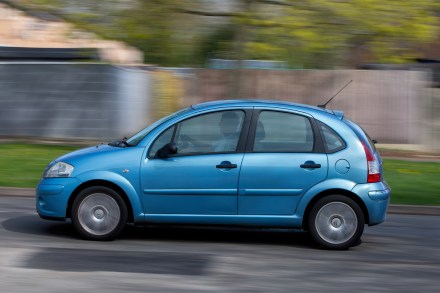
If ever there was a symbol of the decline of the European car industry it is my wife’s Citroen. For the past two months it has sat out on the driveway, inert. We can’t drive it, we can’t sell it and we cannot get it fixed. It is a waste of space, but one that we must continue to tax and insure. The little C3 – which I used to think of as a pleasant vehicle without too much of the electronic junk fitted to most new cars – is one of 120,000 Citroens subject to a ‘stop notice’ following the death of a French motorist in June. The cause of her death turned out to be a faulty airbag which exploded, peppering her with metal shards. Every vehicle fitted with these kinds of airbags has been officially grounded.

I can’t help liking Bonnie Blue

Bonnie Blue is an It Girl. But she’s not an It Girl in the way we used to recognise them. Bonnie Blue is an It Girl because she’s written about as a thing, not a person. She’s an object, everything that’s bad about women, sex, modern life. She’s not really considered to be a human being, with hopes and fears and desires; her pronoun is It. But I can’t help liking her. I’m not lying, and I’m not trying to be controversial; I’m just really keen on honesty, and so few people are really honest, even – especially – when they identify as honest.

The myth of the relaxing beach holiday

Picture the scene: you’re on a sun-drenched tropical island surrounded by azure waters and dazzling white sand. A lone palm tree casts shadows across your lover’s bronzed skin as you sip an ice-cold Campari Spritz. It’s a scene pictured a million times a day on Instagram feeds and the biggest holiday cliché of them all. But does the reality of an exotic island paradise live up to the fantasy peddled by popular TV shows such as White Lotus? T.S. Eliot wrote that ‘humankind cannot bear very much reality’. I would argue that humankind cannot bear very much fantasy either. Yes, turquoise oceans, sugar-white sand and tropical flora are all pleasing to the eye, but are they enough to sustain one’s interest for an entire week, let alone two?

Goodbye to the letters of introduction

Re-reading Agatha Christie’s A Murder is Announced this week (it’s the summer holidays! I can relax like anyone else!), I was struck by one of Miss Marple’s wise pronouncements: And that’s really the particular way the world has changed since the war. Take this place, Chipping Cleghorn, for instance. It’s very much like St Mary Mead where I live. Fifteen years ago one knew who everybody was. The Bantrys in the big house – and the Hartnells and the Price Ridleys and the Weatherbys… They were people whose fathers and mothers and grandfathers and grandmothers, or whose aunts and uncles, had lived there before them.

There’s nothing worse than male trouser trouble

First, there was the bizarre tale of the poor unfortunate man who, after dropping his trousers on the District line near Upton Park, was set upon by an outraged gang, beaten and then forcibly expelled from the Tube. And then, just a day or so before, the perpetually beleaguered Gregg Wallace caused a similar degree of opprobrium when he put out a video in which he addressed allegations of bad behaviour involving a lack of trousers. What on earth is going on? On Instagram, Wallace announced, with a touch of the Beowulf poet: ‘Would you like the truth about the stories regarding me taking my trousers down, listen! There are no findings in the investigation that I took my trousers down in front of anybody.

The strange cult of the Trader Joe’s tote bag

Over the years, I’ve made a lot of trips up and down the highway connecting the small Massachusetts town in which I grew up to a strip mall about ten miles away. In this strip mall is a branch of Trader Joe’s, the mid-range American supermarket chain known for its serviceable range of food, decent prices and workaday packaging. I do not drive, and nor do I live in America any more. But when I am staying with my parents, I like to accompany them on their shopping trips as I find American supermarkets fascinating, if freezing. Trader Joe’s is an OK option for my parents; not great, but fine. For good meat, my mother would go elsewhere, and the same goes for fish.

I flew to Florence to find my father’s shoes

Just before my father died, he visited Mannina in Florence to have his feet measured for a pair of shoes. I’d found the handwritten receipt in his desk on thin yellow paper, stapled with samples of leather. Online pictures of Mannina showed a glass-fronted shop of lacquered wood and brass, the name in beveled gold across the door. So after months without a holiday, I booked a cheap short haul flight from London to Italy, determined to track down these missing shoes.  My father had been a tailor for much of his life, the third man in Pakeman Catto & Carter, an established men’s clothing shop in the Gloucestershire town of Cirencester. ‘At one point he’d dressed half the gentlemen of England,’ my uncle said at his funeral, which is probably not far from the truth.

The competitive cult of the summer camp

‘Before you ask, Mummy, the answer is no.’ While this could be any number of conversations that I have with my seven-year-old daughter, this one has a particular tang. It is the thrice-annual bargaining round that I do in the run-up to any school holiday in which I try to get her to go to a kids’ camp. An executive at Goldman Sachs in equity sales does not work as hard as I do to seal the deal – but I fail every time.  For a brief, prelapsarian period when she was five and more biddable, I had some success. I managed to get her into all manner of summer holiday camps in Oxfordshire: activity camp, Shakespeare camp, tennis camp, even God camp. You name it, I signed her up. Sure, we had some argy-bargy at the moment of drop-off, but in she went.

London is due a lido renaissance

There are 1,000 spaces available for the 6-9 a.m. lane swimming session at Tooting Bec Lido in south London. On Sunday it was fully booked. After a few frantic lengths (at 91m, it is Europe’s longest), we are all shooed out at 8.50 a.m. by the lifeguards to make way for the daytime swimmers. Those slots are like gold dust and sell out within minutes of becoming available. Across London it’s the same story: swimming spaces are a precious commodity. After three heatwaves so far this summer and the warmest June on record for England, it’s easy to see why so many people are craving access to outdoor water. In total, the capital has just 15 lidos (if one includes a couple of ponds). Even the Serpentine is fully booked on good days.

Why I’m still wearing black

When my father passed away suddenly in April, I committed to wearing only black until after the funeral. I’m still struggling to properly articulate my feelings, but wearing black seems like a mark – albeit a feeble one – of respect to the memory of the best man I will ever know, and a small hold-out against fully returning to real life. I’m obviously not the first to wear black in mourning; the colour has held a near-mystical appeal for millennia. The Romans used to don a toga pulla when grieving. In the early medieval period, black symbolised malevolence, but by the 12th century the colour was associated with dignity, austerity and moral authority. It was adopted by many religious orders, including the Benedictines and the Dominicans.

How to deal with a crying woman

A woman crying elicits sympathy – even if, à la Rachel from Accounts, she is some kind of nightmare soap-opera figure from the suburbs of south London. When a woman we do not know bursts into tears in public our gut reaction is to assume she must have a good reason for doing so. She has, until proven otherwise, right on her side. And even if she does not, it does not usually matter. She may be wrong in terms of the rational truth, but she is right instinctively. Otherwise she would not have cried – would she? Let us be clear: women often cry, men rarely do. I speak from experience. I live with an Italian wife and our three disco-age daughters. We have three boys as well, but there is no doubt that it is the four femmine who rule the roost in Casa Farrell.

Pixels are replacing paper

Those of us of a certain vintage will remember the National Record of Achievement, a brown, crummy-looking folder, sent (personally, I like to think) by Tony Blair to every schoolchild in the country. We were encouraged to keep our certificates within its corporate leaves, from Swimming Level 1 Goldfish to Duke of Edinburgh. Presumably, before the government had this idea, people didn’t know what to do with certificates. Perhaps they were used as kindling, or eaten. Receiving a certificate was a moment of fulfilment. If it came in the post, anticipation was part of the process. Being awarded one in person had extra frisson. Some certificates were better than others. The Associated Board of Royal Schools of Music (how the name hums with authority!

How to humiliate a Range Rover driver

Aston Martins are sin, personified: everyone disapproves of them, but everyone wants one. That is why James Bond, a sex-addicted fictional civil servant, is suited to them – at least until he died in No Time to Die (clearly it was). Of course he died. He became emotionally available. If Bond isn’t ripping the knickers off death-stalked maidens, what is the point of him? Why is he feeding a child mango? Next! If you don’t want an Aston Martin, you are either dead like him or – more likely – you have never driven one. Recite the technical specifications by all means and pretend this is why you bought it: numbers. That’s just the denial of the captured. We know why you want the car. For the British, there is no hotter marque – and there never will be.

Hot weather is overrated

Having spent more than half my life living in Scotland, I found weather was probably the most common topic of casual conversation with colleagues. This is because Edinburgh, where I worked as a physician, is freezing for 11 months of the year, and Glasgow, where I was a consultant anaesthetist, rains for the same period. Hot weather was as unrequited a desire as George Clooney walking into the surgical theatre coffee room. When we were blessed with the one month that the sun shone weakly down on us for a few minutes, we basked. Never mind that the warmth was so faint we had to take a woolly jumper everywhere – out we would come in our summer garb, turning to the distant orb like sunflowers, insisting on sitting outside in pubs and cafés while shivering.

The Poundland paradox

‘Poundland sells for a pound’ is one of those stories of which sub-editors dream – not to mention the beleaguered company’s PR department. But irony aside, the news does draw attention to a paradox: why do discount stores seem to suffer more in bad economic times than they do in good times? It’s like Ratners, which boomed during the loadsamoney years of the late 1980s, only to flounder during the early 1990s slump, admittedly with a bit of help from its chief executive, Gerald Ratner, who called one of his company’s products ‘total crap’. Shouldn’t recessions, or times of anaemic growth as we have now, be good for shops that sell things cheaply? Surely they attract customers who are forced to trade down.