Spectator Life

Spectator Life

An intelligent mix of culture, style, travel, food and property, as well as where to go and what to see.

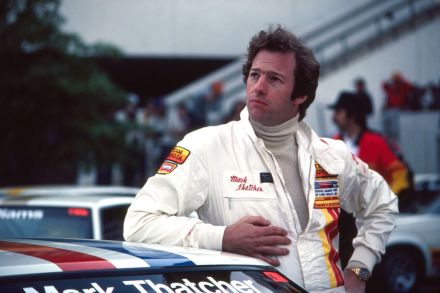
How Margaret Thatcher’s son went missing in the Sahara

The year was 1982. Prime minister Margaret Thatcher rerouted an RAF Hercules over foreign territory and requested the scrambling of jets and choppers and ground troops. The diplomatic cables burned back and forth. President Ronald Reagan expressed concern. The situation was desperate. This wasn’t the Falklands War – that came a few months later. This, in fact, may have been more emotional for the Iron Lady. Her only son, 29-year-old Mark, had gone missing. A privileged and rather bored young man who’d failed his accountancy exams three times, Mark Thatcher was searching for some meaning in life and caught the motor racing bug.
I became a father at 56. Now I feel guilty

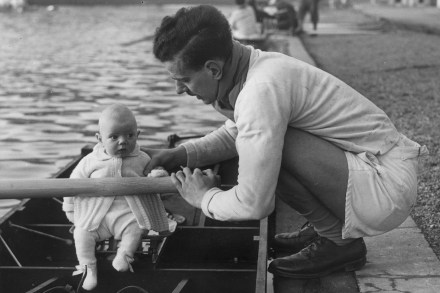
I was a late starter at everything. After drifting through my youth, and numerous false starts in life and work, I only found a committed relationship in my thirties and married in my forties. Even my second career as a writer waited until my fifties. So, too, did my unexpected third career, as a parent. For years, my significantly younger wife and I ached for a child. When it didn’t happen naturally, we embarked on a long, uncertain, painful and stressful IVF journey to fulfil our longing. When we accepted that we had reached the end of that road – or rather our endurance of its rockiness was exhausted – to our amazement and joy, a precious embryo decided to stay, and our daughter was born after a smooth and trouble-free pregnancy.

Partridges and the slow death of Chelsea

Partridges, purveyor of ‘nice things for the larder’ to the well-heeled, will close the doors of its Chelsea shop for the last time next month. After 53 years of serving SW3 delights such as ox tongue, macadamia nuts and glace cherries, the shop, run by the Shepherd family and in possession of a royal warrant, will soon carve its last slice of wafer-thin mortadella. Its landlord, the Cadogan Estate, has thanked Partridges for helping to ‘make Chelsea so special’. What Cadogan Estates omits to say of course, is that a branch of Whole Foods, that artisan behemoth beloved of American bankers and vegan, coeliac Gen Z-ers, is soon to take its place down the road.

My wife earns more than me – and it doesn’t feel great

This is the article I have thought about writing for years, but I have always ended up asking what would be the point. And how annoying that some people would call it ‘brave’, meaning shameful. I’ve always earned a lot less money than my wife. There, I’ve said it. Is that still a big deal these days, a difficult thing to admit? Yes and no – and the ambiguity is rather interesting. Our culture claims to be liberated from old stereotypes about gender roles. But is it hell. Even its progressive urban elite is ruled by stubborn visceral traditionalism when it comes to gender and money. I’m prompted to share these thoughts by a news story.

Wealth and hedonism are a fatal combination

Why do the cool die young? I don’t mean famous, cool people like Jimi Hendrix or Jim Morrison. They are members of the 27 Club – the pop stars who died at 27. I mean the schoolboy gods of my youth, the marvellous-looking, self-assured ones, effortlessly going out with the prettiest girls. And now seven of them – friends and contemporaries from school and university – are dead by the age of 50, either by their own hand or thanks to drink or drugs. The majority of my wild contemporaries have transformed into sober professionals None of the femmes fatales I know have died. Why is it only the cool men who’ve gone? As the cliché has it, they had it all. Take Alex Mosley, who died of a heroin overdose in 2009, aged 39.

My phone was snatched and I’m in crisis

I do not want to dwell on the circumstances, except to say that my phone was stolen and that London is becoming a reeking cesspool of criminality. Perhaps, also, that anyone caught cycling a Lime Bike without a clean criminal record should have the book thrown at them. The result of all this has been a lot of ugly self pity to the tune of ‘why me?’ The worst part was that at the time of snatching, my phone was unlocked, and therefore wide open for fraudulent activity. I disabled all online banking in time, but that didn’t stop the cretin from ordering himself a couple of Ubers and very nearly a PS5. In a brainwave that was pure Conan Doyle, I looked at the addresses these were ordered to, and they were all to the same flat – a clue.

Piece de resistance: how jigsaws became a fashion accessory

The jigsaw is having a moment. Ditto other puzzles, games and brain teasers. Couples engage in post-coital sudoku (apparently). Wordle was played 4.8 billion times in 2023 (the lockdown invention of a young Welsh lad, Josh Wardle). Board game cafes have sprung up in cities. This recent resurgence in the popularity of puzzles is partly a hangover from the Covid pandemic. Sales of jigsaws and board games soared 240 per cent during the first week of lockdown, with more puzzles being bought for adults than children. There are also wider reasons: the so-called ‘homebody economy’ and Scandi-inspired hygge lifestyle craze (think being wrapped up in blankets with a log-burning stove while your mates are on a night out).

The strange revenge of Trudeau’s ex-wife

Eleanor Roosevelt said that the role of the First Lady was not a job but rather a circumstance. For Sophie Grégoire Trudeau, it is even more oblique. She is neither the former First Lady – since Canada does not endow the prime ministerial spouse with ‘première dame’ status – nor is she wife to Justin Trudeau, since their separation in 2023. In the wake of his resignation this week, she inhabits a curious predicament. As Canada’s Liberal first couple, they incarnated the kind of hip grandiosity of the Obamas without, of course, being black How better to occupy that quandary than to amplify her self-styled role as a wellness guru, mental-health expert and relationship healer?

Scottish reeling is the last preserve of the posh

The new year is almost upon us, and it’s time to dust off the taffeta dress and tartan sash and sally forth to the annual reel. No doubt you will have received a lovely stiffy in the post some months ago. Reeling, known to neophytes and the non-U as Scottish country dancing, is, I believe, one of the last indicators of poshness in this country. Unlike skiing, riding or shooting – which you can, of course, learn if you have enough money – reeling is decidedly not about the dosh. There is absolutely nothing flash about reeling.

The art of the bar cart

Whether we’ve got Mad Men or lockdown-inspired home boozing to thank, one thing is clear: the drinks trolley, or bar cart, is back. Interior design websites and social media are awash with them. And that means suddenly the bottle is becoming as important as the drink. Design agency Stranger and Stranger (motto: ‘Don’t fit in. Stand out’) has legions of clients, celebrities first in line, all vying to make their bottle the most beautiful. Brad Pitt (‘A dreamer, a visionary’, according to his drink’s packaging) had them encase his Gardener gin in pastel hues evocative of the French Riviera. (Not to be outdone, Brooklyn Beckham came knocking, deciding he needed a fitting phial for his elixir. Only his creation wasn’t booze but hot sauce.

Life lessons, from Orwell to Didion

Anyone without time to read an author’s long works (most of us these days) might want to consider simply going to the top of the tree and reading their table-talk instead. Conversations with Writers, a series of books from the University of Mississippi Press, has hundreds of titles featuring collected interviews with different authors, from Sam Shepard to Graham Swift, Joan Didion to Nabokov, Edna O’Brien to Ken Kesey, nearly all of whom supply insights about writing or life itself on every page. ‘Worse things can happen than to write a novel and not have it published’ In many cases these books, with their reverence for literature and fascination with the creative process, depict a vanished world and remind you of something lost.

Where posh kids go to pull

This week, in honour of its 70th anniversary, the Feathers Association released photos of youths aged 14 to 16 at its annual Christmas charity ball. Among them, a young David Cameron is pictured poutingly draped around Laura Stanley. The Queen’s son, Tom Parker Bowles, stands with his black tie askew, laughing at the camera with all the exuberance of youth. In private homage to the Feathers Ball, this week I too dug out the picture I have of myself before my first Feathers Ball in 1997. It is categorically not for public consumption. Standing in the Kensington townhouse of a school friend before we left for the ball, I am wearing a mini-dress and platform shoes. My expression is one of awkwardness but also, I think now, of foreboding.

There’s something smug about a Nehru jacket

At a recent drinks party in Oxfordshire, I counted five men wearing Nehru waistcoats. Not one of these men looked like he was paying homage to the garment’s namesakes, Indian Prime Minister Jawaharlal Nehru. Not one looked as if they were genuinely taken with Indian fashion nor remotely bothered that they were wearing the same thing. I detect a hint of smugness in there somewhere, a rather-too-pleased-with-itself appropriation Puzzled, I thought back to other men I’ve seen rocking the Nehru: Imran Khan, obviously; Nicholas Coleridge, probably; Mick Jagger, surely. I’m not sure what all these men have in common, but their take-up of the Nehru waistcoat has neither surprised nor alarmed me.

Is London the most stylish city on earth?

Let’s face it, there are many reasons not to visit London these days: the crime, the intimidatory protests, the woeful public transport, the eye-popping cost of everything, Sadiq Khan – I could go on. So disillusioned have I become with what was once my favourite place in the world that I fear I may be tiring of it, and thus, perhaps, life. Such thoughts make those assisted dying adverts the mayor has just plastered all over the Tube all the more poignant. We are not talking about fashion here, which I haven’t paid any serious attention to since the zip craze of the early 1990s But there is at least one area where London still excels, and can claim plausibly to be the world’s premier destination, at least for half of the British population: high-quality menswear.

Are you brave enough for night shopping?

When it comes to adventures in retail, nighttime shopping is where it all happens: the unusual and most interesting people, the prime parking spaces, the lack of queues and, best of all, the absence of germy, screamy, bored, needy, naggy children. Shopping at night is plentiful in the sticks where I live – the sticks being that area between the outer suburbs and Home Counties proper. It is where you can find both stretches of heath and woodland and still get a decent coffee, speciality breads, etc. Retail parks are open until 8, 9, or even 10, and two epic 24-hour superstores are a mere zoom away in my old car.

The horror of a Christmas jumper

Mark Darcy’s Christmas jumper has come a long way since it repelled the heroine of Bridget Jones’s Diary (2001) at her mother’s annual New Year’s Day turkey curry buffet. The green turtleneck, festooned with a red-nosed reindeer, sold for £5,670 at auction in November. Colin Firth has protested that he’s been ‘unfairly blamed for subsequent surges in Christmas sweater sales’. He might have a point. Arguably, Sarah Lund’s snowflake sweater in the 2007 Danish TV series The Killing did more to elevate the garment to high fashion. Because nothing quite marks the birth of God like a Nordic noir police procedural.

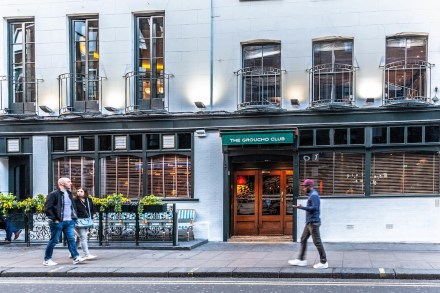
The Groucho Club died years ago

On hearing that the Groucho Club has been closed after the Metropolitan Police alleged ‘a recent serious criminal offence’, I felt a shiver of something I wasn’t quite sure of – one part sorrow, one part joy, shaken over ice-cold memories and served straight up. To some, the Groucho might have been some poncy private members' club but for me – from 1985 to 1995, between the ages of 25 and 35 – it was where I struck deals and enemies, fell in love with pretty strangers and went off those to whom I had promised to be true. The Groucho is where I became ‘Julie Burchill’, for better or worse.

Have you been mis-sold a car loan? Probably not

You would be hard put to find a doughtier defender of British consumerdom than me. I don’t flinch from returning things that don’t work or don’t fit. I have successfully challenged supermarket bills as well as a fine for driving down a poorly signposted low traffic neighbourhood. So I’m no shrinking violet when it comes to consumer rights. Even for me, though, there comes a point where the buyer has to bear some responsibility. And that point is reached with the cash cow of the hour – historical car loans. As of a court judgment last month, the position is this: if you bought a car from a dealer with a loan between 2007 and 2021, you may find a bonus, or even a cancellation of the loan, winging your way in the form of ‘redress’.

RIP to my old band T-shirts

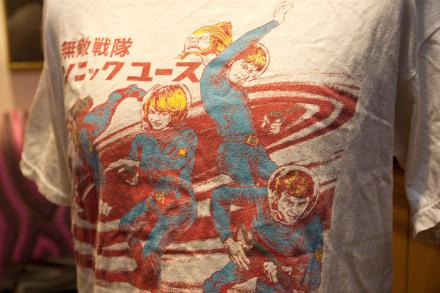
‘This is beginning to fall apart – I think it’s just age.’ Words spoken on the evening of my 32nd birthday. Thankfully, my wife wasn’t referring to my body or our marriage. Almost as tragic though, it was another band T-shirt, the fourth in as many weeks to finally give up the ghost. Big things, like turning 30 or becoming a dad, don’t really rattle me This is no small thing for me. From about 2007 onwards, I had a reliable default outfit: band T-shirt, black skinny jeans, black Converse All-Stars (high-top). Unlike many of my peers, I escaped the early years of marriage without a wardrobe purge by my wife, and so this get-up served me well until fairly recently. But, as Auden wrote, you cannot conquer time.

The rise of the reckless divorce columnist

It is now 20 years since I left university. Two pints in an evening and I feel groggy the next morning. My oldest child is in his last year at primary school, I regularly wake up with mysterious aches and pains, and we still have a very long way to go on our mortgage. All of which is to say that I am firmly and undeniably middle-aged. As it happens, I am rather enjoying myself at the start of my fifth decade. My midlife crisis takes one of the more benign forms: crafting a 1:76 scale model of an interwar rural branch line in the attic. That almost half of children do not have both parents present is grim But that is clearly not the universal experience.

Revenge of the rural Barbour

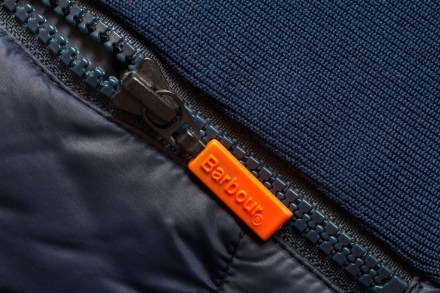
Time was, a Barbour meant one thing: the classic Beaufort model that stank of wax, wet dog, and had pockets stuffed with cartridges from a shoot. Naturally, the late Queen Elizabeth modelled it best, standing at Balmoral in hers with her trademark neckerchief. There is an apocryphal tale that, like all die-hard Barbour devotees, the Queen refused to buy a new one from the 1970s onwards, instead preferring to have hers re-waxed until it presumably fell apart in one of Prince Philip’s Land Rovers. Such was the genius of the Barbour brand, which acted as a sartorial shorthand for the make-do-and-mend postwar generation, evoking all sorts of British no-nonsense, pull-your-socks-up attitudes ever since its inception in 1894.

The anti-smoking drugs don’t work

Ten years ago, I decided that I should stop smoking. Before this decision, I had never given it a second thought. ‘Want to step outside for another? Yes please.’ Who cared about the wind blowing in from the Urals as we huddled around a lighter? Not I. Had I been ready to quit now, a new directive from the NHS, announced by Health Secretary Wes Streeting yesterday, offers smokers a free pill, varenicline, which notionally works by ‘binding to receptors in the brain to stop people craving or enjoying nicotine’. The decision to offer pills is part of the ‘prevention is better than cure’ narrative also being rolled out to tackle the NHS’s other great funds drain, obesity.   You can still smoke outside pubs, Starmer says, but not outside schools or hospitals.

I am addicted to Rolls-Royce

Rolls-Royce calls the Cullinan Series II, the new version of its 2018 ‘high-sided vehicle’ (read SUV), its ‘most capable’ motorcar. That is an understatement. Rolls-Royces can be understated because they are bespoke and, as such, they are what you want them to be. You are dropping the price of a house on a motorcar, after all – the parallels with sexual longing are obvious, if under-disclosed. For every hot pink, or blush pink, Phantom with an interior ceiling lit up as your late dog’s face or horoscope – they can do this – there is an inky Ghost impersonating Bette Davis’s black silk dress in All About Eve. That’s my Rolls-Royce. Mostly, I like them black and white, like chessboards. But they are infinite. No one can touch you in a Cullinan.

The curse of cool

One of the freedoms of later life, if you’re not Keith Richards, is that you no longer have to worry about being cool. Cool, far more than money, is the currency of youth, and as a teenager I knew who had it and who didn’t. But what was cool, all those decades ago? Who possessed it, and why did it matter? Coolness, in my youth, seemed in the DNA, something you either had or didn’t There were various things that defined ‘cool’ when I was a teenager, and most of us in some way fell short. It was the ability not to get too excited about things. To feel enthusiasms but show them obliquely. To wear clothes that hinted at certain trends but never to copy anyone else’s style too slavishly. To hang out with beautiful women but not develop crushes on each of them in turn.

Why girls love fags

I can’t remember exactly when I had my first cigarette, but I remember roughly how I started. I was probably 13. I picked up one of my mum’s packets of ten Silk Cut, which was about half full. I slipped one out, put it in my pocket, saving it for later. My friends and I walked through the streets of Crouch End until we found a corner that was quiet and away from the prying eyes of our parents. At funerals, everyone wants to smoke. People who gave up 20 years before and go jogging five times a week suddenly have a craving We got our matches out, lit it, and passed it round. When the smoke first hit the back of my throat, I retched a bit and coughed but carried on. I got a head rush, felt dizzy, and within a couple of minutes it was gone. No, it wasn’t good for us.

Below the belt: the indelicate truth about male grooming

Let’s get one thing perfectly clear. I’m British, divorced, ginger-haired and I once accidentally called the late Radio 1 DJ Annie Nightingale ‘mum’ during an interview. So there’s very little I can learn about embarrassment. Or so I thought. My perspective changed somewhere around the moment that a male groomer versed in the nascent trend of the ‘boyzilian’ placed hot wax over my most intimate areas and told me, in the nonchalant manner of a butcher asking me how I’d like my sausages bagged, that I should prepare for a certain amount of pain. A certain amount of pain? I have always considered my discomfort threshold to be somewhere between an aged poodle with lumbar ache and a toddler playing with a freshly singed match.

The row over Chelsea’s AI garden

The gardening world is a gentle, friendly place. Rows are rare, with disagreements creeping in softly like moss, not blowing up the way they do in politics. Everyone is quite nice to one another, almost to a fault. Which is why the row over Tom Massey’s AI garden at the Chelsea Flower Show is quite so striking. Since the line-up for the 2025 Royal Horticultural Society version of London Fashion Week was announced last week, gardeners have been absolutely and abnormally furious about the first shoots of AI appearing. Massey's garden promises to be an ‘intelligent’ one, using AI trained on RHS plant data and advice to tell visitors how the plot is doing.

An old codger’s guide to ageing

When I was in London recently, I arranged to meet some old university friends at the pub. Now in our late 50s, we’re getting quite decrepit. Hair – if we have any left – is grey or greying; waistlines are expanding. We talked about our deteriorating vision and hearing, high blood pressure, dodgy knees. None of us is retired yet, but it’s a topic that comes up more frequently. Can we afford it? What will we do with all that extra time? Almost no one reaches middle age without life delivering a few sucker punches Once we’d exhausted the gloomy prospects of impending old age, we returned to our favourite topic of conversation – our youth, particularly our university years.

The end of the car is now

I love driving. When I say ‘driving’, I obviously don’t mean crawling along the North Circular at 2.7 miles per hour, in a state of zombified inertia, mutinously wondering why Keir Starmer’s voice is so weirdly soul-sapping. And when I say I love driving, I don’t want to claim I’m any kind of petrolhead. I have no idea what a carburettor is, and the same goes for crankshaft, torque, drift, and understeer. In fact, I’m not totally sure what a petrolhead is. I wonder if we are overlooking a much smarter solution, which can be found in Phnom Penh No, when I say I love driving, I mean what I am doing now: speeding across majestic British Columbia in a massive great motor, eating up the North American miles on a proper North American road trip.