Spectator Life

Spectator Life

An intelligent mix of culture, style, travel, food and property, as well as where to go and what to see.

Smart meters could soon cost you a whole lot more

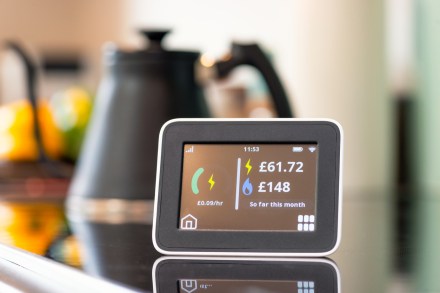
What remarkable power climate change has to turn the usual rules of fairness on their head. The poor pay the taxes and the wealthy get subsidised. It has happened with electric cars, where well-off early adopters were handed grants of £4,000 to buy a new vehicle – as well as being excused fuel duty and road tax, essentially freeing them from having to make any contribution to the upkeep of roads. It has happened with heat pumps – whose owners have enjoyed years of subsidies, the latest manifestation of which is £7,500 in upfront grants. Surge pricing is a desperate solution to manage demand rather than maintain supply The next phase will be even more painful for the poor and even more rewarding for the wealthy.

My strange and wonderful tenants

You might find it a bit rum to open your front door to a stranger and hand over your door keys and alarm code as they head for an upper bedroom. Around a third of erstwhile landlords would now agree with you and have ceased renting, while the call for such affordable room at the inn continues to grow. Now we and our crumbling pile are getting increasingly ancient Half a century ago, we answered a tap at the door to a beautiful woman, standing in the snow in kitten heels. She was a Maori, a chieftaness no less, having slaughtered her first sheep on the family North Island farm at the age of eight. She lingered, getting married two years later in our back garden, and even produced what became a second-generation lodger.

Inside the Kent townhouse built for heroes of the Napoleonic wars

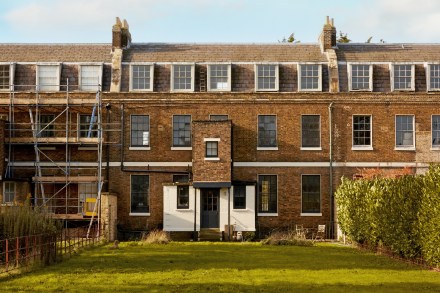
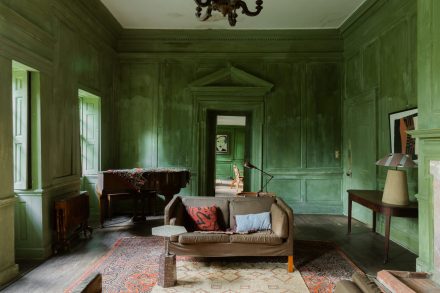
‘I’m used to going deep into narratives, and I just loved the story of this house,’ says actress and director Sara Sugarman, who is selling her Grade II* listed Georgian home in a historic Kentish dockyard. Her roles include TV series Grange Hill and Juliet Bravo, movies Sid & Nancy and Mr Nice, and she has also directed Lindsay Lohan in Confessions of a Teenage Drama Queen and Jonathan Pryce in Very Annie Mary, earning the Sundance Film Maker’s prize along the way. ‘I wanted pure authenticity, so I researched everything I could about the history of the house and 1830s design and got a real hunger for it.

The Nazi next door: inside my grandmother’s house

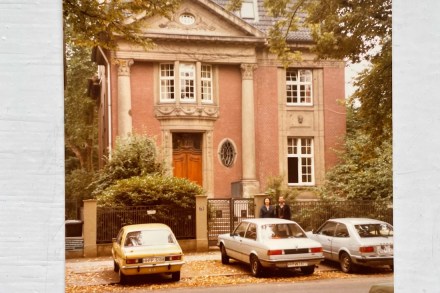
Each time I return to Hamburg (about once a year, on average) I pay a sentimental visit to my grandmother’s magnificent old house, where she spent her cosseted, idyllic youth, during the Weimar Republic and the Third Reich. It’s a robust Teutonic villa, a bombastic relic of the Gründerzeit – that flamboyant building boom which followed Bismarck’s triumphant unification of Germany. It’s on one of Hamburg’s smarter streets, a leafy avenue called Heimhuderstrasse – but it’s not the ornate architecture that draws me there, or even the snob value of the neighbourhood. What brings me back year after year are the stories that cling to this house like ivy – stories from the life my German grandmother lived before I knew her, before and during the second world war.

Airbnb has ruined Cornwall

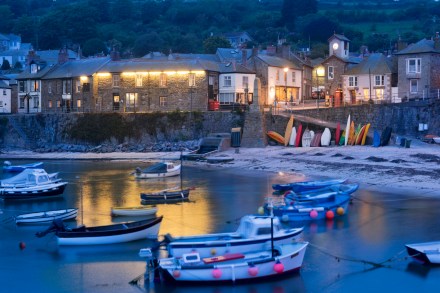
Michael Gove’s restrictions on Airbnb are too late for Mousehole, the next village along. It mirrors Dull-on-Sea in The Pirates Next Door: ‘Too busy in the summer and in winter it shuts down’. Last year there was so much traffic in Mousehole that the bus couldn’t get through, and it dumped trippers at the top of the hill. Down by the harbour, at the bus stop, I saw a Sainsbury’s van instead. And that, to paraphrase Niall Ferguson, is how empires fall. ‘What about my view?’ is their worldview. My husband calls them coffin dodgers Any analysis of the impact of Airbnb on Cornwall must include the question: what happened to staying in hotels? As a child I stayed at the Treyarnon Bay Hotel near Padstow.

I loved my landlord

My favourite home in London was a neat three-storey townhouse in Haringey right next to Wood Green. It was at a strange junction between the rough and mildly frightening Finsbury Park and the hilly Eden of Crouch End. When we needed to get the tube we walked south, past halal butchers and kebab shops – and when we wanted brunch we walked north, where frothy flat whites, avocado toast and poached eggs awaited. I loved that house. After the hell of our first year in London (during which we discovered a dead body in the flat beneath ours), the clean white walls and stained-glass windows of a London townhouse were heavenly. On hot summer days, my housemates and I drank cider in the back garden, stretched out on the Astroturf which baked us from underneath like a cheap green sun bed.

Inside Kelly Castle (baronetcy optional)

For most of us, a cursory flick through an in-flight magazine might lead to the purchase of a G&T, or a bottle of perfume. For Alun Grassick, it was a slightly more substantial investment. When he spotted an ad for a crumbling B Listed castle in the Angus countryside, with its towers, turrets, an associated baronetcy and 33 acres of land, he and his wife bought the property. Since 2001, they have spent an eye-watering £2 million restoring it. The couple had long hankered for a second home in their native country since moving to Hong Kong in the late 1980s.

I’m trapped by the village WhatsApp

I live in a village in Oxfordshire. Before we moved here, a WhatsApp group was set up to help the community navigate the pandemic. It was, other villagers tell me, a lifeline. But the village WhatsApp is still going. No longer a herald of government diktats, it is now a busy forum with photos of abandoned parcels, a slow cooker in an unknown kitchen, someone’s cat staring blankly at me, and, most worryingly, a snap of the village playground littered with beer cans. The WhatsApp group seems to have exposed the realities of the rural social contract There are village announcements too, stories of the occasional lost dog and items that people don’t want to flog but are happy to give away.

Why don’t my local police work nights?

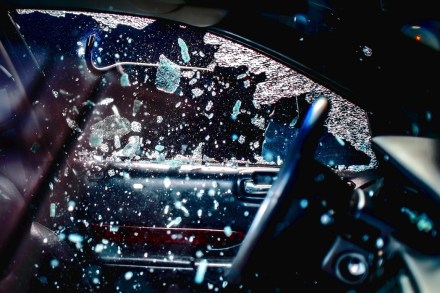
Every few weeks, I leave my front door to find a car missing its side window and a pile of glass on the pavement. One morning there were four windowless cars, all in a row; someone had already been out with duct tape and some bin bags in an attempt to keep the rain from their back seats. The debris from these thefts is just another feature of our London street, like the confetti from Chelsea’s Registry Office which flutters all the way down the King’s Road. But last Wednesday, at 8.15 p.m. to be exact, I witnessed my first attempted smash and grab.  There’s something vindictive about law breaking. This isn’t an exercise in pure economics The two cyclists hadn’t seen me, fag in hand, watching them from my balcony when they pulled up outside.

My life in storage

I’m off to South Italy for a few months having recently sold my late mother’s house and, if I can find a nice immigration lawyer, perhaps longer. This means my home is now full of cardboard boxes, bubble wrap, marker pens and panic. It’s a feeling I’m perfectly familiar with, having changed my living space (and country) more times in life than I care to count. The boxes won’t be going with me abroad. Instead, I’ll be renting local accommodation for my worldly goods: a storage space. Such austerity’s strictly for saints or lunatics, and most of us don’t make the grade as either The buildings that house storage spaces are nearly always the same. They’re plonked down in industrial estates and look faintly like car-showrooms without cars or windows.

I’m addicted to property programmes

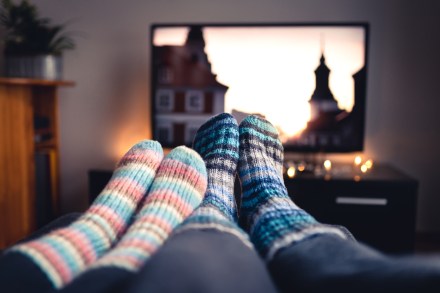
Holed up with Covid recently, I decided to binge on some undemanding TV and selected property programmes, knowing that the genre satisfied some basic human instincts – nosiness about other people’s lives, other people’s taste, other people’s money and other people’s dreams. I was happy with my choice – confident that property programmes were the chicken soup of television, gently nourishing me back into health. There really is something for every aspect of the human psyche in them – curiosity, aspiration, humour, voyeurism, escapism Apparently, there’s a whole world of people who appreciate these shows.

The importance of marshland mindset

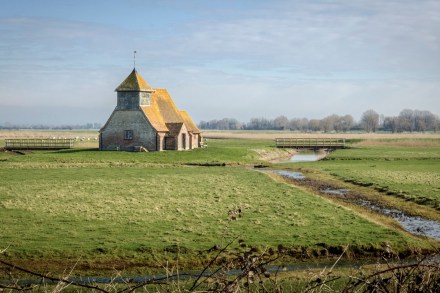
We have in our kitchen a mug purporting to belong to ‘Romney Marsh Mountain Rescue’. There is, of course, no such organisation – the mug is a reference to a long-standing family joke, about how my brothers and I love mountaineering despite having grown up in one of the lowest, flattest parts of England. The Marsh has a handful of small hillocks – really just bumps with delusions of grandeur – but overall it is very flat. My Ordnance Survey map does not mark a single contour line from Rye in the south west to Hythe in the north east and from the Royal Military Canal to the Channel. Winter gales come roaring up the Channel with startling regularity After a quarter of a century away, I returned to live here with my wife and children last summer.

Should you buy a vineyard?

Sometimes you only realise a trend is happening when you inadvertently become a part of it. Last summer we moved house within the southeast from town to country, having deliberately sought out a property with land that would be suitable for planting a small vineyard. A lot of the big English wineries like Chapel Down procure good quality grapes from nearby growers We’ve since discovered that we are far from alone. So many others have had the same idea that most estate agents now employ a ‘vineyard specialist’ who can spot potential and match would-be viticulturists – people who cultivate and harvest grapes - with their future vineyard. The enthusiasm for English wines is growing apace.

Why are writers obsessed with Tunbridge Wells?

It’s just a moderately sized town in Kent, but Tunbridge Wells seems to have a literary status disproportionate to its size. And, perhaps as a corollary, it seems to occur in fiction much more frequently than considerably bigger towns of otherwise greater significance. Or certainly this has been my impression over a lifetime’s reading.  I recall, for example, almost falling out of my chair when it suddenly featured in Thomas Pynchon’s Gravity’s Rainbow The town has numerous literary connections. Thackeray lived there and set part of his The Virginians in the town. Dickens visited, as did Jane Austen – her brother is buried there. And it’s surrounded by smaller towns and villages with extraordinarily rich literary connections.

I’ve been priced out of East Anglia

We have finally found a buyer for my late mother’s Suffolk house, but I’ve fallen into something of a trap. After the money’s divided and the bills are paid, I shall have a lump sum but nowhere near enough to buy a home. I’m 54 next month, not much more than a decade off official retirement age. Having taken a year off to do up the house for sale, I have little salary to show any mortgage-lender that won’t make them call security or simply giggle. Completion date is in February, and I have nowhere concrete (quite literally) to go to. I spent 2022, having grabbed my two cats and fled from a Russian suddenly-at-war, staying at a series of dirt cheap, pet-friendly hotels in the Caucasus and Southern Italy (where I have a daughter).

Why I had to leave London

The summer of 2013 was the third hottest on record in London. At the time I was living in a mouldy semi-detached in Clapham South; what happened in that house has left a lingering horror in my memory that changed the way I feel about London forever. In the flat below us there lived an elusive elderly woman named Audrey. Before I signed the lease, the landlord had briefly mentioned her, saying only that she was a bit anti-social but nothing to worry about – ‘not violent or anything.’ That should have scared me off but I was desperate and my university course was due to begin in a matter of days. We signed the lease and sealed our fates for the next 12 months.

My 1970s kitchen nightmare

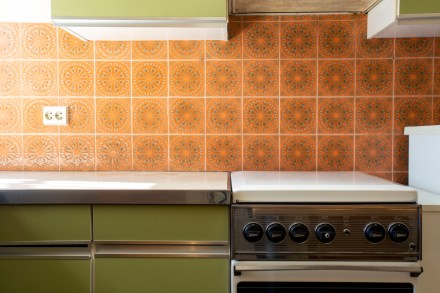
During the Covid lockdowns, I accrued a number of kitchen implements I used only once or twice before confining them to the back of the cupboard. One item that lurks among the mismatched Tupperware is a rather expensive chip pan, namely a deep fat fryer with a whacking three litre capacity, in stainless steel, with a viewing window. I live with one other person, not in a lesbian commune, so why I thought I needed one as big I cannot fathom. In fact, why I needed one at all I have no idea. Stuck at the back of my cupboards is a soda stream, coffee percolator, and an electric carving knife Then there is the pasta maker I could not resist buying, along with supplementary gadgets including a ravioli tablet; drying rack; and roller and cutter set.

The sad decline of Piccadilly Circus

It’s always sad to see a beloved landmark lose its identity – but when the landmark in question is one of the most recognisable places on earth, it’s doubly troubling. In recent years, Piccadilly Circus, once described as ‘the hub of the world’, has descended into a shamefully hollowed out sideshow. Stately Edwardian buildings, once home to department stores, elegant restaurants and upmarket entertainment venues, lie empty or have been colonised by dubious landlords and cancerous ‘candy stores’. All of life seemed to congregate here – it really did feel like the epicentre of the world The West End has always been London’s beating heart but these days the old ticker is in need of a defibrillator.

Inside the fading beauty of Crowland Manor

Ceramicist Sophie Wilson’s Christmas decorations at her Lincolnshire manor house are calmingly analogue. For her, there are no flashing lights, tawdry tinsel or store-bought baubles.   ‘I love to have bare trees around, and always have a huge one in the main kitchen, big enough so I can tilt my head back and gaze up at it,’ she says. ‘The tree in the playroom, though, will be on just the right side of horrible, festooned with two decades’ worth of my children’s art projects and the old fairy, with the rolling eye – all the things that flood me with memory.

What to expect from the housing market in 2024

The housing market indices have stabilised, started rising even. So is that it? Is the great housing market crash over, before it had had a chance even to begin? Not according to the Office for Budget Responsibility (OBR). Buried in its latest Economic and Fiscal Outlook report is a prediction that the slump is far from over. Average prices, it forecasts, will fall by 4.7 per cent in 2024 and will not return to their 2022 levels until 2027. Transactions, the OBR believes, will also plummet by a further 6.9 per cent next year. While that might not bother homeowners so much it certainly will affect estate agents, who live or die on volumes of transactions rather than on prices. There is another thing about the housing market.

Letting go of my mother’s house

My mother passed away last year and it fell to me to sort out her house. Returning from four years in Russia and the Caucasus, I moved into her Suffolk home to get it ready for selling. There was a huge amount to do. Alongside organising my mother’s headstone – no small or hasty business – there was an entire house and a life to sort through. This involved going through endless knick-knacks, glasses, crockery, clothes – and 15 or more rubble sacks of papers and old letters. The last was both cathartic and disconcerting. These are written relics of a life that existed before I came along, one that may well have been richer and more hopeful.

Alexa is gaslighting me

Amazon has teamed up with Disney to launch a new app, Hey Disney! – a joint voice assistant feature which will allow your child to ‘Interact with Mickey Mouse, or Dory from Finding Nemo’. Just what we need. Customers can use Hey Disney! at Disneyworld theme parks – 'ask “Disney Magical Companion” to request fresh towels or the forecast, and Olaf from Frozen might tell you it’s cold out.’ Thanks Olaf. My husband thinks she’s spying on us. ‘The Russians,’ he says with an ominous shake of the head I already fear that my Amazon Alexa is gaslighting me – now she can manipulate me using that awful Mickey Mouse voice. A cold war is brewing in my household, between us humans and the cyborg who lives in our Amazon Echo Dot.

I’m an Aga convert

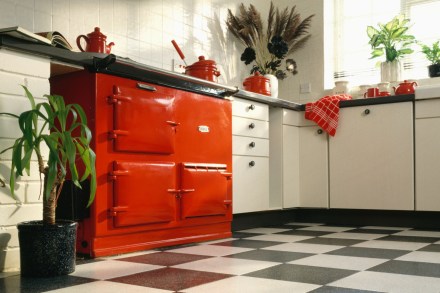
I never thought it would be possible to feel such emotion about a lump of hot metal but I am in love and like all new passions it’s threatening to become all-consuming. I find reasons to drop it into conversation, I seek out others and join groups on social media that share the same predilection just for the joy of swapping photos and snippets of information. Admirers of the Aga will tell you it’s so much more than just a cooker The object of my adoration is the half-a-tonne of enamelled cast iron that squats at one end of the kitchen in my new house. Nestled firmly into a brick hearth, I call my Aga my green goddess and oh yes, she’s definitely a ‘she’. How do I know? For a start, she’s a consummate multi-tasker.

So long to the landline

So Debrett’s has really got behind the latest technology by issuing a guide to the appropriate use of the mobile phone, or rather, ten commandments. The oldies are warned that young people take fright at an unexpected call – text first to see if it’s convenient – and the young are told that they should give a caller their undivided attention on the basis that it’s perfectly obvious if you’re doing something else and ‘This can be very alienating for the recipient, who feels marginalised and deprioritised’.   The thing about the demise of landlines is that it’s pretty well impossible to get hold of anyone easily without it That’s all very well and bears out the weird ways communication is going.

Flat-footed: welcome to the floorboard wars

Jarndyce vs Jarndyce, this wasn’t – at least not yet – and it probably passed much of the country by, especially given the rival distractions of recent weeks. It was nonetheless a lawsuit that will have been followed in compulsive detail by at least two groups of people: those who own their own flats – who are technically leaseholders but prefer to think of themselves as owner-occupiers – and the freeholders and managers of their blocks. Oh, and never forget the lawyers.

Inside Jerome K Jerome’s nine-bedroom Oxfordshire house

Jerome K Jerome’s Three Men in a Boat – a tale of three hapless, hypochondriac London clerks who take a trip along the River Thames in the hope of curing their ailments – became an instant bestseller when it was published in 1889, and hasn’t been out of print since. Bruce Chatwin, Paul Theroux and Bill Bryson all owe it to Jerome.  The book’s success meant that in 1895, Walsall-born Jerome (then in his mid thirties) could make a move to a rambling Oxfordshire house, built in the 1820s on the site of an ancient monastery.  Although he clearly had a fondness for the Thames, the home he chose wasn’t quite on the waterfront. It was, however, in a glorious rural spot in the village of Ewelme, part of what is now the Chiltern Hills Area of Outstanding Natural Beauty.

What’s stopping a housing crash?

Should we really believe that house prices rose by 0.9 per cent in September, as claimed by the latest release from the Nationwide House Price Index? The unexpected rise moderates the annual fall in house prices from 5.3 per cent in August to 3.3 per cent in September. There is a health warning on the Nationwide’s figures – and one which also applies to the monthly Halifax figures. Both these indices are derived from data on mortgage approvals for their own customers. When the market slows and there are fewer sales, it means there is less data on which to base the monthly figures, which inevitably makes them less reliable. Indices such as these were only originally meant to be read on a quarterly basis.

Britain’s most haunted country houses

For centuries, the English country house has provided the setting for some of the most terrifying fiction in our history. These isolated buildings, with their many empty corridors, secret backstairs, shut-up attic rooms and dark corners, their inherent eeriness has made them iconic settings for chilling encounters. But which real country houses inspired their fictional counterparts? Menabilly House, Cornwall Daphne Du Maurier’s mysterious Manderley was inspired by two country houses. The exterior was based on Menabilly House in Cornwall, an estate which Du Maurier would eventually rent from the Rashleigh family five years after Rebecca’s release, while the interior was inspired by Milton Hall in Cambridgeshire.

Bed bugs invaded my mind!

It isn’t just the Paris Metro. Even the very best hotels are not immune from bed bugs. I was blissfully unaware of this fact until a trip to New York a few years ago when a nightmare struck. We had booked a really top place, but within days of getting home, we discovered little red bites on our legs. Little did I know that this was just the beginning.  There are perfectly rational people who have been reduced to smothering their bodies in Vaseline at night to stop the bites Bed bugs are little blighters. They can lay dormant and spring to life months after arriving. They lay their eggs in clothes, in drawers, in carpets, on television remotes and, of course, in beds. They can live in walls.