Spectator Life

Spectator Life

An intelligent mix of culture, style, travel, food and property, as well as where to go and what to see.

Rent reforms haven’t fixed the real problem

It’s 11 a.m. and the letting agent is late. As I wait outside an apartment block for my viewing, I watch as two drunk men fight over a packet of Wotsits. By the time the agent arrives, one of the drunk men is motionless on the floor. The other sits on a bench, licking orange Wotsit dust from his fingers. ‘Great location!’ says the agent. ‘Couldn’t get closer to the station if you tried.’ Once inside, I immediately cover my nose. ‘What’s that stench?’ I ask. ‘It smells like someone microwaved a used nappy in here.’ The agent shrugs. He shows me the rooms, of which there are few. I point at the mould in the bathroom which is beginning to take on a humanoid form. The agent shrugs again. We finish the tour in the kitchen.

Farrow & Ball is finished

In PR terms, it’s a such a well-worn trajectory, it has its own name. ‘Doing a Burberry’ is the term for when something once exclusive and favoured by those in-the-know is appropriated by the hoi polloi and its standing slips inexorably downwards. The Ivy — now a chain of naff provincial cafés — is a notable victim. Marbella, now ‘Marbs’ thanks to the cast of TOWIE is another. So is the name Samantha, once terribly Sloaney, now associated only with a former page 3 girl and some really filthy double entendres on I’m Sorry I Haven’t a Clue on Radio 4.

The impoverished aristocrat’s guide to the cost-of-living crisis

According to a YouGov survey earlier this year, the cost of living tops the list of public concerns at 54 per cent before immigration and asylum (49 per cent), health and the NHS (43 per cent) and the economy (33 per cent). According to the Independent, half of Britons have under £25 left at the end of the week and 79 per cent say the cost-of-living crisis has negatively affected their wellbeing. But here – at long last – is where the impoverished aristocrat comes out on top. Often found lurking in the depths of rural England, the impoverished aristocrat is more than used to weathering bad economic climes. Both they and their ancestors have dealt with a fair few cost-of-living crises in the past.

The Great Boomer Declutter is under way

The Great Wealth Transfer has never felt more under way. Boomers who own more than half of owner-occupied housing in Britain are now grappling with the practicalities of downsizing.  It is estimated that in the next 20 or 30 years, boomers will pass down between £5.5-7 trillion worth of assets and, according to Savills, around £2.9 trillion of that is held in property.    Boomers who are living in houses that they have been in for decades are looking to their millennial children to shoulder some of the burden of their boomer junk, prompting much Swedish death cleaning and decluttering. This seems like a fair trade given that in many cases, these children stand to inherit their fortune; better still for them, this is set to double by 2035.

George Clooney has been seduced by a French fantasy

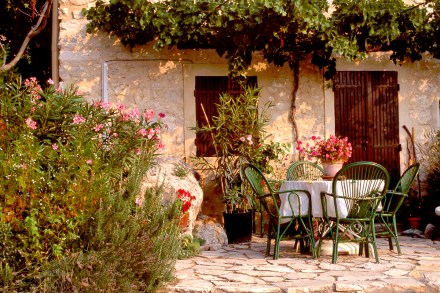
Bonjour and bienvenue to the Clooneys. Gorgeous George, his wife Amal and their eight-year-old twins have been granted French citizenship. The Hollywood actor has long had a deep streak of Europhilia, owning luxury properties in Berkshire and Lake Como, Italy, as well as his pad in Provence. Located near the village of Brignoles, the Clooneys’ €9 million wine estate spans 425 acres, including an olive grove, swimming pool and tennis court. In an interview last month with a French radio station, 64-year-old Clooney declared (in English) that ‘I love the French culture, your language, even if I'm still bad at it after 400 days of courses’. He also praised France’s privacy laws, citing them as the principal reason he and his wife want to raise their children there.

The ups and downs of high-rise living

‘On BBC 2 last Monday,’ noted the Sunday Telegraph’s TV critic Trevor Grove in February 1979, ‘the return of Fawlty Towers was immediately followed by a programme about faulty towers.’ He went on: This was odd, but on close examination turned out to be without significance. After all, what connection could there possibly be between a comedy series based on the exploits of a domineering, havoc-wreaking megalomaniac called Basil Fawlty and a serious study of what has been done to Britain’s urban environment by a bunch of domineering, havoc-wreaking megalomaniacs who call themselves architects? The programme was Christopher Booker’s still remembered City of Towers, a ferocious attack on Le Corbusier-inspired concrete high-rise, especially when used for public housing.

The Mansion Tax trap

All I seem to do these days is stand in the school car park having anguished, if largely pointless chats: the Mansion Tax chat. But let’s call it the Mansion Tax Mumble, since none of us seem willing to disclose the actual sum we paid for our houses. Soon we may not have to, since if your house is worth more than £2 million it will become perfectly obvious: you may never move again. It may even become the ultimate status symbol. Anyone planning to sell a house at £2.1 or 2.2 million will have to forget it since no estate agent will bother; no viewings, no clicks, no calls. All you can expect is an apologetic, spivvy estate agent from Savills to tell you that the market is ‘sluggish’ before refusing to take your calls.

Labour’s eco-towns threaten our heritage

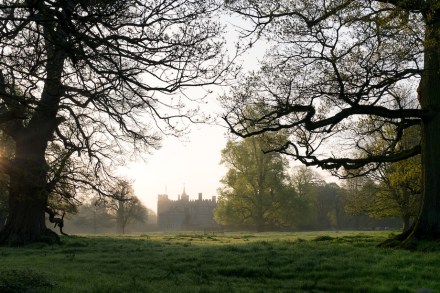
‘He leaped the fence, and saw that all nature was a garden’. So goes the famous Horace Walpole quote about William Kent, the 18th-century landscape designer who saw the garden and its surrounding views as single and unified. Were he alive today, Kent might very soon leap over the ha-ha he designed at the Grade I-listed Rousham House in Oxfordshire and tumble head-first into one of Labour’s new eco-town developments. His breeches rumpled, Kent might observe with some sadness that the coherence of his design is no more. Built in 1635 by Sir Robert Dormer, Rousham continues to be occupied by his descendants Charles and Angela Cottrell-Dormer.

Why would anyone live in a listed building?

When Zoë Cave Hawkins bought a run-down townhouse in the heart of the cathedral city of Winchester, she was fully aware that getting permission to update the Grade II-listed property was going to be a bit of a hassle. But the reality was far worse than she could have imagined. As fast as her architects could draw up plans, a phalanx of planning officers, listed building officers and conservation officers would descend to rip them up.  A proposal to build a terrace above the new flat-roofed kitchen extension was nixed because it would mean replacing a series of original windows on the first floor with modern French doors. A new door to an en suite bathroom was vetoed because it meant taking out a section of batten and horsehair wall.

My murderous, malfunctioning Aga

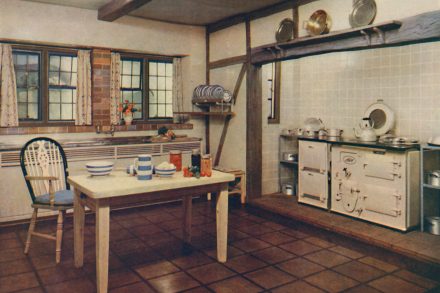
People always divine themselves through material goods: hence the obsession with the Aga, recently detailed by my friend Rachel Johnson in these pages. Rachel loves her Aga – well, her Agas, she has two – because it needs to be defended from bourgeois socialists who don’t have Agas: they just want them, because self-deception is the defining characteristic of the bourgeois socialist. Me, I hate mine. I used to love her because she made me feel upper middle-class, which I’m not, and now I know I’m not, and I’m glad I’m not, please take her. Of course, Agas are class signifiers. An Aga is like the last vestige of the country estate left after the fire sale. As in: ‘We lost the Titian but kept the Aga’.

Am I being haunted?

Asked if he actually believed in ghosts, M.R. James, author of the greatest ghost stories in the English language, answered equivocally that he was prepared to consider anything for which there was sufficient evidence. It’s the time of year when Monty James used to invite students to his rooms at King’s College, Cambridge, and turn down the lights. The students would listen to him read the terrifyingly chilly tales that he created every winter, set in the sedate surroundings of cathedral cloisters, country houses and East Anglian seaside towns. Now that I too live in an ancient cathedral city, I also want to see a ghost.

Hands off my wood-burning stove!

Now that the clocks have gone back and the evenings draw in, those of us lucky enough to own a log burner start thinking about cranking it up. One of the few benefits of returning to GMT, as far as I’m concerned, is the chance to get primal – and have a real fire. Yet, as sure as eggs are eggs, this is also the time of year the media trots out scare stories about the supposed perils of wood stoves. For example, articles have recently appeared in several papers about a report commissioned by the climate charity Global Action Plan and Hertfordshire County Council, which claims that wood-burning stoves and open fires are a significant source of ‘particulate matter’.

What could be worse than property porn? Well…

I’m of the opinion that an overriding interest in ‘porn’ of any kind (I love the way we use the affectionate diminutive about something which ruins so many lives – like calling him ‘Fred’ West) isn’t especially good for the long-term happiness of people. But of course some sorts are worse than others. At the top, you’d have child pornography; at the bottom, property porn. The two find an odd union in the life of India Knight, the un-cancellable Sunday Times nepo-baby hack (her stepfather was editor of the Economist) who has been delighting us for decades, though not perhaps in the way she believes.

Why antiques are cheaper than Ikea

As we all know, only the best friends can deliver bad personal news. And so it was for me about six months ago, over a seafood lunch, that one of my closest pals gave me the ghastly tidings. My friend had just stayed in my small but fabulously located London flat for a fortnight, while I was travelling. He was suitably grateful, but less than effusive about the living conditions. After some humming and hahing, he got to the point. ‘Mate, your flat is a dump. Great location and all that, but eesh, when did you last do it up?!’ O for the gift to see our homes as others see them. Armed with this gift I went back to my beloved domicile, and realised, my God, he’s right.

Will my neighbours please shut up?

For the past decade I have suffered from noisy neighbours in the flat below mine. First it was the stream of student tenants, thundering up and down the communal staircase day and night, banging doors, shouting to each other, playing their guitars. Then at last the flat was bought by a middle-aged owner-occupier, who completely gutted and refurbished the place; the deafening noise and pervasive dust from the months-long building works was almost unbearable. Now that his works are over, I have to put up with the day-to-day clatter and clamour of a neighbour with a lot of Gen Z house guests and a penetrating voice. Noisy neighbours are a plague for those who work at home. Naturally, I find it most maddening when I am in the middle of writing a book or article.

Why does an American billionaire want an Oxford pub?

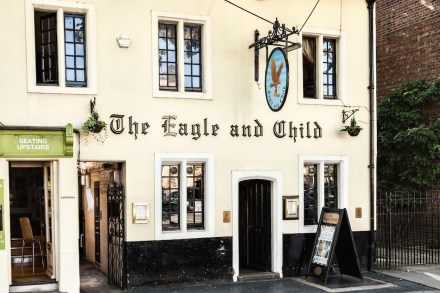
If you’re a fan of American billionaires buying up much-loved British institutions, then you, too, might be rejoicing at news that Larry Ellison has set his sights on purchasing much of Oxford. The squillionaire owner of the software technology company Oracle (net worth: $270 billion, or thereabouts) has started relatively small, however. In addition to spending a huge amount of money on the Ellison Institute of Technology in the city’s Science Park, he has also paid a supposed $10 million for one of its best-known and most-loved alehouses, the Eagle and Child, aka ‘the Bird and Baby’.

My neighbour Angela Rayner and the lure of the Hove-eoisie

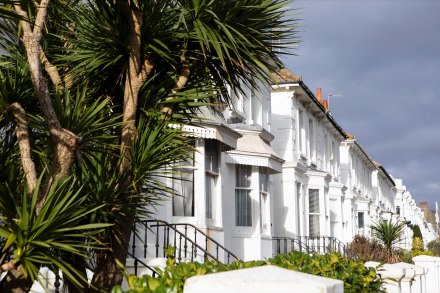
The flat in Hove which Angela Rayner infamously purchased is literally two streets and five minutes’ walk from my place, if I could walk. When I was planning to buy an apartment shortly into the new century, I looked at one in that street and thought: ‘Whoah – that’s a bit steep!’ I’d just sold my gaff to a developer for £1.5 million, so that gives one some perspective on how expensive my ’hood has become, having once been a boring outpost of Brighton. In the end, I decided I preferred Art Deco to Regency – but Mrs Rayner is obviously far classier than me. It’s telling that Ange has moved here to ‘Hove, Actually’ rather than Brighton.

It’s impossible to escape the cult of Ikea

Visiting Ikea is one of life’s inevitabilities. There’s an Ikea on every inhabited continent, 487 across 63 countries. But Ikea is more than a furniture retailer. Ikea is an idea, an abstraction, a way of life. No other shop has captured the hearts and minds of the public in quite the same way, at least not in the UK. Argos is a fate worse than purgatory; Woolworths has gone to the great retailer in the sky; John Lewis is for the Chelsea tractor drivers among us; WH Smith is only bearable when you’re at an airport, and their drinks taste like they’ve been stored in lukewarm bathwater; and Curry’s is selling AI fridges (I don’t want an AI fridge, thank you – I’ve seen 2001: A Space Odyssey; I know how this ends.

Boomers don’t know how hard the young have it

When my father, a barrister who still insists on calling himself ‘working class’, talks to his friends about their early days in London, I almost reel at how pleasant it all sounds. Cheap rent in Chelsea. Jobs they got by word of mouth. Long holidays and longer lunches. It sounds less like real life and more like a Richard Curtis fantasy. My own version of post-university London is somewhat different. I have had a privileged life. I’m one of six children, all privately educated – the result of a Catholic mother, said barrister father and years of school fees paid to institutions that, frankly, struggle to justify their expense. I won’t pretend I’ve had a hard upbringing.

I’ve become a solar panel hustler

What better accessory for my fleet of electric cars (well, two) than my own solar power station, converting the rays of the sun into blistering acceleration? I am propelled by a love of tech gadgets and the prospect of a quick killing. Do not confuse me with Net Zero zealots – I’m in this eco game for myself. So far today, my roof has thrown off 62.8 kWh – enough to drive my 2019 Hyundai Kona Electric for 350 km. (The other car is a Tesla, which I am scared to take out after a dozen of its brethren were recently incinerated in Toulouse.) Solar panels are the best investment game in town, and that’s why they’re going gangbusters in France – despite the bureaucratic mountain you have to climb. First, I had to submit drawings and specifications on paper and electronically.

The Airbnb guest from hell 

‘Is there a secret passageway behind that door?’ said the weirdly difficult Kiwi as she eyed a door marked ‘private’ leading off the central staircase. ‘Yes, sort of,’ I said. Behind that door is the rear part of the house, unrenovated. So if you open it, the secret is you fall into a gap in one of the smashed floorboards, trip over a box of books or ten, fall against a stack of mattresses and tumble down a rickety staircase that lands you in the boiler and machinery room, where you will find the unfathomable clutter that is the builder boyfriend’s tool collection, the vast water tanks, groaningly driven by electric pumps, and my overflowing baskets of laundry.

Farewell to the Fleet Street I loved

Filthy, foetid and fraught with danger. A magnet for hooligans, hard drinkers, a few saints and plenty of sinners. And that was Fleet Street before the newspapers moved in. This ancient thoroughfare, in use since Roman times, is one of London’s most famous occupational streets, much as Jermyn Street is known for its tailors and Harley Street its medics. The difference is that Fleet Street is inexorably linked to newspapers despite the fact journalists have not pounded its pavements for decades, the trade having moved on to Wapping and beyond at the tail end of the last century. Now Fleet Street is on the cusp of another new era, with plans to replace many of its historic buildings with modern office blocks.

What happened to the filthy rich?

Apparently, it was Lytton Strachey who coined the term ‘filth packets’ when he was describing Virginia Woolf’s room of her own; for Virginia this meant envelopes containing bits of this and that – old nibs, bits of string, used matches, rusty paper clips, all the stuff that gathers on the desk of a writer, or did in the 1920s. According to Lytton, Virginia sat in the kind of armchair very familiar to me to write, which appeared to be suffering from ‘prolapsis uteri’. Nevertheless, in spite of her filth packets, Virginia had staff – albeit not as many as there were in the house where she grew up in Kensington – but there was always someone to cook and clean the house and stop the grot spreading into other rooms.

For better, for worse: confessions of a rural wedding venue owner

Employing a marksman to shoot pigeons inside our wedding barn on the morning of a ceremony was not something included in the venue-owner’s manual. For the animal-loving bride, blood-splattered dead birds were preferable to her guests being splattered later that day – an understandable moral sacrifice on her behalf. The birds had sneaked in via an open owl hole window in the roof, something we hadn’t spotted until the unwelcome visitors caused a flap. It was one of the many challenges we faced owning and running a rural wedding venue, a high-pressure business where expectations are enormous and responsibilities seemingly endless.

The war on the London pied-à-terre

Let’s say you’re a young woman working in London, and you own a one-bedroom flat in Islington. You fall in love with a chap who has a nice house in Devon. You marry him.  As soon as you do that, you’ll no longer be allowed to park your car outside your Islington flat in the daytime, except on a meter for a maximum stay of two hours. A married couple is only permitted one primary residence between them, and the larger country house will most likely be designated the main home. In all central London boroughs (not just Camden as in this example), you’re not eligible for a resident’s parking permit if the dwelling is your second home, even though you pay the full council tax. Worse: you’ll soon be paying double the council tax.

How Trump is fuelling London’s prime property boom

From Henry James and T.S. Eliot to Wallis Simpson and (albeit briefly) Taylor Swift, US expats have had a long love affair with London. But over the past year the number of Americans – overpaid, what with their favourable exchange rate, oversexed, possibly, and certainly over here – has been escalating fast.  In 2024, 6,100 Americans applied for British citizenship, the most since records began – in what’s been dubbed the ‘Donald dash’. And it seems it’s the wealthy who are leading the charge. According to estate agent UK Sotheby’s International Realty, four in ten of the $15 million-plus properties sold in the British capital last year went to US buyers.

The problem with scrapping leasehold

Like most non-renting flat-dwellers, I call myself a home-owner or owner-occupier, but that isn’t quite true. I don’t own my flat; I am a leaseholder. What I bought was the right to occupy it for however many years are left on the lease – and as the lease runs down, the flat is worth less and less. Conversely, this is why, if you were so minded, you could find a prime London flat for a (relative) pittance if the lease has only a few years to run, and why long leases generally come with a premium.

The changing smell of Britain’s streets

The other day, while on my lunchtime walk, I passed a woman on a mobility scooter holding an impressive-looking doobie. Later, on my bus home, a bloke got on having just extinguished a joint, bringing the overpowering stench with him. Some commuters don’t even bother to put them out. All you can do is sit and tut passive-aggressively, hoping they’re only going a few stops. While cannabis use has slowly declined over the past 25 years, it seems that you can’t escape it in public. Perhaps part of the reason is that so few people now smoke at all, even tobacco. It makes weed far more noticeable. The other reason is that the police don’t bother punishing those caught. Most are either let off with a verbal warning or a fine.

Why the London exodus is over

During the course of last year, Alex Greaves and his wife Sarah seriously considered moving out of London. The couple, who live in Southfields in the south-west of the city with their sons aged two and five, were tempted the idea of a new life in the country – inspired largely by friends’ idyllic tales of moving to the sticks and into a home far grander than anything they could possibly afford in the capital. In the end, though, Alex and Sarah decided to stay put. And they are not alone. In the past year the number of Londoners leaving the city has dwindled dramatically. Research by estate agent Hamptons found that during 2024, Londoners purchased just 5.7 per cent of all homes sold beyond the city limits. This is a decade-long low, and down from a peak of 8.