Spectator Life

Spectator Life

An intelligent mix of culture, style, travel, food and property, as well as where to go and what to see.

Britain is facing a rubbish crisis

We have a pied-à-terre in Soho, which is convenient when I am in London, even if the street outside our tiny house is sometimes a little raucous at night. The neighbourhood is lively and fun, but my visits come with the difficulty that, in Soho, so far as I can tell, there is nowhere to dispose of your rubbish. I saw recently that Bristol City Council wants to limit collection of its wheelie bins to once a month. In much of Britain, it is already fortnightly. But at least they have wheelie bins. Westminster doesn’t allow wheelie bins in Soho; the pavements are too narrow. I assume this is the case also in other constrained neighbourhoods. Our shiny new Labour-controlled Westminster City Council seems to have given up collecting rubbish.

Confessions of a ‘gazunderer’

'John' has a dirty little secret – one so shameful that he has insisted on anonymity in order to tell his story. Last year, while in the process of buying a three-bedroom family house in Whitchurch, Hampshire, the 42-year-old office worker committed an act which, while perfectly legal, could kindly be described as ruthless. ‘We made an offer for the house, a bit below the asking price, and it was accepted,’ explains John. ‘But over the weeks that followed we started to have second thoughts. A few friends and family members were surprised at how much we were paying for the property. ‘It got to the point where I was hoping the survey would show something bad, so we could renegotiate, but it didn’t.

Britain’s shopfronts are a national embarrassment

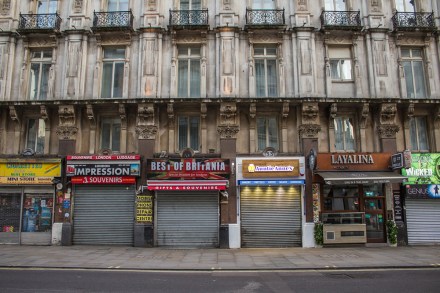
A few weeks ago, a couple of men with ladders started work on a former bridal boutique at the end of my road. I’ve no idea how old the building is. Its pitched roof and intricate gable and the sort of pattern brickwork no one seems to bother with these days suggest it’s Victorian, but it could be older. Beneath the first-floor windows was a decorative cornice. Under that, between a pair of attractive corbels, was a slim wooden fascia upon which the name of the shop was painted in stencilled letters. The chaps with the ladders got rid of all that. They ripped out the timber and chucked it in a skip. The building houses an estate agent now – a flat aluminium fascia, double the size of the old one, informs you of the fact.

London needs the Prince Charles cinema

The suggestion that the Prince Charles cinema in London’s West End could be closed down was the least surprising news of the week. This sort of thing, fuelled by soaring property values, has been happening in Soho and its periphery for three decades now and shows no sign of relenting. The Prince Charles isn’t strictly in Soho, being just south of Shaftesbury Avenue, but it has always felt like it belonged there, with the other left field, misfit and seedy enterprises that gave the place its character and reputation. It was built in 1962 but, on the edge of Chinatown, was just too far off the main drag of Leicester Square to ever really thrive. By the 1970s the Prince Charles was mostly screening soft porn: Emmanuelle and later Caligula.

Why are Brits such bad neighbours?

I sometimes wonder if a property lawyer dreamt up the idea that an Englishman’s home is his castle. Over the years, it’s certainly been a lucrative concept for the legal profession, especially when said castle is worth a few bob. Barely a week goes on when one of the posher papers doesn’t feature an expensive spat in an equally expensive neighbourhood. The latest feud I’ve seen involves a brook that runs through two properties – one owned by an artisan potter, the other a part-time painter – in the bucolic Leicestershire village of Thrussington. The row over who owns the right to this peaceful babbling has so far cost the rival parties a nerve-jangling £300,000 after it was heard by three judges in the Court of Appeal last month.

British architecture according to the Great Man school of history

Simon Jenkins has, over the years, assembled a winsome array of higher coffee-table books about the kind of building which welcomes National Trust mobility scooters and the beige brethren aboard them. This is a man who knows the cardigan market. And he knows his stuff, mostly. He subscribes to a version of the Great Man school of history, which casts the great man as an exigent client who believes himself the maker or author. But, sadly, the grim-faced Bess of Hardwick did not install the glazing herself. And another promoter ever anxious for an attribution, God Almighty, did not personally carve his supplicants’ chantries. It might be his house, but he delegated the design.

Goodbye, Earl’s Court

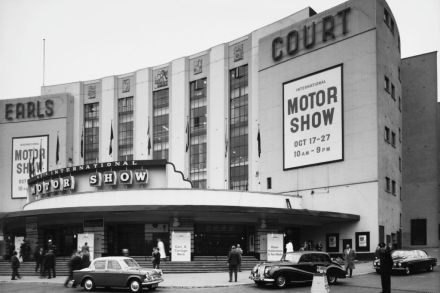
Earl’s Court as I first remember it was where Australian travellers found a cheap bed for the night. It was also the place to go for beers with unfamiliar labels, and bags of kiwi fruit, a rare delicacy in the 1980s. And at a time when Neighbours was riding high in the TV ratings there was fun to be had eavesdropping on conversations littered with ‘fair dinkum’ and ‘strewth’. There are some troubling details: skyscrapers being built in a largely low-rise Victorian neighbourhood and the way streets at the perimeter of the site will be overlooked and overshadowed  Older generations will remember earlier waves of immigrants. There were the Polish soldiers who were resettled there after the second world war and set up shops, cafes and clubs.

The surprising second life of Colonel Seifert

There was a time, not so very long ago, when the skyline of London was dominated by the work of one architect: not Sir Christopher Wren, but Colonel Richard Seifert. But while Wren is universally admired, Seifert has been reviled. Architects hated his success; the public his uncompromising brutalist aesthetic. Yet now, more than two decades after his death, that appears to be changing. Seifert – who did a spell in the Royal Engineers during the second world war and then insisted on being addressed by his military rank throughout his life – was often said to have had more of an impact on the capital than anyone bar the creator of St Paul’s.

How to buy a house that isn’t on the market

There are many, mutually reinforcing causes of the property crisis: it is too easy to borrow; there are too many people; there aren’t enough houses; what houses do exist are in the wrong place; and many houses have the wrong people living in them. Solutions exist to all of these, some of which involve building and some of which don’t. In south-east England it is not uncommon to find people living in£1 million homes who are skint Today we are going to focus on the fifth problem. Too many people are living in houses which are too big for them. In south-east England it is not uncommon to find people living in £1 million homes who are otherwise skint. I know someone who lives on a long road of four-bedroom houses where they are the only household of more than two. This is daft.

Would you rent a John Lewis home?

John Lewis recently returned to its roots, resurrecting its ‘never knowingly undersold’ price-matching promise. But it’s hard to imagine how the company, which opened its first store on London’s Oxford Street in 1864, could apply this undertaking to its latest venture. For, not content with supplying the nation with sofas and curtains, lightbulbs and sewing patterns, John Lewis wants to provide the actual homes to put these items into – dipping its corporate toe into the world of 'build to rent', or BTR. The retailer has unveiled plans to construct almost 1,000 rental flats at three company-owned sites – above a Waitrose store in Bromley, south-east London; on a brownfield site in West Ealing, west London; and on a warehouse site in Reading, Berkshire.

How I found Love on Airbnb

‘My name is Love,’ typed the help assistant, ‘and I’m a member of the Airbnb community support team.’ I was using one of those chat boxes, where someone from the company you’re grappling with, embodied in a flashing cursor, interacts with you in print on a live chat screen. I am kind and polite, I thought. No one has ever really given me credit for that before Now, I’m a big fan of the chat box. The chat box works when all other forms of customer service fail. Chances are you will get much better service if you stop expecting companies to speak to you on the phone, and start letting them do what they do best, which is to solve your issue without speaking to you, because speaking to you is where all the problems start, let’s face it.

An ode to lamplighting

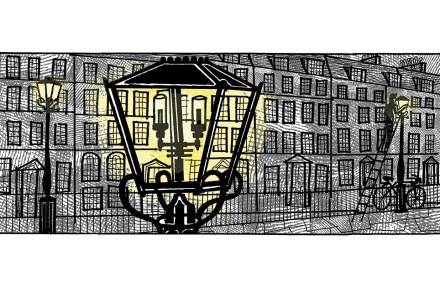
I was growing impatient with a recent blog by Sam Altman, who runs OpenAI, promising progress, universal prosperity, ‘a space colony, and the discovery of all of physics’ through artificial intelligence. I won’t go over that ground now, because I suddenly sat up at a passing remark he made: ‘Nobody is looking back at the past, wishing they were a lamplighter.’ Stephen’s task for Paddington council was to cycle round with his ladder fixing street lamps on the blink I’m not so sure. I used to know a lamplighter and I miss his company. His name was Stephen Fothergill, and in the 1980s he was a welcome sight in the French pub in Dean Street, Soho, late in the evening.

I’m finally a proper villager

I knew that my adjustment to living here was complete when, this morning, I hit the send button of an email. I had written to the parish council suggesting that the local church change its street signage. This is, of course, the critical moment when the character undergoes a metamorphosis into Flora Robson. ‘The board is in a shade of blue one associates with a major hospital,’ I wrote in mild protest. I was about to file him away as a bisexual in search of his first same-sex experience I suggested a smaller sign in heritage-green. The clerk of the parish council obviously runs a tight ship because she responded within the hour. A new sign was being ordered, she said, and thanked me for my interest. Naturally, being English, I replied thanking her for replying to me.

Hunting for the lost blue plaques

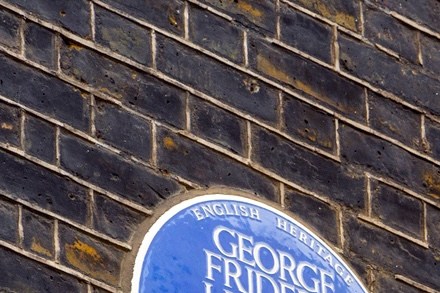
Most people assume that once a blue plaque is installed, it's there to stay. That is not always the case. Around 50 of the over 1,000 official plaques are no longer in situ on their original building – almost always because that building has gone. Now English Heritage, the charity I work for, is asking for help from the public to track down any of the lost plaques that may have survived. In all likelihood, both early Byron plaques are completely lost – potentially somewhere within the foundations of John Lewis In 1867, the Society of Arts inaugurated its new memorial scheme with a plaque to Lord Byron, marking the poet’s supposed birthplace at number 24 Holles Street, near Cavendish Square. A little over 20 years later, number 24 was demolished and the plaque was lost with it.

Confessions of a gentrifier

The backlash against plans for a Gail’s bakery in Walthamstow made me think about my own experience of gentrification. When I moved to my suburb of Bristol nearly 20 years ago, it was still a largely white working-class area. It was also a temporary home to many of the students from the local university. It felt slightly down at heel but, judging by the impressive size of some of the houses, had once been quite prosperous. Black and white photographs from the early 20th century show the now non-existent tram running down a high street populated by soberly dressed Edwardians.

The grotesque world of supercar towers

As an 11-year-old, I tried to persuade my mother that we should sell our Victorian farmhouse in the Wiltshire countryside and pour every penny into a brand-new 212mph Jaguar XJ220, which cost £435,000 at the time. We would simply live inside this low-slung two-seat supercar, parked up in a lay-by with a washing line hung between the car aerial and a nearby tree. ‘We’re not just doing that to be cool, we’re doing it because it makes us more money’ Now an alternative has arisen. Car manufacturers are racing to build luxury residential towers in the enclaves of flashy money. In Miami and Dubai, Mercedes-Benz is putting the three-pointed star on buildings designed to accommodate their aspirant demographic.

The joy of rescuing battery hens

They came straight off the back of a lorry and were placed carefully – top to tail - in three cat carriers, two hens in each. Broken feathers stuck from the air vents, bright, suspicious, amber eyes peered out. We drove them home, listening out for any squawks of distress, but they were silent. Bemused, exhausted, probably wearily resigned to whatever fate awaited them next. These former battery hens, who’d spent the entirety of their short lives living in metal cages no bigger than a sheet of A4, should have been on their way to slaughter These former battery hens, who’d spent the entirety of their short lives living in metal cages no bigger than a sheet of A4, should have been on their way to slaughter.

My battle with Alexa

My first brush with Artificial Intelligence was the Furby – that hideous speaking Gonk with eyes that blinked. You could hear the cogs turning. It felt basic, even for the 2000s. My techie ex got it for me as a birthday present. Like babies, this infant technology responded to clapping. It was weird and dull. Having exhausted its repertoire, I discarded it beside the sofa. One night, weeks later, we were sitting together and heard the whirr of its eyes opening, and it just said, the once, clearly in its strange little voice, ‘Boring’. We laughed. That was as good as it got. Alexa is not sexy like my old satnav, who sounded like Joanna Lumley as a bored dominatrix Alexa, though, is the real deal: my android in a can, my useful housemate. I consult her often.

No, the Bank of Mum and Dad isn’t sexist

I don’t trust a lot of what comes out of universities’ gender studies departments – which seem to me to be more political activism dressed up in academic clothing. But I am not quite convinced, either, of the scientific rigour behind the University of Zoopla’s claim that parents are being far more generous in gifting house deposits to their sons than they are towards their daughters. The property portal has put out a press release this week claiming that daughters are granted an average of £51,671 towards buying a home, compared with £65,004 for sons. The finding, it says, was based on a poll of 1,000 first-time buyers, 630 of whom had received some degree of financial help from their families.

Beware the bat police

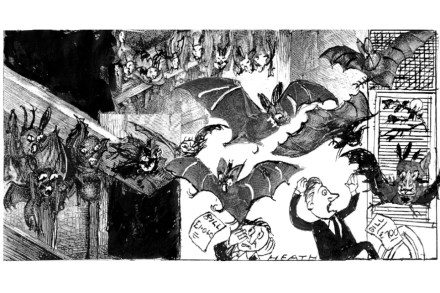
My friend Andrew is angry. He has just had the bat people round to look at his building project in Swanage. There was no evidence of bats that they could find, but that didn’t mean there weren’t any. A full survey would be required. In total the non-existent bats in our village hall cost the parish more than £2,500 I advised him to pay up and not dwell on the madness, but his ire reminded me of my own recent experience with the bat fuzz. From 2018 until this June, I chaired the committee responsible for refurbishing a village hall deep in rural Somerset. As law-abiding and nature-loving people, we followed our surveyor’s stern instruction and did all the bat-friendly things we needed to do before starting the work.

What Labour means for housing

Labour appears to be planning to make housing a big priority for its first weeks in power, which is perhaps unsurprisingly, given that it will have gained power thanks in part to the growing number of frustrated young would-be homeowners. We are being led to expect a housebuilding bill within three weeks of Keir Starmer taking power, to effect the party’s promise to build 1.5 million new homes over the course of a five-year parliament. There is a very large Nimby tendency in the environmental movement Labour’s manifesto suggests what will be in it: local authorities will once again be set housebuilding targets, abolished under Rishi Sunak. There will be an extra 300 planning officers, funded, so it says, with higher stamp duty bills for overseas buyers of UK property.

Get the government out of my bathroom

Two days before leaving this country for Italy – where, defeated by southern British house prices, I planned to fight for a long-term visa and buy a home – I finally found the exact flat I’d been dreaming of, here in the UK. True, it wasn’t in East Anglia, where I grew up and most of my family still lives, but Shropshire, a county which intrigued me and which emerged over time as my second choice. Green, landlocked, with endless castles, hills and valleys, Shropshire is about as remote from the capital as you can get. It has Ludlow and Shrewsbury, medieval towns with rivers, courtyards, timbered buildings and a pleasing Shakespearean ring to their names. Nearby is Wales which, since two epic holidays in my youth, has been a kind of Holy Land for me. What’s not to embrace?

Why Lakeland beats John Lewis

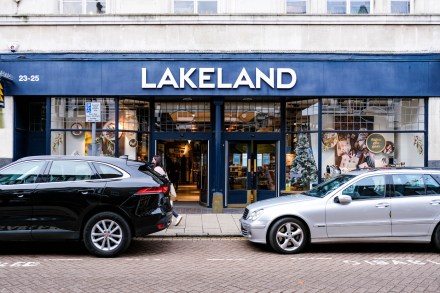
In these febrile times, there is one place to take refuge and that is in the Lakeland catalogue. Change and decay in all around I see, as John Henry Newman observed, but at Lakeland there is still a universe where you can conquer the perennial problem of taking the tops off strawberries, so tricky if they are a little underripe, with a Chef’n’Stem Strawberry Huller (£8.99), combine a blender with a separate coffee grinder with the Lakeland Blender (£69.99), keep insects off cake outdoors with a food umbrella (£4.49) and deal with wet laundry when you don’t have a washing line with the Dry Soon heated airer (from £99). There is no problem in domestic economy that is not covered somewhere, somehow, by this house and kitchenware retail company.

The rise of the village vigilante

Living off the beaten track was idyllic until one night last November. At 1 a.m. during a particularly heavy downpour, a group of hooded men came onto our property and tried to burgle us. Lulled into a false sense of security after three months in our rural home, we’d casually left our 25-year-old Land Rover Defender next to our barn, rather than locked away inside as it would normally have been.  What if the crims refuse to leave and want a fight? What if one of them gets fatally injured on my property? What if I get banged up like Tony Martin? The thieves had come prepared. Two of them scaled the fence and disabled our electric gates, ready for a quick getaway. Another one waited in the lane, engine running.

The weird world of regional auction houses

Michael Prowse, proprietor and auctioneer at Pilton Auctions, is rummaging through boxes at the back of his office – which is in a warehouse, up a wooden ladder and underneath corrugated metal and plastic roofing. ‘I’ve got something horrendous here,’ Michael says, ‘but its on it’s way to the bin.’ I’ve asked him what the strangest item he’s sold at auction is. He’s not sure, but he’s on a mission to find the strangest item he won’t sell. It appeared during one of Pilton Auctions routine house clearances.  I watched a man in his fifties arrive to collect half a dozen world war two German photo albums, which he put into a Finding Nemo bag ‘What is it?’ I ask, not sure I want to know the answer.

What kind of city dweller complains about noise?

I’m a highly insensitive person, which means that I’m rarely perturbed by aural excitement. I love public noise, the sound of the crowd. I would never want double-glazed windows – and I even like the sound of drills and construction because I enjoy living in a boomtown where lots of people want to be. The only noise I don’t like is that of children screeching in restaurants, pubs and bars, but that’s because I don’t believe they should be there in the first place; I love noisy adults in restaurants, having the time of their lives. Little dogs barking in these places I don’t mind – but not big ones as they look like they’re showing off. I like quiet in libraries – and that’s about it.

The hell of interior design

I spent seven hours yesterday cutting up cardboard boxes into little square pieces with a Stanley knife and stuffing them into rubbish sacks. I’ve just moved house and my home is piled high with bulging black bags and looks like Leicester Square during the Winter of Discontent. Given that I don’t currently have the necessary bin from the council, I could end up living with them forever.  These are just some of the stresses of moving into a newly bought flat. Everyone knows the legal process of buying a place is an ordeal – the multitude of documents you can’t find and questions you can’t answer, the survey that over-stresses all the problems, apparent 11th hour impediments to closing the deal that, as in a Hollywood film, finally evaporate as completion day approaches.

Could Rightmove make the wrong move?

Banks have been cutting fixed mortgage rates, leading to hopes among some people that the housing market – which has been pretty flat so far this year – will soon respond positively. While prices and sale volumes haven’t been going anywhere, last month the Royal Institution of Chartered Surveyors reported that enquiries from buyers have risen to their highest level in two years. The company will have to watch its back for app developers out to steal its business But do short sellers tell a different story? Property website Rightmove, according to a list maintained by the Financial Conduct Authority, is currently the fifth most-shorted stock on the FTSE all-share index, behind online grocer Ocado, retailers Kingfisher and Sainsbury’s and clothing-maker Burberry.

Writing a will isn’t easy

It’s generally considered sensible for adults of sound mind to make a will. Many don’t bother. It’s a nuisance. They’ve scribbled their straightforward wishes in a letter at home. They think they’re too young. They’ve told a confidant their final wishes. Or they believe they have nothing to leave, or make assumptions about who’ll automatically inherit their estate, rendering a will unnecessary. It’s not easy to convince a court to deviate from someone’s written last wishes The topic of making a will is sometimes taboo. But given humans’ mortality, even those with modest means and no family would be wise to write a will, if only to take control of what will become of their physical body or of where particular treasured possessions should go.