Spectator Life

Spectator Life

An intelligent mix of culture, style, travel, food and property, as well as where to go and what to see.

The politics of sun loungers

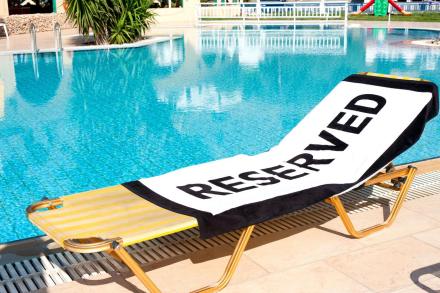
The poolside was deserted when we passed on our way to breakfast. This time, I thought, as we ate at the still-quiet restaurant buffet, we’d triumph. Yet arriving back at the pool after eating, all the sun loungers closest to it had already been claimed – by owners who were nowhere to be seen. Reserving loungers might have been against the hotel’s policy, but removing the towels and beach bags that their claimants had placed on top of them felt like an act of aggression. Instead I sulked silently from my bed near the bins as, an hour later, the family of four who’d taken the plum spot I’d had my eye on for my own family finally sauntered over, ready to spend some time in their premium seats.

What’s behind the bungalow boom?

‘Bungalows are almost perfect,’ as the old gag goes. ‘They only have one floor.’ But these once unfashionable properties are rapidly becoming anything but a joke. While the mortgage crisis is cooling most sectors of the housing market, demand for bungalows is growing. Estate agents report the properties receiving dozens of offers, selling for tens of thousands over the asking price or being snapped up before officially going on the market. The usual breed of downsizers and retirees looking to replace large family homes with something all on one level are facing stiff competition from budget-conscious purchasers seeking to renovate single-storey homes – and often turn them into family homes with stairs.

Against the grain: why the Japanese are losing their taste for rice

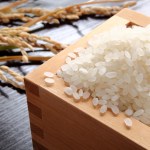
It would be an insult to call rice the staple food of Japan. For centuries it has been so much more than that. In Japan, rice has long been treated with a respect that borders on reverence. The emperor blesses the rice crop each year and in Shinto culture rice and rice-based sake are two of the most common ceremonial offerings to the gods. Rice has supernatural power: the red glutinous variety will protect you from evil and bring good luck. And it must be handled with great care: the worst thing you can do during a Japanese meal is plant your chopsticks in the rice – a symbol, if not harbinger, of death. Rice, prepared and served in the correct manner, has been called the essence of Japan. For purists, occidental curiosities, such as instant rice and rice pudding, are abominations.

If the choux fits: the secrets of perfect profiteroles

Choux pastry can inspire fear in even the most confident of cooks. There's a good reason for it: it’s difficult to give a very precise recipe for choux pastry, as the amount of egg needed to create the correct texture depends on the flour you’ve used, how long the choux has rested, and how fast and how thoroughly you have cooked the choux mixture out. It’s the water content in the egg that primarily causes the choux to rise and puff in the oven into those distinctive domes or elegant eclairs: not enough and they will fall flat, but too much and the pastry will be too sloppy to pipe properly. It’s the Goldilocks of pastry recipes. I am not unfamiliar with choux-dread.

Three tips for the big weekend handicaps

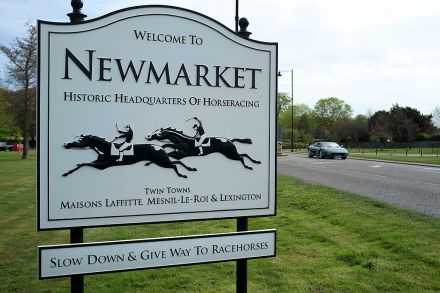
The two big handicaps tomorrow are the bet365 Bunbury Cup at Newmarket and the John Smith’s Cup at York. Both are early closing races in which the weights were framed by the official handicapper several weeks ago. This means several horses in both races are 'well in', in that if the handicapper was in a position to evaluate their most recent runs – after he set the weights – they would be carrying several pounds more tomorrow. However, the most difficult issue to factor into which horses to tip today is undoubtedly the weather: both Newmarket and York are forecast to have large amounts of rain which could make the ground at both tracks 'soft' by tomorrow afternoon.

The rise of the open-fire restaurant

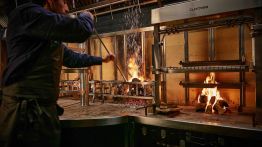
Burn the formal white tablecloths and fling open the kitchen doors. The latest craze in restaurant culture is open-fire cooking – where chefs sweat it out over roaring flames in full view of their customers. And the simple, raw nature of this method of food preparation seems to have set diners’ imaginations alight.  ‘Cooking outside over flames is primal and in our DNA as human beings,’ says Andrew Clarke, co-founder of Acme Fire Cult – one such restaurant in Dalston, north London. ‘The smell of woodsmoke and animal fats hitting the hot coals stirs up something deep inside.’ For Tomos Parry, chef and co-owner of Brat – another open-fire restaurant – the flavour that can be achieved from this style of cooking adds an extra dimension to most dishes.

I’m a middle-aged male Swiftie (and I don’t care who knows it)

I recently underwent a surgical procedure that according to the surgeon who performed it would cause either no discomfort at all or result in 'exceptional pain' for at least two weeks. No way to tell until I was on the operating table, apparently. She said this matter-of-factly, as if discussing bus routes, just as I was about to receive a general anaesthetic. As soon as I came to, I learned it was the latter. In the following days, bedbound and near-delirious with pain and medication, I listened to hour after hour of Taylor Swift. I didn't want to hear anything else. I found her music, with its vast emotional depth and stunning lyrical dexterity, terrifically soothing.

What happened to Italian football?

Neither Sandro Tonali nor AC Milan wanted to part ways. The young midfielder is from the outskirts of the city, has been a fan since boyhood and his dad’s an ultra. He wanted to become a Rossoneri icon like his hero Gennaro Gattuso. The top brass at Milan saw him as a future captain. Tonali was instrumental to the club winning Serie A ­– Italy’s top league – last year and reaching the European Champions League semi-final two months ago. Milan’s legendary manager from the 1990s, Fabio Capello, says Tonali is ‘the recipe to win’ and that he could have played in ‘the great Milan teams’ from 30 years ago.

Where to drink Tuscany’s finest summer tipples

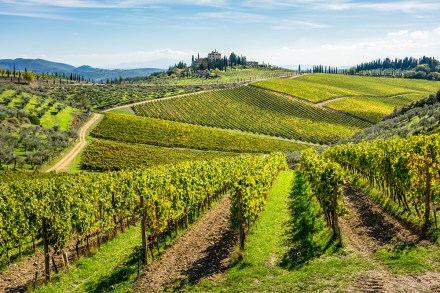
Some subjects invite an eternal recurrence. One such is Tuscany. The other day, I wrote about that glorious region: its mastery of la dolce vita, its almost effortless command of civilisation. Indeed, Tuscan civilisation is a tautology. Since then, I have paid a brief visit. There was only one shadow. How can one find the words to equal the subject matter? Wine was produced here long before we Brits had even discovered woad My host was Grahame McGirr, a successful banker who has always been fascinated by wine, which led him to buy a vineyard near Monte-pulciano. I commented on some of his wines after a tasting in London. They were impressive: promise, stimulated by ambition. He pressed me to report on the promise in situ – the things one does for friends.

Paddington emerged victorious but Eclipse was an enthralling duel

I should have listened to George Duffield. Sandown Park’s Eclipse Stakes, the first time the Classic generation of three-year-olds take on their elders, is one of my favourite races and the then 53-year-old rider’s triumph on Giant’s Causeway in 2000, beating Kalanisi by a head after Pat Eddery had driven him into the lead 200 yards from the finish, was the duel I will never forget. Duffield was Sir Mark Prescott’s stable jockey and soon after that race the Newmarket maestro took a call from Aidan O’Brien, Giant’s Causeway’s trainer. ‘Whatever you do Sir Mark,’ said the quiet Irish voice, ‘make sure you breed from him before you let him go!

Light bulb moment: the flaw in the petrol car ban

This week, writing in the Daily Mail, Matt Ridley produced a devastating takedown of the government’s 2030 ban on the sale of new conventionally powered cars. He plans to pre-empt the ban himself by buying a brand-new petrol car in 2029. Innovation happens gradually and delivers its benefits unevenly – therefore it is stupid to impose it on everyone all at once  I thought he was right about almost everything, except perhaps that final prediction. He’s right to be sceptical about the environmental benefits of electric cars – especially in countries such as China (and, to a lesser extent, Germany) where electricity is largely generated from the filthier forms of coal.

The insidious creep of plastic glasses

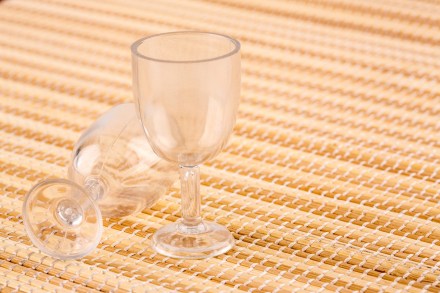
It was the afternoon of the first day of the second Ashes test at Lord’s. In the brief lull between overs, the camera panned, as it often does, to a recognisable face in the crowd: Jacob Rees-Mogg. The traditionalist Tory presented exactly as you’d expect: Savile Row suit, tie and cufflinks. But there was one wrong note: he was drinking from a plastic glass.  Say what you like about Mr Rees-Mogg – and people do – but one attribute that I think we can all agree he possesses in abundance is that he’s in touch, almost viscerally, with his own sense of how things should be done. And this sense, as I perceive it, would very much preclude drinking from a plastic cup.

New York hotels with a literary twist

‘You really ought to read more books – you know, those things that look like blocks but come apart on one side.’ Perhaps F. Scott Fitzgerald was aiming for a motivational tone – literature was his livelihood, after all. He was also a seminal figure in the writers' movement that began in 1920s New York and, over the following decades, took root in hotels across the city. Hot on the heels of Spectator Life's guide to London's literary hotels, here are five New York hotels with their own tales to tell. The Algonquin Hotel [iStock] The Algonquin’s association with the infamous Round Table of the 1920s has provided it with more connections to literature and the arts than perhaps any other hotel in New York.

Mission: Impossible – Dead Reckoning Part One is the action film of the year

It is an unusual compliment to say of what will undoubtedly be the year’s best action film that the experience of watching it is rather like being punched in the face for the better part of three hours. But Mission: Impossible – Dead Reckoning Part One, which arrived in UK cinemas on Monday, is a bruising, visceral and wholly exciting ride that’s about as close as you can imagine to being put in a boxing ring with its star Tom Cruise. If the viewer is pummelled and bludgeoned into an ecstatic state of submission, then that’s the price you pay for this exceptional slice of filmmaking: a thriller that doesn’t just thrill, but exhilarates and wholly dominates its audience in the process.

Confessions of a tanorexic

In an interesting piece for Air Mail, Linda Wells writes of ‘The secret lives of tanorexics’, asking: ‘What drives these bronze obsessives – and why won’t they ever learn?’ She questions her sun-baked friends about why they are so intent on doing a thing which they are warned will ruin their complexions and make it more likely that they get cancer – and doesn’t get a satisfactory answer from any of them. Reading it, I realised that I too am a tanorexic. It kind of creeps up on you over the years, like any other bad habit: one minute you’re having a harmless half-hour in a sun-trap pub garden in Hove and the next your hair’s falling out in Crete, as happened to me when I failed to wear a sun hat in July some years back.

The joy of Suffex: England’s county that never was

There is a point on the dreaded A12 – a road so soulless it makes the M4 looks like Shangri La – when you reach the end of Essex. If you’re driving from London it takes you a surprisingly long time; there’s a lot of noisy beige concrete to go over – about 60 miles’ worth – with roadside highlights including a large, sad-looking ‘adult shop’ that was clearly a Happy Eater or Little Chef in more innocent times, and dejected-looking service stations with alarming short slip-roads. Then of course there are lorries galore thundering along, laden with shipping containers bound for Felixstowe, Britain’s happiest sounding port. Heading east you’ll pass signs for places like Basildon, Billericay, Brentwood, Chelmsford, Clacton and Southend-on-Sea.

The English have always loved gossip

Our national conversation is overwhelmed by tittle-tattle, rumour and gossip. Last week, a salacious email listing George Osborne’s alleged improprieties was circulated among the Westminster bubble. Inevitably, it was then circulated to everybody else, too. Meanwhile, the internet is aflutter with rumours about the identity of a BBC journalist who’s alleged to have paid a teenager tens of thousands of pounds for sordid pictures – and this isn’t even the first sex scandal involving a broadcaster this year.  Foreign visitors were amazed at this insatiable desire to ridicule the private follies and foibles of high society Some might think our modern obsession with grubby tales shows a lack of seriousness. But a love of gossip is nothing new among the English.

Why modern life doesn’t make us happy

The greatest delusion ever sold to us by modern advertising is not that we need to buy water in bottles or that rocks make good pets. It’s the delusion that we should expect to be happy all the time. This idea certainly would have been news to our ancient ancestors. Over millions of years, they became the dominant hominid on the planet because their brains evolved to be survival machines, not happiness generators. The first peals of laughter around those early campfires were not because everyone was having a good time; laughter evolved as a social bonding signal to communicate to the rest of the tribe: ‘Phew, we’re safe now. Looks like we’ve seen off that saber-toothed tiger.

In praise of the suburban semi

In 1939 George Orwell took aim at burgeoning British suburbia and its population of lower middle class lackeys in his novel Coming Up for Air, memorably describing the new homes being built on the fringes of cities as ‘semi-detached torture chambers where the poor little five-to-ten pound a-weekers quake and shiver'. More than eight decades on and the Office for National Statistics reports that one in three of us lives in a semi-detached home, an architectural style with a far longer and more interesting history than Orwell may have been aware of. They are also – officially - the hottest property type on the market. Analysis of more than 100,000 house sales over the past year by sales firm Property Solvers found that semis took an average of 150 days to sell.

The best alternatives to Diet Coke

British media wouldn’t be British media without endless stories of possible health risks in food and drink. The news cycle turns and we land on whether butter is good or bad, or whether having a glass of red wine in the evening is toxic or therapeutic. Another long-running, oft-studied and frequently-discussed topic of debate is aspartame, the artificial sweetener found in the likes of Diet Coke and Coke Zero. The latter is a favourite drink of mine.  Aspartame has suffered its fair share of derision in the past, but it is now being officially declared a ‘possible’ cancer risk by the International Agency for Research on Cancer, a World Health Organisation body.

Two tips for big handicaps this weekend

Trainer Jamie Osborne has targeted OUZO at most of the big one-mile handicaps since taking over the training of the horse at the beginning of last season from Richard Hannon. To date, the gelding is zero wins from 11 runs for Osborne but that statistic does not tell the full story. Ouzo has run some splendid races in defeat, most of them with the trainer’s daughter Saffie in the saddle, and his consistency means he has failed to drop far down the handicap. The gelding, now seven, certainly deserves a change of luck and I am hoping that he gets one as soon as tomorrow (Sandown, 2.25 p.m.) when he contests the Coral Challenge handicap, once again over a mile and once again the talented Saffie Osborne gets the ride.

How to avoid paying parking tickets

My year of motoring tourism didn’t begin auspiciously. Early on the morning of New Year’s Eve, in downtown Dieppe, I looked out of the window of our rented apartment with its magnificent view of the Église Saint-Jacques, painted by the likes of Pissarro and Sickert, and noticed that our car had disappeared.  What followed over the next three hours was a journey of discovery – of the government offices and gendarmeries of the historic maritime town (on foot, in the rain), by which process I was eventually informed that my car was now residing in a secure pound on an industrial estate some five kilometres out of town.  I tried to get a taxi there. Eventually I found a rank by the harbour with three cabs, but they were driverless. I rang the number on one of them.

My culinary journeys: restaurants worth travelling for

Whenever it is suggested travelling south or north of the Thames to visit an ‘amazing’ restaurant I usually start conjuring up excuses. Across London seems a journey too far for food – but going across an ocean for it can be worthwhile. In NYC last year, I found myself with an evening off and, staying in the Lower East Side, made my way to the Bowery Meat Company. The menu was perfect: steak and seafood, excellent cocktails, and sides which included sublime creamed spinach and whipped potato that threatened to float off the plate. I usually eat oysters naked, but Bowery’s version – baked under a parmesan crust – was irresistible. The steak was thick, juicy and cooked to perfection, the fries hot and crunchy.

The death of the sex comedy

After a few years in which she has been largely absent from cinemas – her appearance in Netflix’s climate-change black comedy Don’t Look Up aside – Jennifer Lawrence is returning with, of all things, a raunchy sex comedy, with the punning title No Hard Feelings. It has earned an R-rating in the US and 15 in the UK, and judging by its marketing materials, it is a 21st-century spin on Tom Cruise’s star-making role in Risky Business, focusing on an older woman (yes, Lawrence, at 32, is now classed as such by Hollywood) who is hired by a family via Craigslist to 'date' their socially awkward 19-year-old son Percy, 'date him hard', and thus introduce him to the adult world.

How to make proper vanilla ice cream

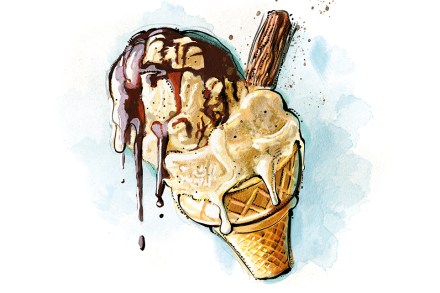
I could map out my life geographically and temporally in scoops of ice cream. From the oyster delights handed over in tracing-paper napkins from Minchella’s hatch in South Shields on the beachfront, to the little silver coupe bowls of ice cream we ordered every night on family holiday in France (always the same, one ball of pistachio, one of blackcurrant). The perfect brown-bread ice cream I had at Andrew Edmunds in Soho when I first moved to London. An elder-flower ice cream with a damson swirl that we ordered on honeymoon in the Cotswolds; a strikingly memorable blue-cheese ice cream which was the first thing I ate upon arriving in Bilbao. A red-bean ice bar we were handed as we stepped out of a sweltering day in Georgetown into a cool and calm hotel.

Watch out Wimbledon: padel is taking over

For the past 15 years, I’ve had an entirely healthy compulsion – my wife, I suspect, would disagree – to play tennis at least twice a week. I assumed this habit was so ingrained that nothing short of a calamitous injury could ever keep me from my fix. Spain is where the craze took hold. Now it’s the country’s second most popular sport, after football I think I may have been mistaken. Recently, I’ve discovered a new sport which is proving, if anything, more addictive. Time will tell if this is a fleeting crush, or the start of something more enduring – but I am beginning to wonder whether my new-found love of padel will lead me to abandon tennis. I hear you ask: what exactly is padel?

A taste of 1997: Pizza Express reviewed

As the government withers this column falls to ennui and visits Pizza Express. As David Cameron, who left the world stage humming, said of Tony Blair: ‘He was the future once.’ So was David Cameron, and so was Pizza Express: I bet they meet often. It was founded in 1965 by Peter Boizot, who shipped a pizza oven from Naples and a chef from Sicily and opened in Wardour Street. That branch closed in 2020. Boizot grew up in Peterborough but lived in continental Europe for a decade, and he learnt three things: an Italian restaurant must be bright; good pizza must be slightly charred (burning food is underrated); children need restaurants too. These changes were sensational, and Pizza Express was launched on the stock exchange in 1993.

If you thought Lord’s was rowdy, get ready for Leeds

Shouldn’t we all just calm down a bit after Lord’s? Once prime ministers decide to intervene, you know things have gone too far. Rishi Sunak has made it clear he wouldn’t want to win a match that way apparently, which feels very much like Tony Blair’s decision to wade into the case of Corrie’s jailed heroine Deirdre Barlow. Mark you, that really was important. So… was Jonny Bairstow out after being stumped by sharp-eyed Australian keeper Alex Carey? Undoubtedly. Should the Australians have withdrawn their appeal? Possibly, because Bairstow had good reason to think the over was finished when he moved out of his ground.