Spectator Life

Spectator Life

An intelligent mix of culture, style, travel, food and property, as well as where to go and what to see.

The egg shortage is coming to Europe

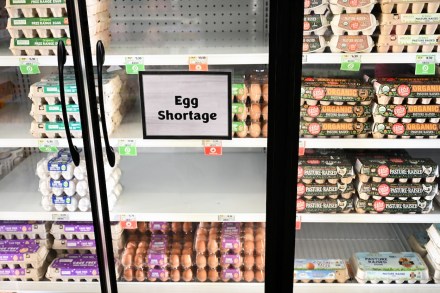
President Trump swerved in his ‘Liberation Day’ event last week, speaking on an issue that has preoccupied America for months: the price of eggs. Trump said: ‘The first week I was blamed for eggs, I said, “I just got here”. The price on eggs now is down 55 per cent and will keep going down. They were saying that for Easter, “Please don’t use eggs. Could you use plastic eggs?” I say, we don’t want to do that.’ Like him or not, Trump has a way of understanding the zeitgeist. The egg crisis is threatening to become global. It has displaced even Marine Le Pen as a subject of discussion at my village café. There was not a single carton of eggs on sale yesterday when I did my shopping at the Super U. How will I make my bacon and eggs?
Is today’s TV British enough?

There is a decent chance that most Spectator readers have seen at least one of the following: the much-ballyhooed Adolescence, the rather less controversial Black Doves, and the once-magnificent, latterly tawdry The Crown. From the travails of royalty to the horrors of a child killer, via the acrobatic derring-do of unusually witty spies, these shows include some of the greatest British actors working today. They are all quintessentially English in their settings. All three have been hugely successful and should, by rights, be programmes that the British television industry should be extremely proud of. Except, of course, they’re not British. Well, not wholly, anyway.

The return of the Young Fogey

At a recent lunch where I was sitting next to A.N. Wilson I couldn’t help but take a good look at his suit. After all, this was the man often described as the original Young Fogey. He was dressed perfectly well in an austere two-piece, though while I (ever the try-hard) was sporting a pocket square, he was without one. On another occasion, chatting to Charles Moore in the colonial surrounds of the Foreign Office’s Durbar Court, the Lord was indistinguishable in dress from the other mandarins and journalistic bigwigs there. In bygone days, a Young Fogey such as he would have donned a seersucker suit and shantung silk tie for the occasion. The Young Fogeys’ flamboyance of dress evident in their heyday is gone.

Save the Red Arrows!

You will be aware that we face a national emergency. I’m not referring to the fact that our closest ally has seemingly taken leave of its senses or the astonishing news that apparently one in four Britons is now disabled – nor that more than nine million of us of working age are economically inactive. I’m not even talking about the parlous state of the NHS. The national emergency I’m referring to is one that trumps even Trump, so brace yourselves. Soon we are going to run out of Red Arrows. The jolly red-painted planes they fly – the Hawk T1s made by BAE Systems – are now so old, they’re even older than Putin’s fighters.

Why ladies love the Land Rover

It was when I nearly reversed into two brand new Land Rover Defenders in the car park at my daughter’s prep school that I realised something was going on. Of course, I had seen them before. I live in Oxfordshire where the A-roads are one long parade of Land Rover Discoveries, Range Rovers and Volvo SUVs from one junction to the next. But recently Defenders seem to be the ‘it’ car on the block. Land Rovers used to connote a certain kind of rarified upper-class masculinity – think Prince Philip, think chins hanging out of them on a shoot – but the new Defender, puffed-up and boxy like a fat peacock, unintentionally parodies what marketeers might pompously call its ‘brand heritage’.

The Judgment of Berkshire

Almost 50 years ago, in a hotel bar in central Paris, French wine faced a reckoning. Steven Spurrier, a British wine merchant, decided California deserved a spell in the sun: at the time French wine was the dominant force in Europe, with bottles from the New World – Australia, New Zealand, the US and the like – considered their poor cousin. Spurrier came up with the idea to pit the very best French Bordeaux against Californian cabernet sauvignons and chardonnays against white Burgundies, and have a panel of experts – all French – rank them in a blind tasting that came to be known as the Judgment of Paris. California won both categories. Odette Khan, a well-known critic, reportedly demanded her scorecard back so news of her grave error wouldn’t reach the papers.

Spare us from ‘nobituaries’

Sometimes it seemed to me as a young hack that writing obituaries must be the best job in newspapers. You can’t get sued – though people tend not to take the gloves off out of ‘respect’ and use ancient phrases like ‘bon viveur’ and ‘did not suffer fools gladly’ when everyone knows you mean ‘well-connected drunk’ and ‘ill-tempered’. It’s only once in a blue moon that someone really says what they think, like when the ‘social influencer’ Jameela Jamil barely waited until the fashion designer Karl Lagerfeld was cold in his casket before X-ing that the capering clown – widely being celebrated as a ‘genius’ – was in fact ‘a racist, misogynistic, fat-phobic rape apologist who shouldn’t be posted all over the internet as a saint gone-too-soon’.

Three bets for Aintree today and tomorrow

Tomorrow’s Randox Grand National (4 p.m.), the world’s most famous horse race, is the highlight of an excellent card at Aintree and I think the bookies have got it right with the horses they have put at the top of the market. Stumptown, who could yet go off as favourite, is the best weighted horse in the race given that he would be given several pounds more if the handicapper was allowed to take his recent Cheltenham Festival win into consideration. His victory by seven lengths in the Glenfarclas Cross Country Chase came, however, after the weights were published and this is a race in which there are no winning penalties.

The curious cult of Dubai-style chocolate

Dubai-style chocolate, viral star of TikTok and Instagram, is so popular that Waitrose is limiting sales to two bars per customer. The upmarket supermarket chain has taken the move, the Times reports, ‘because we want everyone to have the chance to enjoy this delicious chocolate’. Some are sceptical. Steve Dresser, who heads up consultancy Grocery Insight, has questioned whether this is a marketing ploy, with Waitrose ‘trying to generate scarcity’. The supermarket says no, assuring the Grocer of the ‘incredible popularity’ of these £10 confectionery bars. It’s incredible all right. Even Waitrose’s yellow sticker fare is beyond my budget, so to me a tenner for a slab of chocolate sounds not so much indulgent as fall-of-the-Habsburgs decadent.

Finally, we’re cracking down on buskers

At last, somebody has said it. Busking is akin to psychological torture, especially for those who have to live or work within earshot. This damning comparison came from no less than a judge at the City of London magistrates’ court, following a suit brought by Global Radio, the Leicester Square-based owner of LBC and Classic FM. The judge noted ‘the use of repetitive sounds is a well-publicised feature of unlawful but effective psychological torture techniques’. He found that the ‘volume’ of the buskers’ music was ‘the principal mischief’ but also delivered a damning assessment of the way out-of-tune pop songs are offensive to the human spirit. ‘It is clear that the nuisance is exacerbated by the repetition and poor quality of some of the performances,’ said the judge.

I’m bored by this blossom worship

It’s cherry blossom season in Japan and about half the population (according to a Kansai University study) will gather at the viewing spots to pose for photos (Japanese Instagram may collapse) and enjoy picnics in the shade of the sakura trees. Japan will also welcome close to four million visitors to witness the floral marvel. The season is brief, peaking in about a week and disappearing by the end of April, during which time the progress of the blooms across the country is followed with breathless enthusiasm by reporters on the news bulletins. We are assumed to be, expected to be, giddy with excitement about all this, and to swoon with childlike wonder at the profusion of vivid yet delicate flowers. But I’m afraid I’m not quite up to it any more.

Why the restaurant world hates beer drinkers

I’ve always thought working in hospitality is like getting a free MBA – but one rooted in the real world rather than theory. So it didn’t surprise me to discover a brilliant business idea in a book about the restaurant trade. In Unreasonable Hospitality: The Remarkable Power of Giving People More Than They Expect, star restaurateur Will Guidara describes his quest to take Manhattan’s Eleven Madison Park from number 50 in the San Pellegrino restaurant rankings in 2010 to the number one spot in 2017. To check out the competition, Guidara takes a group of employees to the top restaurant on the list. Unsurprisingly, the experience is superb, and his team busily spot ideas they could copy. But Guidara isn’t interested in these.

Golden syrup dumplings: the perfect comfort food

The Italians have a phrase: ‘brutti ma buoni’. It means ‘ugly but beautiful’, and it’s the name they give to their nubbly hazelnut meringue biscuits, which – as the name suggests – taste lovely but aren’t lookers. The phrase came to me the other day when I lifted the lid on my pan of golden syrup dumplings. Because they’re ugly little buggers. They look a little like soggy apple fritters, or even chicken nuggets – am I selling them to you yet? But focus on the buoni, not the brutti: they are absolutely delicious. Golden syrup dumplings sound as British as queueing.

The Lady vanishes

The moment I stepped out of the Covent Garden sunshine and into the regal offices of the Lady magazine, it was like stepping into a 19th-century Tardis, and I was already in love. ‘I’m going for the editorship hell for leather,’ I wrote in my diary (published in 2010). ‘I’ve even been out and bought and read a copy of the magazine for the very first time!’ It was the funeral parlour ambience. The genteel tones of the telephonist, Ros, taking calls from deaf dowager duchesses placing adverts for a couple to prepare light luncheons and do some gentle housework in return for accommodation in the gatehouse. It was the fact that the Lady was the inspiration for P.G.

Beware the £5 coffee

It wasn’t until I received a notification from the Monzo app that I realised I’d spent nearly £10 on two coffees. This wasn’t in the Wolseley or even within the M25, but in Two Magpies, a café in Holt, our local market town in Norfolk – for two regular lattes (admittedly with an extra shot, since it was Monday morning) for myself and a friend. Just last year, I was taken aback when my caffeine fix crossed the £4 threshold, with the barista casually mentioning that coffee prices were rising. But £4.70 feels like it’s firmly in the ‘taking the mickey’ territory. I haven’t been back since (I’m currently writing this in a different café) because I know I’d be unable to resist exclaiming ‘HOW MUCH?

The problem with Oxfam Books

My home city of Oxford has been ravaged by shop closures over the past decade but there is still one outstanding second-hand bookshop (the estimable antiquarian department at Blackwell’s apart) and it’s the Oxfam bookshop on St Giles. Thanks to a regular donations from dons and writers, there are invariably high-quality and interesting items on its shelves, priced sensibly and reasonably. In the past, I reckon I’ve spent a decent three-figure sum there most months, which I persuaded myself was going to developing countries and their good work, rather than growing my unreasonably large collection. Yet I’ve rather fallen out of love with the Oxfam St Giles ever since it did something unexpected a couple of months ago: it stopped me buying books.

My solution to ghosting

Let me tell you a ghost story. I began texting Becky two weeks ago. Soon the messages were flowing. A date was set, a table booked. Friday night. Soho. Here we go. Then, a day before the date, the texts stopped and the lady vanished – leaving me to cancel the restaurant and spend the evening in the company of Wordle. It might be ten years since ‘ghosting’ was added to the dictionary, but the disappearing act has lost none of its sting. It’s also as common as ever: four out of five singletons say they’ve been ghosted. Received wisdom blames the apps. The industrial scale of dating today causes collateral damage. With everyone furiously swiping, matching and texting, there’s not enough time to close every administrative loop.

Have we finally developed tastebuds?

We British are not famed for culinary daring. An adventurous meal has traditionally been one that lacks potatoes. Nose-to-tail eating is mostly anathema to a nation that prefers the blandest part of the chicken because it’s the easiest to cut up. Poverty and shortage were not enough to spur our creativity during postwar rationing. The food writer Elizabeth David recounted a Scottish schoolmaster’s wife who recoiled in horror at her freshly gathered chanterelles. A fisherman did the same on spotting her with a crab, both reacting with the same appalled cry: ‘You’re never going to eat those dirty things?’ Few in Britain praise dishes of pig’s ears or chicken knees, but over the past 30 years our culinary character has improved.

We need to talk about femcels

Women’s expectations are off. They want men with advanced degrees, but on university campuses, women outnumber their male counterparts. They want men with above-average incomes, but the gender pay gap has been reversed – young women now out-earn men. They want men who share their politics, but in almost every western country over the past decade or so, women have slid to the left while men have remained centrist. NEW: an ideological divide is emerging between young men and women in many countries around the world.I think this one of the most important social trends unfolding today, and provides the answer to several puzzles. pic.twitter.

The sad decline of the local paper

Once at my old local paper, the Grimsby Evening Telegraph, a trainee made the mistake of sniggering when asked to cover the allotments sub-committee. ‘Don’t ever fuck with allotment holders,’ the news editor warned. ‘It may not matter to you, but they take those little patches of land very seriously indeed.’ Like most of the news editor’s salty words of wisdom, this advice was forged on the anvil of bitter experience. Grimsby’s allotmenteers guarded their marrow and runner bean patches with a Balkan-esque blood-and-soil passion. The slightest mistake could generate no end of angry phone calls and green-ink letters. I am not sure allotment coverage was quite what King Charles had in mind when he lavished praise on local newspapers last week.

The art of April Fools’ Day

The French claim authorship of April Fools’ Day, dating it to the late Middle Ages. Back then, those who celebrated the year’s beginning on 1 January under the new Julian Calendar made fun of those who still went by the old one. A paper fish was attached to the unsuspecting backs of Gregorian diehards and the festival became known as Poisson d’Avril. The joke has been somewhat lost in the intervening centuries, denoting either the start of the fishing season, the astrological symbol for late March, or some play on the phrase ‘taking the bait’. The era of mass media has seen many of us become April Fools (or fish).

How to walk away from greatness

How do you walk away from greatness? How do you vacate the position of being literally the best person in the world at something? Most of us never have to face this challenge, but at some point Ronnie O’Sullivan will. In Steve Davis and Stephen Hendry he has contrasting examples of how to tackle it. I’d argue that Davis’s approach is by far the better – and indeed teaches all of us about life and the way it should be lived. ‘If he plays his best, he wins. It’s as simple as that.’ There aren’t many who disagree with Hendry’s verdict on O’Sullivan, his successor as the king of snooker and the greatest player, by common consent, ever to pick up a cue.

The war on the London pied-à-terre

Let’s say you’re a young woman working in London, and you own a one-bedroom flat in Islington. You fall in love with a chap who has a nice house in Devon. You marry him.  As soon as you do that, you’ll no longer be allowed to park your car outside your Islington flat in the daytime, except on a meter for a maximum stay of two hours. A married couple is only permitted one primary residence between them, and the larger country house will most likely be designated the main home. In all central London boroughs (not just Camden as in this example), you’re not eligible for a resident’s parking permit if the dwelling is your second home, even though you pay the full council tax. Worse: you’ll soon be paying double the council tax.

Recollections of a 1980s indie kid

It is the evening of Monday 23 September 1985. A band called the June Brides are playing a free gig in the bar of Manchester Polytechnic’s Students Union, the Mandela Building (of course) on Oxford Road. I find myself among the audience of freshers’ week first-year undergraduates. I am 18, a small-town boy who’s been living in a big city for just 48 hours.  The place is half empty, the audience awkward. But I am quite taken with the band and the following day go to Piccadilly Records to buy their just-released mini album, There Are Eight Million Stories. The US novelist Dave Eggers would later recall being a teenage Anglophile indie fan in the suburbs of Chicago and cycling 20 miles to get this record that autumn. I could just get the 85 bus from Chorlton.

How I rank my friends

I like to think of myself as good at making friends. I tend to rank them. There are kindred spirits (rare), very good friends (perhaps five at the most), and good (ten or more). Friendships, like plants, need looking after; they require time and attention. One rank below friends are acquaintances. Acquaintances add warmth and comfort to life but are not essential. You can abandon an acquaintance without much compunction. But good friends nurture the heart and soul and are therefore vital. Kindred spirits? By them you know you’re not alone, not mad, not a terrible person and, amazingly, that you’re loved. I think back to childhood when the need for a best friend was absolutely paramount. I suppose it’s an early version of wanting a mate.

Two bets for Aintree next week

A small but perfectly formed training outfit from Gloucestershire has quietly been making ripples, bordering on waves, with its horses in recent weeks – and there is plenty to look forward to for the rest of the season too. David Killahena and Graeme McPherson, who hold a joint licence to train at Stow-on-the Wold, sent just one horse to the Cheltenham Festival earlier this month and Yellow Car ran a cracker to finish fourth in the Grade 1, 20-runner Albert Bartlett Novices’ Hurdle over three miles. ‘I bought him as a cheap and cheerful three-year-old to have a bit of fun with and for two years he showed nothing at home,’ McPherson told me. ‘But then I ran him in a point to point and the jockey got off and said, “He’s all right”.

Am I losing my marbles?

‘You need to get yourself tested’, my wife said after yet another of my lapses, ‘you’re fast becoming a marble-free zone.’ I couldn’t disagree. Perhaps the relentless ‘mental ’elf’ craze had alerted me to my own flaws, though groping for names and words is, surely, excusable by 67. But I would often devour a book and, days later, struggle to remember not just title, author and plot but whether or not I’d actually read it. And could I reconstruct last week’s events, even in outline? No, of course I couldn’t. The health insurer confirmed they do indeed ‘provide support for that’, the cost counting against my annual limit. I therefore fixed an appointment with the GP: ‘Very sensible to come in about this.

Why I’m a pro-screen parent

Have you ever looked after a child that doesn’t nap from 5 a.m. to 7 p.m.? I have. Just to be clear, I’m talking about a 14-hour day with no relief whatsoever from grannies, nannies or DHs, the ghastly acronym that Mumsnet uses for fathers to signify ‘darling husband’. Next question: have you ever looked after a child for the standard 14-hour shift and not turned a screen on? Don’t lie, because no mother on this planet will ever believe you. Seasoned mothers know that the only way to make it to the business end of the day – 5 p.m., give or take – is to fill chunks of the never-ending day with screen time, sometimes quite large chunks since you’re asking.