Spectator Life

Spectator Life

An intelligent mix of culture, style, travel, food and property, as well as where to go and what to see.

Is Britain depressed?

Something very strange is happening in Britain at the moment. Look at the economy. Things aren’t really too bad: for a start it’s actually growing, if only a little. At the same time, inflation is falling. Real incomes are on the rise too – with earnings going up 4.4 per cent in the year to October, while inflation was 3.6 per cent. Meanwhile unemployment is at 5.1 per cent, which isn’t terrible. The government is raking in the sorts of taxes that would make the Sheriff of Nottingham weep with joy; and yet our taxes as a percentage of GDP are still only a hair above the OECD average – so, in other words, we are plainly a pretty well-off country with plenty of money left to splash on railways and hospitals and frigates.

AI will kill all the lawyers

It feels, pleasingly, like a scene from a cerebral James Bond film, or perhaps an episode of Slow Horses. I am in a shadowy corner of a plush, buzzy Soho members’ bar. A mild December twilight is falling over London. Across the table from me sits an old acquaintance, a senior English barrister, greying, quietly handsome, in his mid fifties. And he wants to speak anonymously, because what he is about to say will earn the loathing of his entire profession. Let’s call him James. I’ve known him for a few years, and over these years we’ve discussed all kinds of things, from politics to architecture to the misfortunes of Chelsea FC. We’ve also discussed technology and AI. James’s views of AI were always like his politics: centrist, clever, moderate, sceptical.

No, Christmas isn’t pagan

At some point during this Advent season and the coming of Christmas, you will log on to your computer, and you will see somebody smugly opining that ‘actually Christmas is a pagan festival’. This person will not know anything about pagans, bar some fuzzy ideas about equinoxes (always with the equinoxes) and sacrifice. The reasons given for this will vary: we put up trees in our houses and decorate them, just like pagans! We light candles! And we give presents, like the Romans did at Saturnalia or the Vikings at Yule or [insert random pagan festival here]. And 25 December is actually the festival of the Roman god Sol Invictus! And it’s near the solstice! And doesn’t it all have something to do with Mithras anyway?

France is becoming a nation of sexless puritans

Bring back brothels! It’s not your typical political slogan, but Marine Le Pen’s National Rally has launched a campaign to reopen and regulate France’s brothels for the benefit of sex workers. In an interview last week Jean-Philippe Tanguy, one of Le Pen’s senior MPs, said his party would table a bill to reopen the brothels – known as maisons closes in France – which were closed in 1946. ‘The prostitutes would be empresses in their own kingdom,’ explained Tanguy. Le Pen’s party believes that regulated brothels would better protect sex workers from violence. But some on the left are outraged at the proposition. In an op-ed in the left-wing L'Humanité newspaper, 12 lawyers dismissed the idea as a ‘fascist project’.

The joy of the little things

Whenever I hear the phrase ‘holiday of a lifetime’, I cringe. Same with ‘dream job’. You know they’re both going to disappoint. How can they not? Expectations have been allowed to build and build, way beyond the ability of reality to deliver. And even if your new job does make you happy for a while, it’ll soon go wrong. The job will change, or you will change, or both, and returns will diminish. No, forget the big stuff – you need to find your joy in little things. One of mine is letting the steering wheel slide through my hands. Every time I straighten out from a corner, and catch the wheel at just the right moment as it spins back round, I make a point of enjoying the moment. OK, it’s not a massive thrill – but that’s the point.

The agony of the village Christmas drinks party

Sometime in mid-October, my husband and I begin our annual deliberation: should we host a village Christmas drinks party? The conversation is almost invariably instigated by my charming husband who, mindful of all the invitations we have shamefully yet to reciprocate, feels that we ‘ought to do it this year, at least’. Almost invariably, I am the voice of dissent.  The arguments I give against are motivated by two competing – but not entirely dissimilar – emotions: vanity and concern. Vanity because I worry that my house is neither big enough nor grand enough for the sort of event I have in mind (think something along the lines of a reception at St James’s Palace, complete with hot and cold running staff and Old Masters jammed on to every wall).

Christmas carols don’t need modernising

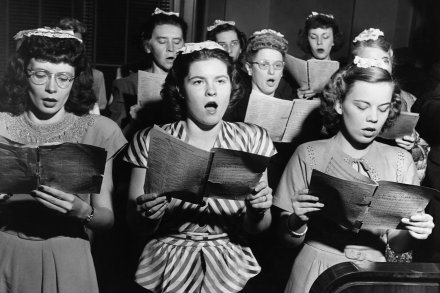
Like Ebenezer Scrooge, we are all visited by the Ghost of Christmas Past. At this time of year, people and events that have gone before feel closer at hand – both the personal and the historical. One of the main ways we experience this is through our tradition of Christmas carols. A recent YouGov survey showed that 14 per cent of Britons usually attend a carol service. Not as high as one would hope, but attendance rates are rising: in 2023, Church of England Christmas services alone saw a 20 per cent leap in attendance. I sense 2025 is already continuing the trend. Yet many churches will be pointlessly squandering the opportunity by continuing a fad which both turns off newcomers and lets down regulars: modernised Christmas carols.

I’ll miss the unintended hilarity of the round robin

‘Dearly beloved friends and family, well, what a year it’s been! Where to start?! The big event for us – aside from nurturing our preternaturally gifted children and enjoying multiple holidays in exotic locations – was the “K” for Rupert in the King’s Birthday Honours list. Mingling with the Beckhams at Buck House after the investiture was an experience we won’t forget in a hurry!!! Meanwhile, Sarah’s novel about Thucydides is doing rather well in the Kindle charts and Agatha, Mungo and Antigone continue to impress…’ A few years ago, by this point in Advent, many Spectator readers would have received a pile of similar missives tucked into Christmas cards.

Will I ever be a juror?

David Lammy’s proposal to do away with jury trials for all but the most serious offences has a consequence which hasn’t so far been aired in national debate. It could deprive me of the chance to bang up some evildoer. Whoops! Saying that probably won’t help me realise my ambition. I think it was the wonderful Mary Killen who once suggested to an anguished correspondent, worried that his holiday would be ruined after being selected for jury service, that he write to His Majesty’s Courts and Tribunals Service saying pretty much what I have just said. In return, she wrote, he should expect a letter informing him that actually he wouldn’t be needed after all. But Gawd, have I been waiting a long time. It was 41 years ago that I first became eligible for jury service.

Let the Beatles be

Like most freelance writers, I have a notepad full of jottings which come under the loose category of ‘Ideas I Probably Won’t Get Round To Doing As I Doubt Anyone Will Be Interested, They’re A Bit Rubbish Anyway And It Probably Wouldn’t Pay Much’. Around halfway down this list is a book provisionally entitled A Hard Day’s Fight, in which I espouse my opinions on a plethora of Beatles-related debates, and add a few new ones of my own.

The tyranny of parcel delivery companies

Once upon a time, post was delivered by a postman or postwoman. Over the past two centuries, this quaint initiative augmented a sense of community and invested early mornings with at least fleeting human contact. These days, decades after the slow demise of letter writing, a postman is now a rather recherché figure and, thanks to Royal Mail price hikes, a symbol of luxury, despite the downgrading of his once resplendent red and blue woollen frockcoat for a synthetic combo including all-weather shorts.

Put Christ back into Christmas cards

It’s that time of year when the cards landing on the doormat compete for the title of most fatuous. Will it be a reindeer spouting an obscenity, or a painterly robin perched on a frosted gatepost in snowy landscapes? Might it be a sanitised cartoon of a coach and four outside a snow-encrusted inn, bright yellow lights glowing from within, a kind of Pickwickian fantasy of Victorian yuletide? Or will it be a trio of children around a scarfed snowman, or a Christmas tree, perhaps? Most likely it will be a sclerotic Father Christmas, or a bright Santa (that’s with a silent ‘t’) as he’s now increasingly known, dominating the foreground or flying through the air on his sledge over a snowy landscape, even though it never snows any more.

Benefits Britain, mental health & what’s the greatest artwork of the 21st Century?

23 min listen

‘Labour is now the party of welfare, not work’ argues Michael Simmons in the Spectator’s cover article this week. The question ‘why should I bother with work?’ is becoming harder to answer, following last week’s Budget which could come to define this Labour government. A smaller and smaller cohort of people are being asked to shoulder the burden – what do our Spectator contributors think of this?  For this week’s Edition, host Lara Prendergast is joined by opinion editor Rupert Hawksley, arts editor Igor Toronyi-Lalic and columnist Matthew Parris.

Bring back the album

Usually when my tweenage sons ask about relics from my 1990s adolescence – ‘What’s a landline?’ ‘What’s a phone book?’ – we’ll have a good laugh about these obsolete artefacts of the not-so-distant past. But last year when my ten-year-old asked about ‘Immigrant Song’, which he’d heard on the soundtrack to a Marvel movie, and I replied, ‘Oh, I think it’s on the third Led Zeppelin album’, his response left me winded: ‘What’s an album?’ What’s an album? The horror! How had this abject failure of parenting happened? I’ve raised my kids in as analogue a household as possible, with piles of books, newspapers and magazines on every surface. I’ve limited screen time and kept them away from smartphones.

Is it over for antiques dealers?

It is estimated that, sometime in the past few months, the content on the internet produced by AI finally overtook content produced by the human mind. In other words, if you go online these days – from YouTube to X, from Facebook to TikTok to can-that-really-be-a-fetish.com – you are more likely than not to be looking through, gasping about, or getting horribly enraged at something created by a silent machine. And I am afraid to say The Spectator, at least in this article, is not going to be an exception. What I am about to tell you, or show you, is partly written by AI – in this case GPT5. However – of course, there is a however – I have a good reason for dousing you with ‘AI slop’. I want to prove that it isn’t always slop, certainly not when it comes to antiques.

The horror of the festive period

I was driving my daughter to school recently when we tuned into Heart Breakfast. A caller was attempting to answer five Christmas-related questions that, if successful, would mean that the countdown to the big day could ‘officially begin’. They weren’t hard but when the questions were answered correctly, there was pandemonium in the Heart studios. Everyone gushed with excitement and wished each other a Merry Christmas, co-host Amanda Holden cried, and the first of very many broadcasts of Mariah Carey’s ‘All I Want for Christmas’ began. It was 10 November – more than six weeks before Christmas Day. It was so unseasonably warm that people were still in shorts. The mind boggles. As I’ve aged, I’ve grown more curmudgeonly about Christmas.

2025 has been a fantastic year for music

Norman Lebrecht, who attends concerts as frequently as falcons swoop over St John’s Wood, has declared 2025 to be a terrible year for music. We are at the mercy of political activists, he thinks, and he has a point. Zealots, particularly those who pursue pro-Palestinian causes, are relentless troublemakers for whom an undefended concert hall or opera house offers an easy target for protest. But for this concert-goer, 2025 was a wonderful year, in terms of quality and variety. So far the inventory reads 43 concerts and nine operas. Not the grandest of totals, and nowhere near a personal best, but a decent tally – with power to add, too. December is full of plums, including a first-ever Messiah.

Would you pay for your office Christmas party?

If Christmas is a time for giving then it seems the message isn’t getting through to nearly enough office managers. For the umpteenth year running, I’m getting the annual stream of resigned-sounding complaints from friends who have office-based careers. Office life has its perks, of course; unlike my mostly-bed-and-airport-based freelance life, you actually know what you’re going to be paid at the end of each month. But my decision to accept the Faustian pact of being a sole trader never feels more validated than when my pals tell me about the plan for their office Christmas party – and the demand that they pay for it themselves.

The march of the useless machines

In search of coffee on my way to work the other day, I stopped short mid-way into a branch of a popular coffee shop when I noticed the digital ordering screens. Nothing will lose my business faster than being asked to queue twice and do the work of someone else for something simple. But these ordering screens seem to be becoming ubiquitous in our towns and cities, forcing those of us who have actually come into the office, likely to sit in front of a screen, to spend our lunchtimes also staring at a screen scrolling through options, when there is an actual human being standing behind a counter a few feet away with nothing to do.

Hitler and Churchill: the artists at war

Winston Churchill and his arch enemy Adolf Hitler didn’t have a lot in common, but one passion they did share was painting: both the heroic wartime prime minister and the genocidal Nazi dictator were keen amateur artists. While auction houses are reluctant to handle or sell Hitler’s landscapes for obvious reasons, Churchill’s pictures have vastly increased in value since his death. One study of a Moroccan mosque, which the great man painted after the Casablanca conference in 1943, was acquired by actors Angelina Jolie and Brad Pitt when they married. After they divorced, Jolie sold the picture in 2021 for £7 million.

Radiohead are joyless

Last week a Radiohead-head friend offered me a ticket for the last of their run of shows at London’s O2 Arena. The poor, deluded fool had paid several hundred quid and was looking to recoup. I politely declined, saying I would rather suffer from decompression sickness. My friend was not amused – but then that’s Radiohead fans for you; liking the band is a serious business. The band is currently on a mega tour of Europe and the reviews have been mixed. Some fans complain about the relentless flashing imagery, while others have pointed out that hanging gauze curtains around a circular stage might not be the best way to feel close to your heroes. Not that they’d be missing much. I mean, you’d hardly describe Radiohead as flamboyant showmen.

So what if Nigel Farage was the school bully?

There may well be, somewhere in this nation of ours, a long-established succession of sensitive, emotionally aware 14-year-olds who can appreciate and denounce the impact of bullying. But, honestly, none of them went to my school.  It doesn’t sound like there were many of this cadre at Dulwich College half a century ago either. At least, not if we believe the recent Guardian ‘scoop’ which claims, thanks to the testimony of Nigel Farage’s fellow pupils (much of which was made public years ago), that the Reform leader was a racist, hate-fuelled youth who taunted anyone of a different faith or ethnicity.

How to save the King’s English

When a survey of 10,000 teachers revealed this month that Britain’s primary school pupils are increasingly relying on Americanisms (the Times front page declared ‘Trash-talking children are sounding like Americans’) I realised immediately what we needed. Rex Harrison. And if not Rex Harrison himself, then a dose of arguably his greatest role – that of Henry Higgins, the cantankerous professor of phonetics who first burst into the national consciousness in 1914 with the London premiere of Pygmalion.

Inside the mind of a modern-day heretic

When I was growing up, it was generally accepted (unless you were a football hooligan) that, however much you disagreed with someone, they were entitled to their opinion. You listened, occasionally interjecting, and then made your case – sometimes forcefully. In the end, you might agree to disagree, but you didn’t harbour any enmity. These days, the idea that a person is free to hold their own beliefs, especially if they run contrary to your own, is considered laughably old-fashioned. The aim now is to silence that individual. If necessary, you eviscerate them, figuratively – usually online. Sometimes, tragically, their views are deemed so unpalatable that they’re silenced for good.

The best American band you’ve never heard of

Earlier this month, the best rock band to have come out of America in decades played London’s Roundhouse in front of 3,000 very excited British fans, all of whom sang along to every song the Alabamans played. It was the best gig I’ve been to in years, mainly because the Red Clay Strays are musically so damned good and that smart British audience got everything they were offering. It had that rowdy, joyful atmosphere that Faces gigs did in the early 1970s. Stay with me, Spectator readers.

Robert De Niro has a serious case of Trump envy

The past few weeks has seen the pleasing spectacle of beautiful female film stars (Sydney Sweeney, Keira Knightley – even the previous Trump Derangement Syndrome sufferer Jennifer Lawrence, who once said that an orange victory would be ‘the end of the world’) refusing to toe the accepted Hollywood line on politics, be it by not kowtowing to trans activists or not accepting that everything is racist. Lawrence actually said: ‘Election after election, celebrities do not make a difference whatsoever on who people vote for’ – or as I wrote here in the spring: ‘How dim would a political party need to be to understand that not only do celeb endorsements not work, but have an actual repelling effect?

Have we learned anything in the 30 years since Leah Betts died?

In the mid-1990s, ecstasy was a drug of the suburbs. My friends and I, all A-level students and shortly to become beneficiaries of the final years of higher education that didn’t come with tuition fees, did not fit the model of ‘drug users’ that the media, still in thrall to 1980s heroin hyperbole, fixated on. When we took ecstasy, it was in the clipped gardens of semi-detached houses that had been vacated by parents for the weekend. We popped pills in beer gardens, in rickety small-town clubs with swirly carpets and fogged mirrors or, in summer, in the sun-bleached parks of central Chester. We cared not for the risks, judging them to be inconsequentially small compared with necking a bottle of vodka or even driving without a seatbelt.

I’m the heir to Manhattan

I’m owed around $680 billion. Some 77 acres of downtown Manhattan belong to the Carter family, according to a letter written in 1894. Wall Street, Broadway and One World Trade Center – they all sit on a plot that is, by rights, mine. Yet here I am, grumbling about what ought to be in the pages of The Spectator. What went wrong? The story goes something like this. Shortly before independence, a pirate called Robert Edwards was licensed by the British to hunt down Spanish ships. He was so successful that the Crown gave him a slice of Manhattan as a reward. Edwards leased the land for 99 years to two brothers and subsequently died, lost at sea. That lease expired in 1877 and was supposed to be apportioned off to Edwards’s heirs. But that never happened.

What happens when there’s nothing left for AI to scrape?

There are several class actions going on against developers of Large Language Models. Jodi Picoult, George R.R. Martin, John Grisham and several other well-known authors are among those engaging in long-drawn-out lawsuits with tech companies such as Meta (who developed the chatbot LLaMA), OpenAI (who developed ChatGPT) and Google DeepMind (who developed Gemini). These companies, without seeking permission (imagine!), used books, newspapers, websites and other text sources to generate datasets to train their machines. The lawyers for these tech companies claim it was ‘fair use’. No one actually copied and resold anything, they say; it was used to train, and only to train.  One of my novels was ‘scraped’ by Meta, and features, in a tiny way, in the lawsuit.