Spectator Life

Spectator Life

An intelligent mix of culture, style, travel, food and property, as well as where to go and what to see.

Taylor Swift is increasingly horny and increasingly mean

Time was, posting anything negative about Taylor Swift would be personally dangerous, given the famous passion, obsessiveness and sheer numbers of the Swiftie fandom. In recent years, the great and the good have also piled into Swiftiedom. Her 2024 Eras tour was a must-attend photo opp for royals, senators and prime ministers’ wives (recall Victoria Starmer’s free tickets to two concerts at Wembley). The V&A hired a curator for Taylor Swift ephemera. Academics have lauded her: Harvard poetry professor Stephanie Burt taught a class on Swift last year and has a forthcoming book out called The Poetic and Musical Genius of Taylor Swift.

Has Taylor Swift broken music’s last taboo?

As a woman in my early thirties, it is my God-given right – arguably my duty – to have an opinion when Taylor Swift releases an album. And it’s a role that I’ve always performed without compunction. But on this occasion – the release of album 12, The Life of a Showgirl, my ability to get into the weeds (does ‘The Fate of Ophelia’ represent close text analysis of Shakespeare?) was hampered by my shock at one particularly audacious lyric.  Previous albums have had the the odd raunchy moment. So when, on this new album, she sang ‘His love was the key that opened my thighs’ in a song titled ‘Wood’, I was unmoved.

Gays won’t mourn the death of G-A-Y

My colleague seemed surprised that I replied ‘no’ when asked if I was sad at the news that G-A-Y bar – a staple of Soho for decades – was closing. A more intelligent answer would be that the closure of any ‘gay space’ is sad, but the truth is this is not somewhere that many in ‘the community’ will mourn. I tried to think about the last time I went to G-A-Y and I can’t remember. I texted a dozen friends and they can’t remember either. I guess that speaks to part of the problem. Jeremy Joseph, the owner of the bar, announced the closure on social media on Wednesday. But the speed of its closure this weekend, just days after the announcement, is surprising. Joseph says that ‘Old Compton Street has lost [its] LGBT identity’.

The banality of Emma Watson

For a long time it was handy dinner party fact that Harry Potter and the Deathly Hallows Part One (2010) briefly filmed at my late grandparents’ house, and appeared as Hermione Granger’s house in the film. Even this required extensive exposure of my grandparents to Warner Brothers’ lawyers, the film crew and, of course, to young Emma Watson herself. Neither of my grandparents had heard of Harry Potter before they were approached, and throughout filming, they failed entirely to notice her, though there was some vague recollection of ‘that rather mousy girl’ from my grandpa, who was far more taken with Susan, the 60-something woman in charge of props. This description stayed with me as Watson’s star rose and rose, plateaued, and turned gender political.

There’s something vulgar about Freemasons

Goodness, isn’t there something a bit hoary about the notion that members of the Metropolitan Police may have to declare if they’re Freemasons? The idea has come up recently in the context of discussion on ‘declarable associations’ – those organisations you’re obliged to admit to belonging to if you’re a London copper.

Am I the target of a publishing scam?

Recently I’ve been bombarded with emails from people who apparently are keen to promote or market one or other of my children’s books. A few appear to have actually read a book of mine and to know the name of the characters, others clearly haven’t. What they all have in common is that the book in question was published some years ago. A favourite seems to be The Very Snowy Christmas, a picture book published in 2020. Carmen would like to make sure it’s ‘cherished, shared and remembered in the conversation of parents, educators and readers’. It’s ‘about legacy’, she says. Sarah seeks to connect my book to ‘curated reading groups, parent-child clubs, seasonal reading circles’. Martin wants to make sure my story doesn’t ‘just sell but echoes, lives, endures’.

Second-hand books tell the most surprising stories

It’s relatively common, I find, when opening a newly purchased second-hand book for the first time, for something to fall from its pages. Most likely this will be a branded bookmark or printed stocklisting paper from the dealer who sold it. But it’s not unusual to find something more interesting, something belonging to the book’s previous owner. Apparently the singer Nick Cave donated 2,000 books to an Oxfam in Hove this summer, and new owners of his paperbacks discovered old plane tickets and Post-it notes tucked inside. We serial readers of actual physical books are constantly in need of bookmarks and will grab at anything to hand to use as one.

The curious cult of solitude

The thing that really fascinates me about solitude is the need to talk about it. The contradiction seems lost on people. ‘I must tell you about the silent retreat I’ve just been on.’  ‘It was so nice to just sit with my thoughts for a bit.’ Solitude is the new wild swimming: if you don’t talk about it, did it even happen?   And I fear this habit is about to get a whole lot more irritating because the benefits of solitude – all fairly predictable – are increasingly being ‘studied’ and presented in quasi-scientific jargon. ‘It creates spiritual sustenance,’ writes entrepreneur and author Ari Weinzweig.

How to spot an AI wedding speech

Early in 2020, inquiries for our speech-writing services were arriving in their droves. From Westminster to Washington, weddings to wine tastings, people needed our help. We cancelled our weekends and prepared for life without a mortgage. Covid gave us our weekends back. And all the other days. Yet when parties and events returned, a significant chunk of our clients did not. It was weird. But this wasn’t a vaccine complication, just a new player in the market. Previously we’d only had to win business against other humans. Suddenly, we were faced with a competitor able to provide speeches for any occasion in seconds. ChatGPT was doing to us what PornHub had done to the top shelf in the local newsagent. We weren’t the only ones.

The decline of the Booker Prize

‘Prizes are for little boys,’ said Charles Ives, the American composer, ‘and I’m a grown-up.’ It’s a pretty sound rule of thumb. The prizes worth having are usually those which reflect a body of work, not a single achievement. Cary Grant, the greatest leading man in the history of cinema, never won an Academy Award. Neither did Alfred Hitchcock, who made a few half-decent films. They received ‘lifetime awards’ from the red-faced academicians, but those gestures merely endorsed William Goldman’s view that, in Hollywood, nobody knows anything. As Billy Wilder told the producer who asked what he had been up to: ‘You first.’ Nobody takes much notice of the Grammys, which were designed to reward commercial success.

Matthew Parris, Stephen J. Shaw, Henry Jeffreys, Tessa Dunlop and Angus Colwell

31 min listen

On this week’s Spectator Out Loud: Matthew Parris reflects on the gay rights movement in the UK; faced with Britain’s demographic declines, Stephen J. Shaw argues that Britain needs to recover a sense of ‘futurehood’; Henry Jeffreys makes the case for disposing of wine lists; Tessa Dunlop reviews Valentine Low’s Power and the Palace: The Inside Story of the Monarchy and 10 Downing Street; and, Angus Colwell reviews a new podcast on David Bowie from BBC Sounds.  Produced and presented by Patrick Gibbons.

Oscar Wilde would loathe Stephen Fry

‘I was born to play Lady Bracknell,’ Stephen Fry swanked recently, in an interview to mark a new production of The Importance of Being Earnest, running until January. I can’t be the only one to greet the idea of another round of Fry interviews with a desire to go to bed and not come out till it’s all over. But that would be a long hibernation. For Stephen Fry pronouncements are like professional tennis; it’s always open season. You can’t get away from the clown, particularly when he’s lecturing women on how they should feel about having great hairy men in mascara sharing their private spaces. Magnificently, J.K.

The evolution of the political animal

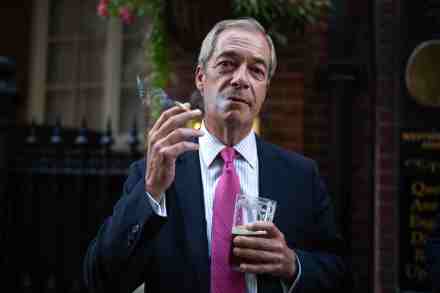
Most of our politicians themselves are not obedient, kindly and loyal. Similarities between candidates and their faithful cat or dog are few – but as trolls now deter supportive spouses and photogenic children from saccharine election leaflet photos, pets are increasingly becoming familial proxies. When Nigel Farage does a TikTok about his dogs Pebble and Baxter, thousands comment approvingly. But finding a family photo of the Reform UK leader is nearly impossible. And that, says Farage and many like him, is entirely deliberate. Political animals are not new. Caligula threatened to make his horse, Incitatus, a consul. Cardinal Wolsey’s cat is immortalised in a bronze statue in Ipswich.

Peter Mandelson’s greatest sin? Baby talk

There’s was so much to loathe and laugh at in Peter Mandelson’s contribution to Jeffrey Epstein’s ‘birthday book’ (which inadvertently has turned into more of a ‘burn book’). But the words ‘yum yum’ were, for me, in a league of their own. Whatever they were referring to – it could have been the peachy posterior of a pool-boy or a particularly perfect profiterole – they identified Mandelson as a practitioner of verbal infantilisation. For this alone, he deserved to be sent packing. I spent five months in hospital during last winter and spring, and though the nursing staff were generally excellent, we were oft spoken to like children in preschool.

Miriam Margolyes has nothing to say and is determined to say it

Miriam Margolyes is on the road, bringing joy to every corner of the kingdom, and aren’t we the lucky ones? It’s a kingdom she no longer has much time for, if she ever did, however hard the coiners of trite phrases try to dress her in the garb of a ‘national treasure’. When the tour is over she’s off quick-smart to a new life in Tuscany, where British folk who dislike their native land have always found a bed. There’s a book out as well, so there is no excuse for not paying attention. As dozens of chat shows have tried to persuade us, she is a bona fide ‘character’, fitting into the English pageant somewhere between Lady Godiva and a bearded lady. Have your tummy tickled as she farts merrily along the rolling English road.

Save our satire

When Henry Kissinger was awarded the Nobel Peace Prize in 1973, musician and satirist Tom Lehrer famously quipped that political satire had become obsolete. Today, many people under 50 would be hard-pressed to say who Kissinger was – let alone why the award was controversial. So perhaps, given recent events, it’s time to update the epigram: satire became obsolete the day an Irish comedy writer was arrested by five armed police officers and questioned for hours over a few offhand remarks he made on X. Personally, I never post anything on X. I don’t have the time or energy. And while I’m an implacable supporter of free speech, I also think it behoves us all to exercise discretion about what we say and write. Poking sticks into wasp nests will, inevitably, get you stung.

Bring back the big family

As a species we are richer than we’ve ever been before. We live longer. We have more food to eat than is good for us. We have abundance in all things. And yet we are no happier than we were. In fact, many of us are downright unhappy. Among our woes is an epidemic of loneliness. Some 8.4 million of us are now living alone in Britain, and more than 3.8 million report being chronically lonely. We lock up more people in our prisons than ever and we can see for ourselves the signs of friction in our society, one which is clearly not entirely at peace with itself. So somewhere we have gone wrong. And I think I know where. It’s our families. They are simply too small. The average number of children born per woman in England and Wales has fallen to 1.

The greatest writer you’ve never heard of

The recent commemorations surrounding the 150th anniversary of John Buchan’s birth – not least in The Spectator – have stirred up literary memories for me. Not of Buchan or his work particularly, I was a little too old for the glaring coincidences of The Thirty-Nine Steps when I read it in my twenties, but of a lifelong Buchan-admirer I knew slightly, the late author Peter Vansittart. Unlike many, Vansittart, a historical novelist among other things, took Buchan seriously, extolling ‘the romantic… the novelist, the adventurer… tolerant and humane.’ Buchan’s The Three Hostages he read every year, he said, as a kind of ritual: ‘curtains drawn, telephone unhooked, the fireside, the whisky, the old delight.

I’m beginning to question our gun laws

Whenever Europeans feel inadequate in relation to America, and have a yearning to console themselves, there is one subject that always comes up: the Second Amendment of the US Constitution, i.e. gun law. Yes, the Yanks may be richer than us. Yes, a dockworker in Delaware can earn more than a British cabinet minister. Yes, America has a dynamic economy and the world’s most powerful military, with a huge lead in science, tech and finance. But remember: ‘in Europe we don’t have mass shootings.’ ‘British children aren’t taught how to dodge bullets.’ ‘You may have Silicon Valley, but we don’t have lunatics wandering around Tesco with AR-15s.’ This feels even truer right now, as America reels from a horrific assassination, by a shooter on a roof with a rifle.

J.K. Rowling is a phenomenal plotter

As I write, a copy of The Hallmarked Man sits beside me. Not being on holiday, spending the morning reading a new detective novel would seem as louche as a pre-brunch martini. Not being David Niven, I’m making the book wait until at least after lunch. J.K. Rowling’s new book, under her pen name of Robert Galbraith, comes in at around 900 pages. I expect to rip through it smartly. I am not an ideal reader of detective fiction, nor the thrillers and mysteries that have a whodunit at the core of their tightly planned plots. My ability to figure out the murderer – even my interest in trying – is vestigial.

David Bowie’s roguish plans for a Spectator musical

David Bowie wrote a musical. Well, nearly. A cache of notes found in his New York apartment after his death indicates that he was planning a new theatre project in the final months of his life. The archive includes the phrase ‘18th cent musical’ among a collection of Post-it stickers filled with ideas and motifs. Creating a musical would have satisfied a lifelong ambition. ‘Right at the very beginning,’ he told the BBC in 2002, ‘I really wanted to write for the theatre. I could have just written for theatre in my living room but I think the intent was to have a pretty big audience.’ He seems to have chosen Spectator as the show’s title.

Britain’s problem? We’re too nice

Studying our national character and current malaise has convinced me that the root cause of Britain’s problems is that we are too nice. Compared with our nearest European neighbours, let alone with most other countries in the world, being British automatically confers a series of characteristics not generally shared elsewhere. For a start we are polite. We do not shove ahead of other people in queues like the Italians, nor do we scream obscenities at random strangers in the street as they do in New York, and buying a cup of coffee is not regarded as a personal insult by cafés staff, as it is in Paris, for example.

Why A Dance to the Music of Time has stood the test of time

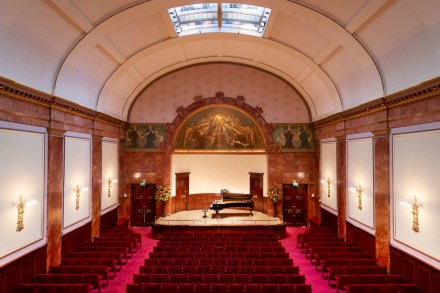
Fifty years ago today, a literary masterwork of the 20th century reached its conclusion with the publication of Hearing Secret Harmonies, the final volume in Anthony Powell’s 12-novel sequence A Dance to the Music of Time. Inspired by the painting of the same name by the 17th-century French artist Nicolas Poussin (which you, like Powell, can see at the Wallace Collection), the series began with A Question of Upbringing, published a quarter of a century earlier in 1951. This introduced us to the English narrator of the whole endeavour, Nicholas Jenkins (uncoincidentally he shares the Christian name of the painter, albeit with an Anglicised aitch), who attends a boarding school – unnamed but modelled on Powell’s time at Eton.

Peter Sellers and the comic tragedy of The Producers

It’s October 1994 and I’m rooting around in a garage in a non-descript LA neighbourhood, a few blocks from 20th Century Fox. The garage is piled high with clothes, cameras, audio tapes, reels of film and, in pride of place, a Nazi storm trooper helmet. This was the last resting place for a mountain of paraphernalia belonging to comedy legend Peter Sellers, who was born 100 years ago today. The house was owned by Sellers’s widow, Lynne Frederick, who had been found dead there just six months earlier. Now her mother lived there alone and was the keeper of the trove. After several G&Ts together, she agreed to allow me access. I was in LA filming a series of interviews for The Peter Sellers Story, a documentary for the BBC’s Arena.

The Stuarts were our worst monarchs

This year marked the 400th anniversary of the death of King James I of England (James VI in Scotland), the first monarch of the generally disastrous Stuart dynasty. By no means forgotten by historians, the anniversary was marked by no fewer than three heavyweight biographies, and headlines devoted to the King in the Times and the Telegraph. James’s son Charles I lost both a civil war and his head; his grandson Charles II presided over the plague, the Great Fire of London, and saw his fleet towed away by the Dutch; his second grandson James II lost the throne entirely and fled into exile. But in spite of this dismal record, of all the Stuart sovereigns, the first James was easily the worst and most disgusting monarch ever to have occupied the throne.

Why September feels like the true new year

Gardens are past their best, large spiders are appearing indoors, chill mornings herald coming mists, the days are not so long, and adverts have replaced barbecues with ‘back to school’ offers. Elderberries have turned a purple that fades into black, and soon will drop and stain the ground. The daily commute remains relatively quiet for another few days but summer, and the summer holidays, are coming to an end. For many of us, September feels more like a new year than January, long after our days of school and study. The cold days of January are much like each other; but at the end of August there is a palpable sense of change. Excitement and melancholy marry. Which one dominates probably depends on how happy you were at school or university.

No England flags, please – we’re Cornish

There’s been a lot of talk recently about flags, especially English ones. The start of the Women's Rugby World Cup – a good excuse to bring out the bunting – has coincided with a renewed interest in proclaiming national identity. Some might see it as an outpouring of patriotic pride, while others view it as a far-right provocation. But whether it's ‘Operation Raise the Colours’ or roundabouts painted red and white (although some bright spark in Birmingham managed to paint a Danish flag by mistake), if the sight of a cross of St George sends you into a panic, I have a suggestion: head to Cornwall. If my recent experience is anything to go by, you’ll be lucky to see a single English flag.

In defence of voice notes

From emails to ‘breaking news’ alerts to texts, our phones come under a bombardment of notifications these days. But there’s one kind that always brightens my day – the one that tells me that a friend has sent me a voice note. This, however, seems to make me unusual. ‘I don't want to hear your mini-podcast,’ complains Emma Brockes in the Guardian; voice notes are ‘self-indulgent’, sniffs Anniki Sommerville in the i Paper; and the Independent's Lucie Tobin denounces them as ‘rude’ and ‘invasive’. In the latest issue of The Spectator, Mary Killen advises a correspondent who’s had enough of them to update their WhatsApp profile ‘to clarify their tastes… “please do not leave voice notes”’.

Taylor Swift is saving America

Elon Musk and Taylor Swift fans rejoice! America’s birthrate is saved! News of the engagement between America’s reigning sweetheart, Taylor Swift, and jock, Travis Kelce, can mean only one thing: a millennial marriage boom is upon us. And with it, natalists will hope, an impending baby boom. I’m no Swiftie. Nor am I one of those men who’s organised his entire political identity around hating the singer. Still, I can’t deny that I feel uplifted by the jubilation erupting across the US and beyond this week. Why? Because Taylor and Travis are taking a stand against pessimism. America’s permanently heartbroken oldest daughter has escaped her fate (for now). These are people taking the leap! Committing to something! How exciting is that?