Spectator Life

Spectator Life

An intelligent mix of culture, style, travel, food and property, as well as where to go and what to see.

‘LinkedIn speak’ is a disgrace

The past few years have seen a slew of devastating style assaults on the English language known as ‘LinkedIn speak’. You know the type of word salad: ‘synergise’ instead of ‘combine’, ‘ideated’ instead of ‘thought of’, ‘holistic’ instead of – well – looking at something as a whole. Alarmingly, there is now an app, Kagi Translate, that allows you to type any sentence and it will deliver it for you in this wretched patois. For instance, write ‘I went to the zoo,’ and Kagi gives you: ‘I had an incredible opportunity to observe high-performing teams in a diverse ecosystem and reflect on the importance of adaptability and strategic positioning.’ Go on, try it.


Long live the bottomless brunch

Bottomless brunch: it sounds disreputable, to start with. There’s the suggestion of indecency; that lower garments are optional, perhaps on the part of the poor waiting staff, like those ‘Butlers in the Buff’. And ‘brunch’ is surely the louchest of meals, invented purely so that people could roll into a restaurant after a long lie-in and commence drinking before noon. There is none of the briskness of ‘lunch’ or the cosiness of ‘dinner’. No one’s going to go for a ‘constitutional’ after brunch. No, they’re going to have ‘just one more’… I’ve had some lovely brunches in my time.

Don’t let AI read philosophy for you

The German philosopher Arthur Schopenhauer (1788-1860) once wrote: ‘[T]he man who feels himself drawn to philosophy must himself seek out its immortal teachers in the quiet sanctuary of their works.’ That’s easier said than done: philosophical classics have a terrible reputation outside ivory towers – as big, boring, difficult books, filled with obtuse theorising about irrelevant problems, their covers featuring ghastly old men staring miserably out at the reader. Books about philosophy are hugely popular today, most of which repackage the thoughts of past thinkers for time-pressed readers – but I suspect not many people transition from these guides to the great works themselves, especially when AI can do all the hard reading for you.

Len Deighton taught British bachelors to cook

Men who cook Spanish omelettes look a bit gay. Or at least that is how American film executives reacted to Harry Palmer cooking in The Ipcress File. The cable said: ‘Dump Michael Caine’s spectacles and make the girl cook the meal. He is coming across as a homosexual.’ This was 1964, when London was the cultural centre of the Swinging Sixties. In the final cut, Palmer asks what she will report back about him. She replies simply: ‘That you like girls … you also like books, music, cooking.’ The Americans had misread the moment. This was a modern heterosexual man, self-sufficient, urban, and quietly competent, but one whose lifestyle still had to be explained.

The puntastic pleasures of wordplay

If you tweeted about a particular snooker referee being the ex-boyfriend of one of the women in The Human League, and a friend of yours replied with ‘Don’t cue want me baby?’, how would you react? Would you groan, sneer and dismiss the pun as the lowest form of wit? Or would you – like me – laugh out loud and feel a surge of joy at the beauty of the wordplay? If the latter, come and stand with me in defence of puns. Not in a ‘guilty pleasure’ way, either, but as a proud statement that puns are wonderful and important. I hate the snobbery that surrounds puns, the way they’re seen as second-rate language. A good pun – be it a joke, a newspaper headline or simply thrown into conversation – is everything language should be about.

Japan’s fascination with Andrew Mountbatten-Windsor

The Japanese are fascinated by the scandal concerning the aristocrat formerly known as Prince Andrew. The main themes resonate powerfully. The concepts of duty, shame and being a burden to one’s family are deeply woven into Japanese culture and so embedded in the language that it is hard to express yourself without touching on them. There are at least four expressions for ‘black sheep of the family’ in Japanese and one of the very first kanji I learned was for the word ‘muru-hachibu’ (eight against one) which means ‘sent to Coventry’ (shouldn’t that be Norfolk now?).   There might also be a sense of ‘there but for the grace of god’ relief for the Japanese in watching a fellow constitutional monarchy floundering.

The vandalism of Banksy

The forces of taste, fashion and regard have long colluded in a disconcerting way around Banksy. He is an ‘artist’ that the great and the good of the auction world take as seriously and reverently as your more common or garden fan who gazes upon his grim graffiti and feels they really ought to like it. In a saner world, in which everyone had not colluded on the premise that Banksy is Important and Good, he would be seen mainly as a vandal and a nuisance.  His vandalism is lucrative in part because it is a parade of ‘subversive’ clichés, so saccharine and obvious they hurt. Thus, we have little black stencils depicting policemen kissing, the House of Commons filled with chimpanzees, or a girl reaching after a heart-shaped balloon.

Where would you put a blue plaque?

Beulah Hill in Norwood is an overwhelmingly uninteresting stretch of South London road; the kind of anonymous thoroughfare that can induce mild depression on a day of drizzle and delayed buses.   Yet, as is often the way with these tedious parts of suburbia, visual perseverance can reap rewards. It was only last week, on my hundredth trudge down the hill towards home, that my fiancée spotted a blue sign above the doorbell to a typically fusty looking mansion block.   Stalking up the driveway to look closer, I read that this was the spot where, 60 years ago, the Jules Rimet trophy (aka the World Cup) was found in a hedge by a mixed border collie dog named Pickles.

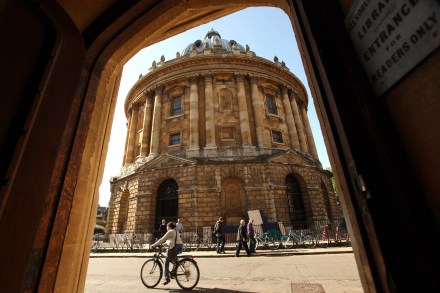
The problem with Mandelson, Maxwell and Oxford University

Peter Mandelson — twice-resigned Cabinet minister, architect of New Labour and, until recently, His Majesty’s Ambassador to the United States — went to the University of Oxford from Hendon County Grammar. Mandelson read PPE at St Catherine’s College from 1972 to 1976. Young Mandelson’s impressions of Oxford, as detailed in Donald Macintyre’s Mandelson: The Biography, are mixed at best: Hertford College ‘stank of cabbage’ while St Edmund Hall was ‘sort of thirteenth century’, the Union ‘hoorayish’ and ‘off putting’. With too many Peters in his year, Mandy was known, simply, as ‘Benj’.   Fast forward some 40 years and Mandelson was awarded an honorary fellowship by St Catherine’s College in 2018.

‘Art is not born in nice conditions’ – on the runway at Ukrainian Fashion Week

Flitting between runway shows, new collection previews and cocktail receptions under the blaring sound of air raid sirens is now the norm at Ukrainian Fashion Week. Following Russia’s full-scale invasion of Ukraine on 24 February 2022, Ukrainian brands travelled abroad to fashion weeks in cities including London, Berlin and Budapest to exhibit collections, before coming home to Kyiv in September 2024.  After covering international fashion weeks for almost a decade, attending the return of Ukraine Fashion Week to Kyiv for British Vogue was naturally unlike any other fashion happening.

The perils of London: a beginner’s guide

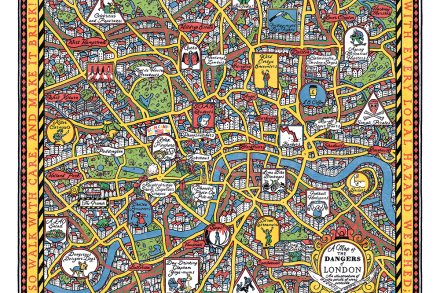
An interesting new perspective on London is doing the rounds. Our capital city is being advertised as a paradise. London, it seems, is suddenly a place where every building is a Wren, where every sunset is a Turner, where every neighbourhood is Notting Hill. The sentiment has even got a name – ‘Londonmaxxing’. It’s been invented by tech accounts on X who got excited by the long queues at AI events run by Vercel earlier this month. There has also been speculation that a disgruntled-with-Trump Anthropic could move to London. As much as I love London, like any true sceptical Londoner, I suspect bollocks. Look at the map by our resident artist J.G. Fox. Anyone considering the move should in fact be sniffer dog-aware of a multiplicity of perils.

The sinister future of AI toys

There is a moment in a recent University of Cambridge study into Artificial Intelligence in children’s toys that unintentionally recreates one of the most disturbing scenes in film history. The report, AI in the Early Years, published earlier this month, involved observing 14 children aged three to five as they played with a conversational AI soft toy called Gabbo, a device that looks like a Nintendo Game Boy that has been embalmed in pastel fur.  During one interaction recorded in the study, a five-year-old tells its stuffed companion: ‘I love you.’ Where Kubrick gave us ‘I’m sorry, Dave. I’m afraid I can’t do that.

Club culture has moved to the kitchen

It’s a Friday evening, work has finished and pre-drinks have kicked off with cheap spirits and even cheaper mixers. Outfits have been chosen strategically to cope with the frosty commute and a sweaty dance floor. Discussion is dominated by tonight’s head-lining act. It’s a routine that has existed since the birth of club culture. Except we are not waiting in KOKO or Heaven or another of central London’s famous nightlife venues. Instead, the DJ is my best friend and the venue is his kitchen.  More than four decades since the birth of modern clubbing and – we are told – British nightlife is facing an existential crisis. The industry reportedly contributes around £112 billion to the economy every year – around 5 per cent of GDP. And yet, it is at breaking point.

Spare us the girls’ weekend, Meghan

I almost spat out my toast (smothered with the As Ever, The Raspberry Spread Trio - ‘Made To Keep On Hand And Enjoy Often’ $42 - natch) in pure molten anticipation when I read that my role model in spreading jam to flour, sorry, speaking truth to power, will be hosting a women-only weekend ‘retreat’ in Sydney during her forthcoming Australia jaunt, with tickets ‘a steal' at £1,700. I already had my credit card in my hot little hand until I remembered that though I love to lunch tête-à-tête with one lady, being in the company of many women at once - with not one awful toxic man around - makes me feel like drawing crude approximations of penises on fragrant toilet doors after around half an hour.

Don’t count out hereditary peers just yet

The ermines have been mothballed; the coronets stowed away. The United Kingdom has, at last, thrown out the hereditary peers from Parliament. This levelling process, begun by Tony (not yet Lord) Blair, and stymied for decades, has come to an end. It’s as if the lion and the unicorn had been torn from the royal coat of arms, and ordered to find other work. No longer will we gawp at the peers processing at the opening of Parliament, arrayed alongside their glittering spouses, their titles and names a reminder of centuries of history. Our parliament - the most ancient in the world - has lost that lustre for ever, and will increasingly resemble the bland, managerial talking-shops of Europe.

Gail’s is Pret for the super-rich

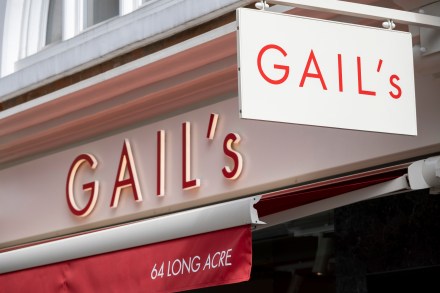
What do you consider the distinguishing marker of wealth in Britain today? Is it privately educating the kids? Is it the £60,000 Tesla parked out front with a black cable running to a gleaming box attached to the wall? Let me tell you what I think signifies real wealth today: it’s eating at Gail’s.  Because you can’t have failed to have notice the conspicuous unaffordability of Britain’s fastest rising bakery – the one that began life in London in 2005 and now has some 170 branches nationwide.   At Gail’s a box of five of their cookies costs £18. You can buy a kettle in Robert Dyas for that — and not a bad one either.

Why the ‘school wars’ are overblown

The recent ‘school wars’ farrago was an act of madness – or, more accurately, Madness. ‘All the kids have gone away/Gone to fight with next door’s school/Every term that is the rule’. So the Camden ska band sang on ‘Baggy Trousers’, their 1980 classic about their school days. Schoolchildren organising to duff up their contemporaries is not new; social media has made it easier for pupils to connect, parents to panic.   For the uninitiated, a TikTok trend thought to have begun in Hackney last month has seen posts pop up across the country – from Nottingham to Watford – encouraging children to meet for clashes between different schools organised into ‘red’ and ‘blue’ teams.

We’re all ‘sapiosexual’ now

What do you think of when you think of Jameela Jamil? (I realise that I may be talking to the wrong demographic here, but bear with me, and I promise I’ll broaden it out.) I think of hair – lots and lots of shiny, black, beautiful hair. Personally – and I thought this long before telogen effluvium, caused by the trauma of spinal surgery, made half of mine fall out and turn the rest grey – I don’t believe I’ve ever seen hair as lovely, not even on the great stars of Hollywood like Veronica Lake. If ever anyone had ‘pretty privilege’ (a term which I find censorious and covetous; attractive people should get prizes, just like brainy ones do) it’s Jamil.

Britain is broken but the parking tickets keep coming

I live on a road where parking is forbidden. This has not stopped any of us from needing cars. Instead, we crowd each evening into the small cul-de-sac opposite, where ten vehicles can park legally, and 15 can park optimistically. The sign is unambiguous: ‘Three hours. No return within two.’  Most days I manage to comply. Some days I even set an alarm. The cruelty is that nothing happens for ages. Weeks pass. Months. You begin to suspect you have cracked the system or even that the sign is entirely ornamental, the sort of bluff recognisable to anyone familiar with the steady arrival of ‘Final’ notices.  Then, without warning, that little yellow envelope appears on your windscreen. The wardens have descended like a pack of seagulls on an unattended tray of chips.

Bring back the book launch

Last week, I had the pleasure of heading to the Freud Museum in Hampstead for the launch of Zoe Strimpel’s much-discussed new book Good Slut. Not only was the venue one of the most splendid I’ve been to for a party of this kind, but the guest list – which included The Spectator’s esteemed editor – was suitably glittering for a Thursday evening in early March. Everyone was on top form, much jollity was had, and by the time the author gave a suitably witty speech from the top of the staircase that Sigmund Freud once ascended and descended, a fabulous time had been had by all.  Would that this was the norm for all book launches.

Stop talking rubbish about Radio 3

‘Listen to this drivel’ is not the combination of words a radio presenter longs to see in reference to their exertions, but it’s what The Spectator associate editor Damian Thompson had to say about me on X recently. I’d provoked Thompson’s ire by telling people what was coming up that morning in my Radio 3 programme, Essential Classics, in a one-minute video delivered with a somewhat unserious tone. Thompson did later apologise for being rude but declared: ‘It’s just awful to hear the new house style of Radio 3.’   Thompson joins other Spectator writers who have their collective underwear in a twist about the style of presentation on Radio 3.

Tracey Emin’s victimhood is a poor foundation for art

It was a given that the critics would indulge in emotional onanism when they covered the Tracey Emin retrospective at the Tate Modern – apt enough when you consider the sexual content of so much of it. But what surprised me was that it wasn’t just women. For the art is almost entirely about Being Tracey: her abortions, her sexual abuse as a teenager by horrible men, her diaries, her cancer with pictures of the bloody stoma, her famous unmade bed, with its used condoms, granny slippers and teddy (it sold in 2014 for £2.5 million) and her death mask, which was done in life … obviously. That, you might have thought, would put off the men.

The ‘slimmed down’ monarchy is fast disappearing

Reports that Princesses Beatrice and Eugenie have been banned from the Royal Ascot carriage procession raise an important question: what is the optimum fighting weight of the Royal Family?  For years now, we’ve been hearing about King Charles’s plans for a ‘slimmed down’ monarchy. Prince William, too, has declared that ‘change is on my agenda’ — which presumably means fewer floppy hats and chests stuck with improbable numbers of medals on the balcony at Buck House.   In the current torrid climate, few would demur that removing titles, cash and crash pads at Kensington Palace for the freeloading grifter elements of this extended family is a bad thing.

Was Picasso a Catholic artist?

There’s a new exhibition on Picasso which is actually transgressive: Picasso and the Bible. That promises to stir things up among worshippers of the great man, who was known for being Republican, Communist and atheist.   The premise of the exhibition – which was opened this week with great fanfare at Burgos Cathedral in Spain – is that an artist can leave the Church, but the Church never really leaves him. The real theme of the exhibition isn’t Picasso and the Bible; it’s Picasso and Catholicism, a more explosive subject.

Serge Gainsbourg would not survive modern France

Yesterday marked the 35th anniversary of the death of Serge Gainsbourg at 62 from a heart attack. The only real surprise is that he ever made it to such an age. Gainsbourg, whose unlovely but strangely beguiling countenance can best be likened to a garden gnome left outside in the rain for too long, was a performer and composer who epitomised French popular music of the 1960s and 1970s in all its bizarre contradictions. Compared to such wholesome British figures as Cliff Richard and Tom Jones, Gainsbourg was a seedy, almost sinister figure whose demeanour gave off an odour of stale aftershave, Gitanes and day-old red wine.  That he was also a songwriter of genius who has influenced countless other musicians – everyone from Jarvis Cocker and Radiohead to R.E.

How Gen Z became indebted to ‘doom spending’

Man on the television says you’ll never pay off your student loan. Lady on social media says the UK has the worst unemployment crisis since 1932. Politician says you’re off to war. Sally from HR says the company is ‘restructuring’ and fires you over a Microsoft Teams meeting. Science guy on Instagram says there’s a new disease in India. Ex-girlfriend says you’ve let yourself go and your body looks like dropped yoghurt.  In short, you’ve got a lot going on. So, what can you do about it? Well, according to some, the answer is simple: spend. Spend what you don’t have. Spend on what you don’t need. Spend until your overdraft is gasping for air, and then spend some more.

The joy of a launderette

A broken-down washing machine is generally regarded as definitely a Bad Thing. There is the expense and hassle of repairing or replacing the machine, the prospect of a flooded kitchen, and the sudden realisation that your underwear stock is … less abundant than you hoped.   But when our washing machine expired recently, I was secretly thrilled because it gave me an excuse to go to one of the few places on the planet that always makes me happy: the launderette.  I feel soothed from the moment I walk into one of these womb-like environments. I love the warmth, the smell of detergent and the air of cleanliness.

How much will Mandelson pay for a good barrister?

When the cops came calling to arrest Peter Mandelson this week, he was already lawyered up. And he’s secured the services of the best – and most expensive – lawyers in town. Mandelson is now staring down the barrel of a legal bill running into the hundreds of thousands of pounds – very possibly the millions, given the mammoth number of documents in the Epstein Files his lawyers will have to trawl through. Add in the forensic examination of government emails swapped in the build-up to Mandelson’s catastrophic appointment as British Ambassador to Washington – and the lawyers’ tills will be cheerfully ringing away.

Does The Spectator hate the Welsh?

This St David’s Day weekend, I devote this column to a celebration of the world’s most under-appreciated ethnic group. Under-appreciated, certainly, in the pages of The Spectator, whose editorial policy suffers from a Pictish delusion that its readers are eager to hear of the appointment of a new procurator fiscal in Ayrshire, or political divides on Pitlochry council, while having zero interest in the finer country to the west. Sometimes mere exposure to Wales may be enough to inspire greatness, as in the work of Alfred Russel Wallace or Led Zeppelin Now in celebrating Wales, we need some ground rules. Since the Welsh are much more agreeable than other Celtic tribes, they are widely content to have sex with people from other cultures and ethnicities.