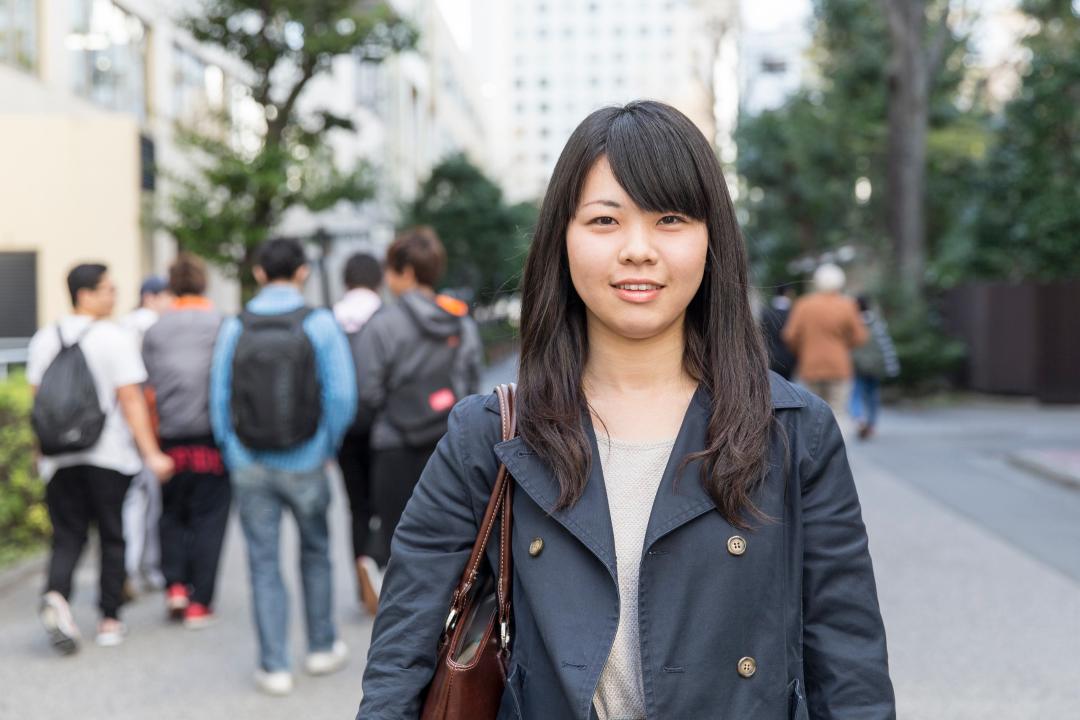
One of the joys of living in Japan is the lack of wokeness. It is not that it doesn’t exist – there is a Tokyo Pride, the odd Gaza protest, and gender equality is increasingly discussed – it’s simply that the concept doesn’t quite translate. Like the strikes that only take place at the weekend so as not to inconvenience customers, woke protesters here are tiny in number, generally polite and devoid of the threatening aggressiveness of the West. And diversity isn’t really a thing. Maybe that’s another reason tourist numbers have exploded. You can get away from all that here…
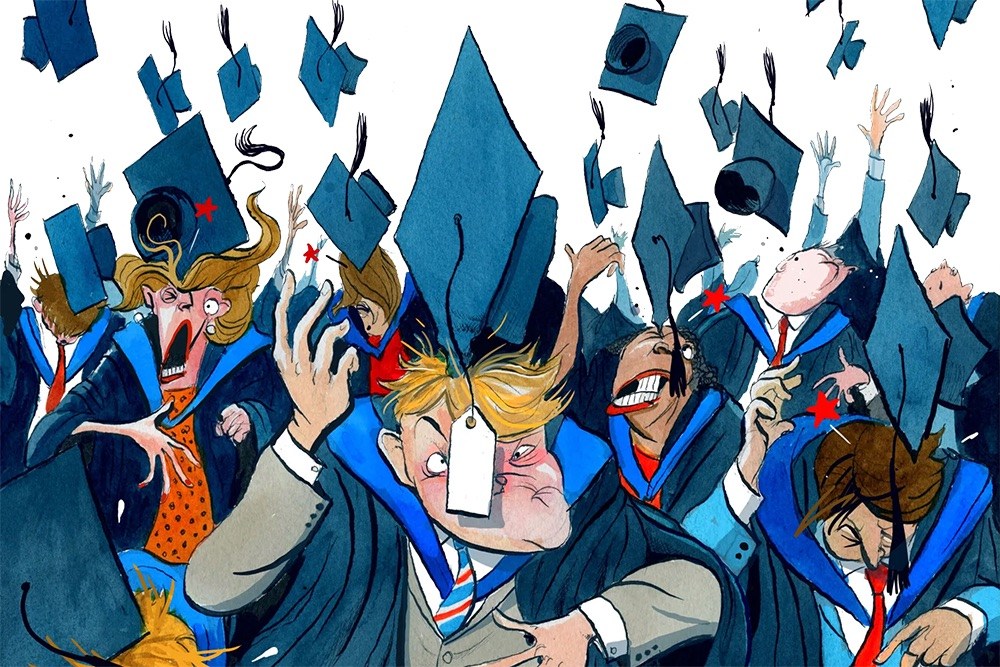
The young in particular seem charmingly oblivious to the culture wars, and universities are generally safe spaces for the woke-phobic. This was brought home to me last week as I was teaching a high-level English class. The word woke came up in reference to an article (an interview with Jonathan Haidt in The Spectator). To my surprise, only one of the group had even heard of woke (he had lived in the US), and even he only had the vaguest idea (“Isn’t it kind of negative?”).
So, I summoned up the magic of ChatGPT to create a picture (“exaggerate a bit and make it humorous” was my instruction). The result was glorious: a fearsome, green-haired, culture warrior, with loud hailer, piercings, pin badges and tattoos, full to the brim with wokist zeal. It was all there: “smash the patriarchy,” “eat the rich,” “DEI,” trans, “silence is violence,” save the planet, “no one is illegal,” “down with white supremacy” and a novel slogan I love and have decided to adopt as my ironic personal motto: “hugs not swords.”
My Japanese students regarded all this with bemusement. They squinted to try to make sense of it, as you might with a challenging piece of modern art. The slogans clearly meant nothing, and the aggressive, denunciatory posture was incomprehensible to them. Why is she dressed like that? And what is she so angry about?
To understand why woke has not taken hold in Japan, it is necessary to understand that the Japanese still believe in unique cultural phenomena, of Japanese things and foreign things. Woke, when it is even recognized is considered a Western socio-political construct, and thus not applicable to Japan. The Japanese are not necessarily hostile to the concept; they just don’t see its relevance to them.
The young in particular seem charmingly oblivious to the culture wars, and universities are generally safe spaces for the woke-phobic
Besides that, aspects of woke clash with traditional societal norms that the Japanese are reasonably happy to hang on to. A patriotic people, devoid of cynicism about their country, there is little desire to smash a system that works pretty well. Japan is the 5th largest economy in the world, has amongst the lowest crime rate in the world, and is in the top 5 for longevity. If it ain’t broke, who needs woke?
There are, of course, problems, but the Japanese expect problems, and have lower expectations than other countries. Contentment and freedom from stress are about the summit of most Japanese people’s aspirations.
There is recent data to support this. A poll by the Nippon Foundation found that Japanese young people had the lowest hopes and expectations for their country of a group of nations, including the UK, China, India, South Korea and the US. Only 16 percent of Japanese believed that things would get better for them or Japan in the future.
However, this could be seen positively, as evidence that the Japanese are fairly satisfied with their lot. Personal ambition and individual joy are subordinated to societal harmony (“wa”). Standards of citizenship are high and penalties for genuine misbehavior (behavior that threatens societal harmony) are severe. People are cancelled here, but only for breaking the law, for actual crimes, not speech or thought crimes.
That is why, as an English teacher, I have learned to drop that old conversational gambit “What’s your dream (house, holiday, job, etc)?” The discussions never get going, the dreams are too modest. One girl, asked about her perfect house, took two minutes to think, then answered: “I’d like to live near a Starbucks.” This is stony ground for a change-the-world wokist.
Society is genuinely cohesive. “Everyone looks like they are members of the same family” was Gore Vidal’s first observation when he visited Japan in the 1970s, and it’s still like that. If woke is truly a tool to divide and intimidate and gain power over others, then that will only work in a country that has sharp divisions of class, background, wealth, and political outlook. If people generally feel they are all part of an extended family, then stirring up divisions to gain advantage for your in-group is pointless.
What is more, woke’s campus failure exposes a fallacy about young Japanese people: that they are a bit childish. You might get that impression from the way they dress (the bags adorned with soft toys, a near obsession with anime, manga, Disney, “kawaii” (cute) culture, Hello Kitty etc.). Someone once did a study that concluded that Japanese women were eight years behind their Western coevals in terms of maturity.
But that depends on how you define maturity. The young trans activists at Dr. Michael Foran’s Oxford lectures, who succeeded in getting the series cancelled and the four Palestinian Action protestors jailed for a total of 20 years – for breaking into a factory, smashing up equipment and seriously assaulting a policewoman – make for an interesting contrast. No doubt they considered themselves serious, politically-aware, and grown-up.
But the idea of losing a learning opportunity you had paid for or throwing away the best years of your life for a violent protest would strike Japanese young people as not only disgraceful and selfish but absurd, like an infant’s tantrum. And, in a country where the concept of Mottainai (despair over waste) is deeply ingrained, a shocking misuse of your time.
If that is immature, may the Japanese never grow up.






Comments