

In September 2018, I started my undergraduate degree in English and Philosophy — a useful vocation, I know. My mother and I drove from London to Bristol in her green Mazda2, walked through the rain to my student digs, blu-tacked my Johnny Cash poster over the fist-shaped hole in the wall, embraced and then said goodbye.
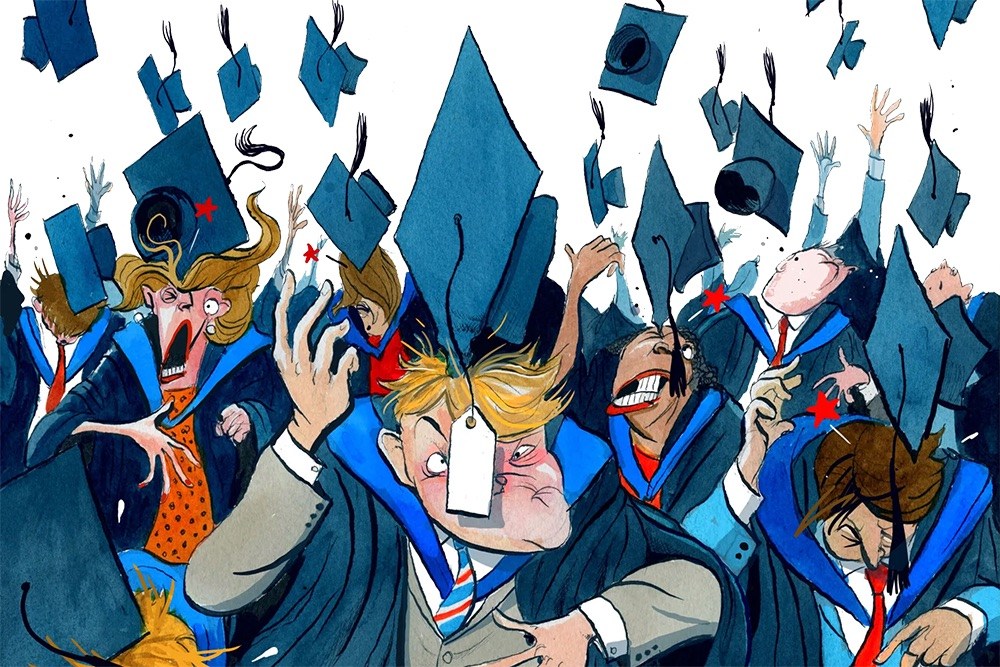
And so began my university experience. Three years of debauchery. Three years of dangly earrings, unwashed pants and forgetting to call my mother. Three years of pitta and chips, irritable bowel syndrome, mullets, £2 cider, sanctimonious student theatre, lecturer strikes, Covid Zoom calls and missed deadlines.
And then it was over. I was no longer a student. I was a graduate. And what did I have to show for it? Not very much, just a flimsy certificate and £50,000 of increasing debt. Five years later, and I’m left scratching my supposedly educated chin, wondering, ‘Was it worth it?’
Well, according to the latest British Social Attitudes survey, potentially not. The BSA has found that the proportion of people who think a degree is no longer worth the time and money jumped from 14 per cent in 2005 to 34 per cent in 2025. I’m surprised that number isn’t higher.
Let us look at the student finance system. I have what you call a Plan 2 student loan. That means I pay 9 per cent of everything I earn over the repayment threshold, which Rachel Reeves has frozen at £29,385 between 2027 and 2030 (not in keeping with inflation). Currently, the maximum interest one can accrue on a Plan 2 loan is 6.2 per cent, though the government has promised to cap that at 6 per cent for the 2026-27 academic year.
By the start of the 2027-28 academic, a typical full-time university course will cost £10,050 a year. That means a student leaving university in 2030 will have amassed over £30,00 of debt, or £60,000 if you take out the maintenance loan (as I did). Many graduates have found that they don’t earn enough to make a significant dent in their debt. In fact, many graduates make monthly repayments without ever reducing the capital. ‘But didn’t you know what you were getting yourselves into? Surely this was explained to you before you signed the contract?’ I hear you ask.
The answer is yes and no. Just last month, more than 52,000 people responded to a call for evidence by the Treasury Committee for its inquiry into the taxation of graduates. Over half of them said they didn’t understand the terms they had signed up for. A further 51 per cent said they would not have taken on the loans if they had known then what they know now. And earlier this year, the BBC discovered that a series of ‘student finance tours’ delivered to thousands of schools between 2011 and 2017 compared student loan repayments to a ‘£30-a-month phone contract’. Last time I checked, I didn’t owe EE £70,000.
I could count the number of engaging tutors I had with one hand, and I would still have two fingers spare
But repayments aside, is a degree even worth £30,000? I don’t think so. At least not in my experience. In general, the quality of teaching at most British universities is poor. I could count the number of engaging tutors I had with one hand, and I would still have two fingers spare. Of course, I’m particularly jaded: I was at university during the pandemic. This means I paid £9,250 a year to spend two-thirds of my degree on Zoom listening to a seminar tutor slurp a cup of coffee with their webcam turned off.
But fine, let’s pretend for a second that the teaching justifies the price point. What about the opportunities post-graduation? Surely a degree means better employment prospects? Wrong. In fact, Alan Milburn’s recent review found that more than one million young people (16-24) were not in education, employment or training. These are the highest — and by ‘highest’, we mean worst — figures in 12 years. If I had a pound for every automated AI job rejection in my inbox, I’d have enough money to pay off my student loan (or just about, depending on the interest).
This week, a report by the think tank Policy Exchange revealed that one in ten graduates are earning less than minimum wage five years after graduating. It also found that over one third of graduates are not working in ‘graduate jobs’. So even if you do secure a job, a liveable salary is far from guaranteed.
But still there are university defenders. They say things like, ‘But university is an experience. It teaches you life lessons. You can’t put a price on memories!’ Yes. Yes, you can. Currently, it’s £62,000. What irks me the most is the claim that universities benefit disadvantaged people. How? Degrees are essentially worthless unless specialised and vocational. Those wealthy enough to pay for university without taking out a loan already do. It’s the rest of us, the gullible majority, who will spend the next 30 years paying the government back for a certificate.
So I ask again: is university worth it? The answer is subjective. I enjoyed my time at university. I made some great friends and had transformative experiences. What is not subjective, however, is the fact that universities are increasingly behaving like businesses — and not the sort that cares for its customers. Until 1998, university was effectively free. It made sense for higher education to have a ‘you should count yourself lucky’ attitude.
Universities still have that attitude, only now they’re charging us £9,790 for the privilege. For me, that’s inexcusable.





Comments