Spectator Life

Spectator Life

An intelligent mix of culture, style, travel, food and property, as well as where to go and what to see.

When Hollywood met Netflix: the best TV shows with big-name directors

Whilst many Hollywood auteurs began their careers in television (John Frankenheimer, Arthur Penn, Steven, Sidney Lumet etc), the received wisdom in previous times was that a return to working in the medium signalled a career in serious decline. Lower budgets, shorter rehearsal times, often inferior casts and tight deadline-driven schedules meant that television was very much the last resort for down on their luck movie directors. There has always been the odd exception, including when Steven Spielberg (who began directing network tv such as Columbo) helmed a few episodes of his anthology series Amazing Stories in the mid-1980s; and of course, Alfred Hitchcock (AH Presents). But the advent of streaming has led to what some have termed ‘The Golden Age of Television’.

The ultimate Dylan mixtape

47 min listen

In this week’s edition of The Green Room, Deputy Editor of The Spectator's world edition Dominic Green and journalist Arsalan Mohammad celebrate Bob Dylan’s 80th birthday by debating a good old-fashioned mixtape of tunes spanning the old master’s 60-year career (with some background sound effects by Arsalan’s dog). To listen to our selection, head over to our special Dylan Spotify playlist here and perhaps let us know what would make your top ten.  Don’t forgot to subscribe to the The Green Room for a weekly dose of books, arts and everything else that makes life worth living. Presented by Dominic Green and Arsalan Mohammad.

The enduring appeal of Friends

I would love to have been there at the original pitch meeting for Friends, 'So yeah, it's about a bunch of friends.' Pitching The Office must have been similarly brusque, 'It's about some office workers working in an office.' And The Simpsons? 'Oh yeah, that's the one about a family called… the Simpsons'. Like all great comedies, the premise for Friends is so simple it sounds almost facile. But embedded within the simplicity of the idea is the entirety of human experience; the joys, the sadnesses, the heartache and the tragedy; it's all there in Ross's remarkable range of expressions that ran from deep melancholy to boyish wonder.

Is France’s answer to Bake Off worth a watch?

If, like me, you’ve watched every episode of the Great British Bake Off (twice), all the professional series, Junior Bake Off, and the celebrity charity episodes, you might need to look further afield for your next fix of television baking competitions. Fear not, because the GBBO franchise is wide-reaching: the format has been sold in 20 territories, and I have found myself hooked on the French offering: Le Meilleur Pâtissier (‘The Best Baker’). At first glance, it appears identical to the British version. In a tent, bedecked with bunting, a bunch of amateur bakers are collected together at pastel-hued baking benches.

The rise of vaccine virtue-signalling

I’ve bemoaned the 'no Tories please' line on dating profiles many a time. Closed-minded and over-used, it’s a banal way for university freshers to virtue signal their wokeness. It’s a phase many go through, and, more’s the pity, do not all grow out of. But as of late, a new, equally lacklustre profile-essential has emerged — one’s Covid vaccine record. Across the pond in the USA, where I’m currently based, twenty-somethings seem set on flaunting their team Pfizer, Moderna, or one-shot Johnson & Johnson credentials. And this begs the question of why? Because, to be quite honest, few things would make me swipe left faster.

Bob Dylan’s most iconic performances

On 24 May Bob Dylan turns 80 and that gives fans like me the perfect excuse to celebrate our love of the great man (not that we ever really need one, of course). As well as regularly listening to the records, I spend far more time than is probably healthy trawling YouTube for videos of Dylan in action. So, if you fancy joining me down a freewheelin’ wormhole, here is a small sample of my favourite live performances from across his career. Boots of Spanish Leather, 1963 This is a YouTube video to listen to rather than watch. It’s an absolute wonder, not only because it is a lovely version of one of Dylan’s great ballads, but also because we hear him at ease, perhaps even enjoying himself, in an interview that bookends the performance.

Politics or neglect? Why the UK came last at Eurovision

Yet again, Britain’s Eurovision entry has come last getting nul points from tout le monde. Yet again, politics is being blamed – but wrongly. The UK was simply outsung and outclassed by smaller countries who made more effort. Eurovision has always been a collision between politics, music and culture. Winners game that system, coming up with an act that crosses dozens of linguistic and national boundaries. It’s tricky. But Britain stopped trying some time ago. The BBC chooses our entry and doesn’t bother with a contest. It also struggles to pick (and prep) Eurovision winners. As a result, every year, Britain sends some unprepared soul to perish on the world stage. A strange, outraged jingoism usually follows Britain's Eurovision flops.

Before The Underground Railroad – 10 films about slavery in America

Oscar-winning director Barry Jenkins’ adaptation of Colson Whitehead’s 2016 novel The Underground Railroad is earning rave reviews. The 10-part Amazon Prime mini-series imagines an alternate history where the abolitionist route for escaped slaves prior to emancipation is an actual, physical subterranean railway. Incidentally, the fantastical railway trope is the chief feature of Netflix’s sci-fi show Snowpiercer (2020-), whilst the rocket-powered ‘Bullet Train’ is prominent in the last season of Amazon’s alt-history Man in the High Castle (2015-19). When looking at motion pictures dealing with the subject of slavery in the United States, one must be aware of the seismic shift from its early onscreen depiction in movies such as D. W.

Richard Dobbs, Tanya Gold and Rory Sutherland

17 min listen

In this episode, Richard Dobbs reads his piece on why he's considering giving up his second vaccine for people more in need (00:55); Tanya Gold reports from her Kent road trip in a Ferrari (07:50); and Rory Sutherland on the unexpected joys of lockdown and why we may miss it when it's gone.

Is there anything more uplifting than Our Yorkshire Farm?

I’m not sure what to say about Our Yorkshire Farm, a documentary on the utterly redeemed Channel 5, that doesn’t sound hyperbolic to the point of idolatry and slight nuttiness. If there is anything else in our culture that is as wholesome, pure and good as this, please tell me about it.  Amid all the murk and sleaze and bigotry and inverted bigotry and tired complacent mediocrity, there is a family that knows how to live well - a family that has more or less restored the whole notion of virtue. Yes, virtue! Amid all the crappy Netflix shows, there is Sidney, who is learning to run his first sheepdog.  Amid all the stale chat about how we’re going to learn lessons from the pandemic, maybe, there is Miles, who looks after the chickens.

My battle to clear Christine Keeler’s name

This July will mark 60 years since the beginning of the chapter in our nation’s history known as the ‘Profumo scandal.’ It was this unhappy episode in which my mother Christine Sloane, formerly Christine Keeler, had a starring role, and is credited with the fall of Harold Macmillan’s government. The story of that affair is well known: Chris met John Profumo, the secretary of state for war, at a summer pool party at Cliveden. She found herself the focus of the world’s press attention two years later when her relationship with the Tory MP became public knowledge. She had also briefly been with a Soviet called Yevgeny Ivanov, prompting feverish claims that she had been passing him British intelligence from Profumo.

The politics of Eurovision

The Eurovision Song Contest has never been more important, and I don’t just mean for fans of feathers, sequins and some eyebrow-raising exhibitionism. This year’s Contest, with the grand final taking place in Rotterdam on Saturday evening where James Newman will represent the UK, will be the first competition post-Brexit and promises to test how good, or perhaps not, our relations really are with our European neighbours (and Israel and Australia, but let’s not get technical). The delightful paradox has always been that politics ‘in lyrics, speeches or gestures’ at Eurovision are all banned by the EBU, rules enforced by the sinister sounding’ Reference Group’.

The strange appeal of pandemic emoji

News that Apple has updated its emoji range to include pictograms specific to the pandemic may either disgust you or inspire you to send a volley of missives out immediately. As an emojiste, I am in the latter camp. I am delighted that I now have a bandaged heart, a dizzy face with spiral eyes, a face exhaling with exhaustion and, of course, a bloodless syringe in my emoji lexicon. My nearest and dearest WhatsApp interlocutors may groan but I simply don’t care. Far from an erosion of linguistic standards, I see emojis as an exciting semiotic advance. I only wish that Roland Barthes, the grand French semiotician of the last century, were around to decode it all. Emoji, which originated in Japan in the 90s, can be used in different ways.

Retro cinemas that every film fan will love

The new James Bond, the much anticipated sequel to A Quiet Place and an adaptation of sci-fi epic Dune: the list of blockbuster films due to be released in 2021 is both star-studded and long overdue. As cinemas prepare to reopen from 17 May, we take a look at Britain’s most unique picture houses. TT Liquor, London Behind the vintage frontage of this liquor store in Shoreditch is a stylish underground cocktail bar hiding a secret. A concealed door leads to a boutique 52-seat screening room showing cinematic classics from Lost In Translation to The Godfather. For each screening, the bar’s expert mixologists craft a special cocktail inspired by the film.

In defence of the word ‘so’

Much has been written in these pages about the modern tendency to start sentences with 'so'.  It's been called an ‘irritating adornment’ portentously announcing the arrival of a new thought but adding nothing to its expression. I often find myself opening sentences with ‘so’ and I feel entirely relaxed about it. ‘So’ has a long history. Shakespeare’s Duke of Gloucester may not have said: ‘So, now is the winter of our discontent Made glorious summer by this sun of York’ but his Tarquin (in The Rape of Lucrece) had no such linguistic scruples: ‘“So, so”, quoth he, “these lets attend the time, Like little frosts that sometime threat the spring…”’.

‘Westminster is where I’m most recognised’: Chris Addison on life after The Thick of It

Is Chris Addison a famous face? The honest answer, he admits, is it depends where he is. In mainstream Britain, he enjoys a decent enough profile as an affable comic and actor. Over in America, where he’s been making it as a director, he’s less recognisable. But in one London postcode, he’s a veritable A-lister. ‘It was like being in a Hollywood movie,’ he laughs, as he recalls a walk across Westminster shortly after starring in the first season of The Thick Of It as the hapless junior SpAD Ollie. ‘Everywhere I went people were going “it’s him! It’s him!” - much more than anywhere else I’d been.’ That cult fame has followed him ever since - at least in SW1. You can see why.

Should biographies be written about the young?

Last year, the apparently definitive biography of Harry and Meghan, Finding Freedom by Omid Scobie and Carolyn Durand, was published, and immediately became a bestseller, despite Harry and Meghan only having reached the tender ages of 36 and 39. It seemed inevitable that as soon as the biography had hit the shelves, it would be superseded by events. Sure enough, in the light of the Oprah interview, Scobie and Durand have updated the book for its paperback publication. A news report suggested that extra chapters will cover ‘their interview with Oprah Winfrey, allegations against Meghan over the bullying of royal staff, which she denies, and Prince Philip’s death.

10 films about the upper classes

Emily Mortimer’s BBC1 adaptation of Nancy Mitford’s classic The Pursuit of Love is proving a hit with viewers, demonstrating that the antics of our social betters continue to fascinate many of us. Downton Abbey may have helped pave the way for this interest, but there is far more to the upper classes than Julian Fellowes’ occasionally jejune televisual guidebook to snobbery, etiquette, and unforgivable social faux pas. Without further ado, ten movies where we ‘Non-U’s’ are given a privileged insight into the lives of the ‘U's’. The Scandalous Lady W (2015) Amazon Buy Only https://www.youtube.com/watch?

Seven walks inspired by artists

As we all discovered during lockdown, going for a walk is one of the best things you can do to keep your mind and body in good working order, and for me it’s even better if there’s some artistic or literary interest en route. Some of my favourite outings over these last few years have been spent following in the footsteps of artists and writers, and now Britain is opening up again it’s the ideal time to get back on the cultural trail. Here are a few of my favourite arty walks. I’d love to hear about some of yours.

A handy guide to hugging

Boris Johnson has announced that the government will permit hugging from Monday 17 May. In subsequent weeks, it is expected that permission will be granted for people to hold hands, kiss and, perhaps, engage in even more intimate acts of mutual appreciation. However, the authorities remain cautious about mutant variants and their ability to spread through rampant hugging.  Former SAGE expert and BBC commentator, Neil Ferguson, has played a key role in government policy throughout the pandemic. Initially responsible for producing forecasts that led to social distancing policies, Ferguson is also rumoured to have performed a series of covert, close contact experiments with his married girlfriend.

Happy 80th birthday, Bob Dylan

40 min listen

In this week's Book Club podcast, we're celebrating the 80th birthday of Bob Dylan. My guests are the former Poet Laureate Andrew Motion, and Clinton Heylin, the Dylanologist's Dylanologist and author most recently of The Double Life of Bob Dylan: A Restless Hungry Feeling 1941-66. I ask what makes Dylan special, whether what he does - even if we admire it - can be called literature, how Dante and Keats found their way into his work, whether there's anything he does badly (spoiler: yes); and if it can really be true that he writes songs with a typewriter rather than a guitar.

The remorseless rise of ‘so’

So, a question for you. Are you bothered by the fact that you hear the word so, quite so often? Does ‘so’ grate on you? It grates on me. A lot. Every time I hear it I shudder, which makes certain television channels frankly hazardous. In fact, I’ve reached my absolute 'so' saturation point. It happened the other morning when my son, who is just five, walked into the sitting room and announced portentously: ‘So, the question is...’ I didn't catch the question because I was wracking my brain as to where he had come up with that form of words. And then it dawned on me... Over the next half an hour I must have caught myself either saying ‘so’ or very nearly doing so, about half a dozen times.

Six literary adaptations that outdo The Pursuit of Love

The actress Winona Ryder once declared that if anyone attempted to film The Catcher in the Rye, she’d have to burn the studio down, such was her love for the book. There’s many a Mitfordian wishing they could enact this retrospective action on the new BBC production of The Pursuit of Love. RAGE-messaging amongst my friends began even before Emily Mortimer’s directorial debut dropped on the iPlayer. ‘There’s not a single line from the book in the trailer!’ ‘Has she actually read the book?’ ‘Let’s go and crack stock whips under her window’.

The sad demise of Alan Partridge

One of my favourite Alan Partridge moments — and there have been many — is the now infamous scene from I'm Alan Partridge, where north Norfolk's most beloved DJ — Alan's words not mine — is chased down a remote country track by a psychotic stalker. On reaching a dead end our hero leaps over a fence and lands in one of those awkward forward lunges where in order to avoid tripping over you have to run to catch up with yourself.  This brief but beautifully realised moment encapsulates everything that made this particular incarnation of Alan Partridge such an excruciating but enjoyable watch. Here we see the cowardly little man desperately trying to maintain a modicum of dignity as his world collapses around him.

All’s well that ends well: TV’s most satisfying finales

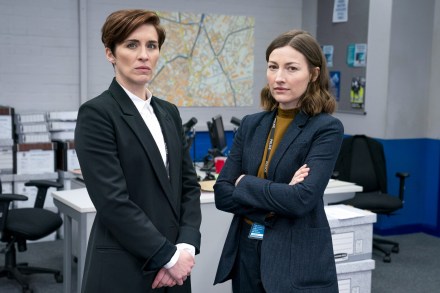
As national irritation continues to simmer over what many viewers felt was the disappointing denouement to BBC1’s hit police drama Line of Duty, here's a look at ten shows that bowed out on a more satisfying note. A good ending is comparatively rare, as the tendency in TV is to squeeze every last drop out of a hit series until audiences are in terminal decline; witness AMC’s The Walking Dead, which continues to limp on. In contrast to shows that drag on beyond their natural lives, many felt that Game of Thrones’ final 8th season was a rush job, prompted by the desire of showrunners David Benioff and D. B. Weiss to cash-in with deals for Star Wars movies and their own series.

Move over Meghan: classic books every child should read

There are so many better ways to spend thirteen quid on children’s books than on Meghan Markle’s The Bench; how about something that children might actually enjoy, which isn't written to gratify the vanity of the author? Here are a few of the ones that I liked and that your children (or you) might like. The Pirate Twins by William Nicholson is just as good as the splendid Clever Bill, which also features a brave and kind little girl called Mary. But The Pirate Twins is more subversive.

The joy of blue plaques

This week saw the unveiling of the latest English Heritage blue plaque. It marks one Caroline Norton, a 19th century writer celebrated for her pioneering legal battles against her drunk and violent wastrel of a husband which resulted in some of the first legislation to enshrine women’s rights. The plaque is at Chesterfield Street, Mayfair, where, in 1877, the always-unlucky-in-love Norton died just three months after marrying again. It’s a riveting story that deserves to be told yet, relatively, Mayfair doesn’t really need any more plaques - like Chelsea, Bloomsbury, Hampstead and the like, it’s already dotted with them. You can go on blue plaque walks there.  But Southgate, where I live, has none.

What we can learn from the noughties teen movie

There’s a movie scene forever etched into the minds of young adults. It’s probably as vivid as our parents’ recollection of the moon landing, or Maxwell House ads. In American Pie, hopeless high-schooler Jim decides to copulate with an apple tart. You don’t think he’s going to do it, but he does. And then, because the filmmakers know we’re on the ropes, they show us the mangled remains in the dog bowl. It’s also a moment that truly embodies the ‘gross-out Teen Comedy’, Hollywood’s fleeting junk food binge that began with the release of American Pie in 1999 to Road Trip, 10 Things I Hate About You, all the way up to 2007’s Superbad. More in the bawdy tradition of Animal House or Porky’s than Breakfast Club.

Short books to read on the commute

As lockdown shows early signs of (finally) coming to an end, there is the likelihood that, once again, early morning trains will be full of bright-eyed and bushy-tailed commuters, keen to leave their ‘home offices’ in favour of being around people who they are neither married to nor responsible for. And this means, one hopes, that they will be choosing appropriate books for the hour or so’s journey into work. While there is a time and place for a 600-page behemoth, there is also something deeply rewarding (and, let us be quite frank, relieving) about a shorter title; not only is it considerably easier to fit inside a briefcase, handbag or satchel, but many great writers produced some of their finest work in less than 200 pages.