Orson Fry

Meeting Karl Ove Knausgård

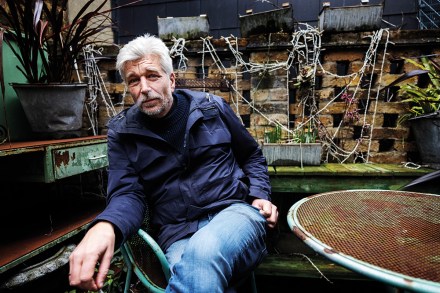
On a winter’s morning, outside the Three Lives bookstore in New York’s West Village, Karl Ove Knausgård has just finished signing copies of his latest novel, The School of Night. His features are familiar from the dustjackets – the gray-blue eyes, the grizzled beard – but he is surprisingly tall and his signature silver mane is now cropped short around the ears. Gone, too, are the cigarettes, traded for a vape. The School of Night is the fourth novel in Knausgård’s “Morning Star” series. It takes its name from a secret society of Elizabethan poets and scientists, which included the explorer Sir Walter Raleigh and the play-wright Christopher Marlowe.
karl ove knausgård

In pictures: The Spectator’s book party with Nicolas Niarchos

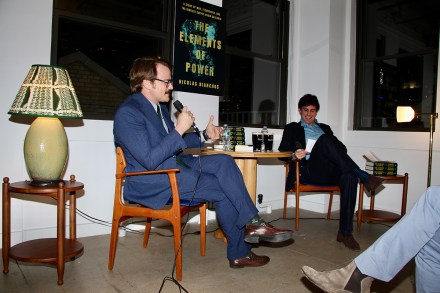
Braving biting January winds, 120 New Yorkers attended the much-anticipated launch of Nicolas Niarchos’s The Elements of Power: A Story of War, Technology, and the Dirtiest Supply Chain on Earth, at The Spectator’s (still) unfinished, unfurnished penthouse digs.  Niarchos is a journalist whose reporting has appeared in the New Yorker, the Nation and the New York Times. He has testified on the effects of Congolese battery metal mining on Capitol Hill and his investigations into mining in Indonesia were shortlisted for a 2024 Livingston Award.

A transatlantic party route

Breaker Media, which has established itself as one of New York City’s foremost bean-spillers, hosted its first shindig at the West Village’s Super Burrito. Exuberant Aussie founder Lachlan Cartwright, an unashamedly old-school hack with a business card wedged in the brim of his fedora, mounted the bar and gave an impassioned speech: “I might as well have called this Broken Media because it’s almost broken me! But I’m having the time of my life.” So too were the guests as they guzzled martinis and snagged cigarettes from bowls on the tables. During one cig break, I had my fortune read by one of the party’s hired psychics. She said all the right things – “born under a lucky star, many children etc.

transatlantic

Charleston notebook: following an English country band through the Holy City

My impression of Charleston, a city I’ve been visiting since my late teens, is that it is oddly more European than American. Real Charlestonians, they say, have more in common with their cousins across the pond than with their compatriots in America’s big cities. I've found that to be true. I’m here for the birthday of one such real Charlestonian, my friend Toto. A former White House staffer, Toto now works in the private sector, but he is destined for a return to politics – his great grand uncle was an accomplished South Carolina statesman and Toto, as he puts it, "feels a deep sense of purpose and mission to ensure South Carolina continues to be the greatest state in union".

Don McCullin shows no signs of slowing down

“Life to me has been bigger than any Hollywood film,” says legendary photojournalist Don McCullin when we meet to discuss his latest exhibition A Desecrated Serenity at New York’s Hauser & Wirth. But when I broach the subject of actual film in the works - a big Hollywood biopic involving director Justin Kurzel – McCullin would rather I didn’t: “I feel ashamed even thinking about it. If you celebrate your success, it’s damaging. I’ve always done what I’ve done because I wanted my father’s name to be important. I’ve done my best to tread the path and behave myself because his name belongs to whatever I do. He didn’t have a very long life, you see. He died at 40 when I was 13.

In pictures: The Spectator’s hard-hat party

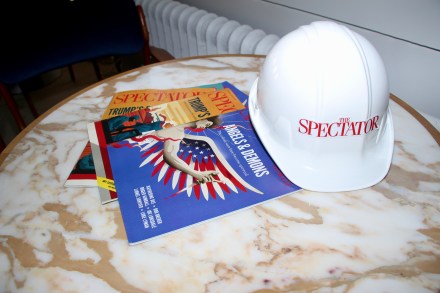
“SPECS, drugs and rock ’n’ roll!” reported the New York Post’s Page Six about The Spectator’s bash on Tuesday to toast our new NoMad office. Some 150 revelers ascended to our unfinished, unfurnished penthouse digs, where they were served cocktails and spectacular sunset views from our terrace facing the Empire State Building.  Music played as guests bounced between the multiple bars. “You guys shouldn’t touch anything, it’s perfect!” said pretty much everyone I spoke to about our bold office renovation plans, while dodging ceiling wires and donning Spectator-branded hard hats (which a few lucky revelers went home with). One literary lady was overheard making plans to “try it on later with some lingerie for my husband.

The Spectator’s evening with model and actress Keeley Hazell

The Spectator and guests gathered at Palo Gallery to toast the publication of Keeley Hazell’s new memoir Everyone’s Seen My Tits: Stories and Reflections from an Unlikely Feminist. For the uninitiated, Keeley – model, actress and now author – is a former Page 3 girl who regularly appeared on the cover of British 'lads' mags' such as FHM, Loaded, Nuts and Zoo Weekly. In 2007, she was the victim of a highly publicized incident of revenge porn, prompting her to leave London for Los Angeles where she traded modeling for acting, landing roles in Horrible Bosses 2 and Ted Lasso. Keeley's debut is a fierce and funny essay collection exploring the relationship between class and feminism, sexual politics and the power of writing your own story.

An evening celebrating the launch of Taki’s memoir

A high time was had by all to celebrate Taki Theodoracopulos – The Spectator’s legendary High Life columnist – at the launch of his memoir The Last Alpha Male in New York. Taki wrote his weekly column for 46 years, thrilling and beguiling Spectator readers with tales of glamorous escapades and misadventures across 20th century high society. In his long-awaited memoir, he traces his steps from his native Greece to battlefields, courtrooms and ballrooms across the globe; recounting a life dedicated to beautiful women, adventure, relentless mischief and bucking the petty, emasculating demands of political correctness. As written on the dust jacket: “The Last Alpha Male is Taki at his best: bold, irreverent, insightful and endlessly entertaining.

The Spectator’s pop-up with chef Thomas Straker

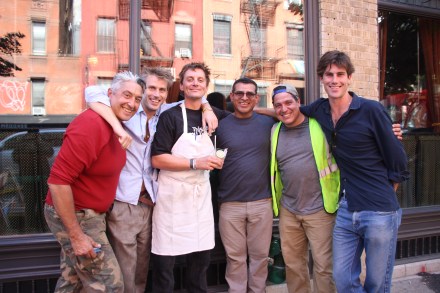
One has to know how to spin plates to be a top chef. And Thomas Straker's multitasking talents were on full display last week at a pop-up in New York hosted by The Spectator to launch his new cookbook where he not only served smash burgers and fries himself but also signed copies of his book. Straker, for the uninitiated, is a British chef, restaurateur and entrepreneur whose star rose during lockdown when he began posting viral home-cooking videos to TikTok. Then came the butter-making videos, racking up billions of views, followed by his business All Things Butter. Early next year, Straker opens his first New York restaurant in the location of Keith McNally’s old Lucky Strike.

Wine and good times flow at Spectator party

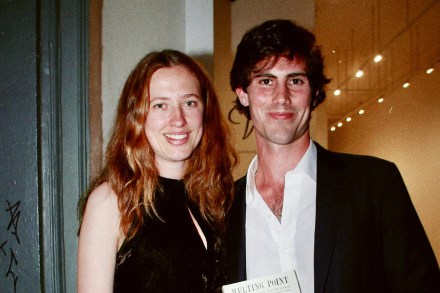
New York At one point the Promised Land was Texas. That was the gist of the conversation I had with Rachel Cockerell at The Spectator’s first live event in NYC, at NoHo’s Palo Gallery. I interviewed Rachel about her book Melting Point, which explores the Galveston Plan, when 10,000 beleaguered Russian Jews set sail for Galveston, Texas. After the talk, wine flowed as friends mingled with Speccie subscribers and spilled out into a balmy summer’s eve on Bond Street. Everyone seemed to enjoy the party except for those who weren’t there. I read the online comments the next morning: “Thanks for the compilation of pictures of the people I’d most want to avoid,” wrote one keyboard warrior. “Just rooms full of snobby people believing it's chic to dress homeless!

Author Rachel Cockerell and The Spectator’s Orson Fry (Lily Burgess/The Spectator) new york

Understanding the fluoride wars

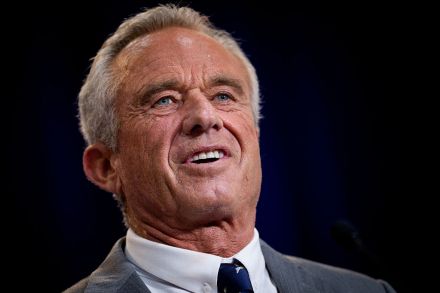
Earlier this year, in episode #2273 of the Joe Rogan Experience, the world’s most successful podcaster started sounding off about fluoride, calling it a “neurotoxin” and citing “conclusive studies” linking high levels of fluoride in the water to lower IQs. In a clip that has been viewed more than 1.2 million times, Rogan expressed bafflement to his guest Adam Curry, the entrepreneur and media personality: “We know it’s bad for you in large doses, and yet there are fucking people out there with college degrees who read the New York Times who will get angry if you want to remove this neurotoxin from water because, ‘Look at all the strides its done in preventing tooth decay,’ and you just wanna say hey man fuck you, this is stupid.

fluoride

The Caviar Kaspia experience

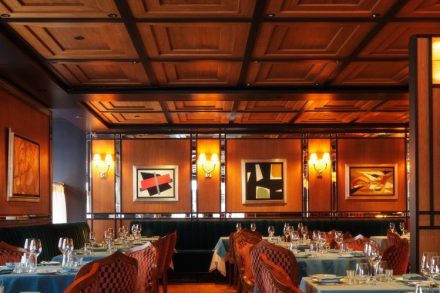
It’s been almost 100 years since Arcady Fixon, a refugee from the Russian Revolution, opened the doors of Caviar Kaspia on Place de la Madeleine in Paris, and began beguiling his fellow exiles and the crème of Paris society with the exotic flavors of his homeland: shiny black caviar, served with blinis or potatoes, and ice-cold vodka. After being passed down through family hands, Caviar Kaspia is now owned by the charismatic entrepreneur Ramon Mac-Crohon, who has ensured that the place has lost nothing of its prerevolutionary charm: Nicolas II’s seal sits alongside antique porcelain in a display cabinet, and Nicolas Swertschkoff’s Troika, depicting a Russian horse-drawn sledge moving through snow, still hangs in the dining room.

Biohacking and skiing at the Alpina Gstaad

Biohacking, one of the more bearable buzz words of recent times, refers to the practice of using science, technology and self-experimentation to improve the body’s function and performance. When I was recently invited to experience the Alpina Gstaad’s new three-day wellness program — designed to “biohack your ski trip for improved performance and mood” — I didn’t hesitate. Here was not only a chance to improve my disastrous skiing but also to restore my pitiful liver, which had taken a particularly heavy beating in the festive run up to 2025. What better place to kick off “Dry January” than a five-star spa tucked away in the Bernese Highlands?

gstaad biohacking

Enter Atelier Arena

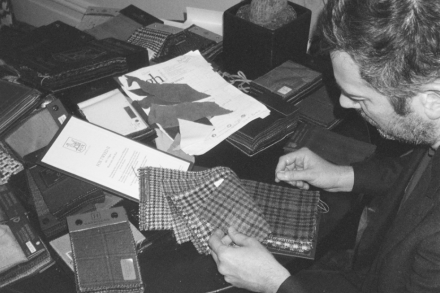
What do the musicians Paul Weller and Daryl Hall, the gallerist Iwan Wirth, and the actor Gary Oldman have in common? A taste in tailors. I meet Tom Arena, who's just set up a regular pop-up atelier, in his suite-cum-studio on the Chelsea Hotel’s fourth floor. He has just finished a morning of fittings with “Young British Artist” Liam Gillick and the makeup queen Bobbi Brown. I’m here for my second suit from Arena and the sheer abundance of cloth and swatch books of the world’s finest yarns makes my head spin: Fox Brothers tweeds, Dormeuil cottons, Caccioppoli linens and silks, exquisite Venetian linings and trimmings.

Arena

The majesty of Siena’s Palio

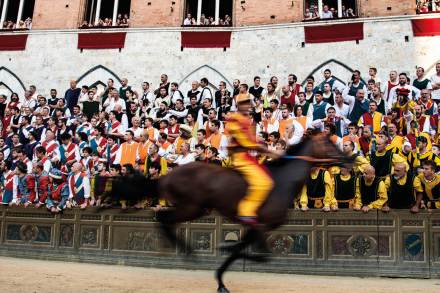
Twice a year, an almost deathly silence falls on the Tuscan city of Siena. It is the moment just before the rope drops in the Piazza del Campo to signal the start of the Palio, the city’s ancient horse race and fiercest rivalry. Siena’s Palio is as mad as it is old. Ten horses and ten riders, representing ten of Siena’s seventeen contrade, or districts, race three laps of the city’s main square at breakneck speed before thousands of screaming spectators, in a tradition dating back to 1633 — the year Galileo was convicted of heresy for insisting that the Earth revolved around the Sun. Every summer, two palii are held: one on July 2, in honor of the Madonna di Provenzano, and one on August 16, the Palio dell’Assunta during the feast of the Assumption. What’s at stake?

Palio

Falling in love with Montana

"You have a big mountain to climb!" is not the sort of text you eagerly await from your girlfriend’s father. But Billy, a true Southern gent, meant no ambiguity. As dawn cracked the alarms sounded in our Airbnb and six of us bundled into the back of the Dodge. A cool mist hung in the valley as “Baba O’Riley (Teenage Wasteland)” started up on the radio and got the blood running. At 6:15 a.m. we entered the shadow of Emigrant Peak, which at 10,921 feet, commands Montana’s Paradise Valley. Emigrant owes its name to Thomas Curry, a pioneer who struck gold in a creek on the east side of the mountain in 1863.

Montana

Bringing back rhinos in Pakistan

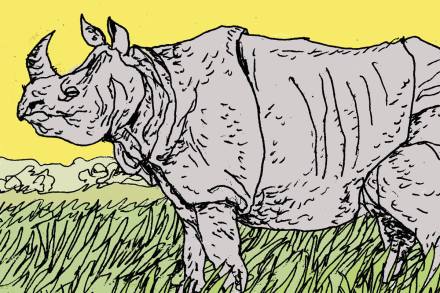
The drive from Islamabad to Multan takes about eight hours. We passed through fields of citrus fruit and farmers tending weed-burning fires. Boys carried giant bunches of twigs over their heads or zipped by on old Honda 70s, balancing water tubs. All had early-Beatles haircuts and wore the shalwar kameez, the Punjabi suit of lightweight trousers and a tunic. Multanis, distinguished by their good looks and their own musical dialect, are called meethi churiyans by other Punjabis, meaning “sweet knives.” They are charming and generous, serving up piles of warm chapati and mutton chops, before stinging you with a hefty bill.

rhinos

The art of Georgian toasting

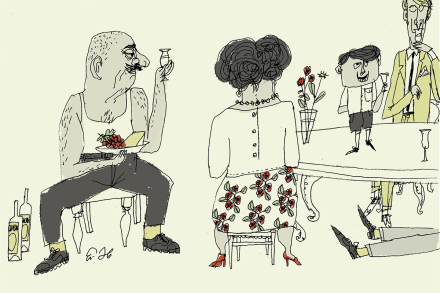
There are a few words you need to know when visiting Georgia — gamarjoba for “hello,” madloba for “thank you” — but one word is absolutely crucial, and that is gaumarjos, for “cheers.” The Georgians are serious drinkers, as I recently discovered while visiting a friend in Tbilisi. And when they drink, they toast. And when they toast, they don’t stop toasting. In Georgia, raising a glass is an essential ritual of the supra, their ancient tradition of the feast. The recent discovery of a bronze tamada (“toastmaster”) figurine from 600 bc means it’s older than the development of their written language. As with any ancient ritual, toasting has its own set of rules.

Georgia

Perudo in Utah

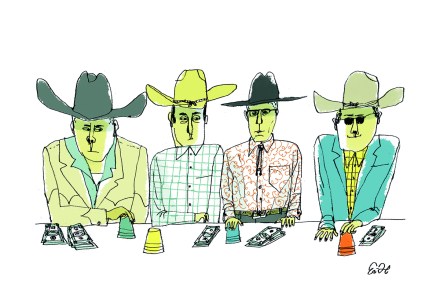
I’m two miles outside Wanship, Utah, at a remarkable new hotel called The Lodge at Blue Sky. I’ve just met my host in the bar, a bear of a man called John Tuffman, or ‘Tuff’, as I’m told to call him by his assistant. Owing to my delayed flight, we’re running a little behind schedule. ‘Down the hatch’, he says, nodding to my beer while he repositions his Stetson. We climb into a car and are driven up to the barn. A few weeks ago, I received an email which I had every right to believe was a scam or an elaborate catfishing attempt. It was an invitation from an events company in San Francisco to appear as the World Perudo Champion at an executive retreat in Utah. At 6 p.m.

perudo