Politics

Read about the latest political news, views and analysis

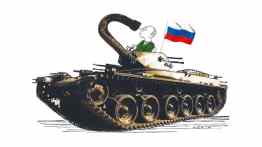
No, Scottish independence is not like the war in Ukraine

Perhaps it’s the absence of any oppression of their own country that compels Scottish nationalists to latch onto the oppression of others. On Monday, Michelle Thomson, an SNP MSP, retweeted news of Ukraine’s emergency application for EU membership, adding: ‘Delighted for Ukraine. It’s [sic] just goes to show what political will can achieve. Remember this Scotland!’ The SNP’s current position is for Scotland to secede from the UK then apply for membership of the EU, a process nationalists have previously suggested Brussels would fast-track. Thomson came in for a barrage of criticism and later deleted the tweet, admitting it was ‘insensitive’. She is taking all the flack but she’s hardly alone in dabbling in such rhetoric.

Why is a no-fly zone a no go?

10 min listen

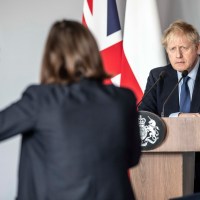
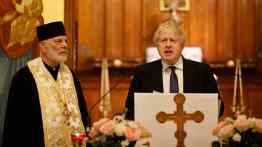
During a press conference in Poland today, Prime Minister Boris Johnson was confronted by Ukrainian journalist and campaigner Daria Kaleniuk, who took issue with the excuse for not imposing a no-fly zone because it may start World War Three, saying it had already begun. While it is completely understandable that on the streets of Ukrainian cities that is how it must feel, the UK and the West are committed to not involving themselves with direct military action against Russia. Though the sanctions that have been imposed on Putin's regime are unprecedented, can they work quickly enough to pause the conflict before things get even bloodier?Katy Balls talks to Isabel Hardman and James Forsyth about how the Prime Minister has been handling this situation so far.

Will grandees return their Russian honours?

It's five days since Vladimir Putin invaded Ukraine and there's no sign of the pressure letting up. Arms continue to be exported across Europe to aid Kiev's war effort while financial penalties continue to be applied. The latest sanctions levied against Russian banks include cutting them off from Visa and Mastercard, and consequently Apple Pay and Google Pay.   But it's not just in the military, diplomatic and economic spheres that Moscow is being targeted. Cultural boycotts threaten to wreck Russia's aspirations of World Cup glory in Qatar this summer while Eurovision has also announced the country will not be welcome. One act of individual defiance is the return of honours given by Putin's state to notable individuals across Europe.

With Beata Heuman

23 min listen

Interior designer, Beata Heuman is known for her work based on playful, original designs characterised by Scandinavian attention to detail and longevity. Living in London, Beata published her own book last year Every Room Should Sing and believes that the same principle applies to her cooking. On the podcast, Beata talks about her life as a young child who grew up foraging on her family farm. Her professional work has been inspired by various culinary themes, from living in Florence to the rising phenomenon of the pot filler in her kitchen designs.

Boris rules out a no-fly zone over Ukraine

What can the UK do to ensure that Vladimir Putin fails in Ukraine? The Prime Minister has just given a press conference in Poland with his counterpart Mateusz Morawiecki where he repeated his assertion that 'Putin will fail' and that the West 'will succeed in protecting and preserving a sovereign, independent and democratic Ukraine'. The Russian president, he said, had underestimated the resolve of Ukraine and its allies.

Yvette Cooper’s refugee record

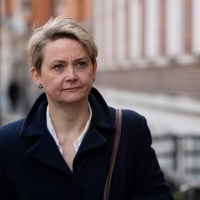
As the Ukraine crisis rages, Labour has chosen to focus on the issue of visas for fleeing Ukrainian refugees. Shadow Home Secretary Yvette Cooper went for her opposite number Priti Patel on it in Parliament yesterday, demanding 'clear answers' for those 'urgently seeking sanctuary or to rejoin relatives.'  It looks like Patel will now be forced to give a ministerial statement today, updating the government's position on the issue: a win for Cooper and those demanding more action. Still Mr S couldn't help but think back to Cooper's own record when it comes to refugees.

Liz Truss is having a good war

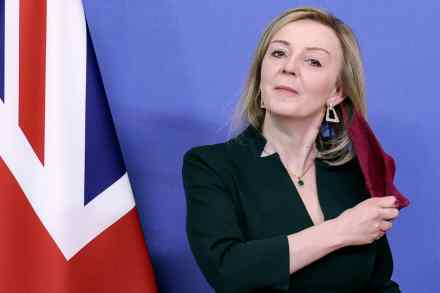
Liz Truss gave a striking statement in the Commons this afternoon on the action the government was taking to respond to the Russian invasion of Ukraine. It contrasted to the approach taken by some of her colleagues, because it contained a number of admissions about the impact of this action. For the first time, the Foreign Secretary stated that Britain would 'have to undergo some economic hardship as a result of our sanctions'. This has been implicit over the past few days, but Truss was the first to say it clearly. She added that 'our hardships are nothing compared to those endured by the people of Ukraine', and also warned that the war could last months or years.

Johnson under pressure on offer to Ukraine refugees

What help will the government offer to Ukrainians seeking shelter in the UK? While the Prime Minister has been talking up his support for the Ukrainian people, government actions on offering refuge to those fleeing the country has so far been limited. After immigration minister Kevin Foster suggested on social media that those escaping Putin's invasion could qualify for the seasonal worker scheme — which applies to jobs such as fruit picking — Boris Johnson is under pressure to go much further (Foster's tweet has now been deleted).  What help will the government offer to Ukrainians seeking shelter in the UK? On Sunday, the government announced that Ukrainian nationals settled in the UK will be able to bring their 'immediate family members' to join them.

Artemy Troitsky – ‘I’m pretty sure Ukrainians will win’

36 min listen

On this week’s episode of Marshall Matters, Winston speaks with Russian author, journalist and culture and music historian Artemy Troitsky. Troitsky has had a long history of being anti-establishment. In the 80s he was blacklisted by the Soviet Union. But it wasn’t until Putin's rule that he felt he finally had to leave his motherland. We discuss the current conflict, Putin and the mindset of Russians today.

All change at Mail towers

As war between Ukraine and Russia continues to rage, closer to home a very different conflict has been playing out at Daily Mail HQ over on High Street Kensington. Mr S has chronicled the recent comings and goings in the hallowed halls of Northcliffe House, as Paul Dacre, Geordie Greig and Martin Clarke have all found themselves in and out of the building's revolving doors since November. Now another bigwig has joined the list of those exiting the Mail group: Mail+ editor Gordon Thomson,  who is departing after three years. The Mail+ project, which has been referred to internally as the 'baby' of owner Lord Rothermere, was launched to much fanfare in 2019.

Viktor Orbán has played a perfect game with Putin

On 3 April Hungarians will have their ninth set of free parliamentary elections since the collapse of the communist dictatorship in 1989. The winner is likely to be Viktor Orbán and his Fidesz-KDNP coalition, which is leading in five of the six major polls. Russia’s invasion of Ukraine will not change that dynamic even though the opposition leader, Péter Márki-Zay has called Orbán a ‘traitor’ for his long-standing friendship with Vladimir Putin. Ever since Viktor Orbán began his second stint as Hungary’s prime minister in 2010, he has repeatedly played the provocateur within the EU, tweaking the eurocrats’ noses with his cultural conservatism and hostility to mass immigration.

Now Lebedev turns on Putin

Looks like this war isn't going terribly well for Vladimir Putin. The Russian dictator now finds himself something of an international pariah, with barely half-a-dozen countries lining up behind him. By contrast, the charmless Kremlin autocrat seems to have done what no-one thought possible: unite Europe in opposition, drag Germany from its Ostpolitik slumber and even force neutral Sweden to dispatch thousands of missile launchers to his foes. Well done Vlad. It's not just in the international arena where Putin finds himself unloved: there's clearly cracks in the previously unshakeable support which he enjoyed from the plutocratic oligarchs his regime has helped enrich.

Will Britain welcome Ukrainian refugees?

Immigration used to be the most-discussed issue in British politics. It gets less attention these days, for reasons too varied to go into here. But even though some voters have been focused on other things, there have been significant changes. Some have been good. Others bad. And the bad ones are about to collide with the Ukrainian crisis. The positive bits of the immigration story have mainly been around regulated, economically-driven migration. Britain’s post-EU migration regime is, well, not as bad as it could have been. It’s not as easy as it was for EU nationals to come here to work, but it’s a bit easier for non-EU nationals to enter. The overall effect has been less a tightening of entry rules than a rebalancing.

Has Putin underestimated the West?

12 min listen

Over the weekend, the West unveiled further measures to punish Russia for invading Ukraine. The European Union said it would put limits on the Russian central bank's ability to access its reserve of foreign currency, Finland blocked Russia from its airspace, and Germany pledged that it would increase its defence spending to 2 per cent. Has Putin underestimated western resolve? Katy Balls speaks to Fraser Nelson, James Forsyth and Isabel Hardman.

Six clips of Ukrainian heroism

It's four days since the invasion of Ukraine by Russia and there's no sign of any surrender by those opposing Putin's forces. By common consensus, the spirited fightback by both Ukrainian troops and their citizens has impressed and surprised many across Europe.  It comes amid reports that the Kremlin has misjudged the extent to which Ukrainians are willing to fight and die for their country, as the west gears up to inflict massive financial sanctions on Russia. The revolution may not be televised but in 2022 conflict is being live-streamed on social media accounts. Below are six of the best examples of the ordinary men and women of Ukraine demonstrating resistance to the Putin invasion.

Has Putin resurrected the West?

I think Putin will have been surprised. I mean: I was surprised. Weren’t you? Not, necessarily, that Ukraine should have been resisting as valiantly as it is; nor even that Russia’s supposedly unstoppable war machine should have found itself out of petrol on a chilly highway from which the road signs have been removed. But surprised by the sheer force and volume and unanimity of the international cry of: no, this will not stand. That is one thing, even amid the unspeakable human cost of the war in Ukraine, to feel encouraged by. If this invasion does, as many have said, mark the beginning of a new order in European security and great power politics, isn’t it a sign that it could be a stronger, better, less complacent one?

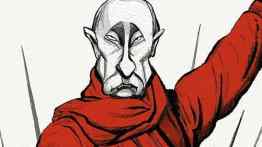
Putin, Ukraine and the end of ‘the end of history’

As Vladimir Putin ordered Russian troops onto Ukrainian soil, the initial Western response was swift, if not underwhelming. Trade in Russian debt was curbed and a handful of oligarchs have had their assets frozen. Snarky tweets from an American embassy safely withdrawn to Poland, were also sent. While Russia rolled its tanks across the border, European cities lit up buildings in Ukrainian colours. Perhaps predictably, the threat of these measures and the diplomatic disapproval accompanying them did not dissuade Putin from further action. Hard power, and the ability and will to deploy it, count. Putin has all three; the West does not.

Will the Ukraine crisis finally end Stop the War’s hold over Labour?

For weeks, discussion about partygate dominated Britain’s newspapers. Russia’s invasion of Ukraine has put paid to that. But Boris Johnson is mistaken if he thinks he has been saved. Instead Keir Starmer is likely to be the biggest beneficiary of the Ukrainian crisis. This might come as a surprise to some. After all, history suggests that a Conservative government should be able to benefit from this conflict by relying on its traditional reputation for being strong on defence and foreign policy in general. Yet the Ukrainian war is different, at least for now, to skirmishes that have arisen in the past.