Politics

Read about the latest political news, views and analysis

Sadiq’s strikes shambles

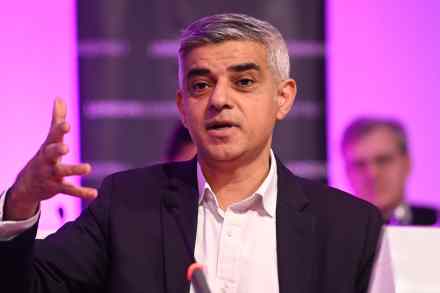
Oh Sadiq Khan. The mayor of London was swept to office back in 2016 on a wave of Labour optimism about their plans for the great metropolis. One of his main pledges was for 'zero days of strikes' as 'every day there’s a strike, it causes huge misery and inconvenience to Londoners.' Khan claimed, prior to his election, that walkouts were 'a sign of failure' and that 'as mayor, what I’d do is roll up my sleeves and make sure that I’m talking to everyone who runs public transport to make sure there are zero days of strikes.' Fast forward to 2022 and a very different picture emerges.
Britain should spend more on defence

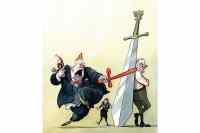
Britain must spend more on defence. As I say in the Times today the defence budget is already being increased but it is hard to argue that it is sufficient given how changed the security landscape now looks with Putin’s Russia launching an all-out invasion of a sovereign, European state. Until this week, the UK could argue that it would only increase defence spending still further when other European members of Nato had pulled their weight and were hitting the 2 per cent of GDP target. But now Olaf Scholz has announced that Germany will be spending 2 per cent – or more – by 2024, which poses another dilemma for London: does it want to remain the second biggest defence spender in Nato after the US?

A wave of anti-Russian hysteria is sweeping across the West

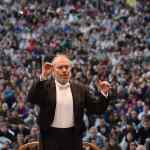
McCarthyism is an overused word, I know. But really, what other word will do to describe the sacking of a conductor for refusing to publicly denounce the leader of Russia? This is the case of Valery Gergiev, who was sacked by the Munich Philharmonic Orchestra this week for failing to condemn Putin. Mr Gergiev was literally given an ultimatum. As the Guardian’s headline put it: ‘Denounce Putin or lose your job: Russian conductor Valery Gergiev given public ultimatum.’ Gergiev refused to denounce Putin and so he lost his job. His management team dumped him too, while acknowledging that he is ‘the greatest conductor alive and an extraordinary human being with a profound sense of decency’.

In Ukraine and China, a power-obsessed Vatican is betraying heroic Catholics

24 min listen

Four million Christians in western Ukraine belong to the Ukrainian Greek Catholic Church, which since the end of the 16th century has adhered to a Byzantine rite while recognising the authority of the Pope. For this reason these Ukrainian Catholics are despised by the Russian Orthodox and its political masters: Stalin tried to force them to become Orthodox again and threw their leader, Cardinal Slipyi, into jail, where he remained from 1945 until 1963.  And how was his heroism rewarded? Pope Paul VI denied him the title of Patriarch and, after Vatican II, the Catholic Church set about Westernising their traditions – for example, discouraging them from having married priests.

Why is the UK so slow in sanctioning oligarchs?

10 min listen

Though Britain has been sending weapons to Ukraine, and led Europe's push to get Russia taken out of the Swift banking system, the government has been criticised for being slow in sanctioning Russian oligarchs. What more should we be doing?Max Jeffery talks to James Forsyth and Katy Balls.

Tory pro-Russia lobbying group disbands

The Ukraine crisis has claimed another victim. The Westminster Russia Forum – previously called the Conservative Friends of Russia – has just announced it will be winding up its lobbying operation here in London. As recently as last week, the group were reported to be going ahead with a 'multilateral relations conference', scheduled for tomorrow. But now, following a wave of cancellations, boycotts and sanctions across London and the rest of the western world, the WRF has announced it will close. In a statement to his supporters on Tuesday, chairman Nicholas Cobb announced his resignation and that of the entire board.

The SNP’s flagship economic strategy is pure window dressing

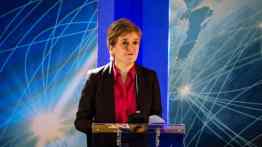
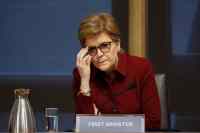
It was an odd launch event for what had previously been a much-touted initiative. While all eyes were on the war in Ukraine, Scotland’s finance minister, Kate Forbes, took to Dundee to set out Scotland's new ten year National Strategy for Economic Transformation. Such events usually involve a room full of press, lots of questions, photographs, one-on-one interviews and then widescale coverage in the Scottish media. This event however was characterised by complaints from print journalists that they were excluded on spurious grounds of ‘ongoing Covid restrictions’, despite the finance minister speaking to a room full of business people and some select journalists to which this rule seemed not to apply.

KitKat-loving MPs consume £250k in snacks

After surviving his Covid scare in spring 2020, Boris Johnson was positively evangelical about the importance of weight loss. Launching a campaign to cut Britain's obesity rates in July that year, the Prime Minister told the country that he was 'way overweight' when he was hospitalised, backing a war on waistlines to cut the number of Britons entering intensive care units. Two years on though, Johnson seemed to have cooled on the idea somewhat. Last month, as he battled to save his embattled premiership, he was reported to be considering whether to drop plans to ban 'buy one, get one free' deals on junk food, and other anti-obesity measures. Perhaps though that’s for the best, given, er, the snacking habit of our own MPs.

The invasion of Ukraine and the death of globalisation

Putin’s savage invasion of Ukraine, and the West’s collective response, is the moment that the slow death of financial and trade globalisation has been accelerated and made irreversible. Globalisation has been rolled back since the banking crisis of 2008, first by the banking regulation that followed, then by Trumpian and Brexit nationalism and mercantilism, then by Covid and now by the shock of war. The current dislocation of supply chains, especially for energy but much more broadly, means inflation will be much higher for longer – because businesses will speed up the shift in procurement of raw materials, energy, components and so on to supplies much closer to home.

Holyrood offers Ukraine counselling

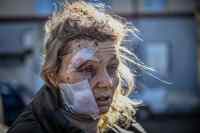
It's now a week since Russia's invasion of Ukraine and there's no sign of an end in sight yet. The casualty lists have mounted on both sides, with the Kremlin admitting to 500 Russian dead, compared to America's estimate of 2,000 on Moscow's side. One millions Ukrainians meanwhile are estimated to have fled the country in the past seven days, with Kiev claiming that 2,000 civilians have been killed in Russian attacks. Sanctions meanwhile continue to be applied by a raft of European and Western powers against the embattled Putin regime. Such suffering now appears to have extended all the way up north to the Scottish parliament, where staff and MSPs are being told they can now receive counselling if they have been affected by the 'distressing' 'evolving situation in Ukraine.

The free world’s new reality

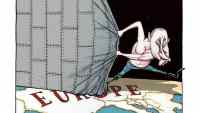
We are about to see brutality in Europe on a scale that will be almost beyond our comprehension. Russia is turning to increasingly indiscriminate bombardment of Ukraine to try to achieve its aims after the failure of its initial military strategy. Vladimir Putin’s invasion has shattered the old belief that the era of wars between European nation states was over because the consequences were simply too grim. The policy of sanctions as a deterrent failed. The assumptions that have driven European geopolitics for a generation are changing before our eyes. Nowhere is this shift more dramatic than in Germany. After reunification, the country’s defence spending plummeted and for decades subsequent governments rejected requests from allies to spend more on military.

Has Putin saved Boris?

It was with some relief that I heard that Labour’s Diane Abbott was opposed to the Russian invasion of Croatia, because you cannot always tell with the far left what way they are going to swing. The Stop the War mob, along with 11 serving Labour MPs, have been anxious to exonerate Vladimir Putin and, in the usual fashion, blame the West. Their Russophilia has easily survived the end of communism and the transformation of Russia into a fascist state. But Croatia presents additional problems for lefties – and I know many former communists who will not visit Croatia because of the role of the Ustase during the second world war: their loss, in my opinion, as it is a beautiful country full of people who wish they were Austrians, which is a noble aspiration.

Putin’s rage: the Russian President won’t be easy to topple

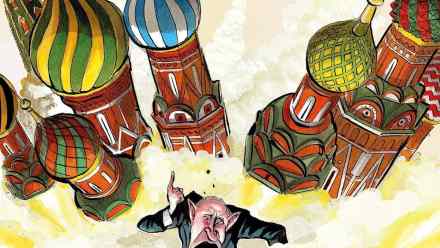
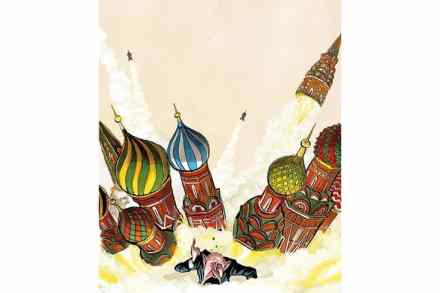
 Moscow How will Vladimir Putin’s hold on power end? Will he be quietly retired by Kremlin rivals angry at a national humiliation, like Nikita Khrushchev after the debacle of the Cuban missile crisis? Deposed by KGB men even more hawkish than himself, like Mikhail Gorbachev? Overthrown by a popular revolt, like Tsar Nicholas II? Or will he die in his bed still the undisputed tyrant of a police state, like Joseph Stalin? Prediction has become a risky business in Russia ever since Putin threw his usual calculation and caution to the wind and launched a rash and fundamentally unwinnable war against Ukraine.

Has Geoffrey Cox got a new rival?

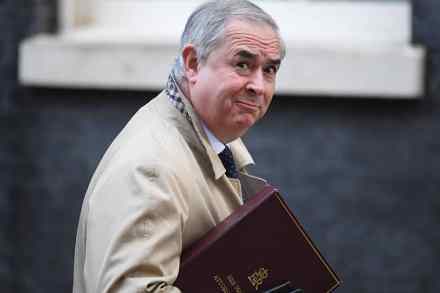
Sir Geoffrey Cox was thrust once more into the limelight just before Christmas, after the Owen Paterson row brought the issue of MPs' second jobs to the fore.  Newspapers were agog at the former Attorney-General's earnings, regaling their readers with endless zeros and pound signs galore. The Daily Mail splashed the news that the baritone barrister earned £1 million a year in outside work; the Guardian claimed Sir Geoffrey had taken home £6 million since first being elected to Parliament. But could the Torridge MP actually be getting a raw deal from his outside work?

Starmer leads on oligarchs at a strange PMQs

Prime Minister's Questions today had a strange tonal disconnect to it. The session began with a standing ovation for the Ukrainian ambassador Vadym Prystaiko, who was watching from the gallery. Normally, clapping is banned in the Commons, but today the Speaker tore up protocol and MPs from across the house (and journalists, who by convention don't clap anything) stood up to applaud Prystaiko. It was a moving moment. But it was not matched by the tone of Boris Johnson, either in his exchanges with Keir Starmer or indeed in the rest of the session. The Labour leader chose to focus on sanctions and economic crime.

Watch: MPs give Ukraine’s ambassador standing ovation

Another day and still Ukraine holds on. Russia last night stepped up its attacks on key target cities, with fighting raging for a seventh day in the north, east and south of the country. It was in those sombre circumstances that MPs in London met today for the ritual weekly jousting of Prime Ministers' Questions. But before the usual punch and judy show kicked off between Boris and Keir, Speaker Lindsay Hoyle had a few words to say first, as he welcomed the Ukrainian ambassador Vadym Prystaiko to Parliament. Barely had the Speaker begun then a wave of applause rang out across the chamber, building to a crescendo as members across the House rose to their feet to applaud Ukraine and its people for their resistance to the Putin regime.

No-fly zones won’t work, but what about aid to Ukraine?

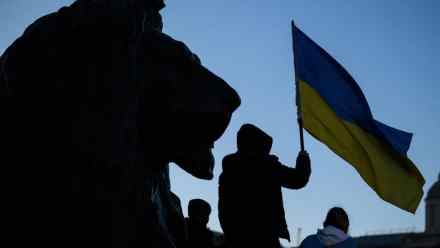
Vladimir Putin's forces are encircling the cities of Kharkiv, Kherson and Mariupol, and a 40 mile-long convoy of Russian armoured vehicles is north of Kiev on the seventh day of fighting in Ukraine. The coming days are likely to see greater barbarity from the Russian President after he failed to get his way in the first few days of the invasion. Those days are also likely to stretch into weeks as Putin lays siege to these cities until they are his. The debate about what the West should be doing to needs to widen out So far the political debate in the West has been dominated by a noisy argument about a no-fly zone: something all leaders have repeatedly ruled out on the grounds that it would lead to direct combat between Nato and Russia.

Lindsay Hoyle praises dodgy doners

As the Ukraine crisis worsened last night, where else would politicos be except the British Kebab Awards – which celebrate all that is good about the humble kebab shop. Alongside journalists, bag-handlers and spinners, a raft of politicians were queuing up to pay tribute to the industry including shadow Foreign Secretary David Lammy and education minister Nadhim Zahawi, who delivered a fiery denunciation of Putin from the lectern. The guest of honour though was Speaker of the House of Commons, Lindsay Hoyle. The Chorley MP used the occasion to both condemn what was happening in Ukraine and then reveal his own love of cooked meat dishes. He told the raucous attendees that: I've got to tell you: I love a kebab.