Politics

Read about the latest political news, views and analysis

Will western sanctions really hurt Putin?

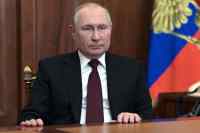
Boris Johnson has announced that the UK will impose personal sanctions on Vladimir Putin and his foreign minister Sergei Lavrov – and is as drawing up a ‘hit list’ of Russian oligarchs to target. ‘We have to make it deeply painful for the oligarchs that support the Putin regime,’ said foreign secretary Liz Truss. ‘There are over a hundred Russian billionaires … We will come after you.’ Will such actions actually work? For many top Russians, they are a badge of honour. ‘What? You haven’t been sanctioned yet?’ asked one Russian senator of the head of a Duma committee during a break in a Russian television show on which I was also a guest in 2019. ‘What kind of patriot are you?

Parliaments clash in Six Nations fixture

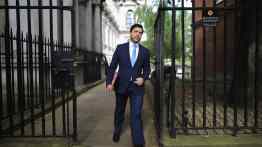
Away from Ukraine, it was all kicking off elsewhere in London yesterday. As the England rugby team was labouring to a 23-19 win against their Welsh rivals over at Twickenham, a similar fixture was taking place a few miles down the road at the nearby Richmond RFC ground. For, as per Six Nations tradition, a Westminster parliamentary team ran out to to take on their counterparts from the Senedd who had made the trip from Cardiff Bay. The London team was compromised of staff and members from both chambers in Parliament and was coming off the back of a successful 12-5 defeat of the Holyrood team in Edinburgh. But the Welsh team are made of sterner suff, having won nine consecutive fixtures in a row.

Sunday round-up: war in Ukraine ‘a very long haul’, says Truss

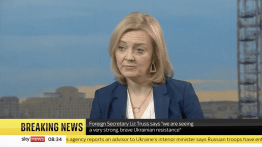
Liz Truss – War in Ukraine could last ‘a number of years’ The Foreign Secretary conducted the government’s media round this morning, in the week which saw Russia invade Ukraine. The capital of Kiev remains under siege from Russian forces, and, as of this morning, the country’s second largest city Kharkiv is also seeing fighting on its streets. Speaking to Trevor Phillips, Liz Truss said that everyone should be prepared for ‘a very long haul: https://twitter.com/RidgeOnSunday/status/1497855239097049088?ref_src=twsrc%5Etfw The UK ‘does welcome refugees’ Keir Starmer and the shadow home secretary Yvette Cooper called on the government to remove barriers for fleeing Ukrainians to come to the UK.

Germany’s defence spending boost will improve European security

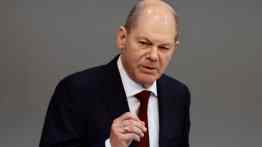
In yet another sign of how dramatically Putin’s invasion of Ukraine has changed Europe’s attitude to both Russia and security, the German Chancellor Olaf Scholz has just announced that the country will spend two percent of GDP on defence by 2024. This is a significant move, Germany currently only spends about 1.5 percent on defence, and will make Germany the biggest defence spender in Europe. Combine this with Berlin’s decision not to certify Nord Stream 2, its acceptance that it needs to reduce its dependence on Russian gas and its change of heart about sending arms into a war zone, and it is quite clear that the country’s strategic posture is very different today than it was a week ago.

Why Britain should offer asylum to Ukrainians

There is not much more that Britain can do for Ukraine. We have done more than most: sent 2,000 anti-tank missiles and stationed troops in eastern Europe to help other allies. But as thousands flee Kiev – not knowing if Putin will turn it into the next Grozny – there is something immediate and profound that Britain can do: offer asylum. Brexit powers of border control can be used to allow anyone with a Ukrainian passport to come here. Ukraine has a population of 44 million – it’s a small country. It wasn’t so long ago that 450 million Europeans had an unconditional right to live and work in the UK – and our country didn’t topple over then.

Why Germany’s decision to cut Russian banks from Swift matters

‘The Russian invasion marks a turning point,’ said Olaf Scholz on Saturday as he announced that Germany would break its long-standing principle of not sending arms into conflict zones by delivering 1,000 anti-tank weapons and 500 Stinger missiles to Ukraine. ‘It is our duty to support Ukraine to the best of our ability,’ he explained. With the halting of Nord Stream 2 and the offer of weapons, Berlin had already moved remarkably far out of its foreign policy comfort zone. Now it has gone a step further and agreed to exclude ‘selected Russian banks’ from the global payments system, Swift. It is not yet clear which banks will be targeted, which may affect the effectiveness of the sanctions.

Putin’s seizure of Chernobyl should terrify us all

The word ‘Chernobyl’ sends a shiver down the spine of most Europeans, and with good reason: it was the site of the world’s worst nuclear catastrophe. Now it has been seized by Russian forces in their ongoing invasion of Ukraine. So what is Putin up to? And does the world need to worry? The simple answer is yes: this is an act of war that could end up affecting us all. Radiation levels have reportedly increased at the site since the invasion, potentially in response to Russian shelling or radioactive dust being kicked into the air after the arrival of heavy military equipment in the area. There could be catastrophic consequences should more of the site be damaged. There is a risk of ecological and nuclear disaster at the site.

A new Europe is emerging from this crisis

With every hour that Kiev holds out, the geopolitics of Europe changes more. Germany, which so values its prohibition on sending weapons into warzones, has just announced that it is sending 1,000 anti-tank weapons and 500 Stinger missiles to support the Ukrainian forces. I expect that defence spending will rise considerably in the coming years Germany is also allowing other Nato members to export arms with German-made parts to Ukraine — which will make a material difference to the supplies that the Ukrainian government receives. Yesterday evening, it was announced that Russian banks are going to be cut off from Swift.

John Keiger, Mary Wakefield and Sean Thomas

21 min listen

On this week's episode, we’ll hear from John Keiger on Emmanuel Macron’s brand of performative diplomacy. (00:53)Next, Mary Wakefield on the few pros and many cons of the lady carriage. (10:30)And finally, Sean Thomas on how learning to work from home opens the door to working in paradise. (16:17)Produced and presented by Sam HolmesSubscribe to The Spectator today and get a £20 Amazon gift voucher.

Putin’s invasion has exposed the frailty of Europe’s armies

Putin’s forces are currently steamrolling Ukraine’s defences, with Russian troops circling the capital and invading from the south and east of the country. Meanwhile European leaders, neutered by their military weakness, have been unable to do little more than offer pointless sanctions and statements of solidarity. As Russian troops streamed across the border, European Commission President Ursula von der Leyen condemned the ‘unprecedented military aggression.’ When the Kremlin moved to recognise the Donetsk and Luhansk oblasts as independent states, the response in Brussels was to pass a fresh package of sanctions.

What is Sunak’s vision for the economy?

11 min listen

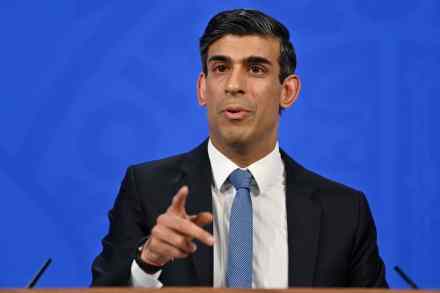
Katy Balls speaks to Kate Andrews and Tony Danker, the director general of the Confederation of British Industry (CBI), about the Chancellor's Mais lecture on Thursday, where he reaffirmed his belief in 'sustainably' cutting taxes.

Will war ruin Tory party chair’s firm?

As the Prime Minister and his government urge caution to companies over Russian engagement, will party figures be considering their own business affairs? With CCHQ coming under pressure over Russian donations in the past, Mr S couldn’t help but recall that Ben Elliot’s Quintessentially firm has a long history with Russia and high net worth individuals. The company – which has received more than £1 million in UK government contracts – makes much of its elite services on its website, boasting about how ‘our dedicated lifestyle managers make the impossible possible with access to private and exclusive cultural experiences, regularly making members’ dreams become reality.

Are Russia’s oligarchs the key to stopping Putin?

12 min listen

Russian forces are attempting to take Kiev, the capital of Ukraine. Ben Wallace, the defence secretary, said he would be spending the day trying to convince European allies like Germany and Italy, who are reluctant to put too harsh sanctions on Russia, to ban them from the Swift payments system. How else can the West put Putin under pressure?Max Jeffery speaks to James Forsyth and Katy Balls.

Tom Tugendhat and the worrying rise of Russophobia

Public life in Britain has taken a dark turn over the past 48 hours. Russia’s outrageous invasion of Ukraine has caused some people to lose their minds. War hysteria is everywhere. Jingoism is surging. Russophobia itself threatens to take hold in polite society. I can’t be the only person who feels deeply uncomfortable with the stifling, conformist and accusatory atmosphere that has descended on these isles in such swift order. Truth is the first casualty of war, they say. In fact it’s more often freedom and reason. Especially freedom of conscience: the freedom to think differently to those banging the drums of war, or, in this case, those calling for a huge Western showdown with Russia.

Gordon Brown’s office took Russian bank’s money

Labour has been trying to make political capital out of Russian-linked donations to the Tory party. Sir Keir Starmer might play the cross-party card in the House but not all on his benches share that sense of magnanimity. Liam Byrne enjoyed taking a pop at Boris Johnson's socialising with oligarchs yesterday while Rachel Reeves and David Lammy previously called for the Conservatives to return nearly two million pounds of donations made since Johnson took office in 2019. Labour's basis for this demand is that the donors 'made money from Russia or have alleged links to the Putin regime': quite the conflation between actual Kremlin cronies and those who have simply worked and made money there.

Harry and Meghan speak out on Ukraine

Amid all the gloom, a sliver of light has emerged from the rubble of Ukraine. As Sun-Tzu said: 'In the midst of chaos, there is also opportunity' – and some have certainly taken the opportunity to heap ridicule on themselves. Steerpike has cast his eye over the most ridiculous, self-involved and outlandish takes on Russia's invasion as celebrities and politicians trip over themselves to proclaim their thoughts to the world. Harry and Meghan No crisis would be complete without the right royal duo involving themselves. The pair released an online statement claiming that they 'stand with the people of Ukraine' – not literally of course, given that they live in an £11million mansion in Montecito, California, some 6,000 miles away from Kyiv.

Will Ukraine become Putin’s Afghanistan?

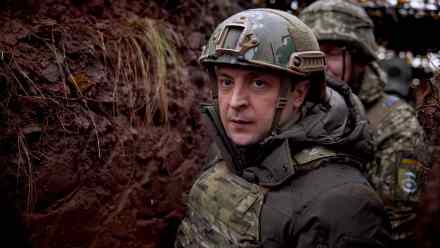
Defence Secretary Ben Wallace may be right that Russian troops have not succeeded in all their immediate objectives, that they are demoralised and have been incompetent, and have suffered heavy losses. But the idea Putin is failing miserably – as Wallace claims – won't be compelling to those who spent the night in Kiev's metro stations to shelter from Russian missiles. President Volodymyr Zelenskyy and his government colleagues, who warn that the first priority of Russia's special forces is their removal from the face of the planet, are also unlikely to be persuaded. For all Western leaders' words about imposing the 'mother of all sanctions' and not allowing the bully Putin to prosper, Ukrainians can only see Putin's overwhelming military capability.