Politics

Read about the latest political news, views and analysis

What can we expect from the G20 summit?

11 min listen

The G20 summit kicked off as world leaders arrived in Bali overnight. Ahead of the summit, Biden and Xi met to discuss tensions over trade, tech and human rights. The two claim they are ready for candid exchanges as China-US relations are at their lowest in decades.  Rishi Sunak also flew to his first G20 summit. The Prime Minister is expected to hold multiple bilateral meetings as he tries to make his mark on the world stage. Meanwhile, can he keep a grip on domestic issues ahead of the Autumn Statement this Thursday? Isabel Hardman speaks to Fraser Nelson and James Forsyth.

Matt Hancock has united Britain

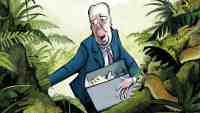
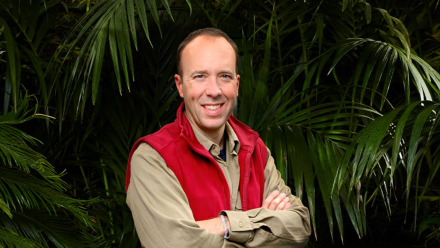
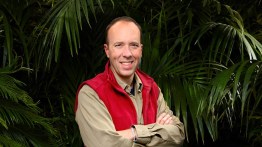
Some people deal with failure better than others. Matt Hancock, it seems, has spent the past three years trying to get over losing his bid to be leader of the Conservative party. But good news! Finally, Hancock has found solace. Upon being declared leader of the I’m A Celebrity Get Me Out Of Here jungle, he told his campmates his new position 'more than makes up for' his previous loss. Hancock has, yet again, attempted to explain why he is in the game show jungle. 'What I’m really looking for is a bit of forgiveness,' he declared.

Rayner’s war chest is wound up

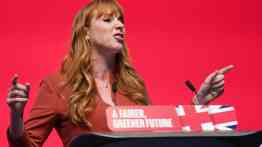
Cast your minds back sixteen months ago. Back then, Boris Johnson was in his pomp, having narrowly missed out on winning the Batley by-election. The vaccine roll-out was underway, with the UK leading the world out of Covid. And in the Labour party, there was much excited talk of a challenge by Angela Rayner to Keir Starmer's flatlining leadership. How the picture has changed, one year on. Labour is twenty points ahead in the polls, with Johnson (temporarily?) consigned to the history books. Now Starmer reigns supreme in his party, with the Tories in disarray. And rather than mount a challenge, Rayner's allies have now moved to wind up her eponymous war chest. Back in early 2020, Rayner amassed donations of £185,000 from supporters for her successful campaign to be Labour deputy leader.

The Istanbul bombing will deepen Turkey’s rift with the West

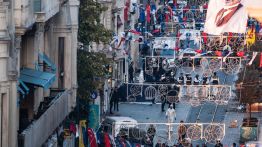
Istiklal Avenue is a picture of chaos at the best of times. Istanbul’s answer to Oxford Street, the bustling pedestrian area is lined with upmarket shops, cafes and overpriced kebab stands. Groups of men sit out till late at night on benches drinking tea and playing chess, while families pushing buggies jostle with tourists for ice cream and pastries. On Sunday, though, that chaos gave way to outright panic when an explosion ripped through the heart of the city, Europe’s largest and home to more than 15 million people. One shopper captured the moment the fireball erupted in the packed crowd, sending women and children scrambling to escape. Meanwhile, pictures taken from offices overlooking Istiklal show mangled bodies and scorched paving stones. https://youtube.

Braverman’s Channel migrants scheme won’t work

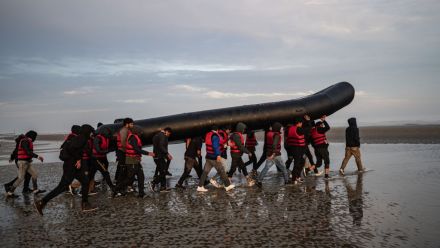
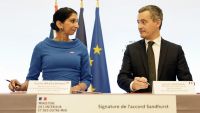
One tries to find grounds for optimism about the resolve and capacity of Her Majesty’s Government in these testing times but there is none to be found in today’s deal with France on Channel migrants. In fact, the wearily familiar outline of the agreement – yet more UK taxpayers’ money going to the French in return for more beach police patrols, better information-sharing, embedded UK officers working alongside them, blah blah blah – fits very neatly into the failed approach of Boris Johnson and Priti Patel. Clearly having what Home Secretary Suella Braverman heralded as a '40 per cent uplift in the number of French gendarmes patrolling the French beaches' has the potential to reduce the cross-Channel traffic at the margins, and for a while.

Would the real Matt Hancock please sit down?

'Politics,' as the old quip has it, 'is showbusiness for ugly people.' That quote was minted in the good old days when there was, at least implicitly, some clear blue water between the two things: it intended to draw an arch point of comparison between two quite different spheres of activity. Politics was momentous, solemn, and consequential; showbusiness was vain, silly and inconsequential. The quip points to a sneaking sense that, secretly, those in the former realm were actuated by less high-minded concerns.   These days, there is less and less sense, either among the general public or the practitioners of either art, that any such distinction exists. Both are now simply vehicles to attain the infinitely fungible currency of fame. That’s a slippage too far.

Dumping Trump could backfire for the Republicans

The walls are closing in on Donald Trump. Again. But this time it’s different. Again. In the wake of the Republicans’ performance in the midterms, which ranges from lacklustre to biblically awful depending on how many drinks the GOP consultant you’re asking has had, Trump is taking all the blame. There are two problems with this. First, it’s not really true that it’s all Trump’s fault. And second, it is very likely to backfire and empower an otherwise somewhat floundering Donald. As to the issue of blame, yes, Trump promoted some primary stinkers. Dr. Oz and Don Bolduc in the Pennsylvania and New Hampshire Senate races respectively performed particularly odiously. But he did get a win with J.D.

Sunday shows round-up: Hunt says ‘everyone’ will be ‘paying more tax’

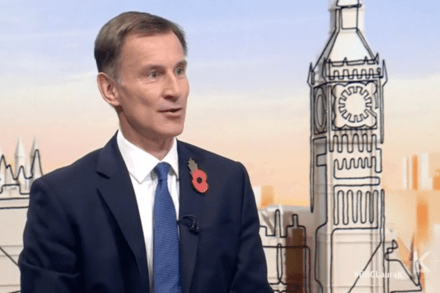
The Chancellor of the Exchequer Jeremy Hunt joined Laura Kuenssberg this morning ahead of the Autumn Statement, which will be held on Thursday.  Fans of a good fiscal event will no doubt reflect on 2022 as a stellar year, but for most people the outlook will not be rosy. Embracing the possibility of a recession ahead, Hunt laid the groundwork for some unpopular choices: https://www.youtube.com/watch?v=8lVwvXJN6tQ ‘We need to understand’ why people left the labour force Kuenssberg challenged Hunt over why the UK had not yet managed to grow the economy back to where it had been before the pandemic turned everything on its head: https://www.youtube.com/watch?

Is this the beginning of the end for Jacinda Ardern?

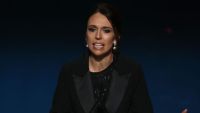
Many people envisage Jacinda Ardern’s 2017 electoral victory as a romp, a 1997 Tony Blair-esque sea change of optimism. In reality, in the months leading up to that election Ardern’s Labour party was by no means a sure bet. In a similarly blurred retrospect, Ardern’s first term as PM is thought of as unified and productive. People believe she was always going to coast to re-election before Covid hit. In fact, Ardern’s government may have been in a parlous enough state to lose, before being suddenly resuscitated and given focus with massive public backing in response to the pandemic.   It was the 2020 election, set against the backdrop of Covid-19, that delivered Labour its triumphant majority and the power to govern alone.

Is Nixon the most misunderstood president in history?

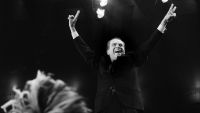
Has the reputation of any American statesman been more effectively trashed than that of Richard Milhous Nixon? Donald Trump’s, perhaps – certainly the forty-fifth president inspires loathing on a scale matched only by the thirty-seventh. Nixon and Trump have a few other points in common. Both men built coalitions through appeals to forgotten voters. They spoke to Americans who were frightened by rapid and destructive social and economic change. Both were denounced as fascists and standard bearers of the most reactionary forces in American life, yet in fact both governed with substantial moderation. Nixon and Trump prove the truth of Marx’s quip that history repeats itself first as tragedy, then as farce. Nixon is the tragedy; Trump the farce.

The sinister attempts to ‘decolonise’ mathematics

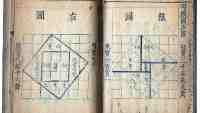
Mathematicians in British universities are now being asked to ‘decolonise’ the curriculum. This autumn, the Quality Assurance Agency for Higher Education (QAA) – an independent charity which reviews university courses – launched a consultation that urged universities to teach a ‘decolonised view’ of mathematics.   It is easy when you work at a university to roll your eyes at this sort of thing and play along. But as a mathematics academic, I felt it was my duty to challenge this unscientific proposal. This week I published an open letter to the QAA criticising their consultation and was delighted that a number of high-profile professors and mathematicians from minority groups agreed to add their signatures.

The SNP’s misinformation campaign on Scottish renewables

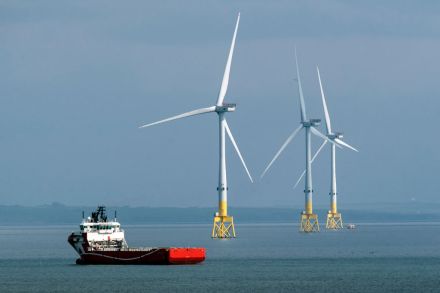
SNP MP Stephen Flynn was emphatic when he used a certain statistic in Parliament last month: ‘Scotland’s potential in this regard is huge – absolutely enormous... We have 25 per cent of Europe's offshore wind capacity – 25 per cent!' he told his audience. It is not the first time Flynn has used the statistic, and neither is he the only SNP MP, or MSP, to use it. 'With more than 25 per cent of Europe’s capacity in wind energy, Scotland is set to become a massive producer and exporter of renewable energy,' wrote Angus Robertson MSP, the SNP's External Affairs and Culture Secretary at Holyrood, in a newspaper column in January.

Was Lord Wolfson right?

26 min listen

Natasha Feroze hosts as Fraser Nelson and Kate Andrews debate Lord Wolfson’s recent BBC interview in which he called for the UK to import more low skilled workers in order to fill the country’s job vacancies.

Isabel Hardman, Matthew Parris, Graeme Thomson and Caroline Moore

21 min listen

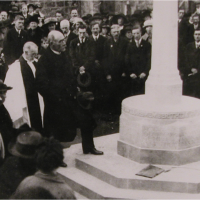
This week: Isabel Hardman asks how Ed Miliband is the power behind Kier Starmer's Labour (00:57), Matthew Parris says we've lost interest in our dependencies (05:03), Graeme Thomson mourns the loss of the B-side (11:57), and Caroline Moore reads her Notes on... war memorials (16:51).  Produced and presented by Oscar Edmondson.

Meet the British soldiers fighting in Ukraine

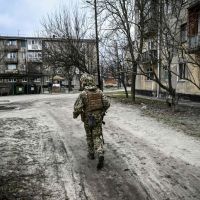
At his base near the frontlines outside of Kherson, an ex-British soldier named JK shows me a video of what looks like a scene from the world war one film 1917. It shows him and two other volunteer fighters walking through a burning, smoking treeline, having spent two hours pinned down by artillery and sniper fire that killed three Ukrainian comrades. It was a grim, exhausting day – and, as soldiering experiences go, far more rewarding than life in the British army.  ‘When I first signed up for the British army, there was drill and discipline, and if you were punished, your instructor would make you do press ups – that keeps you fit and toughens you up,’ said JK, whose own great-great grandfather won the Victoria Cross in world war one.

Dominic Raab’s unhappy Whitehall return

Dominic Raab likes to refer his six-week spell away from the Ministry of Justice as a 'sabbatical' but for many of his staff it was more of a respite. The Deputy Prime Minister, Lord Chancellor and Justice Secretary (as he likes to be called) was restored to the MoJ last month by Rishi Sunak, after he was unceremoniously booted out of the department by Liz Truss at the beginning of September. But it seems that civil servants aren't too pleased at Raab's return, judging by the smorgasbord of stories that appear in today's newspapers. The Guardian details how senior staff were offered a 'route out' of the ministry when he was reappointed amid concerns about his behaviour.

Don’t write off the Russian air force

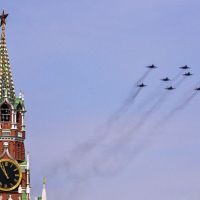
The Russian air force’s  failure to establish air superiority over Ukraine – and the consequent inability of its fighter and bomber aircraft to meaningfully affect the course of the war – has been one of the defining features of the invasion so far.    It has even become almost a given in policy and public discussion that Russian airpower is a busted flush. But recent research conducted by RUSI in Ukraine shows that in fact Russia conducted hundreds of strike sorties and fighter patrols deep inside Ukrainian airspace during the first three days of the invasion – which suggests it would be a dangerous mistake to underestimate Russian airpower as the war continues.