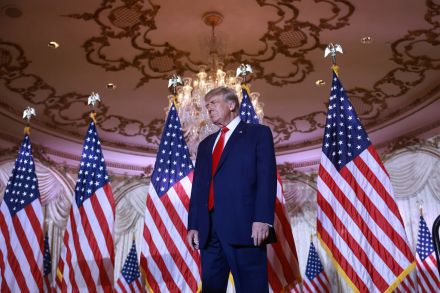
Can Donald Trump win in 2024?
44 min listen
Freddy Gray speaks to the editor of Modern Age Daniel McCarthy about the former president’s chances for a comeback.
Read about the latest political news, views and analysis
44 min listen
Freddy Gray speaks to the editor of Modern Age Daniel McCarthy about the former president’s chances for a comeback.
There’s been none of the wolf warriorism we’ve become used to from Chinese diplomats as President Xi met world leaders this week. While meeting presidents Biden, Macron and Australia’s PM, Xi was all smiles; the discussion focused on climate change and food security, as well as how to prevent tensions from spilling over into war. The one exception to Xi’s more charming image seems to have been his encounter with Canada’s leader Justin Trudeau, who received a dressing down for his government leaking contents of their bilateral the day before. But this awkward clash was the exception. And on Russia, Xi seems to have said all the right things.
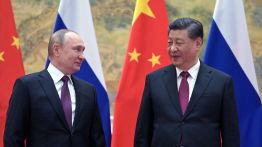
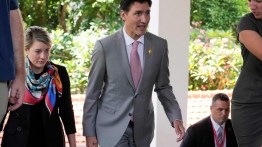
Justin Trudeau might be the self-anointed king of elite liberal opinion but it appears his methods find little favour with Beijing. Cringeworthy footage has now been released of President Xi Jinping dressing down the Canadian premier on the side-lines of the G20 conference. The two leaders were caught on camera having an, er, lively discussion at the global summit in Bali today, with Xi tearing into the Prime Minister. A visibly irritated Xi confronted Trudeau about how details of an earlier meeting between them, which was held yesterday, had been leaked to the press by Canadian government sources. The media reported that Trudeau had raised 'serious concerns' over suspected domestic interference by China during his first talks with Xi in more than three years.
Global Rishi was absent from PMQs today. He’s busy reclining in a supersonic airline seat, paid for by someone else, as he flies back from the G20 summit, preceded by a stint at Cop27. The aim of these endless conferences is to protect us all from the curse of low taxes, falling energy bills and national sovereignty. And the negotiations are said to be going well. As he jets needlessly around the world, campaigning to stop others from jetting needlessly around the world, Rishi is probably unaware of the petty squabbles that occupy MPs. Meanwhile, on planet earth, this is a Very Special Week in Parliament. It has its own designation and it highlights a glaring social injustice. However, which of us can actually name the important cause which is being promoted?
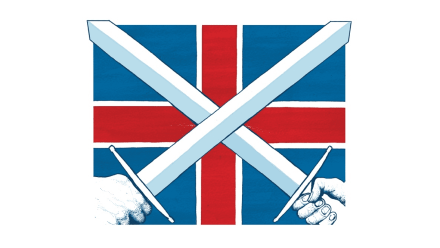
The Supreme Court will hand down its judgment in the Scottish independence referendum case next Wednesday. This is the reference brought by the Lord Advocate, Scotland’s most senior law officer, over Nicola Sturgeon’s proposed Scottish Independence Referendum Bill. Downing Street has refused to grant a re-run of the 2014 referendum, in which Scots voted to remain part of the United Kingdom. Sturgeon has said her government will simply hold a referendum of its own. Going to the Supreme Court is a political move, and presumably reflects Sturgeon’s suspicion that Holyrood holding a referendum in defiance of Westminster is unlawful. The issues before the justices are threefold. One, whether this is a ‘devolution issue’.

12 min listen
Last night there were fears of a direct attack from Russia on a NATO country, after a missile struck two Polish nationals on the border with Ukraine. An investigation is now underway, but who is responsible for these deaths? Also on the podcast, Dominic Raab took PMQs today despite bullying allegations against him gathering pace. What are the latest developments in the bullying row? Cindy Yu speaks with James Forsyth and Katy Balls. Produced by Cindy Yu and Oscar Edmondson.
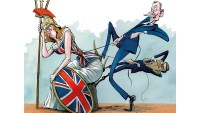
Rishi Sunak has ushered in a new era of austerity, not just Osborne-style spending cuts, but tax hikes as well. His Chancellor, Jeremy Hunt, says the plan is not just to balance the books but to control inflation, and so this will be the theme of the Sunak years: Austerity 2.0. Throughout the leadership campaign, Sunak repeatedly argued that persistent high deficits were no longer an option. Difficult decisions lay ahead, he said, and claims to the contrary were ‘fairy tales’. His critics said this was a safety-first ‘Treasury view’, and Britain had plenty of scope to borrow more. But Sunak was certain that the debt racked up during the pandemic – not just by Britain but countries the world over – guaranteed a wake-up call at some point.

'A man's a man for a' that' said Robert Burns. Well, perhaps not for much longer. The Scottish Parliament has recently voted in favour of legislation to allow lads to become lassies, and vice versa, merely by declaration. No medical intervention or diagnosis of gender dysphoria required. Under the Gender Recognition Reform (Scotland) Bill, which enters its committee stage this week, Scots will be able to change their legal sex at ages 16 and 17 after six months of living in their new gender, and after three months if aged over 18. First Minister Nicola Sturgeon has enthusiastically embraced the claim made by her coalition partners, the Scottish Greens, that ‘transwomen are women’.
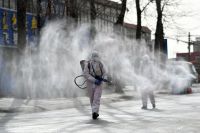
China’s president Xi Jinping has shaken hands with more world leaders over the last two days than he has met in three years. Xi hasn’t worn a mask throughout the G20 summit: from the moment he and his opera singer wife stepped off the plane in Bali, emerging from a Covid cocoon. When the summit finishes tomorrow, Xi will go straight to Thailand to meet other Asian leaders at the APEC summit. His outgoing deputy Li Keqiang has also been meeting other southeast Asian leaders in Cambodia. For China’s leaders, pressing the flesh has been unthinkable since the pandemic first broke out in China in December 2019. Now the pathological zero Covid approach may be easing up. Xi’s appearance at the G20 coincides with some slight opening up for ordinary Chinese too.
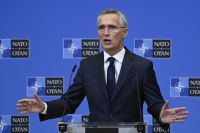
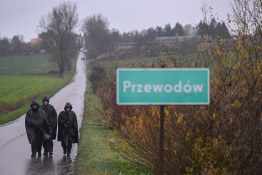
When what seems to have been a Ukrainian S-300 air defence missile accidentally hit the village of Przewodów in Poland, killing two farm workers, it became at once a litmus test of national attitudes and a reminder of the wider dangers of the war in Ukraine. At first, confusion about what had happened allowed everyone to reach for their favourite conclusion. There were suggestions that this was a deliberate Russian attack to test Nato’s will, and calls for the alliance’s Article 5 – whereby an attack on one member should be considered an attack on all – to be invoked. Poland’s early assessment that this was a ‘Russian-made missile’, which could still apply to much of Ukraine’s arsenal, too, was quickly turned into a ‘Russian missile’ in clickbait headlines.
Since the 2008 financial crash, British politics has been moving faster and faster, and becoming less stable. This frenzy reached its apogee with Liz Truss’s 44-day stint in No. 10 which had enough drama for a ten-year premiership. One of the challenges for Rishi Sunak is to calm things down and to return politics to a more normal pace. It will be a good sign for the government if the World Cup dominates newspaper front pages for the next month. However, there is one area where Sunak needs politics to move faster than normal. Jeremy Hunt’s Autumn Statement is the kind of fiscal event that you would expect at the beginning of a parliament. It is about dealing with a difficult fiscal inheritance. It is designed to fix the ‘mistakes’ of the previous administration.
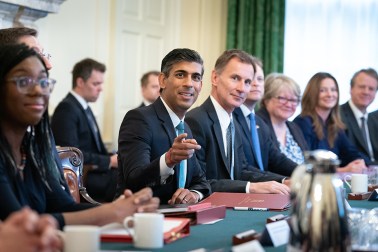
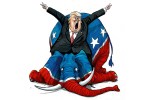
Donald Trump has been running for president for at least a decade. His campaign did not start on 16 June 2015, when he descended that golden escalator in that eponymous tower in New York. It began on 19 November 2012, days after President Barack Obama had defeated Mitt Romney, when Trump registered a trademark application for the phrase he pinched from Ronald Reagan: ‘Make America Great Again.’ After he won the White House in 2016, Trump did not cease pursuing re-election. After he lost in 2020, ditto. The fundraising – the key part – and therallies have kept going and going. On Tuesday night, at his home at Mar-a-Lago, Florida, he simply made it official.
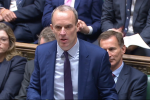
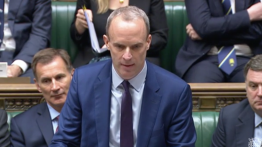
Once again, the Tories went into Prime Minister’s Questions in a defensive crouch over the behaviour of one of their ministers. Shortly before the session, Rishi Sunak tried to soften the blows that were due to rain down on Dominic Raab over allegations about his behaviour towards civil servants. The Prime Minister, still overseas, announced there would be an independent probe into the claims that had been made. This at least meant Raab, who was standing in for him in the Commons, could say the government takes bullying seriously. But it didn’t stop the session from being dominated by Labour attacks on the matter.
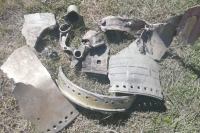
Yesterday, during the largest wave of missile strikes conducted by Russia since February, a shell flew six kilometres over the Ukrainian border into Poland, killing two people. Before any facts had been established, there was confusion in the Russian media whether to report on the story with outraged protestation or excitement. To begin with, Russian commentators reacted with glee. TV presenter and known Kremlin mouthpiece Margarita Simonyan gloated on social media, referencing recent Ukrainian shelling on the Russian border and taunting ‘Now Poland has its own Belgorod region, what did you expect?’. Nevertheless, several hours after the news broke, a statement came from the Russian Ministry of Defence denying responsibility for the missile.
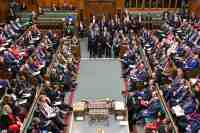
'It's coming home!' England fans may cheer next week in Qatar but there's one thing Commons' bosses don't want coming back with them: malicious viruses that could put parliament's internet system at risk. Security chiefs on the Westminster estate have issued strict guidance to those football fanatics heading off to the oil rich Arab country this week. Messages have been posted on the Palace of Westminster's intranet, warning staff that 'as someone who works for parliament, the information stored on your devices is valuable and potentially of interest to malicious actors.' Researchers and secretaries are urged to 'not take any parliamentary-issued devices with you' with disposable burner phones and new personal email accounts suggested instead for the trip.
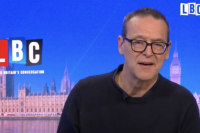
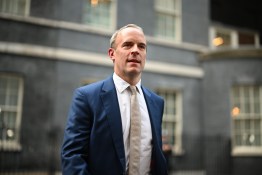
First it was Suella Braverman, then it was Gavin Williamson, now it is Dominic Raab. Three ministers have been in the crosshairs of Westminster's press pack these past three weeks. The first survived, the second resigned and now it is the turn of the Deputy Prime Minister to experience life at the centre of a media storm. The questions facing Raab are of personal conduct, with anonymous briefings aplenty about his allegedly aggressive demeanour, treatment of staff and aversion to Pret sandwiches. One person though who is more than happy to go public with his views is Sir Simon McDonald, the Permanent Secretary at the Foreign Office between 2019 to 2020 when Raab was Foreign Secretary.
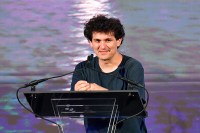
Billion-dollar losers Sam Bankman-Fried, the 30-year-old founder of FTX, saw his wealth plummet from $16 bn to zero when the company collapsed. Other big fortunes lost: – Masayoshi Son, founder of Softbank, lost paper wealth of around $70 bn (in today’s money) during the dotcom crash of 2000-2. The company later floated and now he is reckoned by Forbes to be worth $22.8 bn. – Yasumitsu Shigeta, founder of mobile phone company Hikari Tsushin, lost a paper fortune of $42 bn in the dotcom crash, but thanks to a partial recovery in shares he is now worth $3.4 bn, says Forbes. – John Rockefeller, the oil magnate and America’s richest man at the time of the Wall Street Crash, is reckoned to have lost the equivalent of $10 bn.
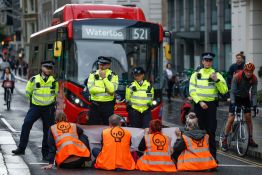
What do Just Stop Oil protesters have in common with the suffragettes? Their antics of blocking motorways and chucking tomato soup at famous paintings might lead you to think there are few parallels. But Helen Pankhurst – great-granddaughter of Emmeline – thinks they do share some common ground. Both groups, Pankhurst suggests, are on the right side of history. In an article for the Guardian, she claims that ‘the climate crisis is a feminist issue’. ‘I have absolutely no doubt that in 100 years’ time (climate activists) will be seen as the real heroes,’ she says. Like Just Stop Oil, the suffragettes targeted museums, sports events and public buildings to raise the profile of their cause. But contrary to what Pankhurst suggests, the similarities stop there.
Uncertainty still surrounds what happened with the missile that struck the village of Przewodów in Poland, around four miles from the Ukrainian border, which killed two farm workers last night. President Joe Biden has said that the missile’s trajectory means it is ‘unlikely’ it was fired from Russia. At the moment, it is unclear whether it was a missile fired by Russian forces in Ukraine, one knocked off its course by a Ukrainian interception – or a Ukrainian air defence missile gone astray. There are reports this morning that the initial US verdict is that it was probably a Ukrainian air defence missile.
Another week and another minister under pressure. But rather than hand in his resignation notice like Gavin Williamson, Dominic Raab has chosen to come out swinging against his critics. Facing questions about his conduct, the Deputy Prime Minister, Lord Chancellor and Secretary of State for Justice (as he likes to be called) has drafted a public letter, confirming there are two formal complaints lodged against him. One was made during his time at the Foreign Office; the other during his first tenure as Justice Secretary. He has now requested that Rishi Sunak begin an independent investigation into the claims and promises to cooperate fully with the outcome. Raab says he will not be standing down from government while the inquiry is ongoing.