Politics

Read about the latest political news, views and analysis

Government threatened with Budget defeat

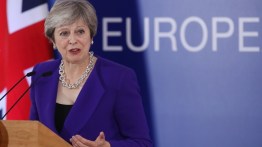
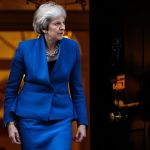
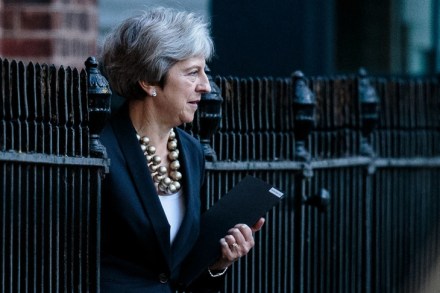
The government is facing a defeat on the Budget. But rather than a Brexit showdown or the DUP pulling the rug from under Theresa May's feet over the rumoured backstop, the issue is a domestic one. After Tracey Crouch resigned from government over the decision to seemingly delay reducing the maximum stake for fixed odds betting terminals (FOBT) by six months, more than 20 Tory MPs – including Remain MPs and Brexiteers such as Jacob Rees-Mogg – and all 10 DUP MPs have signed an amendment demanding the new maximum stake be brought forward. The vote is scheduled for next week. While the government would currently lose that vote – no-one expects it to get that far with a climbdown expected in the next few days.
Horst Seehofer’s resignation signals the end of the German political elites

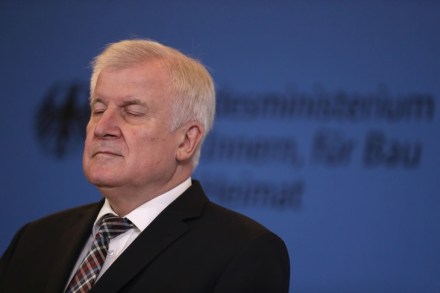
The German politicians who were once larger-than-life figures, dominating their political parties as easily as they dominated Germany’s political discourse, are fast becoming dinosaurs. First it was Martin Schulz, who resigned as chairman of the Social Democratic Party in February after some backbenchers opposed the party’s decision to enter into another grand coalition with Angela Merkel’s Christian Democratic Union. That coalition deal was the product of a particularly humiliating loss for the SPD in the 2017 German federal elections, where it barely scrounged 20 per cent of the vote.

What’s the expiry-date of a Westminster scandal?

The House of Lords privileges and conduct committee recommended today that the former Lib Dem peer, Lord Lester, be suspended from the chamber until 2022, after he was accused of offering ‘sexual inducements’ and sexually harassing a complainant - which he strenuously denies. If the House of Lords agrees with the recommendation (which it will decide in a vote on Thursday) it will be the longest suspension of a politician in parliament's modern history. Mr Steerpike suspects though that Lord Lester won’t be the only parliamentarian sweating ahead of the vote on Thursday.

Labour U-turn: ‘Brexit can be stopped’

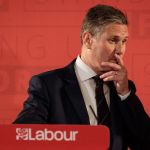
With Theresa May's government seemingly on the brink of collapse over the backstop agreement, the Prime Minister can take heart that the Opposition are also experiencing Brexit turbulence. Over the weekend, Jeremy Corbyn set the cat among the pigeons by telling a German newspaper that Brexit cannot be stopped. The Labour leader's comments dismayed a lot of pro-EU Labour voters. But fret not, in the space of two days Labour's Brexit position appears to have changed again. Keir Starmer – the shadow Brexit secretary – has just told the Today programme: 'Brexit can be stopped.' Expect the position to change again by end of play.

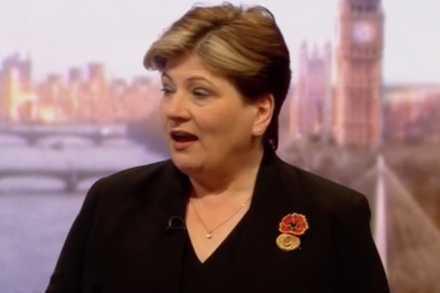
Sunday shows roundup: Emily Thornberry on a second referendum – ‘All options are on the table’

Damian Hinds - May's opponents should consider 'what the alternatives are' As the nation prepared to mark the centenary of the end of World War One, and to pay its respects to those who have died as a result of war, politicians from both major parties sat down for their final TV interviews before the ceremonies began. The Education Secretary joined Andrew Marr, and the discussion turned to Transport Minister Jo Johnson, who resigned on Friday to call for a second referendum on Brexit. Hinds issued a word of caution to the government's critics within the Conservative party and the DUP: [embed]https://twitter.com/BBCPolitics/status/1061557678156132352[/embed] AM: [Are there] more resignations to come? DH: We’re in the latter stages of this negotiation, about 95% of the way through.

If Jo Johnson is so worried about financial services, he should back Brexit

Jo Johnson has noticed that Theresa May has managed to unite the country, in that both Leavers and Remainers worry that her deal will let the EU pass our laws and regulate our markets but leave us no say in that process. But why does he think that staying in the EU is a remedy for the problems he outlines? He focused on a supposed threat to the service sector, spelling out the damage he seems to think Brexit would do. Here’s what he has to say: “Even if we eventually secure a customs arrangement for trade in goods, it will be bad news for the service sector — for firms in finance, in IT, in communications and digital technology. Maintaining access to EU markets for goods is important, but we are fundamentally a services economy.

Another day, another Johnson calls for a second referendum

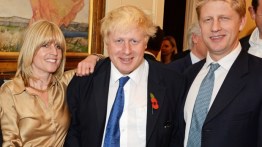
After Jo Johnson resigned on Friday over the government's Brexit position, his brother Boris was quick to take to social media to commend Jo for taking a brave stand – by calling out the flaws with the proposed Brexit deal. However, the former foreign secretary stopped short of backing his brother's call for a second referendum – also known as a so-called 'People's Vote'. Still, Jo need not worry – there are plenty of other Johnsons willing to fill that void. With Jo and Boris's sister Rachel a vocal Remain campaigner already, their brother Leo has now joined the fold. Leo Johnson took to Twitter to praise his brother Jo and call for a 'real vote' – going so far as to @ his rogue Brexiteer brother Boris. https://twitter.

We are heading towards a constitutional crisis on Brexit

Pity Olly Robbins and Sabine Weyand who are as we speak negotiating a Brexit deal for their respective bosses, Theresa May and the EU27. Because following the resignation of Jo Johnson, it is now clearer than ever that the deal they will probably agree this weekend, to be put to the Cabinet on Monday (or at the very latest on Tuesday), will be rejected by Parliament. They are straining every one of their intellectual sinews to reach an agreement that is almost impossible given the ideological gulf between them on how to keep open the border between Northern Ireland and the Republic of Ireland. And when they succeed through the application of sophistry on a Herculean scale, what then?

The only case Mrs May can make for her Brexit deal

Jo Johnson’s resignation, the DUP kicking off and the European Commission's Article 50 task-force talking about a lack of progress mean that it hasn’t been a good end to the week for Theresa May. As I write in The Sun this morning, one government source says ‘if there’s no November Council, then no deal goes into overdrive’. But given Theresa May’s desire to avoid no deal there probably will be some sort of agreement in the not too distant future. But it will be flawed—and Theresa May should say so. Why would a Prime Minister admit that a deal they’ve negotiated isn’t great?

Why everyone wants a taste of Brexit

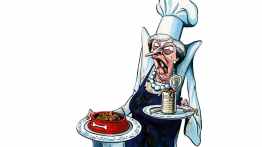
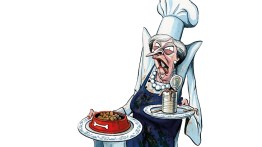
When Boris Johnson declared this week that Theresa May’s new deal would be a ‘Christmas present of the finest old Brussels fudge,’ he embraced one of Brexit’s most enduring motifs: food. This week's Spectator cover story 'Brexit is Served' is full of culinary metaphors. The language of food seems to cross the Brexit divide: Remainers and Leavers are united in their love of food and for good reason: when it comes to food we all have wildly different tastes and it is the same with Brexit. Like Marmite, you either love Brexit or you hate it. It began with Andrew RT Davies’ promise to the Tory party conference in 2016. ‘Mark my words’, he told delegates, ‘we will make breakfast – Brexit – a success’.

The Spectator Podcast: why May’s Brexit deal is hard to stomach, but the alternative is worse

As Theresa May prepares to unveil her Brexit deal, we ask: just how bad is it, and what happened to ‘no deal is better than a bad deal’? In the American midterms, the Blue Wave didn't happen, but Democrats did take control of the House of Representatives – what next for Trump’s presidency? And last, as we approach Remembrance Sunday, who are the lives we are remembering, and is it time to move on? First, Theresa May is serving up two unpalatable options on Brexit – her deal or no deal. If we take her deal, Britain risks being tied to the EU forever through the customs union; but if there is no deal, the country will face a period of instability and disruption that we are simply not prepared for.

Could the UK out-grow the EU after Brexit?

Collapsing retailers. A looming far-left government threatening nationalisation. And perhaps most significantly of all, our potentially chaotic rupture with our largest, closest and most significant trade partner. It doesn’t seem to matter what you throw at it, the British economy continues to be surprisingly resilient. Figures out today showed it expanded at 0.6 per cent in the third quarter, its fastest rate for a couple of years, and a rate which should keep annual growth at a more than respectable 2 per cent plus. That will come with all the usual caveats of course. It was helped by all the money we spent in the pub watching our boys do so well in the World Cup this summer, the pound was weak yet again, and much of it was financed by hammering our credit cards as usual.

The conundrum of Britain’s continued growth

The conundrum of economic growth continues. The withdrawal process from the EU is, even by the admission of the most ardent Brexiteers, going pretty badly. We have a rearguard Remain lobby trying to talk down the economy at every opportunity – something which you might think ought to be undermining confidence. And yet still there is no sign of the Brexit-induced recession which the Treasury told us a month before the 2016 referendum would be inevitable within two years of a Leave vote. The GDP figures for the third quarter released by the Office of National Statistics (ONS) this morning, show that the economy grew by 0.6 per cent in the third quarter. It is not dynamite, especially considering that growth was a more modest 0.1 per cent in the first quarter and 0.

Letters | 8 November 2018

Hubris and nemesis Sir: Douglas Murray’s assessment of Angela Merkel’s decision to stand down as German Chancellor (‘Europe’s empty throne’, 3 November) suggests a certain symmetry with the fate of our own former Prime Minister. David Cameron also declared that he would leave office at a time of his own choosing, but circumstances conspired against him. Mutti shows a great deal of presumption in announcing she will stay until the next election. If German politics bears any resemblance to our own, the very act of announcing a long goodbye will ensure that she leaves before her chosen moment. Cameron brought about his own demise by hubris, thinking he could renegotiate the terms of EU membership.

Deal or no deal?

When the Lisbon Treaty was signed in 2007, the inclusion of Article 50 was hailed as a concession to British Eurosceptics. For the first time there was an exit clause: a clear, legal way for a country to leave the European Union. Whatever concerns Britain had about the federalist direction of the EU, it was now at least enshrined in treaty that this country had a right to get out should MPs vote for it to do so. It was intended as a reassurance that the United Kingdom had the sovereign right to leave the EU if it wanted to. What worries cabinet members about the current Brexit plan is there is no clear exit clause. Because of the so-called ‘backstop’, the UK will not be able to leave unilaterally. Even Downing Street has admitted this.

The Irish border issue is no mere sideshow – and UK ministers are mostly to blame

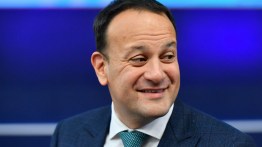
We may or may not hear news soon of a settlement of the Irish border issue that will allow Brexit to proceed without the calamity of ‘no deal’. Word this week was that Irish taoiseach Leo Varadkar might offer a compromise ‘review mechanism’ for the ‘backstop’ which might otherwise leave the UK locked in a customs union — but like me, you’re probably none the wiser as to what that actually means.

Drive-thrus

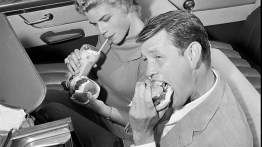
My wife and I have a set routine after landing back at Gatwick. We collect our bags, clear customs and are reunited with our car (Meet and Greet parking is by far the best value for money and avoids an hour or so of inhaling a mini-cab’s ‘vehicle deodoriser’). Then we head for the McDonalds ‘Drive-thru’ restaurant next to the BP garage, where Joanna normally goes for the Big Mac meal, while I vacillate between the McChicken sandwich and a bucket of chicken nuggets with a side order of fries. We look forward to this guilty secret so much that often we discuss our order in detail while queuing at passport control. Whatever we choose fills us up and is a marked improvement on what you can buy on-board.

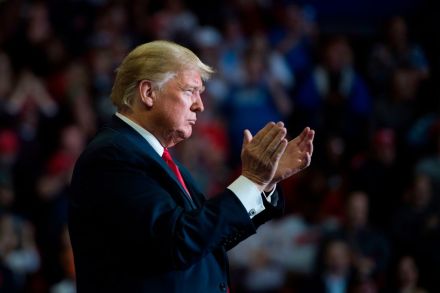
How will Donald Trump react to his midterm elections setback?

Midterm elections are traditionally nightmares for the party of a sitting president. Just ask former president Bill Clinton, who suffered the humiliation of seeing his Democratic Party lose 54 seats during Newt Gingrich’s 1994 Republican Revolution. Ask George W. Bush, whose blunders in Iraq cost the GOP control of both chambers of Congress in 2006. Or maybe ask Barack Obama, who candidly admitted after the electoral disaster of 2010 (in which the GOP picked up 63 seats on their way to capturing the House) that he needed to do a better job presiding over America’s economic recovery.

The leaked Brexit memo exposes May’s botched strategy

The leaked plan of how the Government might try to sell the Brexit deal contains a telling passage. The memo instructs the Cabinet Office to talk up the agreement by ‘comparing it to no deal but not to our current deal’. For all the claims by a government spokesman that the 'misspelling and childish language in this document should be enough to make clear it doesn't represent the government's thinking', this key phrase is the closest we have come to a disturbing admission: that Theresa May’s deal could leave us worse off than remaining in the EU.

Does a Democratic House win pave the way to impeachment?

At an election-night party hosted by a leading light in the Clinton White House, the hostess wore blue, anticipating the ‘blue wave’ that Democrats hope is about to sweep away the Republican majority in the House of Representatives. As I write, the Democrats are up 14 seats. They need to gain 23 to win the House. Opinion polls going into Tuesday gave them a good shot at that – and a smaller chance of winning the Senate. But then again, opinion polls predicted Donald Trump would lose and that Brexit wouldn’t happen. And some Democrats talked about how they would need a huge margin in the popular vote, as much as 10 points, to overcome how Republican states have redrawn the boundaries of Congressional seats.