Politics

Read about the latest political news, views and analysis

Full text: Theresa May defends her Brexit deal

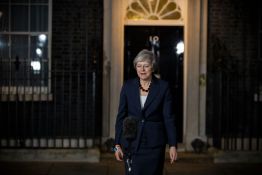
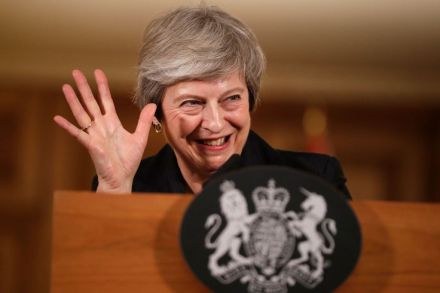
Serving in high office is an honour and privilege. It is also a heavy responsibility. That is true at any time - but especially when the stakes are so high. And negotiating the UK’s withdrawal from the EU after 40 years, and building from the ground-up a new and enduring relationship for the good of our children and grandchildren is a matter of the highest consequence. It touches almost every area of our national life: our whole economy and virtually every job; the livelihoods of our fellow citizens; our integrity as a United Kingdom of four nations; our safety and security – all of these are at stake. My approach throughout has been to put the national interest first. Not a partisan interest. And certainly not my own political interest.
Has Nigel Farage actually read the ‘worst deal in history’?

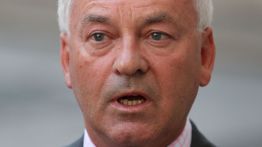
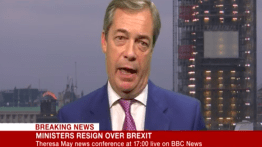
Nigel Farage was back on the airwaves today, and somewhat unsurprisingly, he was not a fan of Theresa May's Brexit proposal. So much does he hate it in fact, that he told viewers: 'There's only one thing to do, when this, the worst deal in history, and that is to put it in the bin. A strong opinion. But had he actually read the 'worst deal in history' he professed to hate so much? Asked by the BBC, Farage had to admit that he hadn't yet found the time: 'Well I've read some of it, and my lawyers read all 585 pages and the more I learn, the less I like it.' But have you read the whole document? 'No, I could take three days off and so I suppose.' Well, to be fair him, it can be hard these days to find the time.

The Tories deserve a lengthy spell in opposition

Brexit has many theme tunes but the Rolling Stones’ “You Can’t Always Get What You Want” is as good as any. If only the Brexiteers could understand this; if only they could grasp that compromise means exactly that. But, consumed by their own monomania, they cannot for they are blind to everything except their own convictions.  Jacob Rees-Mogg, a man evidently guilty of believing too much in his own fan mail, sonorously declares it is time for Theresa May to go. Nick Timothy, a courtier whose chutzpah has few equals in recent British political history, decries what he terms the Prime Minister’s “capitulation” to Brussels or, as some of us view it, reality.

Watch: Alan Duncan walks out of Brexit deal interview

Rory Stewart has already been caught out claiming wrongly that 80 per cent of the public back Theresa May's Brexit plan. Now another of the Prime Minister's defenders has come unstuck while trying to support May's withdrawal deal. Alan Duncan was asked whether the government had a problem if the majority of the public don't back the deal. How did Duncan respond? He walked off: https://twitter.com/rosskempsell/status/1063092180594708481?ref_src=twsrc%5Etfw Oh dear...

Listen: Rory Stewart’s fake news on Theresa May’s Brexit deal

Theresa May's supporters are resorting to some desperate measures to try and salvage the Prime Minister's Brexit deal. Step forward, Rory Stewart. The prisons minister claimed just now on BBC 5 Live that 80 per cent of the British public support the deal. The only problem? He was making that number up. Stewart was quickly called out on his numbers; here's what he said: 'I am producing a number to try and illustrate what I believe...obviously this is not coming from an opinion poll.' Mr S. isn't sure that this is the best way of winning support for the PM...

Blue on blue Brexit warfare breaks out in the Tory party

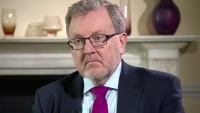
My my. Tensions are flaring across this Conservative Party this morning, as the Tories tears themselves apart over Theresa May's Brexit deal with the European Union. Scottish secretary David Mundell, who has come out in support of Theresa May's deal, was being interviewed on ITV news this afternoon, and didn't exactly pull his punches when it came to his recently departed colleague Dominic Raab. When asked about Raab's view that May's deal was a real threat to the integrity of the United Kingdom, Mundell replied: 'I'm not taking lessons on standing up for the United Kingdom from carpet baggers.' https://twitter.com/ITVBorderRB/status/1063036232568061952 The gloves are coming off. And it isn't only Mundell who is turning on his Tory colleagues.

Watch: Jacob Rees-Mogg’s withering verdict on May’s Brexit deal

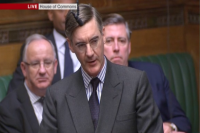
Only a handful of MPs have spoken up in support of Theresa May's Brexit deal in the Commons. But the criticism from a certain Tory backbencher will worry her more than most. Jacob Rees-Mogg took to his feet in the Commons to ask why he shouldn't now hand in a letter of no confidence in the Prime Minister. Here's what he said: 'My right honourable friend – and she is unquestionably honourable – said we would leave the customs union. Annex two says otherwise. My right honourable friend said that she would maintain the integrity of the United Kingdom. A whole protocol says otherwise. My right honourable friend said that we would be out of the jurisdiction of the European Court of Justice. Article 174 says otherwise.

Can Theresa May’s critics unite around an alternative plan?

Ahead of the crunch Cabinet meeting No. 10 aides privately admitted that the one minister they could not afford to lose was Dominic Raab. It wasn't just that losing a second Brexit Secretary would send a very bad signal about the government's Brexit policy. More importantly, Raab is regarded as a pragmatic Brexiteer and there was a fear that his resignation would have a domino effect. Those fears were correct. So far today we have seen a second Cabinet minister resign as well as a number of junior ministers. What's more, there is a very good chance more will come. So, where does May go from here? Not only does her Brexit deal look dead on arrival, May's premiership is at maximum danger point. There is an expectation that there will be a confidence vote within days.

Full text: Theresa May’s Brexit Commons statement

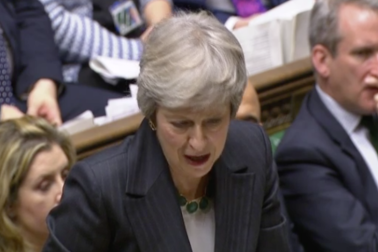
With permission, Mr Speaker, I would like to update the House on our negotiations to leave the European Union. First, I want to pay tribute to my Rt Hon Friends the Members for Esher and Walton and Tatton. Delivering Brexit involves difficult choices for all of us. We do not agree on all of those choices but I respect their views and thank them sincerely for all that they have done. Mr Speaker, yesterday we agreed the provisional terms of our exit from the European Union, set out in the Draft Withdrawal Agreement. We also agreed the broad terms of our future relationship, in an Outline Political Declaration. President Juncker has now written to the President of the European Council to recommend that “decisive progress has been made in the negotiations.

How can Theresa May govern now?

It will be reasonably low down on Theresa May's agenda this morning, but replacing the ministers who have resigned so far is something she will have to think about soon. The Prime Minister has always tried to maintain a balance of Brexiteers and Remainers in cabinet in order to keep both wings of her party happy, but this is naturally going to be much harder given the Brexiteers are currently walking out. Then there’s the need to find new ministers who will stay loyal. This desire to maintain a Brexit balance and find loyalists isn’t necessarily that good for the job of actually governing, though. Esther McVey has left the Work and Pensions department at a critical time for its flagship policy.

Brexit resignations: live updates

It's been a busy morning in Westminster, with ministers fleeing from Theresa May's government like rats from a sinking ship. Fear not though, Mr S is on hand to help keep you keep track. Keep an eye on this post, it will be updated throughout the day as the resignations keep on rolling in.

Esther McVey’s resignation adds to Theresa May’s woes

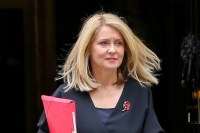
Esther McVey has quit the government. The Work and Pensions Secretary has long known to be unhappy with Theresa May’s Brexit policy and at yesterday’s Cabinet pushed repeatedly for a vote, so she could register her objection to the withdrawal agreement. Having been denied that vote, she realised that the only way a Cabinet Minister can really show that they oppose a policy is by resigning—and has done so this morning. McVey’s resignation is less of a blow to May than Raab’s; most Tory MPs were expecting her to go at some point. But it adds to the sense of crisis surrounding the government this morning. In total, four ministers have quit the government so far this morning—Suella Braverman, a junior DEXEU Minister, and Shailesh Vara have also gone.

Esther McVey: why I had to resign

Dear Prime Minister, There is no more important task for this Government than delivering on the United Kingdom’s decision to leave the European Union. This is a matter of trust. It is about the future of our country and the integrity of our democracy. The deal you put before the Cabinet yesterday does not honour the result of the referendum. Indeed, it doesn’t meet the tests you set from the outset of your premiership. Repeatedly you have said that we must regain control of our money, our borders and our laws and develop our own independent trade policy. I have always supported you to deliver on those objectives.

Can May survive the loss of Dominic Raab?

This is a PM who has shown herself capable of surviving extraordinary personal humiliations. But to lose two two Brexit secretaries - David and now Raab - in fairly rapid succession is a set back of a different magnitude. They were supposed to be in charge of Brexit. And yet both have resigned rather than being associated with a Brexit plan they hate and squarely lay at her door. Raab’s resignation letter says she has agreed to be shackled by the EU to an extent that 'no democratic nation' has ever allowed. So she is now personally and inextricably linked to a Brexit plan - the most important British initiative in modern times - which parliament is set to reject.

Dominic Raab: Why I had to resign as Brexit Secretary

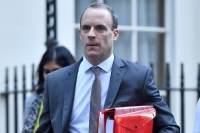
Dear Prime Minister, It's been an honour to serve in your government as Justice Minister, Housing Minister and Brexit Secretary. I regret to say that following the Cabinet meeting yesterday on the Brexit deal, I must resign. I understand why you have chosen to pursue the deal with the EU on the terms proposed, and I respect the different views held in good faith by all of our colleagues. For my part, I cannot support the proposed deal for two reasons. First, I believe that the regulatory regime proposed for Northern Ireland presents a very real threat to the integrity of the United Kingdom. Second, I cannot support an indefinite backstop arrangement, where the EU holds a veto over our ability to exit.

Theresa May and the 48 letters: could it be today?

If Tory MPs are right when they tell me that by lunchtime today there will be 48 letters of no-confidence in Theresa May lodged by them with Sir Graham Brady, chairman of the 1922 backbench committee, what does that actually mean? Well it is all about how they hate the Brexit plan she unveiled yesterday – or so I am told by rebel Brexiter MPs. It is their “proof”, if such were needed, that May could not get her Brexit plan approved by Parliament in a “meaningful vote”. The logic is that if they are prepared to vote against her leadership of the party, they are obviously prepared to vote down the deal. It does not however prove that May would be ousted if she ran in a subsequent leadership contest triggered by the letters. But that is irrelevant to them.

Dominic Raab resigns from the government – who will follow?

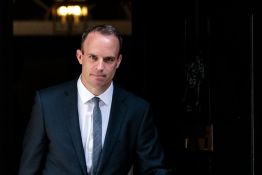
Dominic Raab has resigned as Brexit Secretary following yesterday’s cabinet meeting. This is a bigger blow to Theresa May and her hopes of passing a Brexit deal than the resignations of David Davis and Boris Johnson after Chequers. It now seems almost impossible that this deal can pass the Commons without wholesale Labour support. Indeed, that Raab listed Northern Ireland’s separate treatment as one of his reasons for quitting shows how unlikely it is that the DUP can be persuaded to back this deal. Confirming that, Nigel Dodds, the Westminster leader of the DUP, immediately praised Raab for ‘standing up for the Union’. So, what happens now?

May’s maths problem

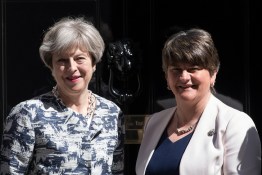
The bad news for Theresa May is that Brexit isn’t over. She might have agreed terms with the European Commission and discussed these with her cabinet, but perhaps her most difficult task awaits: she must now get it through Parliament. Even if she had struck a good deal, it would have struggled to pass. May only has a majority thanks to her confidence-and-supply deal with the Democratic Unionist Party. Northern Ireland was always going to be one of the most contentious parts of Brexit, as the EU has demanded that its future is decided first — in the legally binding withdrawal agreement — rather than in the coming UK/EU trade negotiations. In theory, the DUP has agreed to support the Tories over Brexit.