Politics

Read about the latest political news, views and analysis

Momentum’s membership splits with Corbyn over Brexit

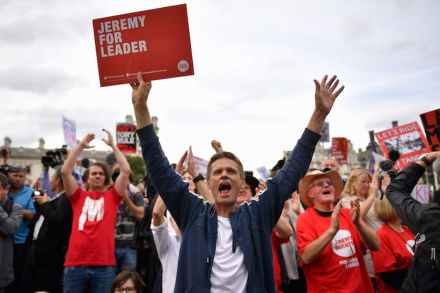
At Labour conference this summer, the party’s leadership were clearly spooked when its previously loyal members demanded the party support a second Brexit referendum. With this in mind, and ever keen to ensure that the rank-and-file are in step with Jeremy Corbyn, the left-wing campaign group Momentum recently decided to survey its supporters to see what they really thought about Brexit and Labour’s position. The group asked over 6500 of its members from across the UK what they thought of Labour’s spurious six tests, the possibility of no deal, and most importantly: if Momentum members wanted a second Brexit vote. Well today the results came in, but they were clearly not what the Momentum higher-ups were hoping for.
Did the Lib Dems sell data to the Remain campaign?

The rearguard Remain lobby, which has far from given up on its ambition to reverse the Brexit vote, has put much store in the alleged electoral malpractice of Aaron Banks and his Leave.EU campaign, as well as the actions of the now-defunct Cambridge Analytica. Along the way it has found the Electoral Commission and the Information Commissioner’s Office (ICO) eager to investigate. There has, however, been a drawback to this strategy: it has invited examination of the Remain campaign’s own spending and use of personal data. Sure enough, a report published by the ICO today offers some possible dynamite.

Second Cabinet this week to decide on Brexit backstop

It looks like today’s Cabinet will only be the first of two meetings this week. I understand that another one, which may well make an actual decision, is now likely to be held later in the week. Today’s was significant for an intervention from Geoffrey Cox, the attorney general. Cox’s contribution was about balancing risks. He, I am told, did say that Northern Ireland would be under various, different regulations under the current proposals. But he said that a unilateral withdrawal mechanism—which a large number of Cabinet ministers again backed—wouldn’t be a panacea to all the UK’s problems in the Brexit talks.

Britain is ripe for agriculture innovation after Brexit

Agriculture is being transformed by innovation at a rapid pace. Genetically modified crops are being grown on 190 million hectares worldwide, with on average 20 per cent higher yields and 40 per cent fewer chemicals than their non-GM counterparts. Genome editing (which involves no cross-species DNA transfer) has produced fungus-resistant wheat and disease-resistant pigs. Farmers in Ukraine and Brazil are using satellite and drone data to target fertiliser and pesticide where and when it is needed, reducing the costs and environmental impact of farming. Robots are starting to drive tractors, identify weeds and pick strawberries. New nitrogen-fixing bacteria derived from sugar cane by Nottingham University promises higher yields in maize and rice.

Theresa May will pay any price for a Brexit ‘Deal’

Halloween may be over but fear still stalks the land. As we enter the Brexit endgame, it is apparent that Theresa May plans to terrorise her turbulent troops into supporting the Chequers-style deal she has cooked up with the EU. A deal at any price? That is the Prime Minister’s position. From the very beginning of the negotiations, she has been intent on securing a deal. The lamentable events of the past two years can be traced back to this simple imperative. According to her, success in the talks equalled a deal; failure equalled no deal. And that is where I and my fellow economists in Economists for Free Trade (EFT) beg to differ. A deal is not success in itself. In fact, a bad deal is far worse than no deal (sound familiar?). I will come to why in a moment.

Should taxpayers pay for Chuka’s Brexit jaunt to Paris?

Chuka Umunna loves to talk Brexit, telling anyone who will listen what a disaster Britain’s departure from the EU will be. The MP for Streatham has even made several hops across the Channel to discuss the subject with European politicians. But who paid for Chuka’s recent jolly to Paris to talk Brexit? Mr S can reveal that it was the taxpayer that footed the £397 bill for Chuka’s Eurostar ticket to the French capital: So is travelling to France really the best way of representing his constituents in south London? A spokesman for Chuka said that ‘by being active in the Brexit debate, including talking to European counterparts, he is fulfilling an election commitment he made to his constituents at the General Election’.

The Arron Banks delusion

What do people mean when they say Arron Banks ‘bought Brexit’? That phrase is everywhere. It’s a New Statesman headline: ‘The man who bought Brexit.’ He ‘bought Brexit’, the Observer informs us, with his ‘funding of the populist, social media driven Leave.EU campaign’. OpenDemocracy, like many others, wants to know where Banks’ money comes from, so that we can finally answer the question: how could he ‘afford Brexit’? This vision of Banks ‘buying’ one of the largest democratic votes in British history, as if it were a second-hand car or something, is weird. And very revealing. What it reveals is the alarmingly low esteem in which voters are held by the Remain-leaning section of the chattering classes.

Sunday Roundup – Arron Banks fights back

The day's most anticipated interview came from Arron Banks, the businessman and co-founder of the Brexit campaign group Leave.EU, who agreed to talk with Andrew Marr. Earlier in the week, the Electoral Commission announced that it was referring Banks to the National Crime Agency amid questions over the exact source of Leave.EU's funding for the referendum campaign in 2016. One of the central allegations raised is whether an £8 million loan came through Rock Holdings, a business based in the Isle of Man, which would contravene UK law: AM: Were you the real source of that money? AB: ...Of course I was. The money came from a UK registered company. It was generated from cash, generated from businesses in the UK.

The Tories can’t blame BBC bias for losing a Budget spin battle

The Mail on Sunday today splashes on “the most biased BBC News bulletin in history” – a reference to the Radio 4 Today programme on the morning after the Budget. I was a guest on that programme, coming in at the end, so I should be pleased to have been a part of history. But was it really so biased? I’m not so sure. The furore is around the decision by R4 news to lead on a Resolution Foundation critique about the distributional effects of the tax cuts, saying that raising the personal allowances etc helps the richest the most. A left-wing story? Yes, but it was clearly identified as such by the 8am bulletin. The Tories simply lost the spin wars to one of the leading left-wing think tanks that morning, and seem upset now.

The faulty logic of a ‘Norway for Now’ Brexit

The campaign ‘Norway for Now’, an idea promoted by Nick Boles, is that Britain should join the European Economic Area and EFTA, until such time as we can move further out of the EU, for example with a Canada-style free-trade deal. This is what Norway and Iceland and Liechtenstein do. The idea sounds nice as a friendly and temporary compromise. But in fact the psychology is wrong. Such arrangements were devised more as an entry chamber to full membership (which is what Norwegian elites still want) than as part of an exit strategy. The Norwegian Prime Minister is now making this point. The point of Leave is to escape the gravitational pull of Brussels. Why make self-contradictory efforts to stay in the orbit and leave it at the same time?

Brexiteers in government nervous about what’s going on in the negotiations

It is quiet out there, too quiet in the views of many Brexiteers in government. As I say in The Sun this morning, they fear that right now a deal is being done that they’ll be bounced into supporting. They worry that since last week’s Cabinet meeting, there hasn’t been any new Brexit offer put either to Cabinet or the inner Cabinet yet technical talks have resumed in Brussels. They fear that a deal will be agreed and then they’ll be faced with a choice of rejecting it and having to take the blame for no deal and the chaos that would involve or accepting the agreement with all its flaws. This fear of being bounced has been heightened by Theresa May’s mood.

Life after No. 10 is not what David Cameron was hoping for | 2 November 2018

It can be cruel, the way politics plays out. At the very moment George Osborne was telling the bemused staff of the London Evening Standard  that his working life in politics had obscured a passionate desire to become a newspaper editor, a familiar figure could be seen in the fresh meat department of the Whole Foods supermarket almost directly underneath the paper’s Kensington newsroom. That man was David Cameron, and inevitably someone with journalistic instincts spotted him, snapped him on her phone, and tweeted it. We congratulate ourselves on the ‘here today, gone tomorrow’ nature of British politics.

Have the Labour moderates forgotten how elections are won?

Labour, as we know, is a party which has fallen into the hands of a dreamy left-wing idealist who is out of touch with the public, and who has managed to push out the party's down-to-Earth moderates - people who, like Tony Blair, understand that if Labour wants to win power it must appeal to broad swathes of Middle England. That, at least, is how it seemed until this week. But it all looks a little different after 20 backbench Labour MPs defied the whips to vote against the Chancellor’s decision to raise income tax thresholds. Jeremy Corbyn had instructed his MPs to abstain. It is astonishing to read the names of the rebels: Yvette Cooper, Liz Kendall, Lucy Powell, Jess Phillips, Margaret Hodge.

Theresa May is rubbing salt into the wounds of the Tory Brexit bunch

The flurry of overnight speculation that a deal had been done to guarantee post-Brexit access for the City to the EU was all a bit odd. It's true that a few weeks ago, the Treasury over the course of a couple of days successfully negotiated some "high level principles" for what the future access relationship might be for UK-based banks and other financial institutions to the EU's single market. But this is a million miles from a deal – which would not and could not be negotiated in its practical detail for months and even possibly years.

The Spectator Podcast: will the EU project crumble after Merkel leaves?

Angela Merkel is stepping down but what is her legacy and can the EU project survive without her? On this week's Spectator podcast, we also take a look at whether WhatsApp has made it harder for MPs to plot; and ask: should Brits be allowed to forage for wild mushrooms? Merkel has been Germany’s Chancellor and Europe’s de facto leader for 13 years. In this week's cover piece, Douglas Murray argues that her departure is the end of the federalist EU project. On the podcast, Douglas is joined by Sophie Pedder, the Economist’s Paris bureau chief and Emmanuel Macron’s biographer.

The Spectator’s Notes | 1 November 2018

At the Brexit-related cabinet last week — as revealed by James Forsyth in these pages — David Lidington made an intervention in support of the Prime Minister’s approach to the negotiations. He was, he said, the only person present who had been an MP at the time of ‘Black Wednesday’, when the pound fell out of the ERM on 16 September 1992. It had been so disastrous and divisive, he went on, that the government must at all costs avoid a repeat over Brexit. Many heads nodded sagely. Mr Lidington, a moderate and public-spirited man, was quite right about the pain caused to his party 26 years ago; but the interests of the Tories and of the nation are not necessarily the same thing.

Diary – 1 November 2018

Upon discovering that Sinéad O’Connor has converted to Islam, I was about as shocked as a Yuletide shopper hearing the opening bars of Slade’s ‘Merry Xmas Everybody’ while picking up last-minute stocking-fillers. It had to happen, didn’t it? Douglas Murray attributes home-grown Islamic conversion to the retreat of the secular West from spiritual life — the Search For Meaning — but I don’t give the clowns that much credit.

All the ministers who’ve resigned from Theresa May’s government

Another one bites the dust. Sports Minister Tracey Crouch became the latest minister to resign from the government this evening, in protest at Theresa May and Philip Hammond's decision to delay the introduction of a £2 maximum stake on fixed-odd betting terminals. Crouch’s resignation puts her in the growing group of Conservative MPs who have resigned from Theresa May’s dwindling government since the 2017 general election – some leaving in protest, and some in disgrace.

Tracey Crouch’s resignation is a big blow to the Tories

Tracey Crouch has resigned as a minister at the Department of Culture, Media and Sport, over the Government’s handling of reforms to the rules around fixed-odds betting terminals. I don’t know much about the policy or the events that preceded this, but I know enough about Tracey Crouch to be confident that this is exactly what it seems to be: a minister resigning on point of principle because she could no longer defend the Government’s position on an important issue. If that sounds unusual and perhaps even a bit old-fashioned (politicians don’t do that sort of thing these days, do they?