Politics

Read about the latest political news, views and analysis

The impossible choice Theresa May now faces to get her Brexit deal through

What can we expect from the prime minister's decision to speak with senior parliamentarians to gauge the kind of Brexit deal, if any, that might get through the Commons? I have been talking with members of the cabinet and those close to her – and they are divided on whether this is a genuine attempt to find a workable consensus or simply more Micawberish delay in the hope that unknown events will bail her and her government out. First things first. In the motion the PM will lay before the House, probably on Monday as she is obliged to do under the Grieve Amendment, don't hold your breath for a sharply delineated set of proposals to put back to the EU for negotiation.
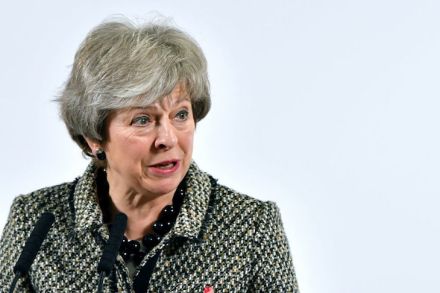
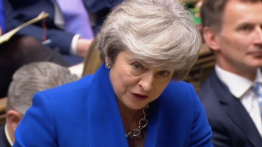
Corbyn moved too soon – and let May take over the House again

Theresa May has won her no confidence vote, and by a decent margin – with a majority of 19. As we expected, the vote has allowed the Tories to — temporarily – unite. May can now say that despite suffering a record defeat for any government on her single most important policy, she commands the confidence of the House. The Tories will also hope that the failure of this confidence motion will push Labour’s own Brexit divisions up the agenda. Those Labour MPs who want a second referendum will now become more vocal. They’ll say that Labour have tried and failed to get an election, so — by the conference motion -- Corbyn should now swing behind a second vote.

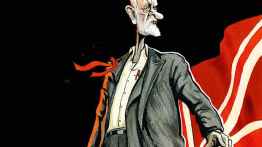
Jeremy Corbyn’s incompetence remains a reassuring certainty

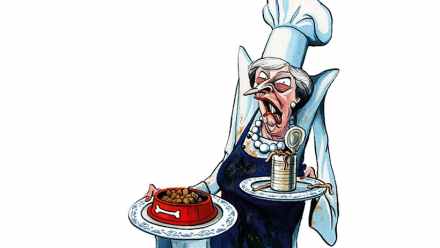
It looked exciting on paper. A massive defeat for the government. Their flagship policy not just sunk but blown to smithereens. And a Prime Minister facing a no-confidence motion for the first time since Sunny Jim Callaghan was unseated in 1979 by Margaret Thatcher. And yet PMQs lacked sparkle. The mood was footsore, hungover, whimpering with fatigue. A historic day felt entirely unhistoric. Everyone wanted a break. May, her throat hoarse, looked knackered and bored, like Mick Jagger at the fag-end of a world tour. She gasped out some of her answers without grammatical ornaments. When Robert Goodwill sought her congratulations for a Scarborough firm that flogs fertiliser to China, she managed this: ‘Driving exports, driving investments, good for the north.

Corbyn gives May an easy ride at Prime Minister’s Questions

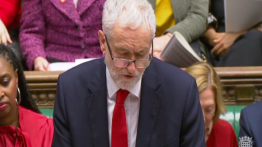
Jeremy Corbyn decided to re-release his greatest hits at Prime Minister's Questions today, starting with Brexit but then moving on to poverty, education, police cuts and 'burning i justices'. We've heard these questions many times before, and often in the same sequence, but today the Labour leader was using them once again to try to underline that Theresa May's government is failing not just on Brexit but on everything else too. This didn't work, though, because Corbyn only tried to tie the topics together in his very last question, and that question was particularly rambling. Last night the Labour leader's spokesman delivered a crisp line about the government being unable to govern because it couldn't get its main business through.

How the world’s papers reacted to May’s Brexit vote defeat

Theresa May appears as a dodo on the front page of today's Sun. Unfortunately for the beleaguered Prime Minister, the verdict isn't much better in the foreign press. Last night's disastrous night in the Commons makes the front pages of newspapers around the world. The New York Times describes the Prime Minister’s defeat as ‘bruising’ and the paper says last night’s result ‘underscores how comprehensively Mrs. May has failed to hold consensus behind any single vision of how to exit the European Union’.

How tonight’s no confidence vote could help Theresa May

Another day, another big vote in the Commons. But as with yesterday, there is a sense in Westminster that tonight’s vote is a foregone conclusion. Theresa May is expected to win it as the DUP are still backing her, as are the ERG and no Tory second referendum types have come out against her. Now, it might seem odd that the Commons can inflict the biggest defeat on a government of the modern era, on the defining issue of the parliament on Tuesday and then affirm its confidence in that government on the Wednesday. But that is British politics right now. If this no confidence vote goes as expected, it will help Theresa May. It will allow her to say that she still has the confidence of the Commons and so can carry on governing.

Watch: Richard Burgon turns nasty

When he first came to power, Jeremy Corbyn promised a 'kinder' politics and told Labour supporters to 'treat people with respect'. But did Richard Burgon get the message? Mr S. only asks because he suspects the Labour MP and arch Corbynite won't have won many new fans when he popped up on Channel 4 News yesterday evening in the aftermath of May's thumping defeat in the Commons. Burgon told Lib Dem MP Jo Swinson that she would be 'judged by history' as a result of her party's past coalition with the Tories: https://twitter.com/Channel4News/status/1085302626349142016?ref_src=twsrc%5Etfw 'The real enemies are the Conservatives. And you have aided and abetted them. to hurt working class communities and stall our diversity. I hope that rests well with your conscience.

Theresa May moves the market

After suffering what could be the largest Commons defeat in over a hundred years - far surpassing anyone's expectations, it's fair to say that Theresa May will not be happy with the way things went this evening. So she might take comfort in the fact that her deal did at least have one positive outcome: providing a small boost to the economy -  though probably not in the way she intended. In response to her Brexit deal being voted down by a massive margin, the pound briefly fell, and then rebounded sharply against the Euro and the Dollar, a clear sign that the uncertainty of the Brexit process was still preferable to her bad deal: Mr S expects we won't hear champagne corks popping in Number 10 at the news just yet...

Theresa May’s confidence vote problems will only get worse | 15 January 2019

Theresa May is in a peculiar position after suffering the largest government defeat in history. Her Brexit plans look dead in the water and even she appeared to admit that she would now have to reach out to members of other parties and consider her options. In a bid to capitalise on May's misfortune, Jeremy Corbyn has confirmed that Labour will table a motion of no confidence in the government. The vote will take place tomorrow afternoon following PMQs. Yet for all the calamity of the evening, the Prime Minister is on course to win it comfortably. Both the DUP and the Tory Brexiteers who voted against May's deal say they will back May in a vote come tomorrow.

What options does Theresa May have left after this defeat?

Westminster was braced for a heavy government defeat. But few were expecting a loss on this scale: 230 votes. It is hard to believe that the 116 MPs May needs for a majority can be persuaded to change their minds by tweaks to the backstop. So, what May thought would be her plan, going back to Brussels, trying to get something and then bringing the deal back is now off the table. In her response to the defeat, May made clear that she accepts she needs to reach out across the House before going back to Brussels. But the problem is it is very hard to see what combination of changes gains her the support of 116 MPs. For example, if May went for a customs union she’d gain some Labour support, but likely see some Tories fall into the other column.

Watch: Matt Hancock’s disastrous attempt to defend Theresa May

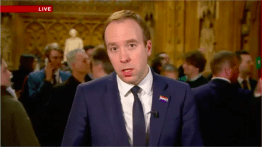
Theresa May made history tonight by notching up the largest defeat for a sitting government in British political history. But despite 118 Tory MPs rebelling against the Government, May can still count on some of her colleagues to try and defend her. Step forward, Matt Hancock. The health secretary popped up on the BBC to trot out the PM's Brexit plan B: go back to the Commons and listen to MPs on what they do want. Unfortunately for Hancock, his attempt to explain what happens next didn't inspire Mr S with much confidence: Andrew Neil: They're ruling out reopening the agreement. What do you do now? Matt Hancock: There are two parts to the proposals - there's both the Withdrawal Agreement and there's also the Future Relationship.

Theresa May’s Brexit deal rejected by MPs by 432 to 202 votes

Theresa May’s Brexit deal has been decisively rejected by MPs who voted 432 to 202 against the Prime Minister’s withdrawal agreement. The Prime Minister had told MPs to back her deal or risk "letting the British people down" but politicians voted down her deal in the biggest government defeat in the Commons in British history. The previous record was by a margin of 166 votes in 1924, when the Labour minority government lost a vote by 364 votes to 198. A total of 118 Tory MPs rebelled against the Government in the crunch vote tonight. Jeremy Corbyn responded to the PM by confirming that he would table a vote of no confidence in the government, which will be held tomorrow.

Has Theresa May just revealed her Brexit plan B?

Theresa May has just finished a speech in which she made clear – without using those words – that the Government is going to lose tonight’s meaningful vote and that she is now planning for the next Commons confrontation on Brexit.  She managed to get one MP, Sir Edward Leigh, to withdraw his amendment on the basis that she was happy to work with him on ‘creative solutions’ to the backstop. She also promised that ‘the government will work harder at taking Parliament with us’ on Brexit.  But this harder work doesn’t seem to include any moves towards working with Labour on some kind of national unity movement to stop a no-deal Brexit.

Labour MPs threaten to push Corbyn into supporting a second referendum

Labour MPs who want a second referendum are threatening to table their own motion calling for one next week if their frontbench fails to do so. Jeremy Corbyn is expected to call for a vote of no confidence in the government once Theresa May's deal is defeated in the Commons this evening. The Labour leadership has refused to do this until now because it doesn't want to hold a vote it is certain to lose, but the pressure has now grown so great for a vote that it will be extremely difficult for Corbyn to dodge it, even though the DUP have said they will stop the government from falling so long as there is a chance that the backstop will not pass.

Conservative MPs are running out of patience with Theresa May

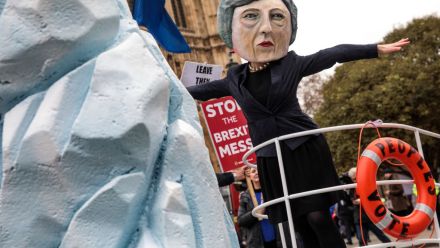
Westminster has been a febrile place for months, but today, as the meaningful vote on Theresa May's Brexit vote approaches, it has tipped into something quite different. The streets around the House of Commons are lined with protesters from all sides, clutching placards, ringing bells and chanting. Flags are swirling, balloons are bobbling in the air, and drivers are honking their horns - though having cycled through the crowd earlier, I'm not sure whether the horns are necessarily ones of support for one group or another, or actually just drivers trying to stop people wandering out in front of them in the road. Inside the parliamentary estate, though, the mood is rather more studied.

Bercow vs Government, Part VIII: Speaker rejects Murrison amendment

Relations between the Speaker and the government have taken yet another turn for the worse this afternoon. Ahead of tonight's vote on Theresa May's doomed Brexit deal, ministers had hoped that an amendment tabled by Andrew Murrison – calling for an end date on the backstop – could win backbench support and save the Prime Minister from humiliation this evening. However, John Bercow had other ideas – and did not select the amendment for the vote. Instead, Bercow selected four amendments from Labour, SNP, Edward Leigh and John Barron. This means three seemingly government friendly amendments – from Murrison, Hugo Swire and a group of Labour MPs – have been left off.

The question that Leavers and Remainers still can’t answer

Why did Britain vote for Brexit? As Parliament gazes into the abyss, the question seems worth asking, even if I don’t pretend to be able to offer a simple answer. And that’s the point, really. Britain is teetering on the brink of a grand failure of policy and politics because, insofar as anyone involved has even wondered why a majority of voters rejected Britain’s political-economic settlement in June 2016, they have generally come up with simple, shallow answers. Among No Deal Leavers, most explanations for the referendum result these days refer to “control” (especially over immigration policy) or “sovereignty” or some nebulous idea of the economic opportunities that lie in different trading arrangements.

Brexiteers owe Dominic Grieve and Gina Miller a debt of gratitude

If, as seems inevitable, the Commons votes to reject Theresa May’s Brexit deal later today – thereby sparing Britain from the humiliation of being trapped in the backstop, forced to accept EU rules without having a say in them – the hero of the hour will be Dominic Grieve. Him and Anna Soubry, Nicky Morgan, Kenneth Clarke, Sarah Woolaston and a gaggle of other Remain MPs. Why? Because it was only thanks to them that the Commons is getting its meaningful vote on the Brexit deal. It was they who rebelled against the government in December 2017 to make sure that such a vote would be held.