Politics

Read about the latest political news, views and analysis

The Prime Minister’s Brexit plans are all the same: run the clock down to 29 March

The Prime Minister’s plans B, C , D and E are all the same: run the clock as close as possible to 29 March, Brexit Day, so that enough of the critics to her Brexit plan blink at the risk of either crashing out with no deal or seeing Brexit cancelled such that it passes at the last. In two words, the Brexit strategy is 'Tick Tock'. Yesterday’s conference-call cabinet meeting was a masterclass in Theresa May as bulldozer and ministers 'sitting back', according to one of them.

The problem with backing out of Brexit

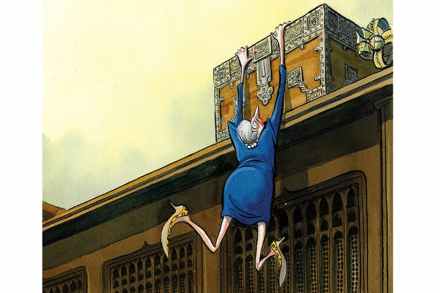
Are we suffering a national humiliation? There has been a lot of commentary – not least from elements of the Remain-supporting press – about how the UK has become an international laughing stock. Papers in other countries have joined in the chuckling. Recent events have not been good for our reputation for stability and sanity. However, the one thing that the UK could do to destroy what international credibility it has left, is to change its mind on Brexit, and go back to the EU asking whether we can stay after all. Our national humiliation would be complete. We would be the employee who stormed out publicly, insisting to everyone that they could make it on their own, only to beg their employer to take them back.

The message behind Labour’s latest party broadcast

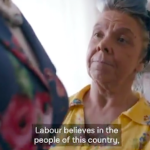
When Labour released the party political broadcast Our Town, it was enough to worry aides in No.10. The slick video saw the party zone in on voters in towns that had voted heavily to Leave. Filmed in areas including Mansfield, the video sent a clear message: Jeremy Corbyn is on a mission to appeal to the Brexit voters on whom the Tories now rely. Last week, the party released the next video in that series, Our Country. Although Corbyn's confidence vote against the government stole the limelight at the time of release, the video does shed some light on how Labour plans to fight the next election (ideally this year): https://twitter.

Grieve’s Brexit amendment could destabilise British government for years to come

How can backbenchers take back control of Brexit? The latest plan is by Dominic Grieve who would (according to leaks) amend it to the Prime Minister’s new mystery Brexit plan which is being put to a vote on 29 January. As you might expect from Grieve, a QC, it’s well put-together. It identifies a weak point in Britain’s constitutional architecture, and proposes to take a shot. If he hits his target, it might not just take down Brexit but a whole lot more besides. His amendment does not advocate for a particular policy, only against no deal. The Commons gave parliament permission for no-deal when it endorsed Article 50, so Grieve seeks to rescind that permission. He also aims to secure additional power for use in the future.

May goes back to the backstop

Today’s Cabinet conference call was more illuminating in terms of direction of travel than the details of what Theresa May is actually going to do. It is now clear that May’s approach is to try and put the Tory DUP alliance back together by getting something on the backstop rather than trying to find some cross party consensus. One of the reasons for this is that the Labour leadership’s reluctance to play ball makes it very hard to get the numbers for any compromise deal. I am told that David Lidington, who had been leading the cross party talks, reluctantly acknowledged this point. As one Cabinet Minister put it to me, ‘This kills the system’s desire for a customs-union style solution.

Are Tory Brexiteers slowly coming round to May’s Brexit deal?

After Theresa May's Brexit deal was defeated by 230 votes in the Commons last week, there was speculation that May would lean towards a softer Brexit in order to get a deal through. Despite holding a series of cross-party talks in this vein, that now looks unlikely. As James reports on Coffee House, May is expected to announce that she will continue to seek backstop concessions in a bid to win back Tory and DUP support. Given the level of Brexiteer opposition to May's deal, that may seem like a long shot. But it's worth noting that in recent days, leading Leave MPs appear to have softened their opposition to the government's plan. Jacob Rees-Mogg used an outing in the Mail on Sunday to suggest that he could back May's deal – if he couldn't get a preferable no deal outcome.

Sunday shows round-up: Brexit manoeuvres under scrutiny

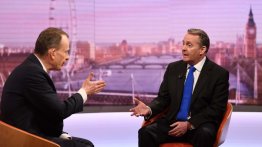
Liam Fox - Remain MPs are trying to 'steal Brexit' With the government in severe difficulties after a week which saw Theresa May's Brexit withdrawal agreement rejected by the largest margin in Parliamentary history, politicians are now exploring how to break the deadlock before the UK officially leaves the EU on 29th March. Speaking to Andrew Marr, the International Trade Secretary condemned parliamentarians hoping to take advantage of the current stalemate to try and hinder or reverse the referendum result: https://youtu.be/afHr_MXzcso <iframe width="560" height="315" src="https://www.youtube.

The Liz Truss Edition

27 min listen

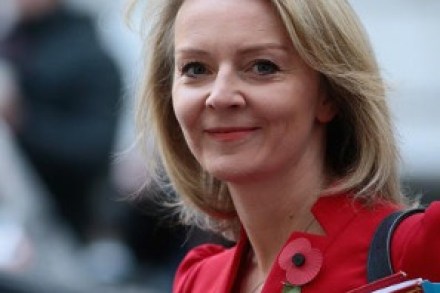
Katy Balls talks to Liz Truss, chief secretary to the Treasury, about her shameful Lib Dem past, why she loves cheese, and how The Thick Of It made her life harder.

Why a customs union is looking less likely

Immediately after the government’s crushing defeat on Tuesday night, a slew of Cabinet Ministers thought that it was inevitable that Theresa May would have to make some kind of concession on the customs union to get a deal through parliament. But, as I say in The Sun this morning, this option has run into two obstacles. First, Corbyn and McDonnell aren’t playing ball. Without their blessing, there is no way you could get 116 Labour MPs to vote with a Tory PM. Secondly, it has become clear that agreeing to a customs union would not only split the Tory party, lead to at least one Cabinet resignation, but would also—according to one senior Cabinet Minister—lose the support of 40 MPs who voted for the deal on Tuesday night.

Raw and noisy debate is exactly how laws should be made

An unexpected outcome of the tortuous process of Brexit negotiations has been the enhancement of Britain’s reputation as a parliamentary democracy. For many years, it has seemed as if political debate was draining away to the TV and radio studios, or even to social media — with MPs reduced to simply rubber-stamping decisions which have already been made elsewhere. This week, the Commons reasserted its authority in the most dramatic way imaginable, inflicting the largest ever government defeat on a substantive motion. The rejection of the Prime Minister’s Brexit deal is a humiliation on a scale which confounded the government’s attempts at expectation-management. To Mrs May’s credit, she immediately conceded that MPs must decide what happens next.

Why Conservative MPs are talking about an early election

Theresa May managed to make history this week by breaking the record for largest government defeat. With no clear Plan B, speculation is rising that we could be heading towards an early election. This week Cabinet Secretary Sir Mark Sedwill asked Whitehall chiefs to draw up contingency plans for a snap poll in the event that May decides to go to the country. Meanwhile, Tory MPs – including ministers – have warned their local associations to prepare for the prospect of a vote as early as next month. As I write in the i paper, an election is a scenario that government figures now see as a potential way – if not a particularly desirable one – to break the deadlock. Visitors to CCHQ report that the prospect of an early election is being talked of.

Brexiteers may have blown their big chance, but Remainers have done far worse

Have Leavers just blown their best chance of Brexit in a subconscious sort of way, because deep down, they never really wanted it? Matthew Parris makes this case in a typically eloquent Spectator column this week. He might be right, but they have not blown it quite so badly as Remainers have. Imagine how events would have turned out this week had the great mythical new political party of the centre actually existed – if it had an organisational structure ready to pounce on its big opportunity, along with a smattering of MPs of other parties ready to jump ship. Imagine if, in the 24 hours between the Brexit vote and the no-confidence vote, it had suddenly risen, serpent-like.

Is this finally Boris Johnson’s moment?

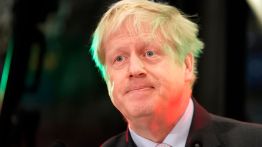
Once more unto the breach, dear friends, once more. That was the message of Boris Johnson’s speech this morning at a JCB factory in Staffordshire. He admitted this week that he regretted bottling his leadership bid in 2016. This time is his last chance to have a go at swiping the ultimate prize – the keys to Downing Street – a prize he’s coveted since he was a boy. Boris’s earliest known quotation is when, asked by his sister Rachel as a child what he wanted to be when he grew up, he said, “World King.” He’s thinner and more smartly dressed than he’s been for years. That might have been influenced by the reported acquisition of his new 30-year-old girlfriend, Carrie Symonds.

The cheer on Question Time that will terrify Corbyn’s Labour

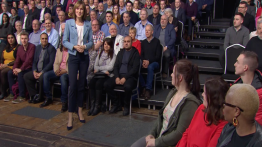
How brilliant was that cheer on Question Time last night? Isabel Oakeshott said Theresa May should just walk away from the EU. Fiona Bruce asked her if she meant we should pursue ‘No Deal’. ‘Yes’, said Oakeshott and there it was, instantly, contagiously, the loudest cheer I can remember hearing from a Question Time audience. This was no polite applause or murmur of approval. It was a statement — a noisy, rebellious statement of the people’s continuing and profound attachment to the idea of leaving the European Union, deal or no deal. It was a cheer that should echo through the nation. That will chill the bones of the political establishment. Which will rattle a commentariat that ceaselessly pumps out columns on how awful No Deal would be.

Corbyn gives his verdict on a second Brexit referendum

Jeremy Corbyn is under mounting pressure to back a second referendum. Labour MPs have grouped together to try and persuade their leader to side with the People's Vote campaign in order to break the Brexit deadlock. But so far, Corbyn doesn't seem keen on the idea, preferring instead to sit on the fence. The same isn't quite true of his brother, Piers, who in the early hours of this morning took to Twitter to make his views on a second referendum perfectly clear: Mr S thinks the People's Vote brigade will be hoping that Jeremy doesn't turn to Piers for advice on what to do next...

The Norway v People’s Vote fight

One of the bitterest divides in British politics right now is between advocates of a second referendum and those who favour the Norway option. They both want to be the last alternative standing to no deal; and are happy to trash each other in the process. On Politics Live tonight, Tony Blair, the most prominent advocate of a second referendum, laid into the Norway option. He derided it as a ‘pointless Brexit’, as it would leave the UK following the rules of the single market but with less say in how they are made. Nick Boles, the principal Tory advocate of Norway plus, then hit back in his own interview with Andrew Neil.

What’s the real reason Greg Clark doesn’t like Brexit?

To those who’ve known Greg Clark for any length of time, the transformation of the mild-mannered business secretary into the Cabinet’s most fervent Remainer requires some kind of explanation. So what's the real reason Clark finds Brexit a threat? Forget about protecting the automotive industry and manufacturing generally. The car industry is already reeling from the government’s hostile environment towards car ownership. Last year, car sales fell for the second year in a row, with diesel vehicles down 29.6 per cent. Supply was hit by testing to meet new emissions standards and demand dented by the government’s ongoing war on diesel.

Emmanuel Macron’s fear of Frexit is bad news for Britain

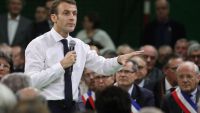
Emmanuel Macron launched his Big Debate on Tuesday and for the next two months the French people will have the chance to air their grievances in meetings and online. The consultation, in response to the Yellow Vest protest movement, has captured the media's attention but nonetheless it was knocked off the top of the news agenda temporarily by events in Westminster. There is an undoubtedly a touch of schadenfreude in the Élysée Palace at the Brexit farrago, a relief that another world leader is in torment. Macron learned that parliament had rejected Theresa May’s Brexit deal on Tuesday evening, as he was nearing the end of a seven hour debate in a Normandy town hall.