Politics

Read about the latest political news, views and analysis

Labour’s double standards over fast-track university courses 

This week, after regulations passed through the House of Lords, parliament approved legislation which will allow universities to offer fast-track degrees which are only two years long - allowing students to graduate earlier and save twenty per cent on tuition fees if they opt for shorter courses. The news, you might expect, would have been greeted by champagne corks popping in Labour HQ. Back in 2016, it was Labour's education team, backed by the shadow higher education minister Gordon Marsden, who pushed for fast-track degrees to be offered to students. Labour's Roberta Blackman-Woods tabled the original amendment which called for 'fees for a 3 year degree to be charged over 2 years to allow for greater funding flexibility.
Theresa May should back a People’s Vote — with one condition

Writing for The Spectator, I am already at grave risk of being expelled from the liberal elite, doubly so as a Remainer who (wearily, sceptically, fearfully) accepts the democratic mandate for Brexit. Soon I won’t be able to pick up breakfast at my local vegan food truck without the guy shrieking, ‘OH, DOES ROD LIDDLE LIKE SMASHED AVOCADO ON RYE TOO?’ So I embark on this, a thought experiment and not a serious proposal, with some trepidation. Here is the problem: the country voted to leave the European Union but MPs are not thrilled about the idea. They voted down the Prime Minister’s deal with the EU on the terms of our departure, some because it was too Brexity and others because it wasn’t Brexity enough.

MPs have their holidays cancelled – but will they have anything to do?

After much speculation, Andrea Leadsom has confirmed that the February recess will be cancelled. This means that – in theory – MPs will be deprived of any ski holidays scheduled for the week of 18 February. It's still up in the air what Commons business – if any – will take place that week given that Parliament is in a state of deadlock. However, the view was that regardless of Brexit progress, it would be an incredibly bad look for MPs to trot off on holiday at the time of an approaching constitutional crisis. So, will they have anything to do?

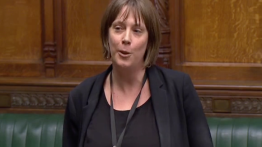
Watch: Jess Phillips’ speech on parliament’s high earners

With all the dramatic votes this week, it could easily have been missed that an important debate about immigration also took place in the chamber on Monday, on the government's new proposals to limit immigration after Britain leaves the EU. Pulling no punches was the Labour MP for Birmingham Yardley, Jess Phillips, who used a speech to pour scorn on the fact that people who earned under £30,000 would be classed as unskilled under the new proposals, and therefore would find it more difficult to emigrate to the UK. But it was Phillips' remarks about her colleagues in the House of Commons that caught Mr Steerpike's attention.

Europe’s blind spot

In Paris in December, I sat with a journalist friend in a café on the Boulevard Auguste-Blanqui and listened to him explain to me why a no-deal Brexit would be a catastrophe for Britain. It had to do with an article his newspaper had published about the Mini. You might think they were typically British cars, he said, but the plant where they were made in Cowley belonged to BMW! The steering wheels were assembled in Romania! The tail lights came from Poland! So? I asked. Brexit was about leaving the EU, not making globalisation un-happen. Who do you think wants to close the Mini plant? Britain does not want to damage its export sector any more than Romania or Poland wants to shut down a factory that provides the livelihoods of thousands.

Salute the rich who choose to pay their taxes

Paying tax — which many of us have been doing this week before HMRC’s 31 January deadline — is a citizen’s duty, not an act of virtue. But for the very rich it is also a choice, since with the help of expensive advisers they can duck it or pay very little of it by using complex avoidance devices and offshore havens. So if they stay onshore and pay up, we should salute their good citizenship — if only to encourage others like them who might lighten the tax burden for the rest of us. In that context I was pleased to see two of this column’s controversial heroes of modern capitalism in the Sunday Times list of the UK’s 50 highest taxpayers.

Those who warn of Brexit unrest invite it

There’s a famous (or infamous) method of negotiation or interrogation called ‘Good cop, bad cop’. You’re probably familiar with the idea. An individual whose cooperation is sought is approached by an apparently reasonable negotiator whose friendly advice is to co-operate because if he doesn’t then his colleague, who has a nasty temper, may fly into a rage — in which case our friend cannot answer for what this dreadful fellow might do. The good cop holds himself out as anxious to protect the individual from somebody much worse than himself. He does not of course condone this person’s behaviour in any way, but he’s sadly beyond his control.

Why reawaken the IRA?

When politics goes round in circles, the columnist inevitably revisits issues that would have been sorted if only everyone read The Spectator. So: back to the Irish border — a demarcation that takes up no geographical space, but has still mysteriously dominated a dozen years of my life. Oh, well. What’s one more afternoon, then? Derry’s recent car bomb underscores a curious omission in all the Brexit argy-bargy about a ‘hard border’. Throughout, neither May, nor Barnier, nor even Varadkar ever utters the letters I, R and A. Yet the scummy residue of this vanquished potato blight lies at the heart of the hysteria about hypothetical border infrastructure that could present a ‘target’. Decorously, no one ever says target for whom.

Martin Selmayr is taking over the Brexit negotiations – and that’s bad news for Britain | 30 January 2019

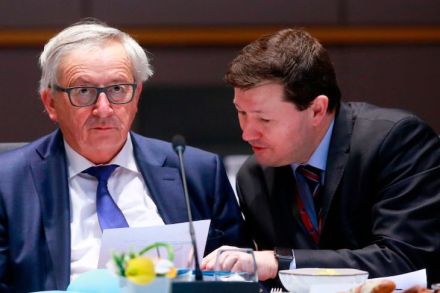
It’s no coincidence that the EU had already prepared a statement on Monday that ruled out any Brexit renegotiation, even before the 'Brady amendment', which requested the replacement of the backstop within the withdrawal agreement had been voted on. One of the reasons why, is that a certain Martin Selmayr is now very much sitting in the EU’s driving seat. A lot of media attention in the UK is often spent on whatever the EU Brexit negotiator Michel Barnier and his team are saying, but I am hearing in Brussels that when Theresa May’s top Brexit advisor Olly Robbins visits EU institutions, he now meets Martin Selmayr, the controversial Secretary-General of the European Commission.

Eurosceptic fears grow over a potential customs union pivot

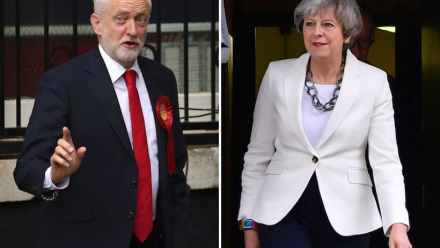
After refusing to meet with Theresa May until she ruled out a no deal Brexit, Jeremy Corbyn finally held talks with the Prime Minister this afternoon. Accompanied by members of his inner circle – Seumas Milne and Karie Murphy – the Labour leader used the meeting to put May under pressure on the customs union. Corbyn discussed with May the best way to secure a Brexit deal which can command a majority in the Commons – arguing that this was by moving to support a permanent customs union between the UK and EU. However, depending on who you speak to, there are varying reports of how that suggestion was received. A spokesman for Corbyn insists that May showed a 'serious engagement in the detail' of Corbyn’s proposal for a customs union with the EU.

Why did Jeremy Hunt have such a long face at PMQs?

Bit of a different day at PMQs. There wasn’t a peep from Remain Corner where Anna Soubry, Nicky Morgan and Sarah Woollaston like to hold court. Perhaps they’re all re-training as Uber-drivers in case a snap-election renders them jobless. And we heard nothing from the Labour party’s Bullingdon Club of Brexit-saboteurs, Yvette Cooper, Stephen Kinnock and Chuka Umunna. Thank goodness Ken Clarke spared us his usual parrot-recital about suspending Article 50. And the ‘people’s vote’ wasn’t mentioned at all. Instead Labour’s C-listers had their turn. Jack Dromey, a gifted nihilist, wore a bright summery jacket which contrasted sharply with the dire news he recited from his sat-nav.

This is Brexit’s La La Land moment

From Venezuela to Zimbabwe, the noise that defines failing states is the wail. It’s not our fault, their leaders cry. We are the victims of a foreign conspiracy, fifth columnists and saboteurs. The most obvious and least discussed consequence of last night’s capitulation by the British Prime Minister to the right of her party is that the Tories are building a conspiracy theory of their own, as they prepare to whine and blame everyone but themselves for the crisis they have brought on Britain. If it is teaching us nothing else, Brexit has at least shown us that 'taking back control' never means taking on responsibility.

The three problems with changing the Brexit backstop

The EU only functions as a collection of 28 nations – minus one on 29 March – because of its streamlined, centralised processes. And that efficient bureaucratic process was magnificently on display in two years of negotiation between the Article 50 taskforce of the European Commission, led by Michel Barnier, and the UK government. It culminated in the legally binding Withdrawal Agreement that was signed off at the end of last year by all EU government heads, including Theresa May.

Theresa May’s biggest Brexit battle is still to come

The morning after the night before finds the Tory party still in good spirits. There is a sense of relief that the party managed to find something that all but 18 of them could vote for. It was no small achievement to get nearly every Tory MP into the same lobby on Europe with Brexit only 59 days away. But the harder part is still to come. First, Theresa May has to get something from Brussels and then she has to get it through the Commons. But May’s victory last night has brought her time. She’ll hope that she can get something from the EU and that the longer both no deal and a lengthy extension to Article 50 remain possible outcomes, the more MPs will come round to her agreement as the least worst option. May has no guarantee of success.

The Cooper amendment’s failure is a setback for the MPs pushing for a softer Brexit

It’s been a disappointing night for the Remain and soft Brexit factions of parliament. Ahead of the votes on amendments to Theresa May’s Brexit plan, there had been a hope among some that the votes would serve as an opportunity to soften the government’s Brexit position. After the Prime Minister’s deal was voted down by 230 votes last month, a number of MPs - as well as officials in Brussels - read it as a sign that the only way to get a Brexit deal through parliament was for May to pivot to a softer Brexit. Tonight those hopes were dashed – at least for the timebeing.

Theresa May’s Brexit deal has come back from the dead

At long last, something changed in the House of Commons tonight; at long last Theresa May had something that could, with only a little squinting or wishful thinking, be considered something close to a good day. Her deal, the withdrawal agreement backed by her Government and agreed with the EU, that seemed moribund less than two weeks ago, has new life. It may not be entirely healthy but it has, remarkably, enjoyed some kind of resurrection.  The choices available to parliament, and by extension the country, are becoming clearer. Now that MPs have rejected the Cooper-Boles amendment that would have placed some obstacles in the path of the default No Deal scenario, we are left with what was always most likely all along: the deal or no deal at all.

The Brady amendment gives Theresa May the strength to kick the can down the road

You could tell that the result of tonight's vote on the Brady amendment (which calls for alternative arrangements to replace the Northern Irish backstop) came as a surprise to those at the top of government from the look on Chief Whip Julian Smith's face as he re-entered the Commons. He looked as though he had spent the past few hours trapped in a ghost house of horrors at a funfair. Smith had, like his colleagues in Downing Street, thought that this amendment was going to fail with a narrow margin until minutes before the result was announced. Instead, it passed with a surprising majority of 16.

Graham Brady’s Brexit amendment passes in the Commons

Graham Brady’s amendment – that will send Theresa May back to Brussels to renegotiate her Brexit plan – has passed by 16 votes. The amendment, which was put together by the chair of the 1922 committee and was backed by the Government, states that the controversial backstop should be ‘replaced with alternative arrangements to avoid a hard border’. This effectively gives the PM a mandate from the Commons to try and reopen negotiations on the withdrawal agreement. But there is no guarantee that the EU will agree to this, as Brussels has already made it clear that this would not be acceptable. So what happens next? The shortest answer is that, once again, the can has been kicked down the road.