Politics

Read about the latest political news, views and analysis

Portrait of the week | 7 February 2019

Home Theresa May, the Prime Minister, went off to Brussels again to talk about ‘alternative arrangements’, for which parliament had voted, to the Irish backstop in her EU withdrawal agreement, which parliament had rejected. First she gave a speech in Northern Ireland, saying: ‘There is no suggestion that we are not going to ensure in the future there is provision for this insurance policy… the backstop.’ Lord Trimble (once an Ulster Unionist, now Conservative), the winner of a Nobel Peace Prize, said he was ‘exploring’ the possibility of a legal challenge to May’s deal on the grounds that it undermines the Belfast Agreement of 1998.
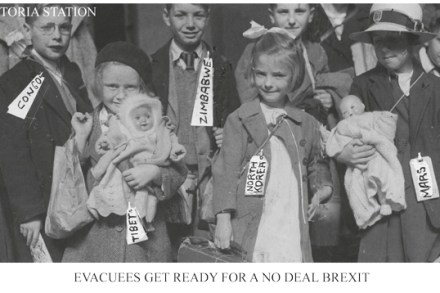
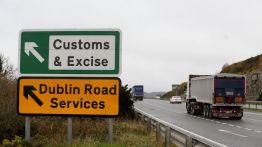
Forget the backstop. Business is doing what it does best: making decisions and investing

With 31 working days until negotiations time out, Theresa May has been selling her vision for post-Brexit Britain to businesses in Northern Ireland. The Prime Minister is hoping her visit will reaffirm the government’s commitment to thwarting any chance of a hard border and sell an agreement that Northern Ireland can get behind, all the while searching for the key to unlock the Westminster stalemate. Those addressed by May – a business community in Northern Ireland that has endured years of uncertainty on the future of trade with their neighbours – has thus far been drowned out by the political noise. Yet while our politicians talk, businesses in Ireland have been quietly doing what they do best: making decisions and going for growth.

Would a no-deal Brexit be a repeat of Black Wednesday for the Tories?

Could a no-deal Brexit destroy the Tory party's reputation for competence and lead to a crushing electoral defeat in the same way as Britain's withdrawal from the Exchange Rate Mechanism did in 1992? That is certainly the view of some seasoned commentators, such as Jeremy Warner in yesterday's Daily Telegraph, and the parallels to an acrimonious Brexit seem obvious. But in reality, the comparison is actually misleading, as it misrepresents the political history of the ERM exit and fails to understand how Britain has changed as a result of the Brexit referendum. First, it's worth remembering that what really hurt the Conservatives after 'Black Wednesday' was not that government policy had been defeated by economic logic.

Wealth taxes are back in fashion – but they’re still a terrible idea

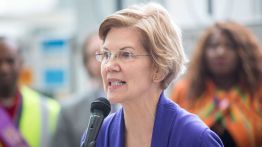
Wealth taxes are back in fashion. In the United States, Senator Elizabeth Warren is proposing an ‘ultra-millionaire tax’. In the UK, there are calls for greater taxation of property from a coalition stretching from Lord Willetts, a former Conservative minister, to Owen Jones and other Corbynista activists. I say ‘back’ in fashion, because these taxes appear to be subject to a cycle of sorts – endlessly proposed, debated, then… quietly set aside. Most of the recent UK examples have focused on property. The Tories’ ‘dementia tax’ – a phrase coined by Policy Exchange's Will Heaven in The Spectator – is remembered all too well from the ill-fated 2017 election.

Both sides will blink

What can the EU do to help the Britons out of their Brexit quagmire? Until very recently, the answer would have been ‘little, if anything’. There is a deal on the table, which Theresa May herself pronounced to be non-negotiable. Well, parliament directed her — and by implication, the EU — to think again and to reconsider the vexed question of the Irish backstop. Does anybody on either side of the channel really want to wreck the future relationship between the UK and the EU over the unsolved issue of the Irish border, as well as risk creating renewed enmity along it? God forbid.

Who does Nicola Sturgeon think she is?

It’s been a busy old week in Scottish politics. The SNP government is suffering a public backlash over plans to allow councils to levy a tax on workplace car parks. There has been a fatal infection outbreak at another hospital. MSPs are angry that the nationalists have installed one of their own as chair of the parliamentary inquiry into the government’s handling of the Alex Salmond affair. Best of all, the Scottish Government’s headquarters opened its first gender-neutral toilets.  Nicola Sturgeon, though, has missed it all. The First Minister is on a trade mission ‘promoting Scotland in North America’, according to the Scottish government. Scots have been settling Canada and the United States since the mid-17th century.

Britain is heading for a Brexit tragedy

With 50 days left before the official date for leaving the EU, we may just have hit peak Brexit mayhem. Can it get any worse than this? Seriously. The cabinet has a three-way split between those who see a no-deal Brexit as economic and political armageddon – the Rudds, Hammonds, Gaukes and so on – those who would prefer a negotiated deal but secretly like the idea of a purer rupture – the Leadsoms, Foxes and Mordaunts – and those sitting in the middle with their fingers in their ears, thinking happy thoughts and hoping none of this is really happening. "It is frustrating how many in the cabinet are just sitting this out" said one minister.

Corbyn gives his price for Labour backing May’s deal

Yesterday, Donald Tusk used a hellish press conference to say that Remain had no effective representation in the UK owing to the fact that both the Prime Minister and the Leader of the Opposition support Brexit. Tusk said that as a result it was time to face up to the fact that the UK really will be leaving the EU. Proving that point, Jeremy Corbyn has now made his biggest move on Brexit yet. The Labour leader has written to May setting out his terms should she want Labour to back her Brexit deal. In the letter are several demands which will make Eurosceptics MPs uncomfortable.

Corbyn’s offer weakens May in Brussels, but helps her at Westminster

One of the main messages that Theresa May is taking to Brussels today is that significant, legally binding changes to the backstop are needed to get the withdrawal agreement through the House of Commons. Jeremy Corbyn’s letter to her undermines that position. In it, the Labour leader sounds less hostile to the backstop than he did after meeting May last week. Instead, he suggests that the way to deal with the backstop issue is through a political declaration that makes it much less likely that it has to be used. This is the EU’s preferred solution too, and so Corbyn’s offer undercuts the message that May is trying to take to Brussels.

The Tories are a party in search of policies

‘What would a Conservative manifesto say on Brexit?’ Many Tories consider this question a slam-dunk argument against an early election. But the party’s predicament is actually much worse. It is easier to work out what their manifesto would say on Brexit than on a whole host of other issues. The Tories are relatively united on Brexit, for the moment. Only eight of the party’s MPs voted against Sir Graham Brady’s amendment last month which authorised Theresa May to seek ‘alternatives’ to the backstop. So this would be the Tory position in a pre-Brexit election. In an immediate post-Brexit contest May would presumably seek a vague mandate to negotiate the best possible future relationship, leaving open what precisely that is.

The wrong track | 7 February 2019

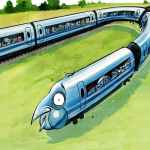
No one is in any doubt about the problem facing Britain’s railways. Over the past decade, rail fares have risen twice as fast as salaries. Yet across the national network, overcrowding is at record levels, cancellations are spiralling and passenger dissatisfaction is at a ten-year high. Yet ministers are about to start pouring £4.5 billion a year, every year for a decade, into building a single new railway route: HS2. To put this into perspective, the amount annually maintaining and upgrading the rest of the rail network is £6 billion. It’s a trap that we can, even now, avoid. Much has changed since the scheme was launched in 2010. Official cost estimates have almost doubled — from £33 billion to £56 billion.

Britain needs to back down on the backstop – but the EU must help

Theresa May's attempt to alter her Brexit deal is going down badly in Brussels. The anger is partly understandable: after all, this is the agreement May's own government negotiated. Donald Tusk's barbed comment today – that there is a "special place in hell" for those who promoted Brexit without a plan – can be explained by this frustration. But the EU also needs to face up to the political reality: May's deal suffered a crushing Parliamentary defeat by 230 votes. It’s all very well having an agreement that works in Brussels theory, but it still has to get through the Commons. If Brussels really wants a deal, it too needs to move; MPs may need to climb down, but the EU can help to provide them with ladders.

Why can’t Ian Blackford admit the truth about a no-deal Brexit?

It’s all over, folks. This is absolutely the last time you’ll ever see Theresa May live in concert. Until the next time. May has become a bankrupt rock-star taking her tired old hits out on the road yet again. This week’s futile tour includes Belfast, Dublin and Brussels. Futile because the EU won’t grant any concessions until the dying hours of March 29th. So the PM might as well enjoy the scenery, the food and the wine if there’s any left after Jean-Claude Juncker has been served. Meanwhile a muted house met in her absence. The increasingly bizarre speaker, John Bercow, introduced May’s replacement, David Lidington, with the following: ‘The Rt Hon gentleman is a notable celebrity not only in Aylesbury but here in this house’.

Liz Truss’s female founders speech: Little Mix, the Bullingdon Club and appealing to Gen Z

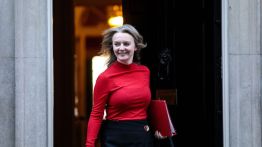
As Chief Secretary to the Treasury, Liz Truss has shown herself unafraid to say what she thinks. Whether it's the need to defend Conservative values, rallying against Michael Gove's wood-burning stove ban or poking fun at her current party's Brexit secretary related woes. On Monday night, Truss gave a speech to female entrepreneurs and founders in 11 Downing Street. In it, Truss spoke in defence of free markets, the need for a party to appeal to Generation Z and pointed out that the majority of venture capital money in the UK was given to all-male teams and compared that to the idea of a Bullingdon Club infused Conservative government – something that she said belongs in the past: 'I am the number one believer in free markets.

The most revealing part of Tusk’s press conference wasn’t about Brexiteers going to hell

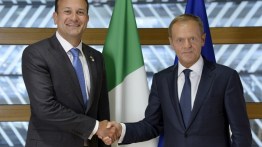
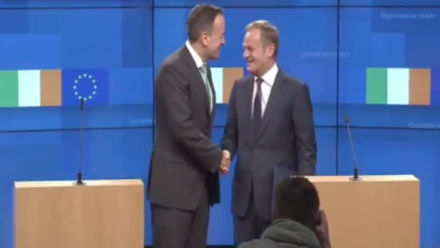
Westminster is in a flurry this afternoon over Donald Tusk's comments at a press conference this morning with Leo Varadkar. The European Council president used the platform to declare that he had been pondering of late what that 'special place in hell' for 'those who promoted Brexit without even a sketch of a plan of how to carry it safely' looked like. Tusk even went on to tweet out his comments – just in case anyone had missed the moment in the conference. Adding insult to injury the EU Council president has also been caught on mic laughing about the likely angry response from the British. Tusk is at least right that his latest outburst has landed badly in the UK – with Andrea Leadsom the first Cabinet Minister to publicly criticise him in response.

What would George Orwell make of the Brexit right?

I don’t believe in turning George Orwell’s writing into Holy Scripture – he would have hated the reverence as much as anything else. But if the Brexit right is going to crow and quote his dislike of the communist-influenced left intelligentsia of the 1930s and 1940s it should read the rest of his work first.  Orwell believed in a united socialist Europe. ‘Democratic Socialism must be made to work throughout some large area,' he wrote just after the Second World War. 'But the only area in which it could conceivably be made to work, in any near future, is Western Europe’. If you can forget his belief in a post-war socialism that has gone, Orwell’s arguments for European unity stand up well.

Watch: Donald Tusk’s ‘special place in hell’ for Brexit promoters

With Theresa May instructed by parliament to renegotiate her withdrawal agreement and attempt to remove the backstop, all eyes today were on the Irish Taoiseach, Leo Varadkar, as he headed to Brussels to discuss the Irish border issue with the EU. But at a press conference following the talks, it was President of the European Council, Donald Tusk's comments that have ended up attracting the most attention. In a scathing end to his speech, the EU leader couldn't help but level this broadside against those on the British side he said had caused Brexit without a plan for carrying it out: 'I've been wondering what the special place in hell for those who promoted Brexit without even a sketch of a plan how to carry it safely.'  https://www.youtube.com/watch?

Labour and the banality of anti-Semitism

Is there a name for the moment something objectionable becomes so mainstream that those responsible can solemnly lament it as a fact of life? I propose that we call it the Formby Point. This week, Labour’s general secretary Jennie Formby reportedly told a parliamentary party meeting that it was ‘impossible to eradicate anti-Semitism and it would be dishonest to claim to be able to do so’. Note the sly wording, the subtle distancing; you can almost hear the affected sigh of resignation. The woman who runs an institutionally racist party that refuses to challenge its institutional racism can, with a straight face, regret the inevitability of racism.  As a matter of fact, it is possible to eradicate anti-Semitism from a membership-based organisation.