Politics

Read about the latest political news, views and analysis

Tusk, Selmayr and the EU’s Twitter diplomacy

This morning, Donald Tusk had an unusually provocative line in his speech. "I have been wondering what the special place in hell looks like for those who promoted Brexit without even a sketch of a plan how to carry it safely," he said. Any politician knows that the image of Brexiteers going to hell cannot be dropped into a speech without huge controversy. Leo Varadkar, the Irish Taoiseach who had been standing next to him, spotted it instantly and was caught on mic joking to Tusk about the outrage it was intended to cause in the UK. Tusk nodded and laughed. Then for good measure, he tweeted out the incendiary point. https://twitter.com/eucopresident/status/1093112742293266435?ref_src=twsrc%5Etfw All this is an unusual way to conduct diplomacy, but this trolling fits a trend.

The plan that could give rebel Labour MPs the space to break away

Reports that Theresa May’s team are considering a June election haven’t exactly been met with universal acclaim. Tory MPs in marginal seats are horrified by the prospect, demanding assurances from the party's chairman Brandon Lewis that this isn’t the case. But it's not only Tories concerned about losing their seats who should be worried. A snap election would also be bad news for the band of Labour MPs considering breaking away to form a new party. The arguments against forming a new party due to the crushing forces of our first past the post electoral system are familiar and have acted as a brake on the formation of significant new parties since 1983.

Theresa May’s expectation management falls flat with the ERG

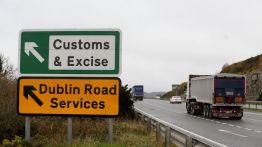
Theresa May has been in Northern Ireland today attempting to ease concerns over her commitment to avoiding a hard border. The Prime Minister told business leaders in Belfast that while Parliament wanted 'changes to the backstop as it currently exists', her commitment to no hard border in Northern Ireland was 'unshakeable'. However, May's words also went some way to highlight the difference in expectation as to what No. 10 think is an acceptable change to the backstop – and what the Brexiteers in the European Research Group believe is acceptable.

A referendum on Irish unity might be the best way to solve the Brexit border issue

Has the time come to hold a referendum on Irish unity? The best way for the UK to leave the EU would be via a Canada-style free trade agreement, an option that was offered by the EU last year. But as things stand, the 1.8 million population of Northern Ireland is preventing the rest of the UK from leaving on the most favourable terms for both the UK and the EU27. More precisely, the section of the population represented by the Democratic Unionist Party (DUP) is blocking this mutually beneficial agreement. The Belfast Agreement of 1998 represented a major change in strategy for the British government. It created a pathway to Irish unity.

Will the public mood on no deal sway the Commons?

As Theresa May attempts to reopen negotiations on the terms of the backstop, there is a view in Downing Street that May won't be able to win any substantial changes until Yvette Cooper's no deal amendment has been defeated for a second time. The Prime Minister will put down a neutral motion next Wednesday and amendments to that motion are expected to be voted on the following day. The expectation is that Cooper will bring back her amendment which would force the government to try and extend Article 50 if a no deal scenario looked likely. There's a concern in government that this time the amendment could pass. A number of Tory MPs may become more anxious about the prospect of no deal when it's two weeks closer ad a deal still doesn't look imminent.

Jeremy Corbyn’s Alexandria Ocasio-Cortez stunt backfires

Alexandria Ocasio-Cortez is the left's rising political star. The 29-year-old is the youngest women ever to serve in the US Congress and her fan base is growing quickly online, so it's no surprise that Jeremy Corbyn wants to team up. But the Labour leader's cosy phone call with the Democrat has somewhat backfired. Corbyn said yesterday that it was 'great to speak' to Ocasio-Cortez, who returned the favour by tweeting that it 'was an honour to share such a lovely and wide-reaching conversation with you'. This seemed to be the start of great things, until a follower of Ocasio-Cortez pointed out Labour's ongoing troubles with anti-Semitism: Oh dear. It was good while it lasted...

There’s more than meets the eye to Selmayr’s backstop slapdown

Oh dear. It's only Monday and already Theresa May's week appears to have taken a turn for the worse. The Prime Minister's plan to renegotiate the terms of the backstop has received a strongly-worded rebuke from the European Commission. MPs from the Commons Brexit committee were in Brussels this morning meeting with Martin Selmayr, the commission’s secretary general. Some of those present reported that they left the meeting believing the UK would be able to secure legally-binding concessions on the issue of the backstop. However, on seeing this account reported, Selmayr has taken to social media to put forward a different account of what took place.

How long will the Tory truce hold?

Nearly one week on from Tory MPs uniting around a Brexit position and the cracks are starting to show. After Brexiteers and Remainers alike came together to vote for the Brady amendment on Tuesday calling for the backstop to be replaced with alternative arrangements, Theresa May was triumphant that she could now tell Brussels there was a majority in the Commons for a Brexit deal so long as the EU was willing to play ball. However, this weekend things hit a bump in the road after May penned an article for The Telegraph. In it, the Prime Minister said that the vote for the Brady amendment had shown there was majority support for her deal so long as the backstop was renegotiated – hinting that this could be done by a side agreement or codicil.

May’s ‘delusional’ promise to deliver Brexit by 29 March

Here is what members of the cabinet said to me when I pointed them towards a statement made in the Sunday Telegraph by the Prime Minister that she is 'determined to deliver Brexit and determined to deliver on time – on March 29 2019'. 'Farcical' said one. 'Total delusion' said another. 'Verifiably untrue' said a third. It's not that they doubt Theresa May is working to take the UK out of the EU. It's just they cannot see how it is remotely possible that departure can be achieved in the less than eight weeks remaining before the official leaving day.

Watch: Andrew Marr calls out EU leaders over TV no-shows

When was the last time an EU leader gave an interview to British TV to talk about Brexit? If you're scratching your head to remember, you're not the only one. Andrew Marr raised just this point on his programme this morning, calling out the likes of Donald Tusk, Michel Barnier and Jean-Claude Juncker for their persistent failure to appear on his programme. Here's what Marr had to say: I just want to say one thing about our line-up of interviews. We are at a moment where negotiations with Brussels are absolutely critical and it has been a long moment. And week after week I get the chance to cross question British ministers and opposition politicians. And week after week, we ask the likes of Donald Tusk, Michel Barnier and Jean-Claude Juncker to answer questions as well.

Sunday shows round-up: UK ‘will still be a very safe country’ after no deal, Javid says

Sajid Javid: No-deal UK ‘will still be a very safe country’ This morning Andrew Marr was joined by the Home Secretary Sajid Javid. With the possibility of a no-deal Brexit on the horizon, the interview turned to the implications that could have for the UK’s national security. When Marr asked if security could be diminished, Javid avoided a direct answer, repeatedly telling Marr that ‘we will still be a very safe country’: https://twitter.com/BBCPolitics/status/1092016349818236929 SJ: There will be a change in capability, and there are capabilities that I’d want to keep... but they require cooperation with the EU, and I have to proceed on the basis that in a ‘no-deal scenario’ the EU will no longer allow us access to those capabilities...

There’s something very un-Conservative about warning about civil unrest

There’s a famous (or infamous) method of negotiation or interrogation called ‘Good cop, bad cop’. You’re probably familiar with the idea. An individual whose cooperation is sought is approached by an apparently reasonable negotiator whose friendly advice is to co-operate because if he doesn’t then his colleague, who has a nasty temper, may fly into a rage — in which case our friend cannot answer for what this dreadful fellow might do. The good cop holds himself out as anxious to protect the individual from somebody much worse than himself. He does not of course condone this person’s behaviour in any way, but he’s sadly beyond his control.

MPs know if parliament is ever to command respect again, Brexit must happen

The House of Commons does work better than it seems to, I promise you. When a big subject comes up, it spends weeks, months, even years, posturing and sparring, but it has a way of working out when a choice is truly important. Brexit has taken years, and is truly important. We saw the first signs of this realisation dawning on Parliament when it rejected Mrs May’s original deal so decisively. We saw the second signs on Tuesday night. As that series of covert Remain amendments — most notably Cooper-Boles — fell, a pattern became apparent. Enough MPs now understand that if the institution of parliament is ever to command respect again, Brexit must happen, and the minimally acceptable way in which it must happen is that the permanent Irish backstop goes.

If Eurocrats really cared about Irish farmers, they’d chuck the backstop altogether

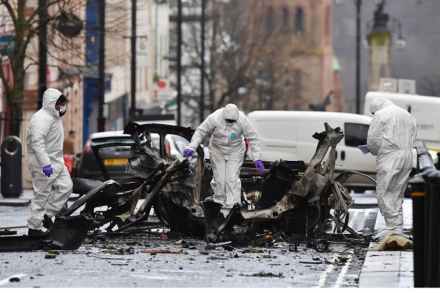
When politics goes round in circles, the columnist inevitably revisits issues that would have been sorted if only everyone read The Spectator. So: back to the Irish border — a demarcation that takes up no geographical space, but has still mysteriously dominated a dozen years of my life. Oh, well. What’s one more afternoon, then? Derry’s recent car bomb underscores a curious omission in all the Brexit argy-bargy about a ‘hard border’. Throughout, neither May, nor Barnier, nor even Varadkar ever utters the letters I, R and A. Yet the scummy residue of this vanquished potato blight lies at the heart of the hysteria about hypothetical border infrastructure that could present a ‘target’. Decorously, no one ever says target for whom.

Don’t expect much on Brexit before Valentine’s Day

Don’t expect much movement on Brexit this side of Valentine’s Day, I say in The Sun this morning. There are two reasons for this. First, EU leaders are irritated with Theresa May. She signed off on a deal with them, assured them it could get through the Commons and then lost by a record margin. They are now sceptical when the British indicate that this or that change could get the deal through parliament. Despite the Brady amendment passing, the EU are still doubtful about what would get a deal over the line. But there is another reason beyond their irritation why the EU are holding off from engaging with Mrs May. They want to see what happens when the Commons next votes on Brexit on the 14th of February.

Why I’m not worried about no-deal fruit and veg shortages

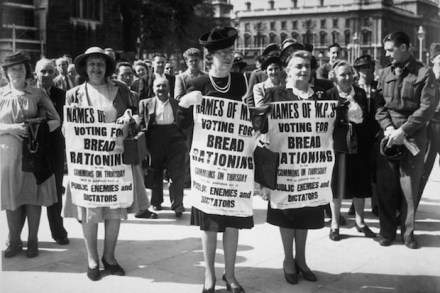
What to do about the coming shortage of green groceries of which several supermarkets warned yet again this week if there is a no-deal Brexit on 29 March? I am just old enough to remember when fresh fruit and veg were in short supply at this time of year. People used to know how to store things to mitigate the problem: apples would be carefully laid out on straw-strewn shelves. We ate lots of root vegetables and not much greenery. If ever you saw a strawberry out of season it came, for some reason, from Israel. Perhaps it is time for a Brexit recipe book, like those comforting wartime rationing ones full of bright ideas for dull things. In our part of the south coast we have racier ideas.

Is it time for a Brexit recipe book?

What to do about the coming shortage of green groceries of which several supermarkets warned yet again this week if there is a no-deal Brexit on 29 March? I am just old enough to remember when fresh fruit and veg were in short supply at this time of year. People used to know how to store things to mitigate the problem: apples would be carefully laid out on straw-strewn shelves. We ate lots of root vegetables and not much greenery. If ever you saw a strawberry out of season it came, for some reason, from Israel. Perhaps it is time for a Brexit recipe book, like those comforting wartime rationing ones full of bright ideas for dull things. In our part of the south coast we have racier ideas.

The Spectator’s Notes | 31 January 2019

The House of Commons does work better than it seems to, I promise you. When a big subject comes up, it spends weeks, months, even years, posturing and sparring, but it has a way of working out when a choice is truly important. Brexit has taken years, and is truly important. We saw the first signs of this realisation dawning on Parliament when it rejected Mrs May’s original deal so decisively. We saw the second signs on Tuesday night. As that series of covert Remain amendments — most notably Cooper-Boles — fell, a pattern became apparent. Enough MPs now understand that if the institution of parliament is ever to command respect again, Brexit must happen, and the minimally acceptable way in which it must happen is that the permanent Irish backstop goes.

The Asda equal pay ruling that could wreck the UK’s labour market

I don’t know what it is like to work as a checkout assistant in Asda, still less in an Asda warehouse. But if I did work in a company’s shops and I learned that there were better-paid jobs available in its warehouses I am pretty sure I know what I would do: apply for a job in the latter. It wouldn’t occur to me to pick up the phone to a lawyer and claim I was a victim of discrimination. But then perhaps I am not suited to life in the age of grievance politics. Today, the Court of Appeal has ruled that Asda may be guilty of sexual discrimination in that it is paying shop staff less than warehouse staff.

Watch: Whitto’s awkward turn on Channel 4

Oh dear. It's been a rollercoaster for the European Research Group of late. Once heralded as the Machiavellis of Brexit, the group of backbench Eurosceptics have lately become the subject of some mockery thanks to their botched attempts to oust Theresa May as Prime Minister. However, things appeared to turn in their favour again this week when the group – led by Jacob Rees-Mogg – managed to get May to change her Brexit strategy – and confirm that she wished to reopen the Withdrawal Agreement. Alas Mr S suspects the turn of John Whittingdale on Channel 4 news in the aftermath will have done little to cement an image of professionalism.